Comprehension skills Writing Worksheets for Ages 4-7
4 filtered results
-
From - To
Enhance your child's reading and writing abilities with our "Comprehension Skills Writing Worksheets for Ages 4-7." Designed to develop essential comprehension skills, these engaging and educational worksheets guide young learners in understanding and interpreting texts. Each worksheet focuses on building vocabulary, improving sentence structure, and fostering a love for reading through fun, interactive activities. Ideal for children aged 4-7, our carefully crafted resources not only boost literacy skills but also stimulate critical thinking and imagination. Start the journey to fluent reading and effective writing with our high-quality comprehension skill-building worksheets today!
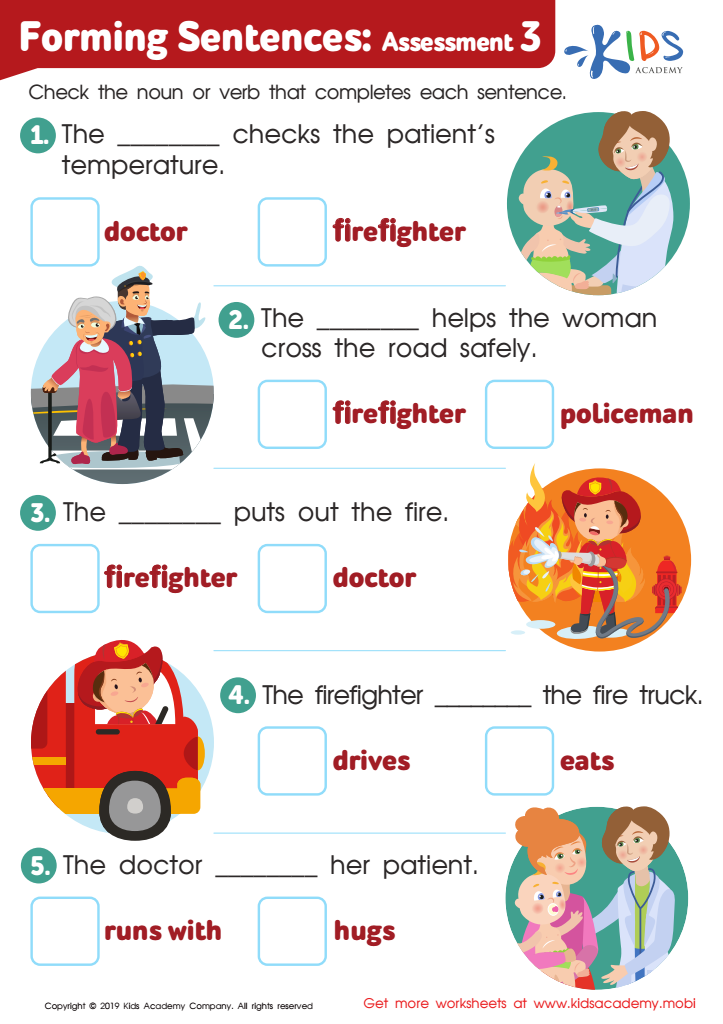
Forming Sentences: Assessment 3 Worksheet
 Assign to My Students
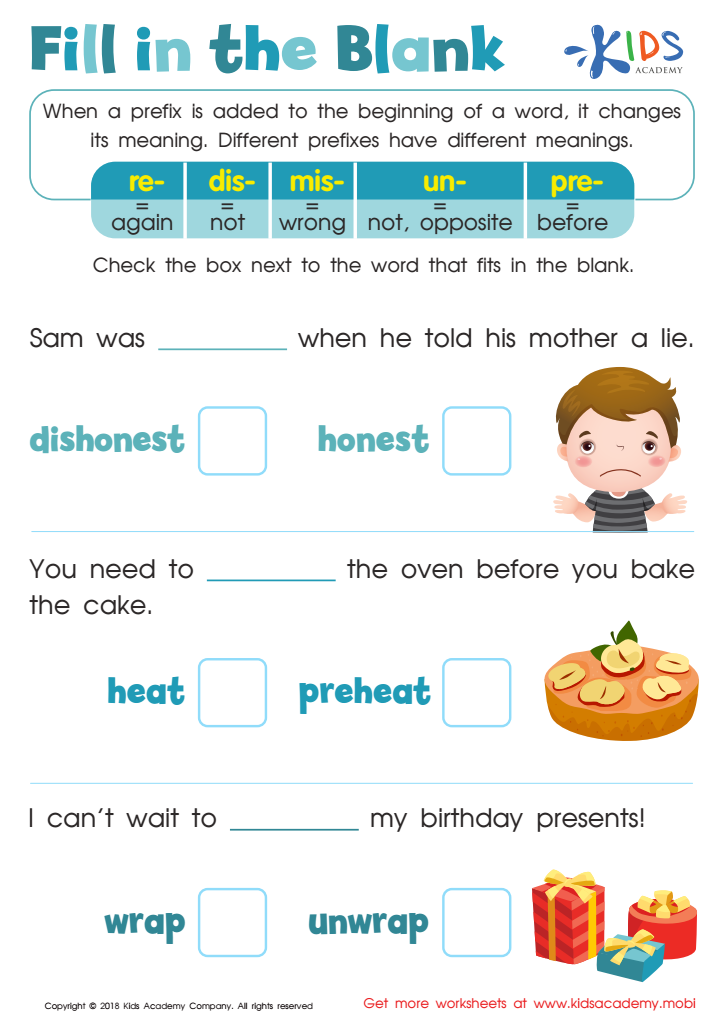
Reading: Fill in the Blank Worksheet
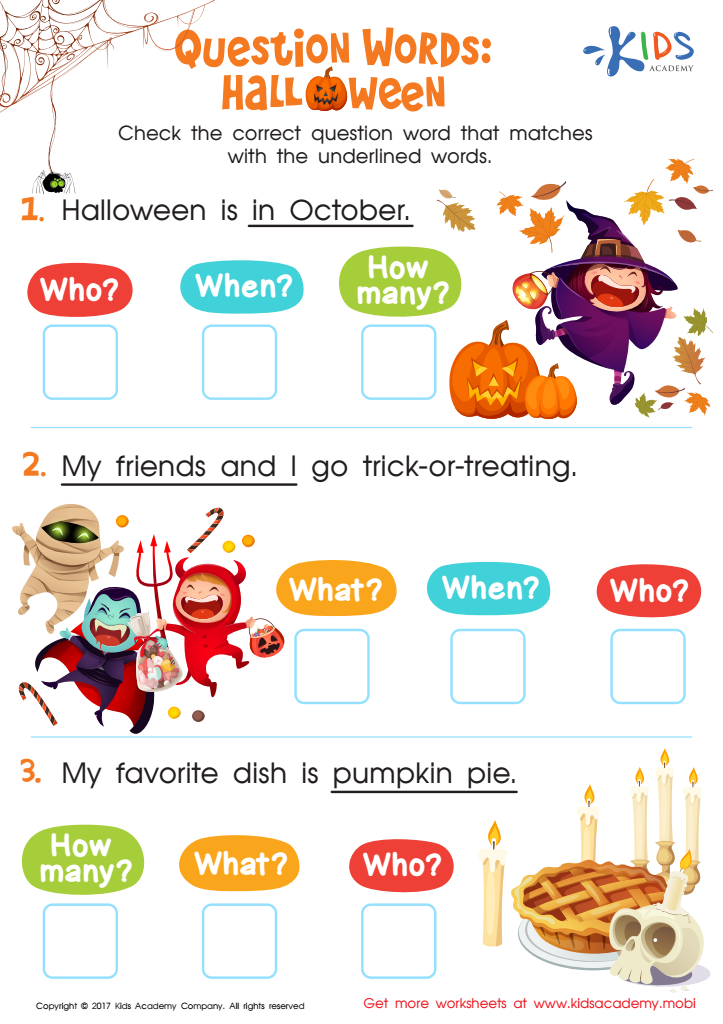
Question Words: Halloween Worksheet
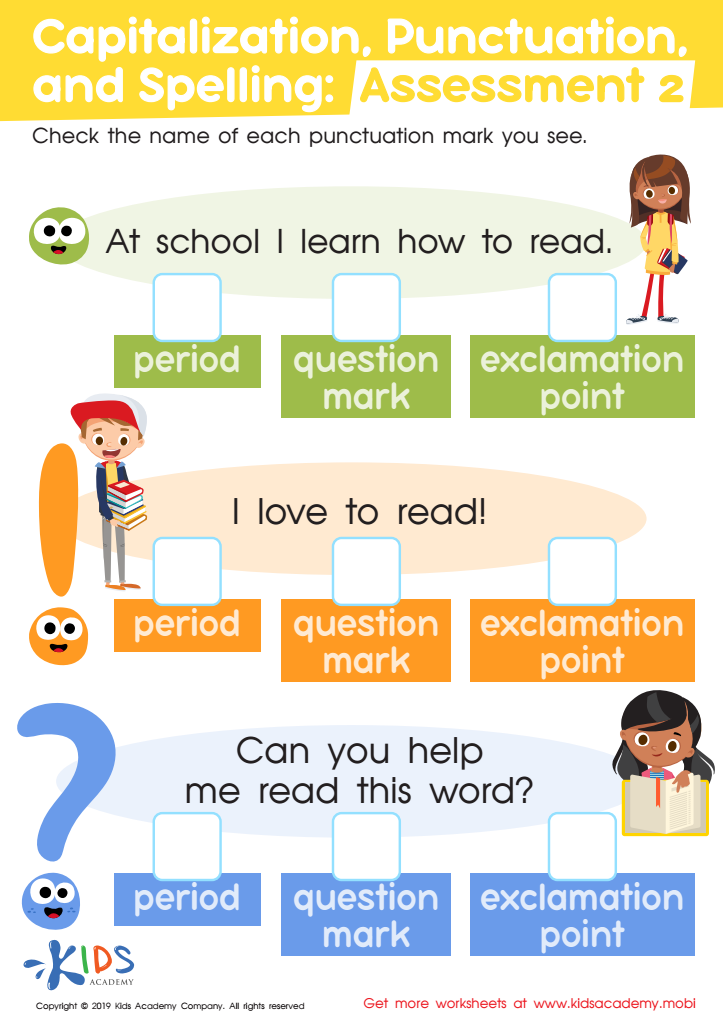
Capitalization. Punctuation. Spelling: Assessment 2 Worksheet








Parents and teachers should prioritize developing comprehension skills in writing for children aged 4-7 because these formative years are critical for language and cognitive development. Comprehension skills enable children to understand and process information, providing a foundation for academic success and effective communication. When young learners begin to write, they are not merely learning to form letters and words but are also organizing thoughts and expressing ideas coherently. Strong comprehension skills enhance this process by helping children grasp the meaning behind words and texts.
As children gain comprehension skills in reading, these abilities translate into improved writing. They become better at constructing meaningful sentences, using context-appropriate vocabulary, and conveying clear narratives or information. This, in turn, boosts their confidence and motivation to participate in learning activities, fostering a love for reading and writing. Moreover, comprehension skills are vital for problem-solving and critical thinking; competencies that extend beyond academics into everyday life.
Encouraging and nurturing these skills early ensures that children are well-equipped to face future educational challenges, making them effective learners and communicators. Ultimately, investing time in developing comprehension skills in writing supports holistic early development, setting the stage for lifelong learning and success.








