Spatial awareness Writing Worksheets for Ages 4-7
3 filtered results
-
From - To
Enhance young learners' spatial awareness with our engaging writing worksheets designed for children ages 4-7! Our printable worksheets combine fun activities with educational content, helping kids develop crucial spatial and writing skills simultaneously. From tracing shapes to drawing within lines, these exercises improve hand-eye coordination, shape recognition, and fine motor skills. Our carefully crafted activities are perfect for young writers to grasp spatial concepts while boosting their creativity and confidence. Perfect for home or classroom use, these worksheets are a valuable resource for helping children excel in writing and spatial understanding. Empower your child's learning journey with our spatial awareness writing worksheets!
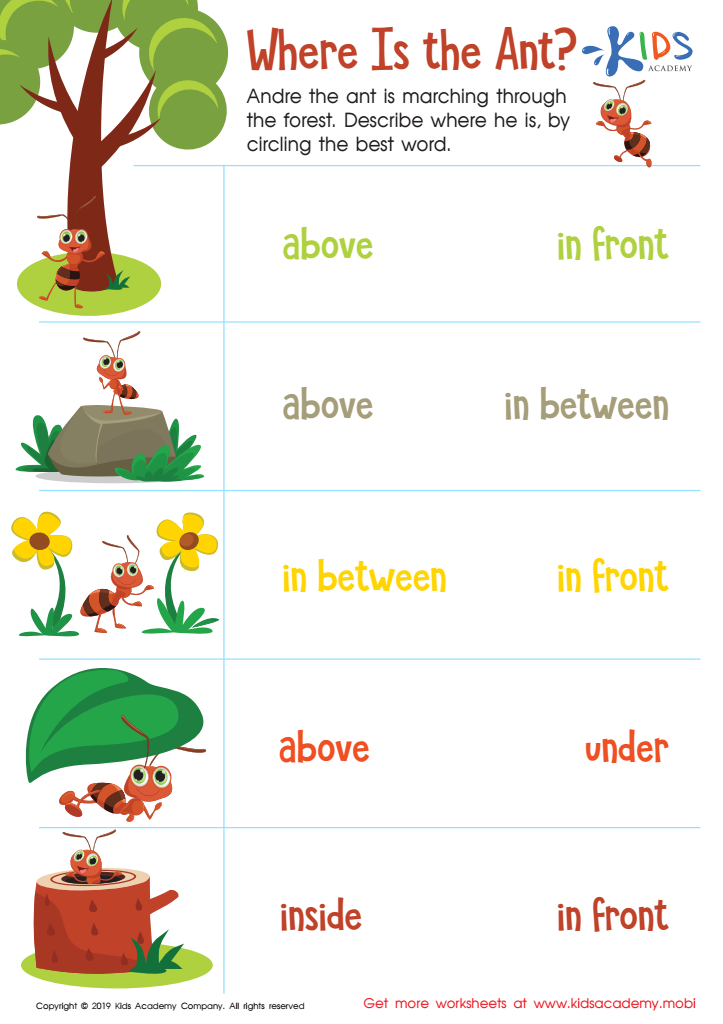
Where Is the Ant? Worksheet
 Assign to My Students
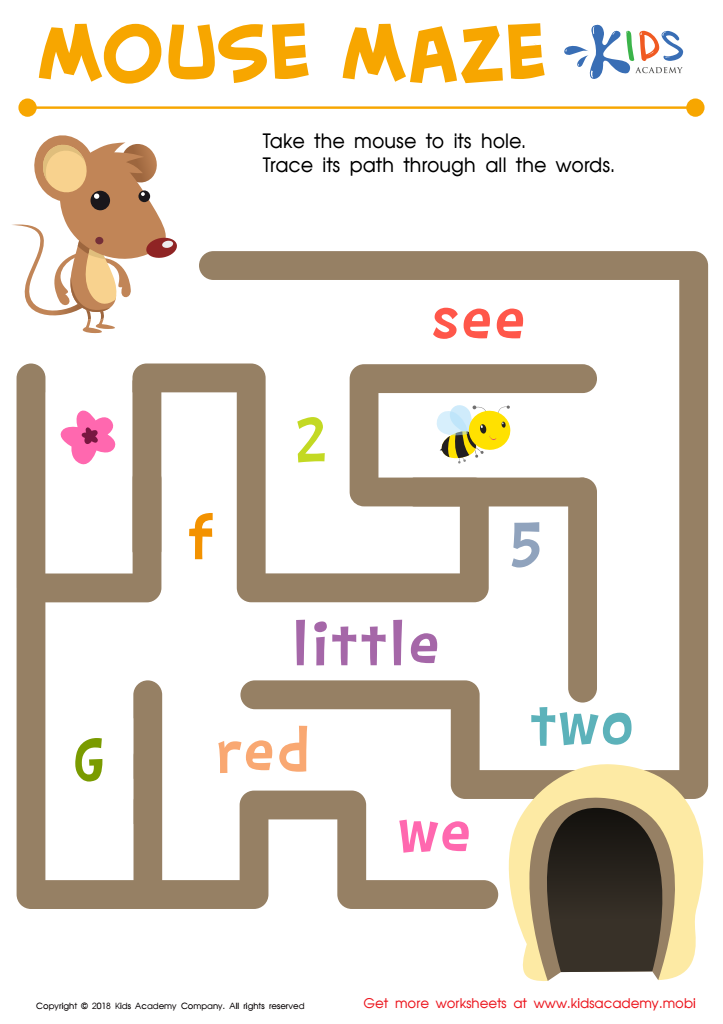
Find Words Mouse Maze Worksheet
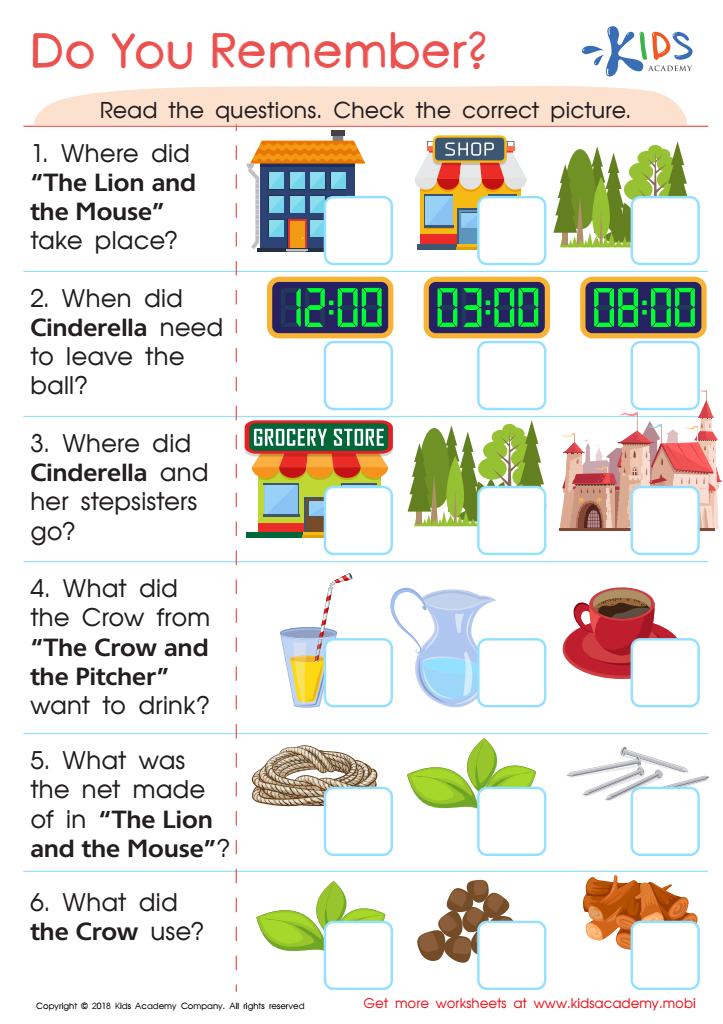
Do You Remember? Worksheet







Spatial awareness in writing is crucial for children aged 4-7 as it forms the foundation for their academic success and everyday functioning. During early childhood, the ability to understand and interact with space—including the spatial arrangement of letters and words on a page—enables children to write legibly and organize their thoughts clearly.
When children develop good spatial awareness, they can control the size and shape of their letters, maintain consistent spacing between words, and correctly align text on the page. This skill is vital for effective communication, allowing others to easily read and understand their writing. Without spatial awareness, children may struggle with these aspects, leading to frustration and potential setbacks in their learning journey.
Moreover, spatial awareness in writing also enhances fine motor skills and hand-eye coordination, which are essential for various classroom tasks and daily activities. Children who build strong spatial skills early on are often better at problem-solving and mathematical reasoning, as they can more easily grasp concepts like geometry, patterns, and the relationships between objects.
For these reasons, parents and teachers should pay close attention to nurturing spatial awareness in young children. Providing supportive environments with engaging, hands-on activities can foster these critical abilities, setting children up for future success in both academic and real-world contexts.








