Understanding adjectives Writing Worksheets for Ages 4-7
3 filtered results
-
From - To
Unlock the joy of learning with our "Understanding Adjectives Writing Worksheets for Ages 4-7"! Tailored for young minds, these engaging worksheets introduce children to the world of adjectives, enhancing their descriptive writing. Packed with fun activities, kids will easily grasp how to use adjectives to add color and detail to their sentences. Perfect for both classroom and home use, these resources aid in building a solid foundation for future writing skills. Encourage exploration, creativity, and a love for language with these educational tools designed to capture the imagination of young learners. Start your child's descriptive journey today!
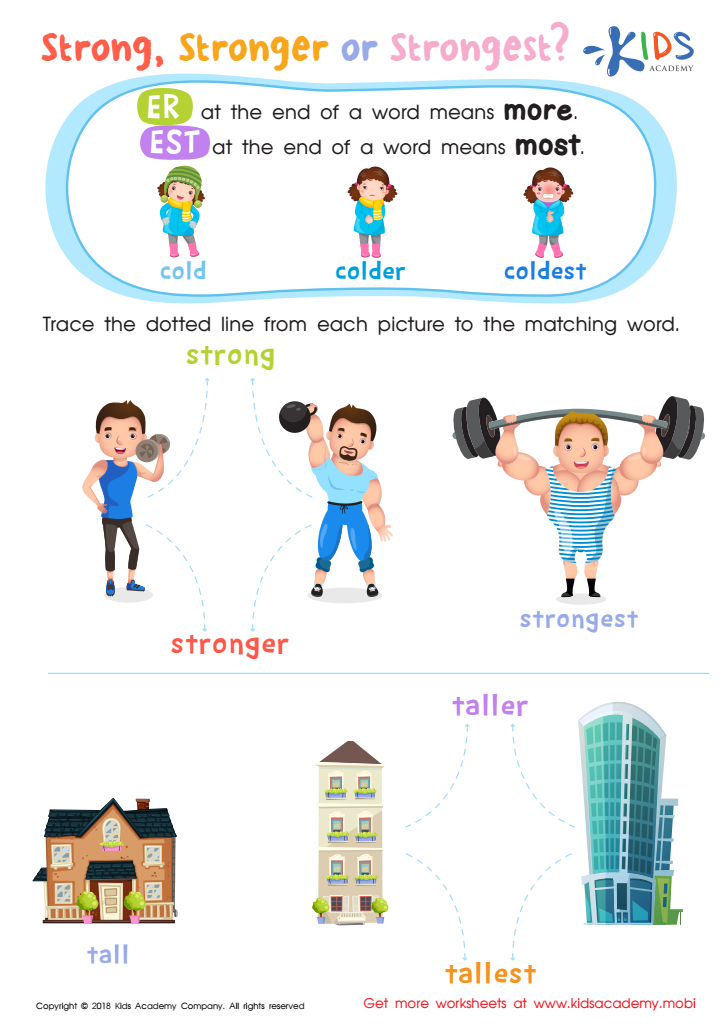
Strong or Stronger? Worksheet
 Assign to My Students
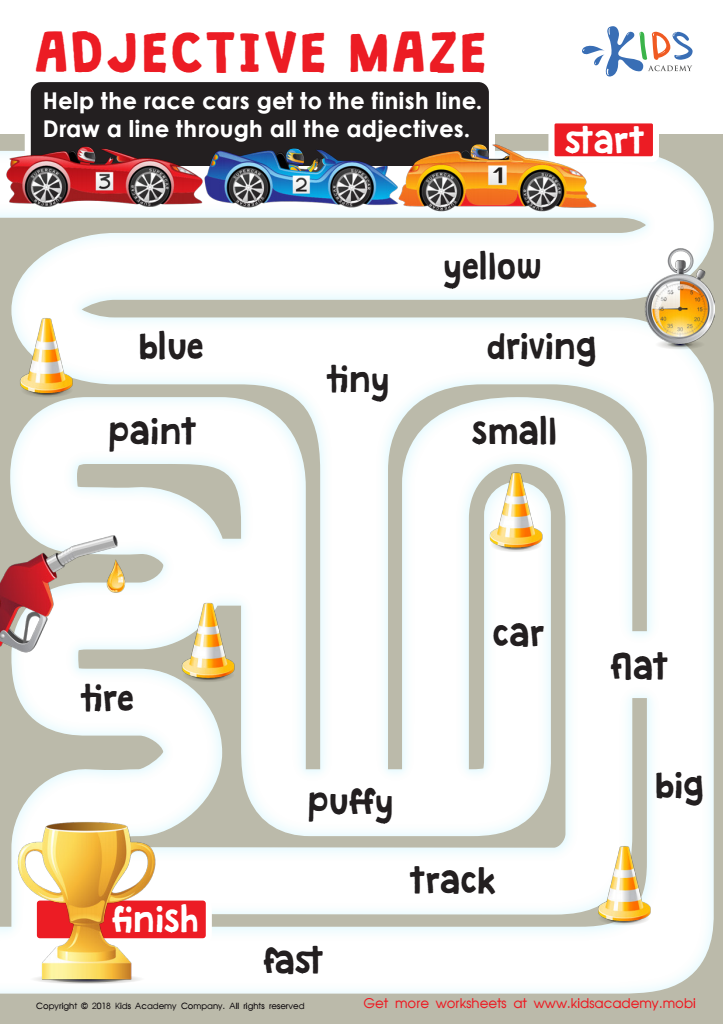
Adjective Maze Worksheet
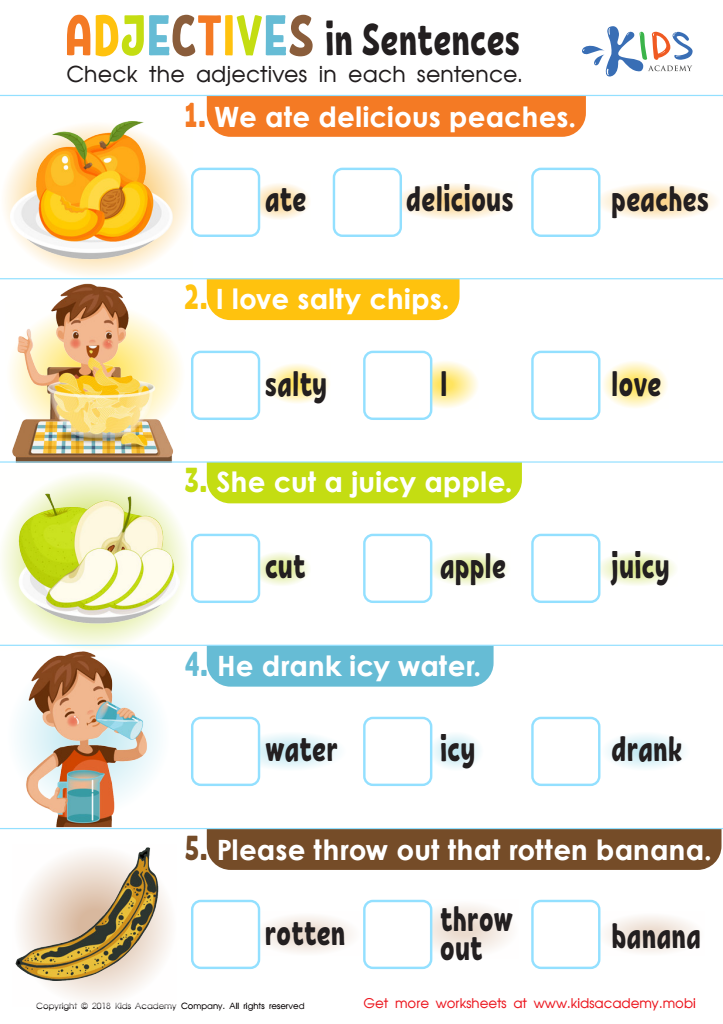
Adjectives in Sentences Worksheet






Understanding adjectives is critically important for children ages 4-7, as it lays the foundation for effective communication and literacy skills. During these formative years, children are rapidly expanding their vocabulary and learning to articulate their thoughts more clearly. Adjectives play a key role in this developmental stage by helping them describe objects, people, and experiences more precisely.
For parents, engaging with their children's use of adjectives can make everyday conversations more enriching. Whether it's describing a "colorful butterfly" or a "tall tree," these descriptive words help children convey their perceptions and emotions. This can lead to more meaningful interactions and improved bonding.
For teachers, instructing children in the use of adjectives offers numerous educational benefits. It boosts reading comprehension by helping students vividly understand the texts they read. Writing activities that emphasize adjectives can also enhance creativity and encourage students to be more expressive. Additionally, a good grasp of adjectives contributes to grammar and language proficiency, aiding their performance in various academic subjects.
In summary, focusing on adjectives for young learners enhances descriptive abilities, enriches everyday communication, and lays a strong foundation for future academic success. Parents and teachers who prioritize this aspect of language development are investing in their children's overall cognitive growth.








