Filters

7 filtered results

Clear all filters
Favorites
With answer key
Interactive

7 filtered results

Difficulty Level

Grade


Enhance your child's reading comprehension skills with our fun and engaging punctuation worksheets designed specifically for ages 4-7. These interactive resources help young learners understand the importance of punctuation in refining their reading and writing abilities. Our worksheets include exciting exercises that encourage children to identify punctuation marks, complete sentences, and develop fluency in reading. By incorporating playful activities, we make learning enjoyable and effective! These worksheets are an excellent way to build confidence and critical thinking in early learners. Explore our collection today and support your child's literacy journey while fostering a love for reading from a young age!

Check out this FREE Trial Lesson on Punctuation for age 4-7!

Read Words in Order

Favorites
With answer key
Interactive
  • 4-7
  • Reading comprehension
  • Punctuation
Word Spacing Worksheet

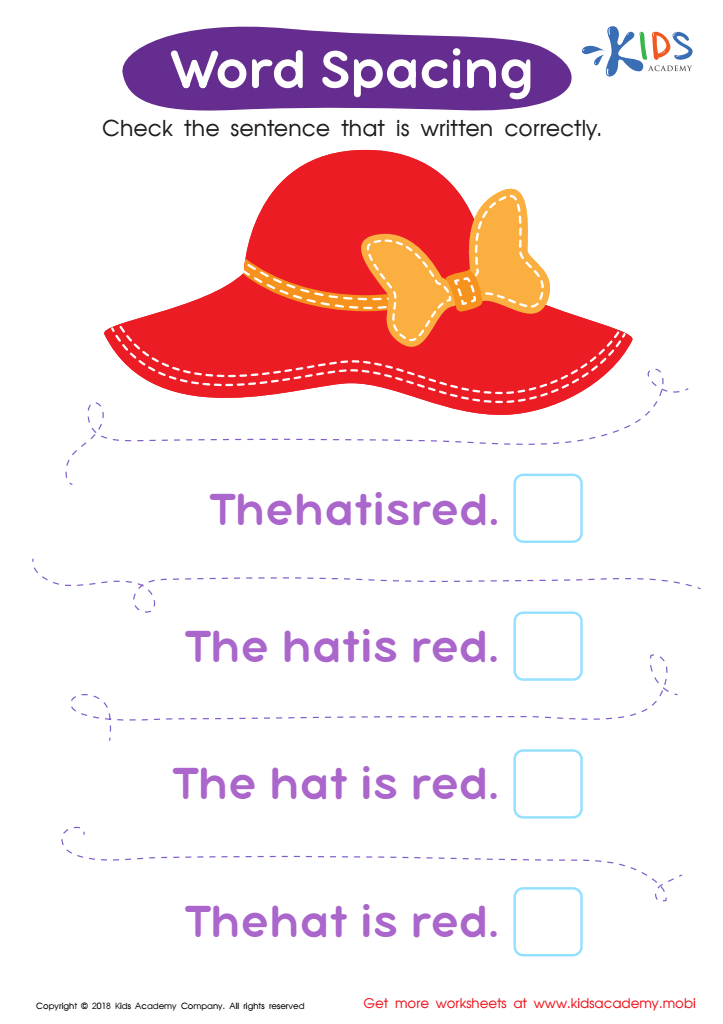
Word Spacing Worksheet

Can your child read and write simple sentences? Test their skills with this easy worksheet. Point to the four sentences under the picture; each conveying the same message but with different word spacing. Ask your child to select the sentence with proper spacing.
Word Spacing Worksheet
Worksheet
Which Punctuation Mark Worksheet Preview

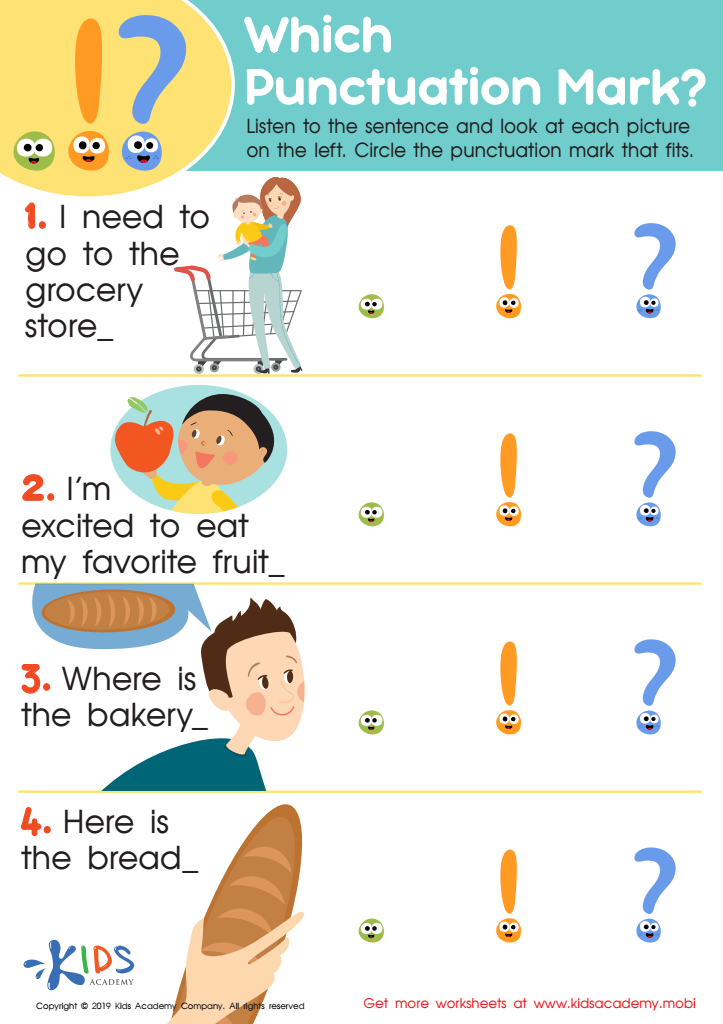
Which Punctuation Mark Worksheet

Punctuation marks are essential for expressing what we say. This worksheet asks your kindergarten student to circle the correct punctuation mark for each sentence. Read each sentence aloud and help them identify the expression needed. A picture accompanies each sentence. Enjoy! (79 words)
Which Punctuation Mark Worksheet
Worksheet
End punctuation worksheet: At the Zoo

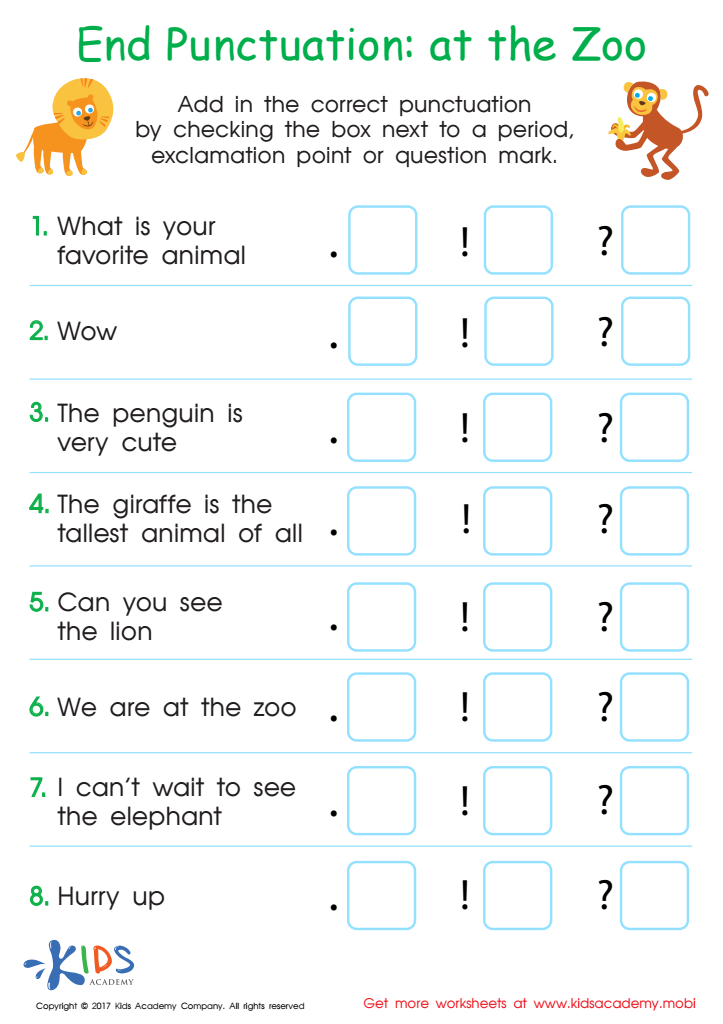
End Punctuation: At the Zoo Worksheet
Let your kid hone their sentence and punctuation skills with this cute At the Zoo worksheet. Read it out loud to provide guidance if needed, and help your child find the right punctuation mark for each sentence.
End Punctuation: At the Zoo Worksheet
Worksheet
Which is the Correct Sentence? Worksheet

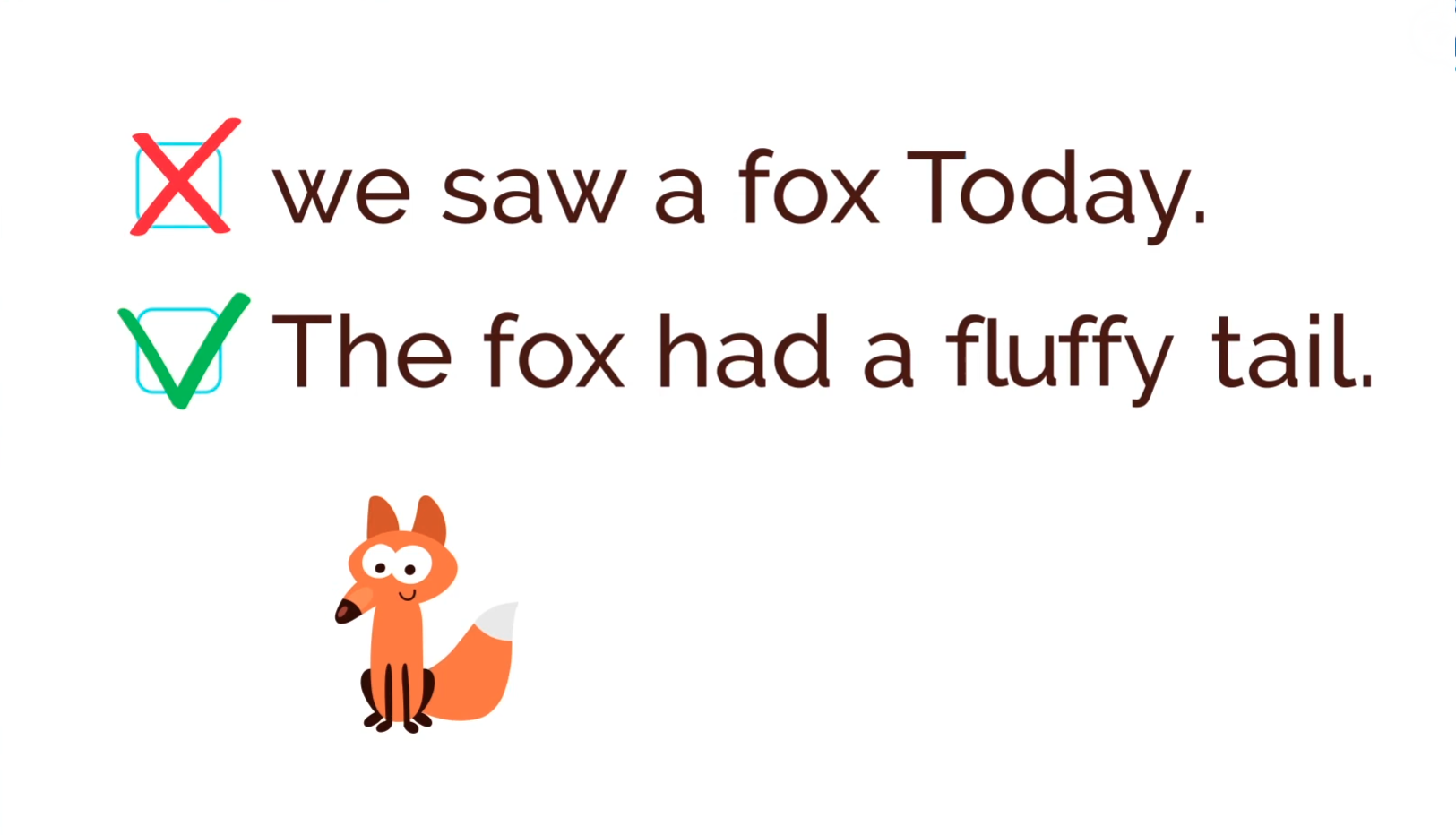
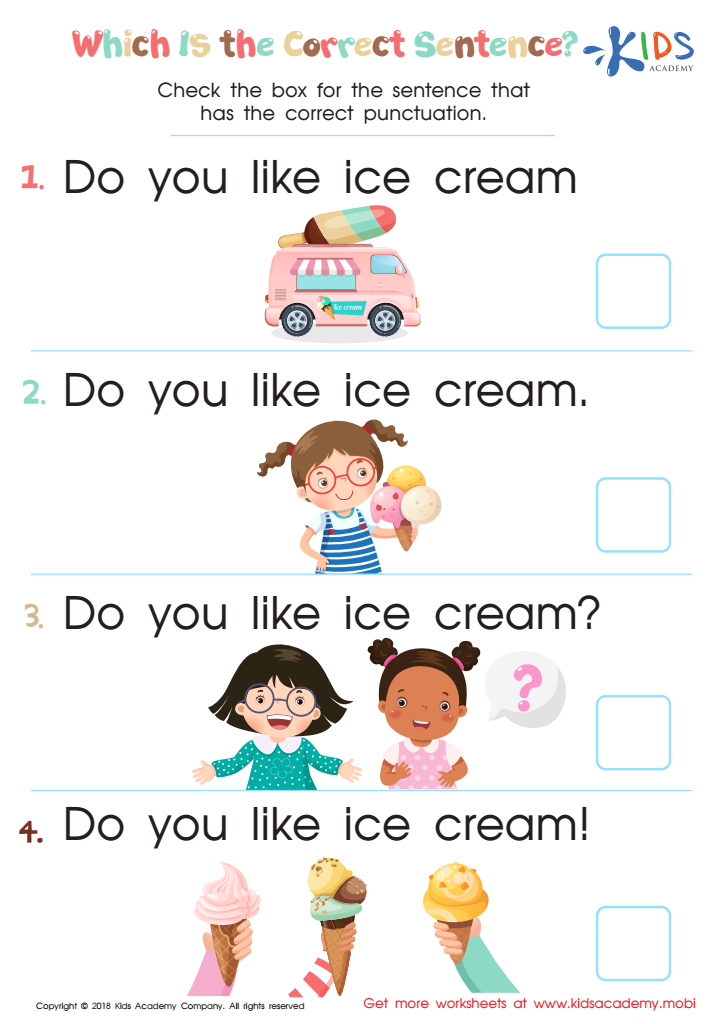
Which is the Correct Sentence? Worksheet

Punctuation is crucial in sentence formation. If your kid still doesn't grasp it, bigger hurdles await when writing sentences. Get them to read simple sentences, then ask if they know the right punctuation. Assist them in selecting the sentence that has the accurate punctuation.
Which is the Correct Sentence? Worksheet
Worksheet
What is the First Word? Worksheet

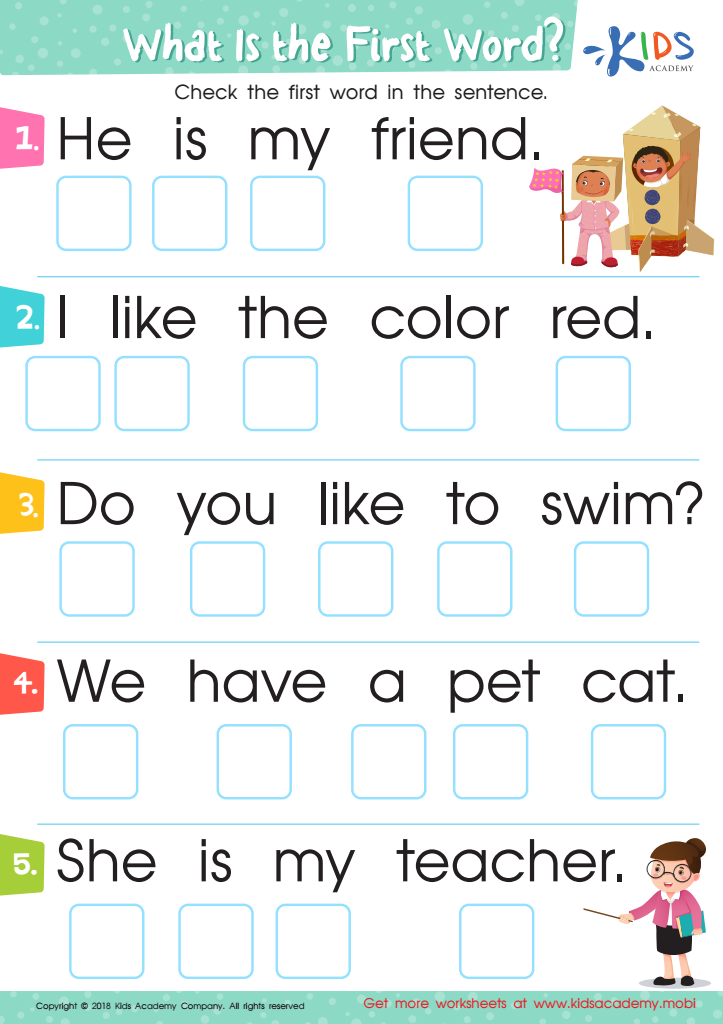
What is the First Word? Worksheet

Help your students test their sentence-reading skills with this printout! After teaching the alphabet, have them identify and write the first word in each sentence. With this exercise, they'll gain reading proficiency and be better prepared to write their own sentences.
What is the First Word? Worksheet
Worksheet
Sentences That End in an Exclamation Mark Worksheet

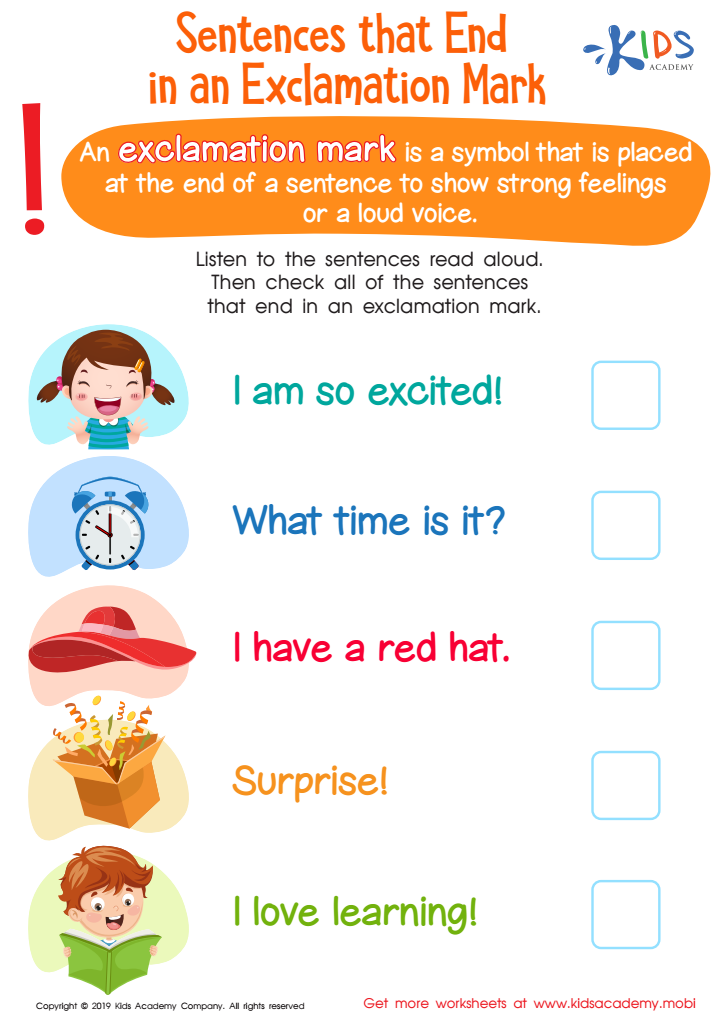
Sentences That End in an Exclamation Mark Worksheet

This worksheet is a great way to brush up kids' punctuation skills. Period, comma, question mark and exclamation mark are the first four punctuation marks they should learn. Exclamation marks show strong emotion or a noise. Use this printout to teach and test kids' understanding of exclamation marks.
Sentences That End in an Exclamation Mark Worksheet
Worksheet
Finish the Sentence Worksheet


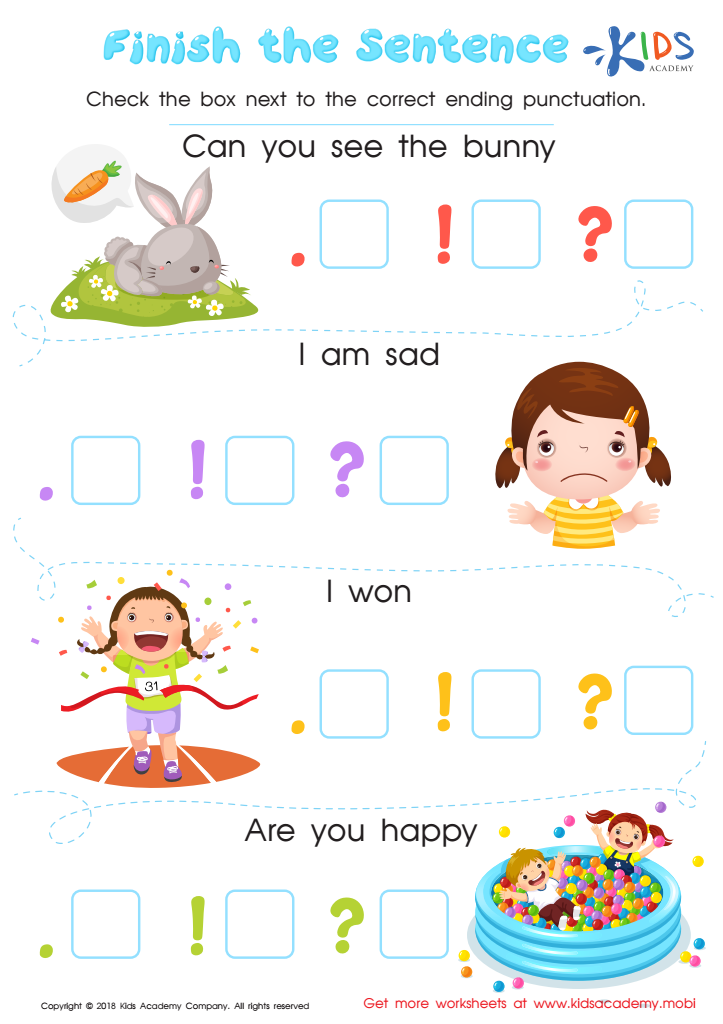
Finish the Sentence Worksheet

If your students have difficulty with punctuation, have them read sentences aloud and check the box next to the correct ending punctuation with this simple worksheet. Punctuation signals the tone and meaning of sentences. It helps students understand what is being communicated.
Finish the Sentence Worksheet
Worksheet


Reading comprehension and punctuation are essential skills for children aged 4-7 and play a crucial role in their early education. At this developmental stage, children are laying the foundation for their literacy skills, which will influence their academic journey ahead. Strong reading comprehension enables children to understand and enjoy stories, which fosters a love for reading. It opens their minds to new ideas and enhances their vocabulary, critical thinking, and social skills.

Punctuation, often overlooked in early learning, is vital for conveying meaning. Teaching children the basics of punctuation—like periods and question marks—helps them recognize pauses, tone, and intent in a text. When children grasp punctuation, they analyze texts more fluently, which improves their overall comprehension.

Parents and teachers should care because early mastery of these skills increases children's confidence in reading and writing. Engaging children in activities that promote comprehension and understanding of punctuation can enhance their communication skills, setting them on a path for academic success. Furthermore, developing these skills early aids in reducing future learning challenges, ensuring children are better prepared for complex texts in later grades. Ultimately, investing in these foundational skills supports lifelong learning and literacy development.