Letter formation ABC Letters Worksheets for Ages 4-8
5 filtered results
-
From - To
Nurture your child's writing skills with our "Letter Formation ABC Letters Worksheets" designed for ages 4-8! These engaging worksheets from Kids Academy help young learners master the fundamentals of the alphabet, enhancing their ability to form each letter correctly. Ideal for preschoolers and early elementary students, our activities combine fun with education, promoting fine motor skills, hand-eye coordination, and letter recognition. Each worksheet provides ample practice, allowing children to confidently and neatly write both uppercase and lowercase letters. Spark a love for learning and build essential literacy foundations with our carefully crafted resources. Perfect for both classroom and home use!
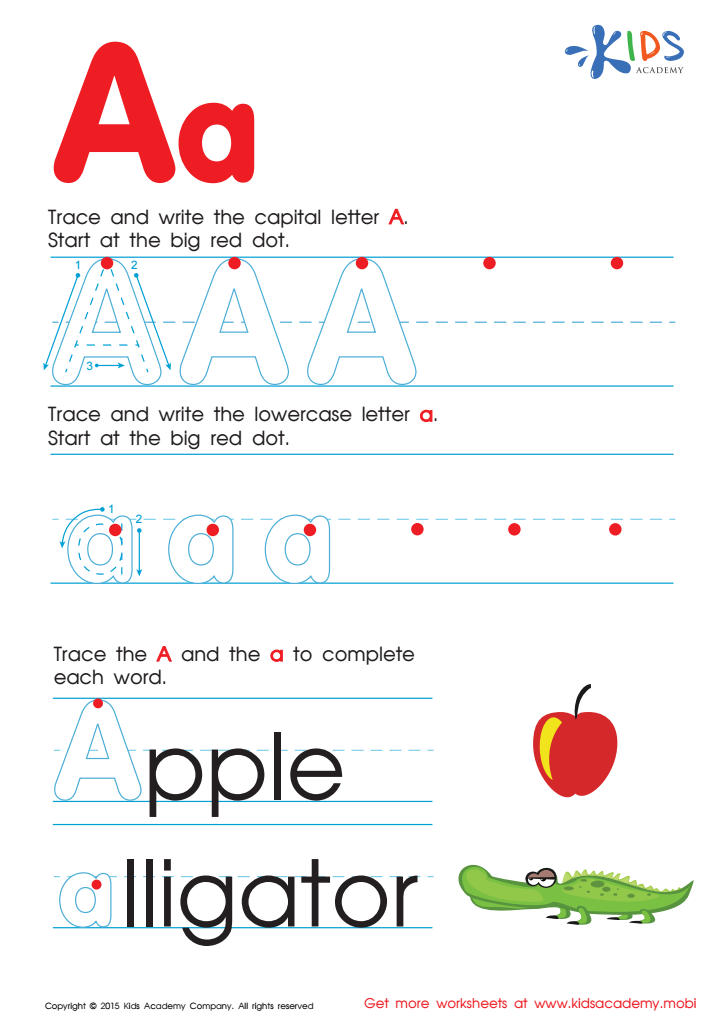
Letter A Tracing Page

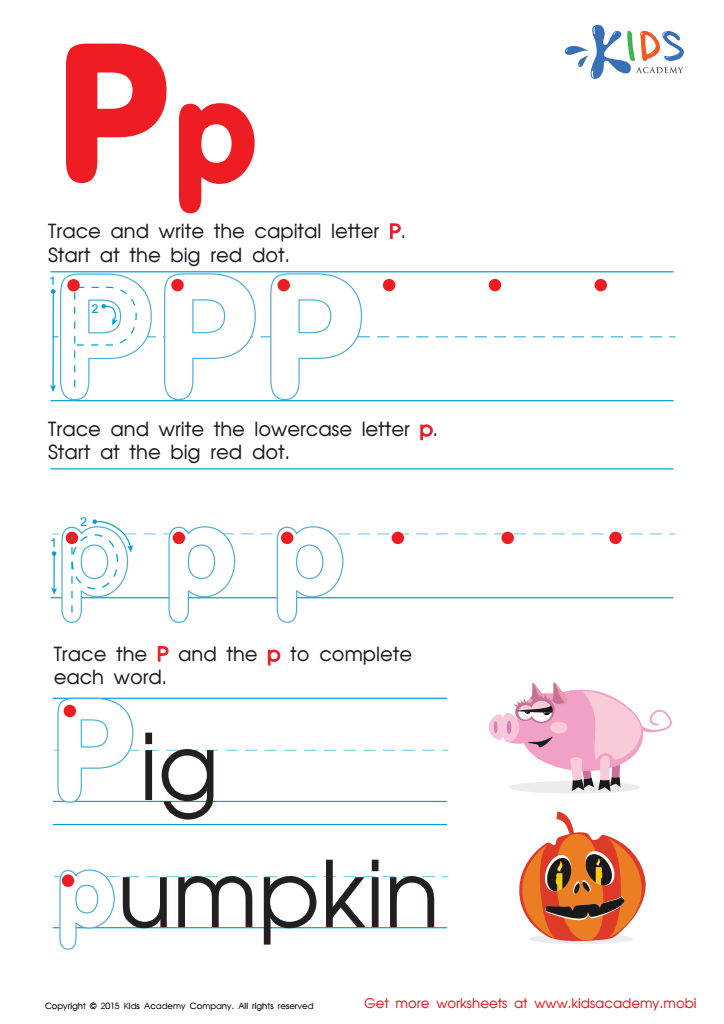
Letter P Tracing Page
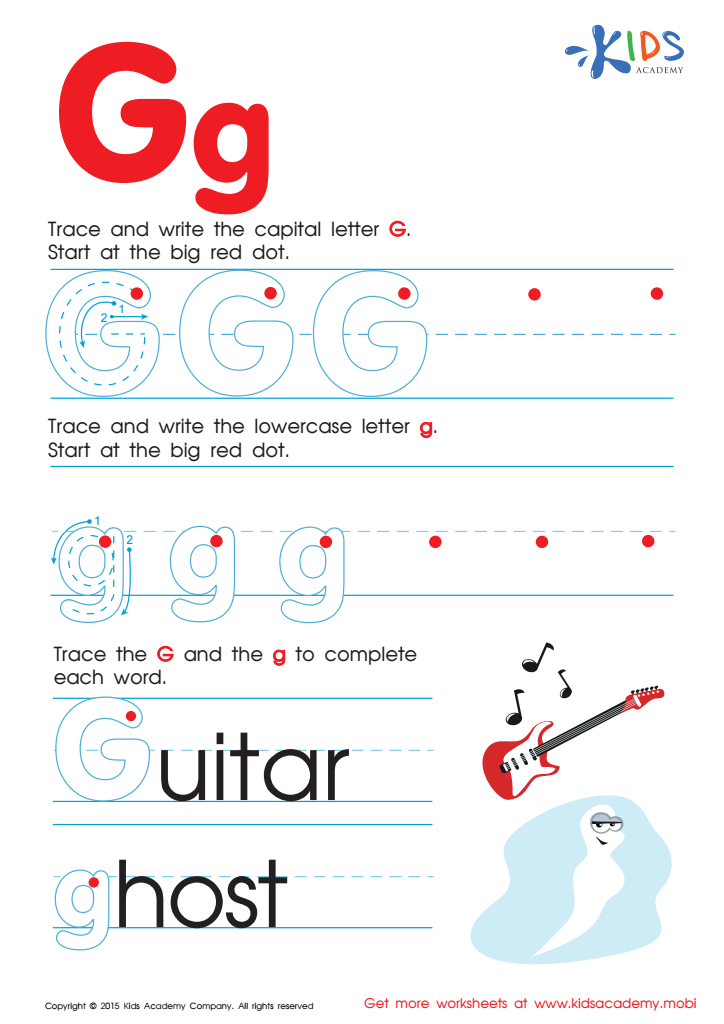
Letter G Tracing Page
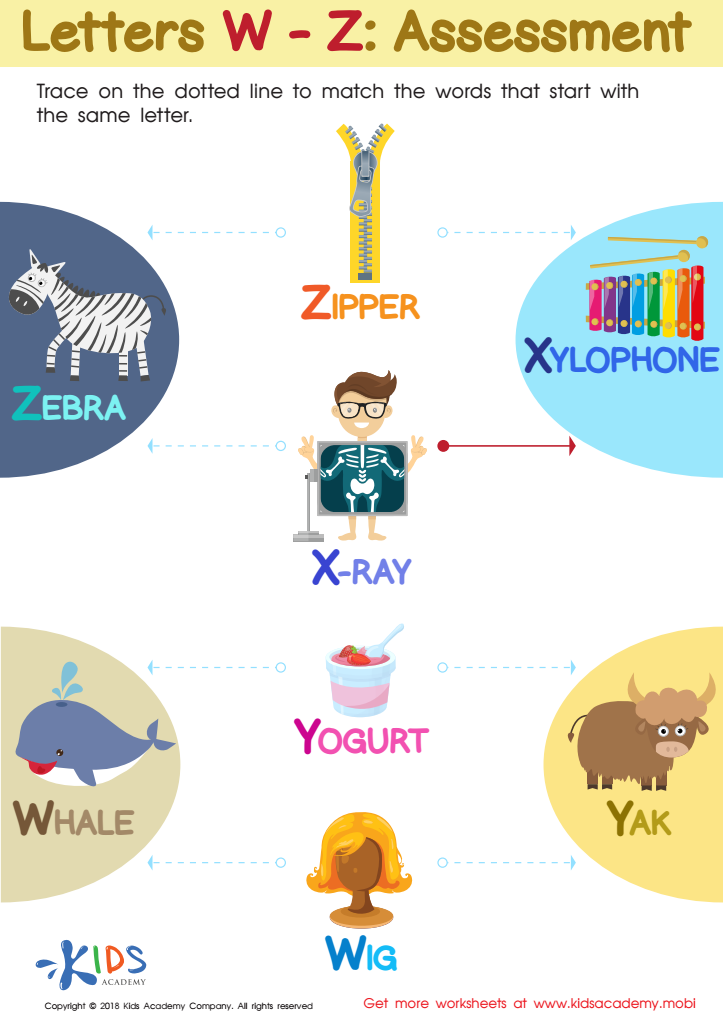
Letters W–Z Tracing Worksheet
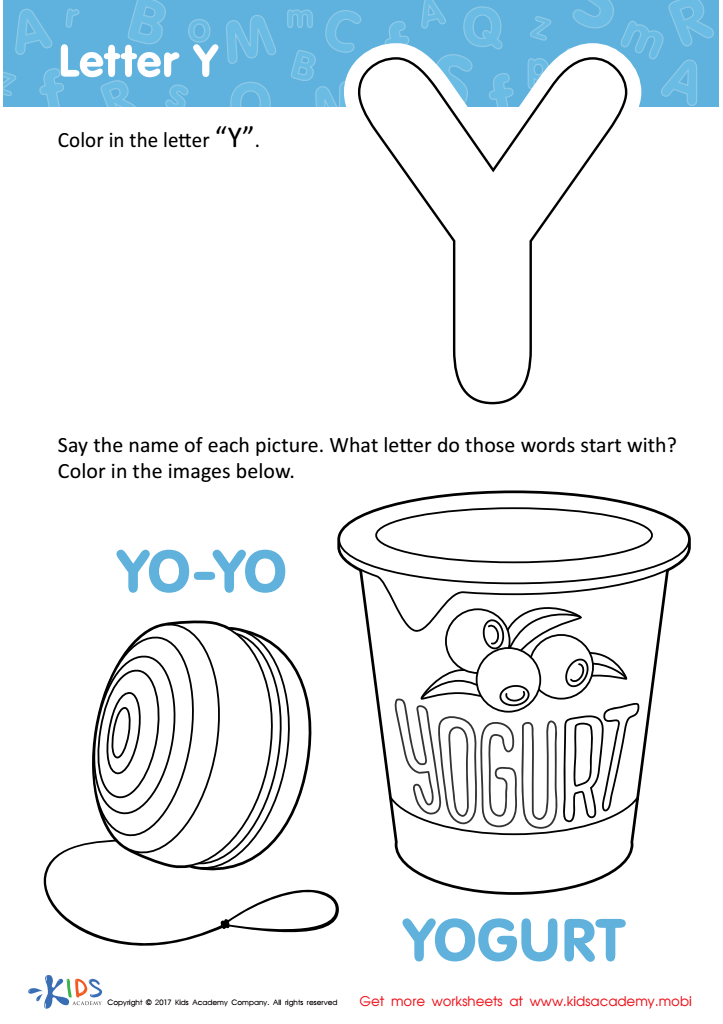
Letter Y Coloring Sheet
 Assign to My Students







Letter formation, especially for ABC letters in children ages 4-8, is a foundational skill that underpins early literacy and overall academic development. This formative stage is crucial as it aligns with the sensitive period when children's brains are particularly receptive to acquiring language and writing skills.
Correct letter formation helps children recognize and differentiate between letters more easily, which is essential for reading fluency. When children learn to form letters correctly, they are more likely to become proficient readers and writers. Uniform, clear handwriting also boosts their confidence and reduces frustration, setting a positive tone for their long-term educational journey.
Moreover, learning proper letter formation improves fine motor skills and hand-eye coordination, which are critical developmental milestones. These skills are not just limited to writing but extend to other educational activities and life skills, such as playing musical instruments or participating in sports.
For educators and parents, emphasizing proper letter formation ensures that children are less likely to develop bad habits that are hard to correct later on. By providing consistent practice and encouragement, they help fortify children's cognitive development and lay a strong foundation for future academic success across all subjects.
In summary, prioritizing proper letter formation during the early years fosters literacy, fine motor development, and overall confidence, making it an essential focus for both parents and teachers.







