
Spelling practice Consonants Worksheets for Ages 4-8
7 filtered results
Difficulty Level
Grade
Age
-
From - To
Subject
Activity
Standards
Enhance your child's spelling skills with our engaging Consonants Worksheets, designed specifically for ages 4-8! These fun and interactive resources provide a dynamic way for young learners to practice consonant recognition, letter sounds, and spelling. Each worksheet features vibrant illustrations and age-appropriate exercises, making learning enjoyable and effective. Perfect for homeschoolers and classroom settings, our spelling practice materials help children build a strong foundation in literacy. Encourage your child’s confidence and creativity while they explore consonant sounds through various activities, including tracing, fill-in-the-blank, and matching games. Start your spelling journey today—watch your little ones thrive!
Favorites
With answer key
Interactive
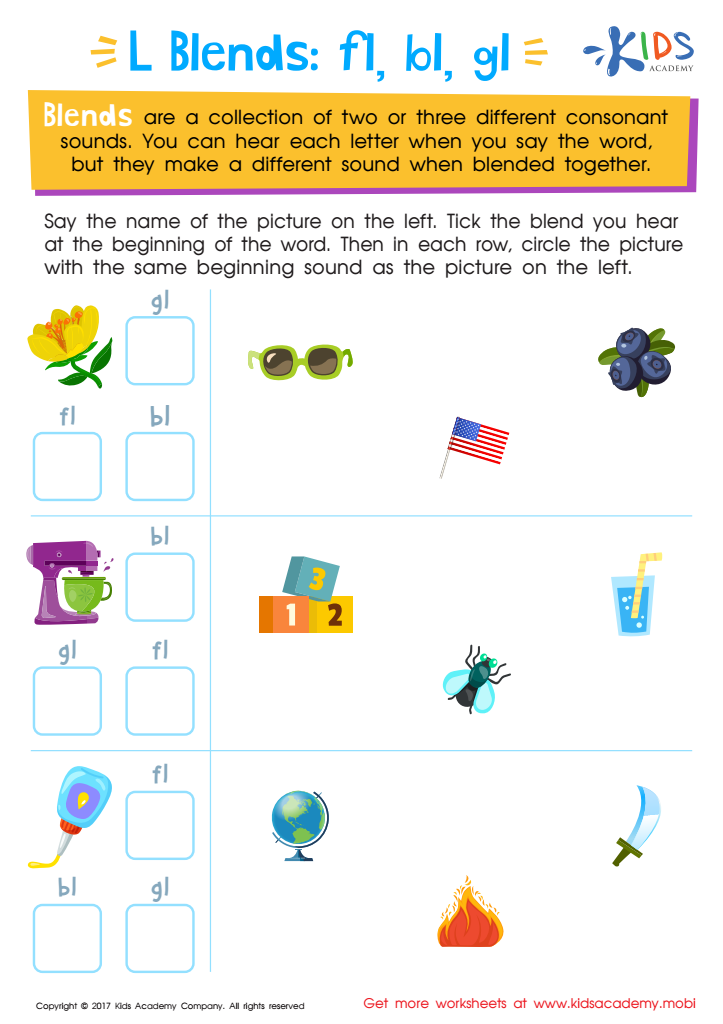
Blending Consonants: "Fl", "Bl" and "Gl" Printable
Help your child master consonant blends Fl, Bl, and Gl with this printable worksheet. Find words associated with the pictures and learn to better understand the difference between consonant blends. Vibrant images motivate and aid in learning. Download now for improved phonics success!
 Assign to My Students
Blending Consonants: "Fl", "Bl" and "Gl" Printable
Worksheet
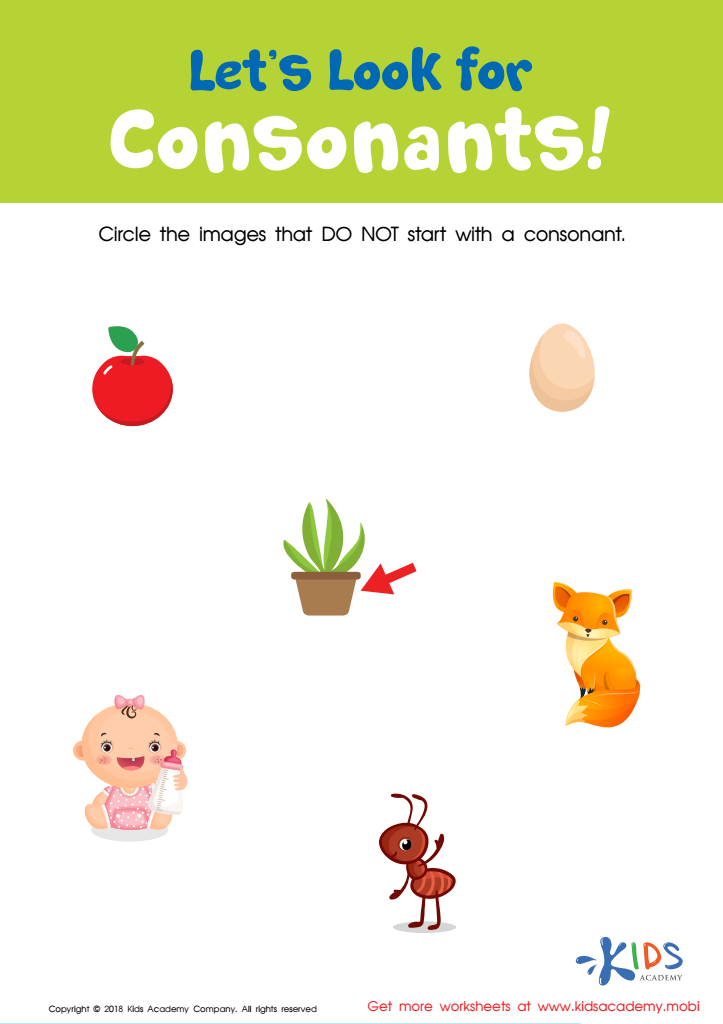
Let's Look for Consonants Worksheet
Help kids learn consonants and words that start with them. Ask them to recite the alphabet, then explain consonants are all letters but the 5 vowels. Use the worksheet to ask them to circle items without a consonant. Emphasize that's 21 consonants.
Let's Look for Consonants Worksheet
Worksheet
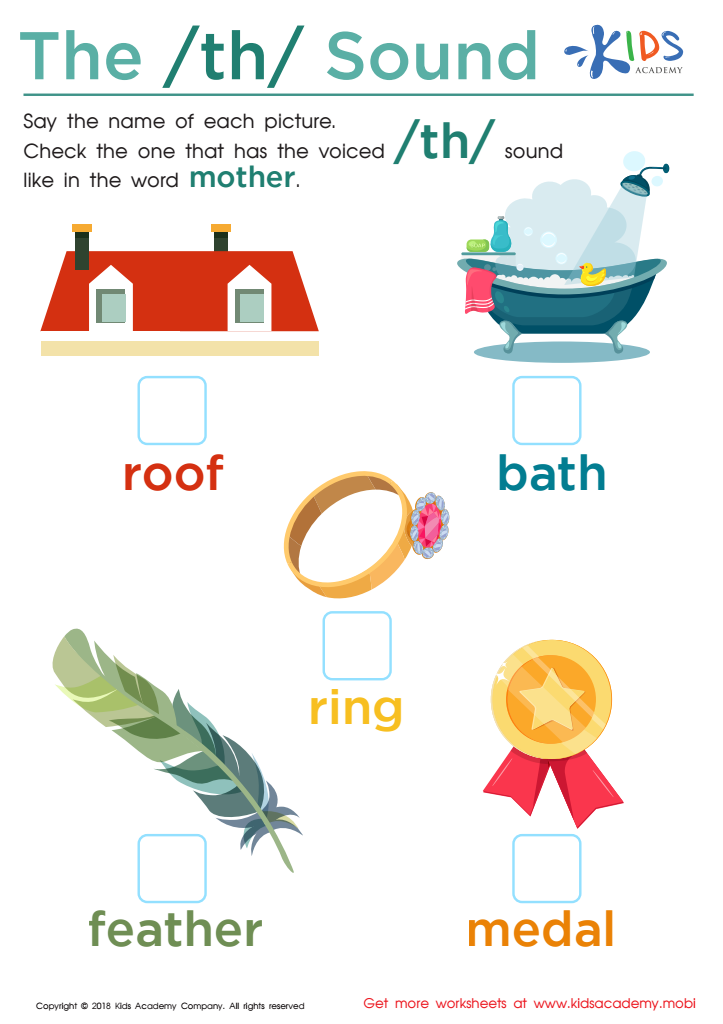
The /th/ Sound Worksheet
Confuse your students no more: have them use this worksheet to understand the /th/ sound and its two variants. With pictures, ask them to say the name of each one. Help them identify the voiced /th/ sound, like in 'mother', by having them say it aloud. Download the pdf to get started.
The /th/ Sound Worksheet
Worksheet
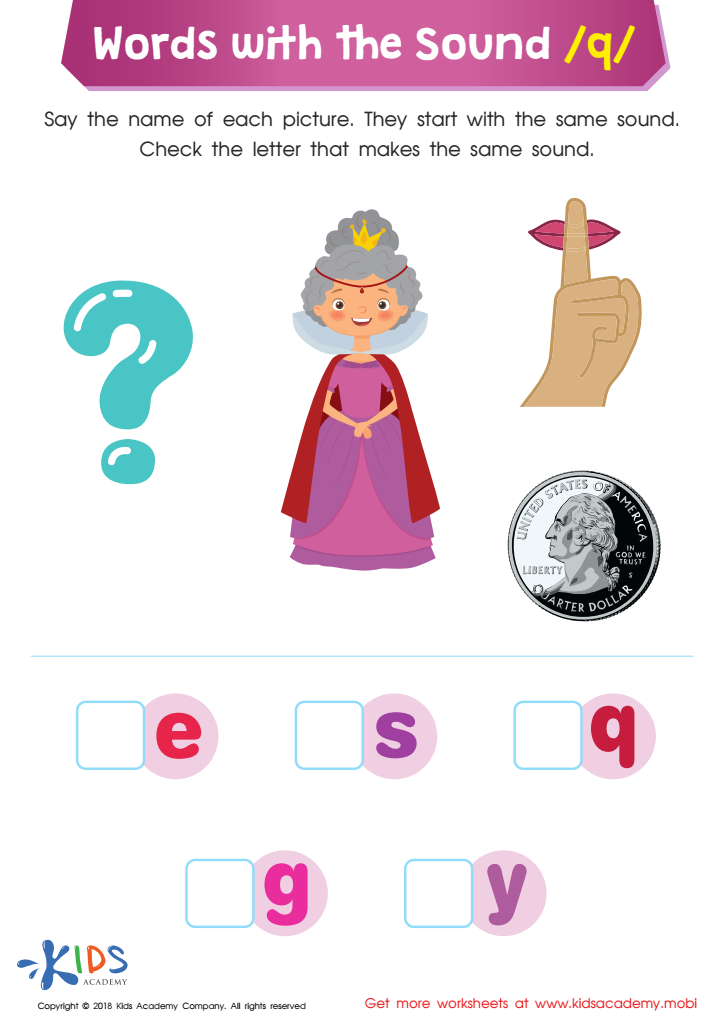
Words with Sound Q Reading Worksheet
Beginning readers will love this free PDF worksheet! Bright colors and familiar pictures make it fun, as they say the name of each image and work on fine motor skills. Letters “q” is featured among others, helping to recognize and isolate its sound, which is often seen with a “u” behind it.
Words with Sound Q Reading Worksheet
Worksheet
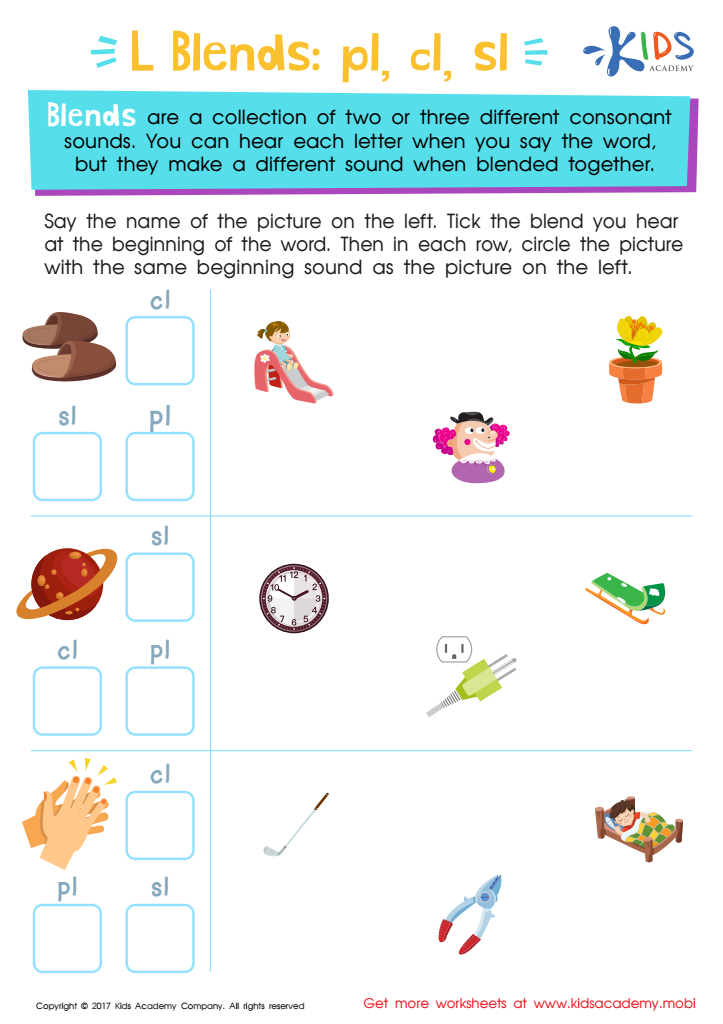
L Blends: "Pl", "Cl" and "Sl" Printable
This printable worksheet will help your child recognize and identify the Pl, Cl, and Sl consonant blends, sound them out, and identify them in print. Improve your child's reading and writing skills with fun and colorful phonics practice!
L Blends: "Pl", "Cl" and "Sl" Printable
Worksheet
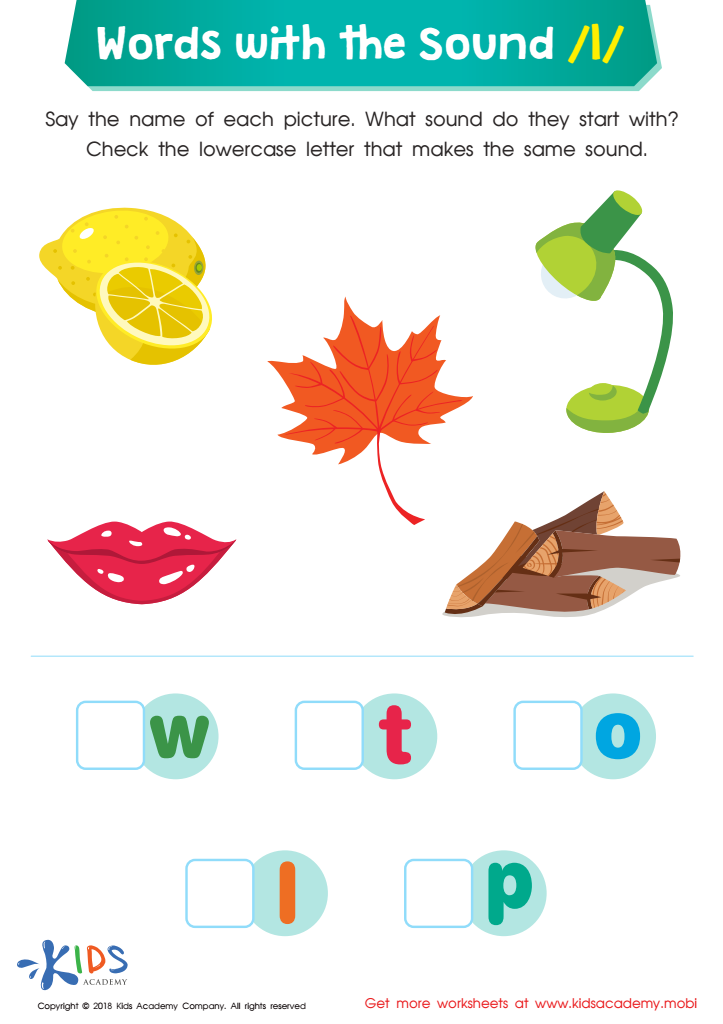
Words with Sound L Reading Worksheet
This PDF worksheet is great for helping emerging readers isolate initial sounds. Kids name familiar pictures, then identify the correct letter for the "l" sound. This worksheet strengthens fine motor skills, plus builds visual discernment. It's fun and colorful too!
Words with Sound L Reading Worksheet
Worksheet
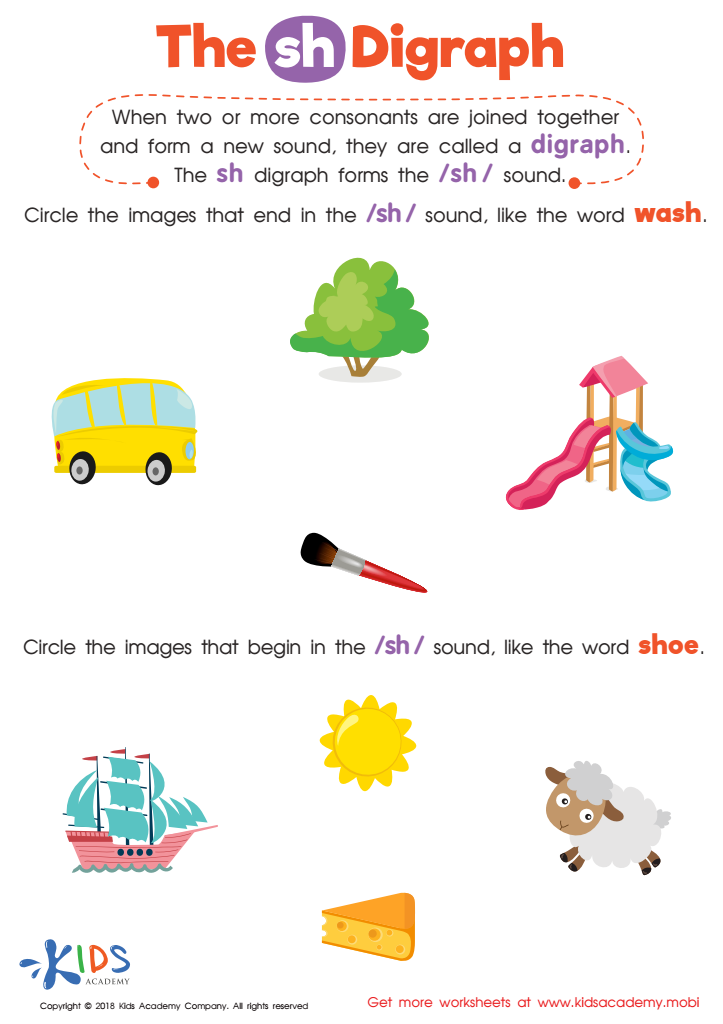
The SH Digraph Worksheet
There are many phonetic sounds, each with its own unique sound. When two or more consonants are combined to create a new sound, it's called a digraph. Example: the sh digraph creates the /sh/ sound. Have kids look at the pictures and say the words aloud. Help them circle the images ending with /sh/, like 'wash'.
The SH Digraph Worksheet
Worksheet
Join Kids Academy for Free
Who is primarily going to use this learning content?



Spelling practice for consonants is fundamental for children aged 4 to 8, as it lays the groundwork for their literacy development. During these formative years, kids are developing phonemic awareness, which is the ability to hear, identify, and manipulate individual sounds in words. Focusing on consonants helps them grasp this critical skill, making it easier to learn how letters correspond to sounds, ultimately progressing to reading and writing.
Furthermore, consistent consonant practice enriches vocabulary and spelling skills, as children learn not only the sounds that letters produce but also how they form the building blocks of words. Improved spelling reinforces their ability to communicate effectively, enhancing their confidence in both spoken and written language.
For parents and teachers, fostering good spelling habits is key to instilling a love for literacy. It encourages playful interaction with language through games and activities, making learning enjoyable. Attention to consonant practice can also signal any potential challenges early, allowing for targeted support. Overall, spelling practice contributes to a child's academic success, social interactions, and overall communication skills, paving the way for lifelong learning and confidence in language use.







