
Reading Skills Elementary Phonics Worksheets for Ages 4-8
5 filtered results
Difficulty Level
Grade
Age
-
From - To
Subject
Activity
Standards
Enhance your child's reading journey with our engaging Elementary Phonics Worksheets designed for ages 4-8. These vibrant, interactive resources cultivate essential reading skills by introducing phonetic concepts through fun activities. Tailored to young learners, our worksheets cover letter recognition, blending sounds, and early word formation, making learning enjoyable and effective. Parents and educators can easily integrate these phonics worksheets into daily practice, fostering a solid foundation for reading success. With a variety of exercises, including games, puzzles, and tracing activities, your child will develop confidence and literacy skills in no time. Explore our collection and set the stage for lifelong reading enjoyment!
Favorites
With answer key
Interactive
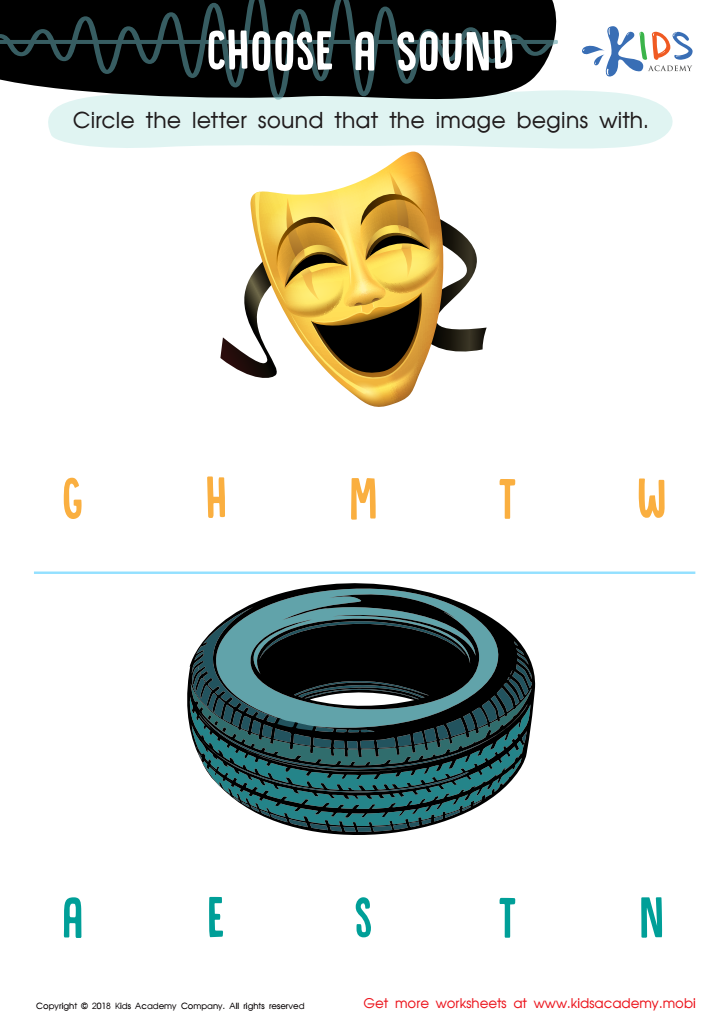
Choose a Sound Worksheet
Help your child hone pre-reading skills with this colorful worksheet! They'll practice tracing letter sounds, develop phoneme awareness, and gain confidence. Plus, it's a fun way to work on their fine motor skills.
 Assign to My Students
Choose a Sound Worksheet
Worksheet
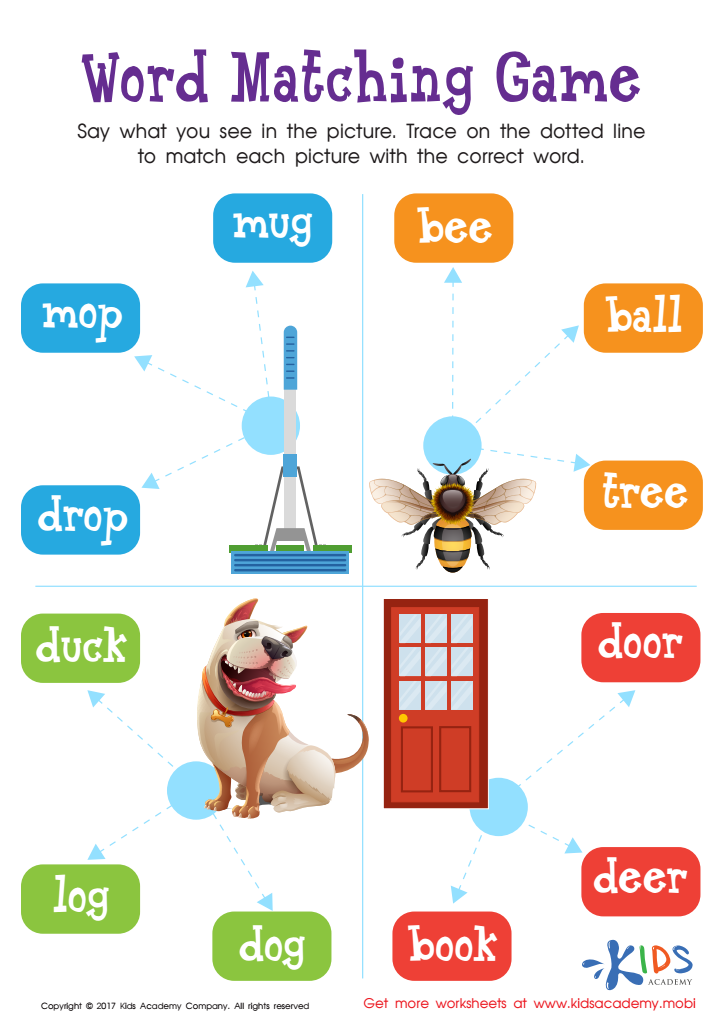
Word Matching Game Worksheet
Help your early reader develop prereading skills with this fun matching worksheet! Visual cues help them learn sight words, decode words in word families, and identify phonetic patterns. They'll practice discerning sounds past initial consonants while saying the name of the picture and finding the matching word - and reading at the same time!
Word Matching Game Worksheet
Worksheet
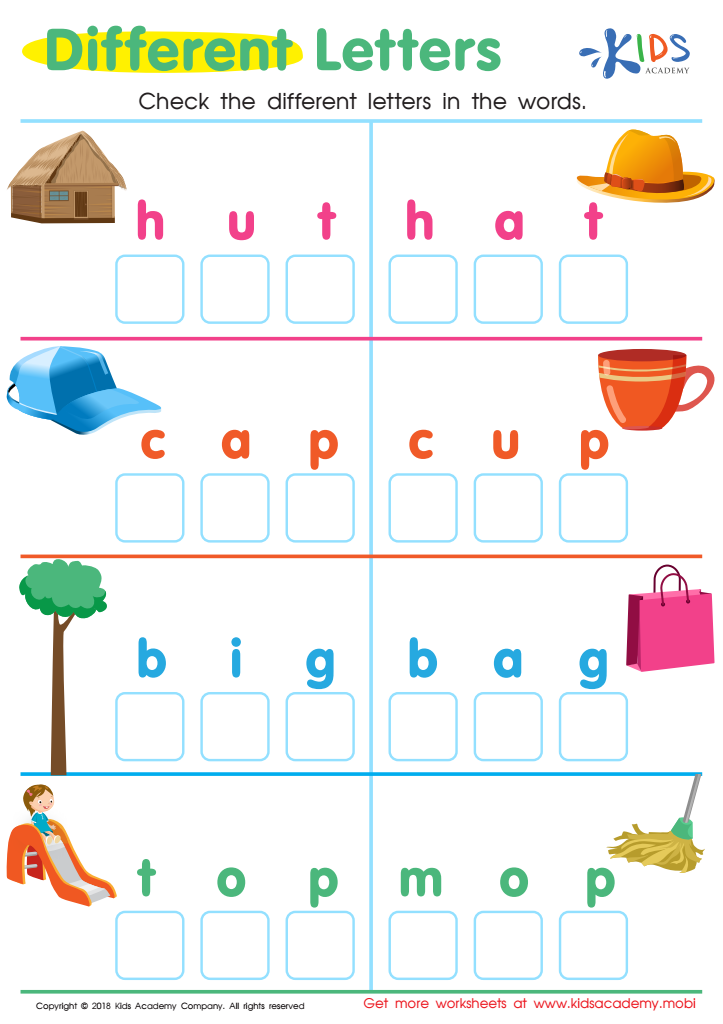
Different Letters Reading Worksheet
Download our phonics worksheet to help kids understand letter sounds. Have them sound out letters and join them to form words. Colorful pictures assist in recognition, making it perfect for kindergarteners. A great intro to phonics!
Different Letters Reading Worksheet
Worksheet
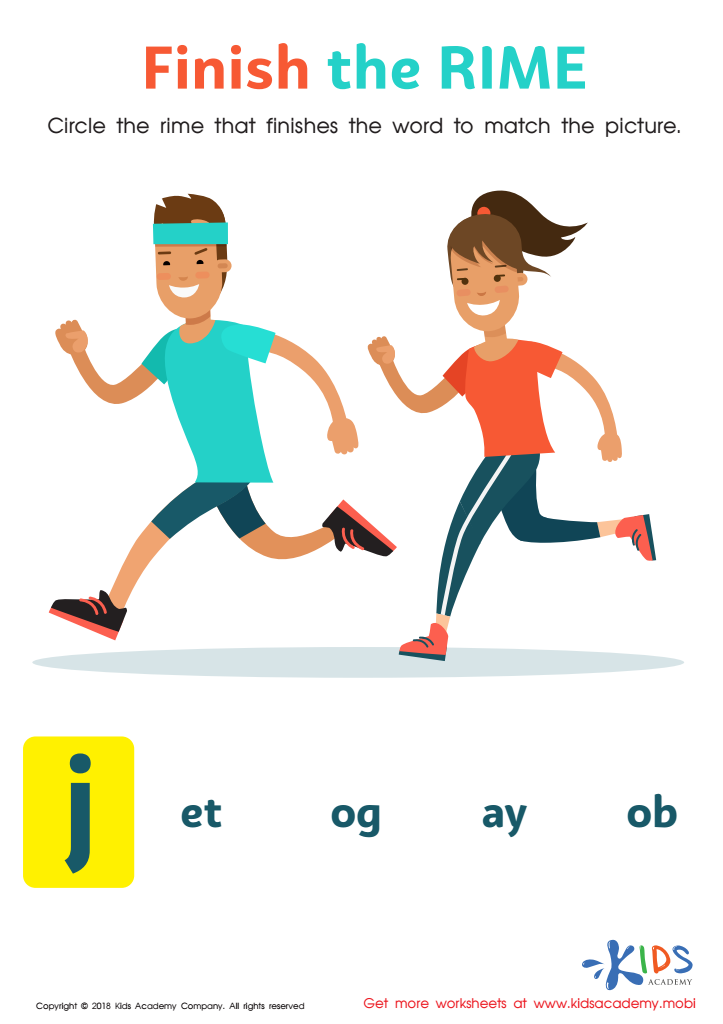
Finish the Rime Worksheet
Rimes help kids learn word families and spelling strategies. This PDF worksheet gives new readers practice with initial consonants, pictures, colors and motor skills. It's fun and cheery, and a great way to boost phonological awareness and rime identification.
Finish the Rime Worksheet
Worksheet
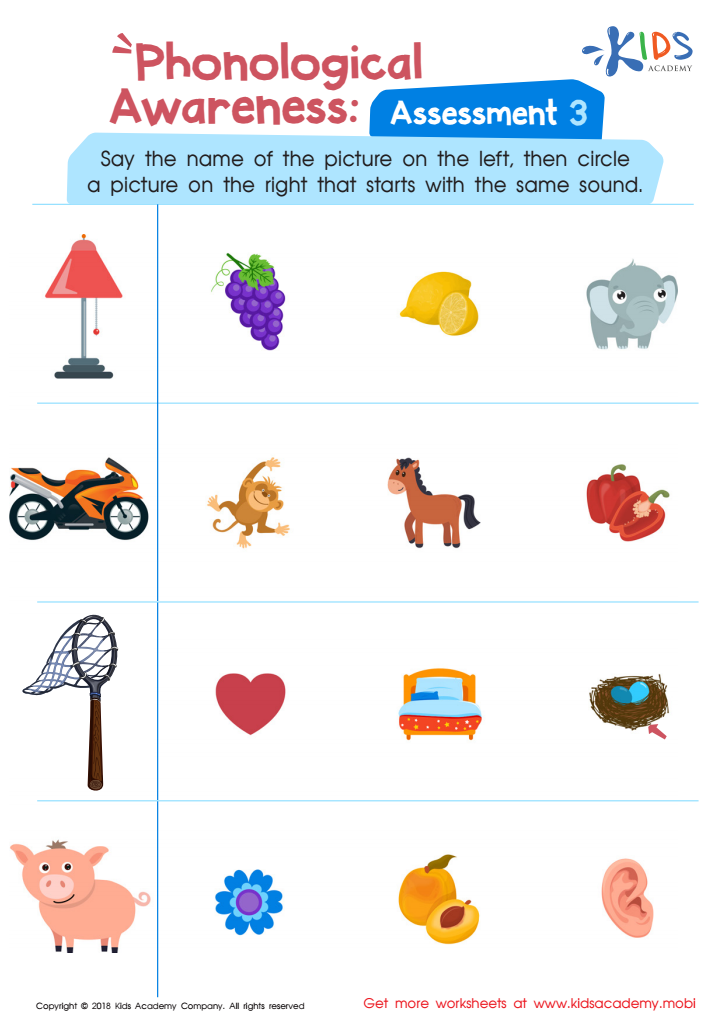
Phonological Awareness: Assessment 3 Worksheet
Test kids' reading readiness with a phonological awareness worksheet! With this PDF exercise, encourage children to name each picture aloud and match left to right. Help them learn to recognize word sounds at the start, middle and end of words. They'll be sure to remember that lamp doesn't sound like elephant!
Phonological Awareness: Assessment 3 Worksheet
Worksheet
Join Kids Academy for Free
Who is primarily going to use this learning content?




Parents and teachers should prioritize Reading Skills Elementary Phonics for ages 4-8 because these foundational skills are critical for a child’s long-term literacy development. Phonics is the relationship between letters and sounds, allowing young learners to decode words, improve reading fluency, and enhance vocabulary. Mastering phonics helps children build confidence as they begin to read independently, which fosters a lifelong love for reading.
At this age, children's brains are particularly receptive to language acquisition. Establishing solid phonics skills early leads to better comprehension and retention, which are essential as academic demands increase. Additionally, phonics instruction supports children with different learning styles, particularly those who may struggle with traditional reading methods.
Further, intervention in phonics can reduce the risk of reading difficulties later on. Early investment in phonics can close achievement gaps and set children on a path of success in their educational journey. When parents and teachers collaborate to support phonics learning, they create a conducive environment for literacy skills to flourish, positively influencing a child's overall development. Ultimately, fostering strong reading abilities can empower children to engage with the world meaningfully, ensuring they are equipped for future learning opportunities.







