Rhyming skills Alphabet Worksheets for Ages 4-8
5 filtered results
-
From - To
Discover our engaging Rhyming Skills Alphabet Worksheets designed for children aged 4-8! These educational resources help young learners develop phonemic awareness and improve their reading skills through fun rhyming activities. Each worksheet features vibrant illustrations and interactive exercises that encourage kids to identify rhyming words, fostering a love for language and literacy. With a variety of engaging formats, your child will enjoy practicing their phonics while enhancing their vocabulary. Perfect for home or classroom use, these worksheets support early learning and make mastering the alphabet an exciting journey. Start your child's literacy adventure today with our Rhyming Skills Alphabet Worksheets!
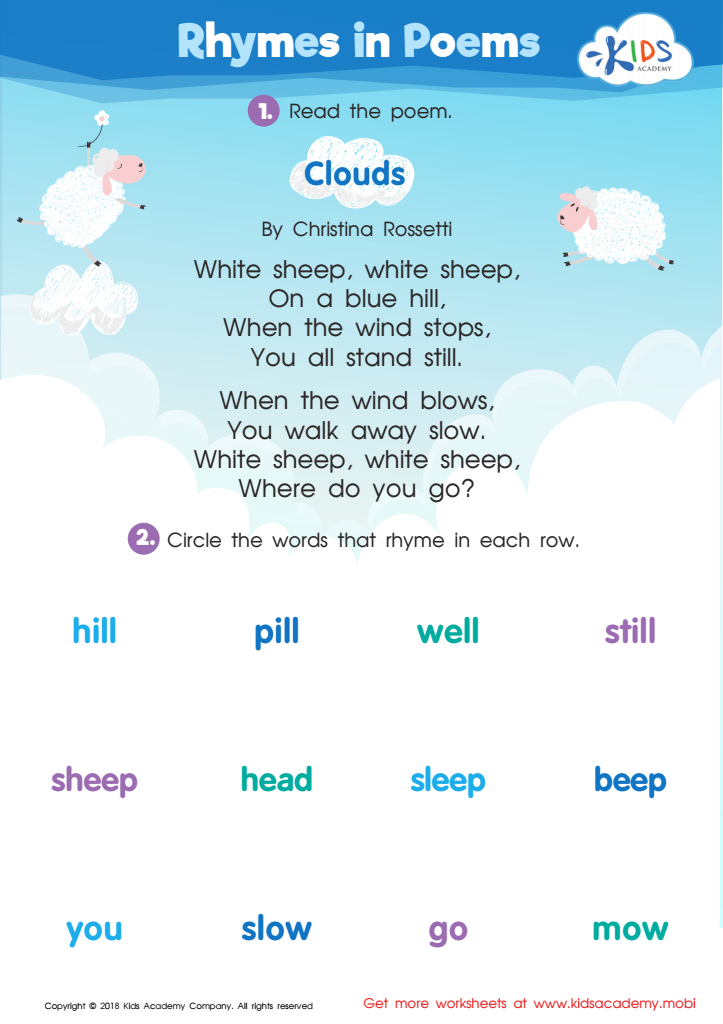
Rhymes in Poems Worksheet
 Assign to My Students
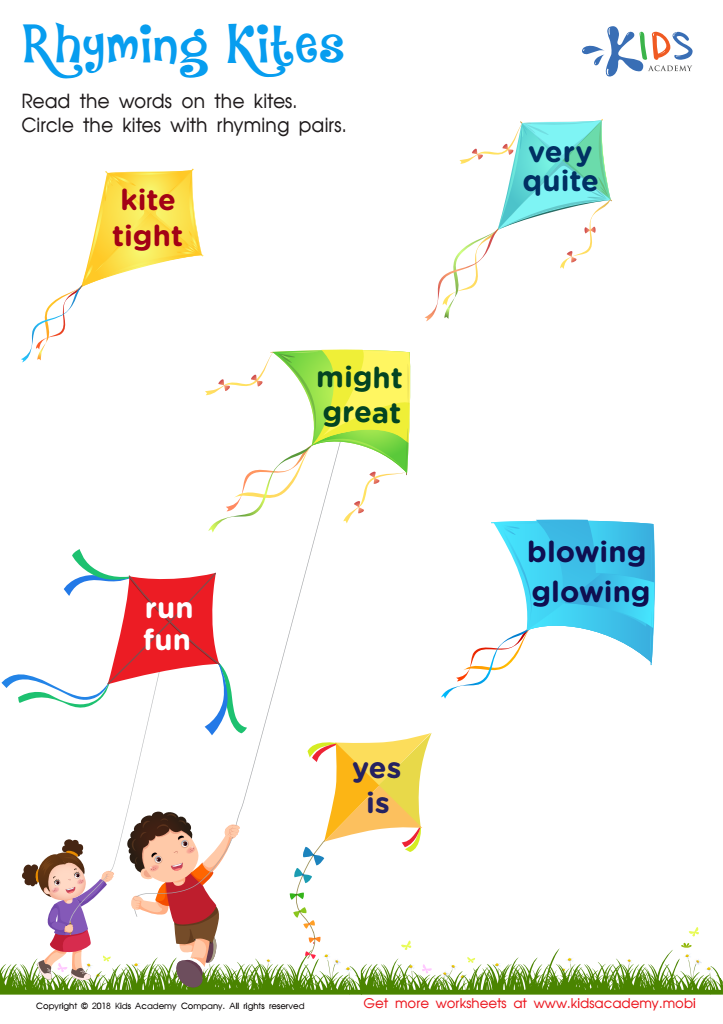
Rhyming Kites Worksheet
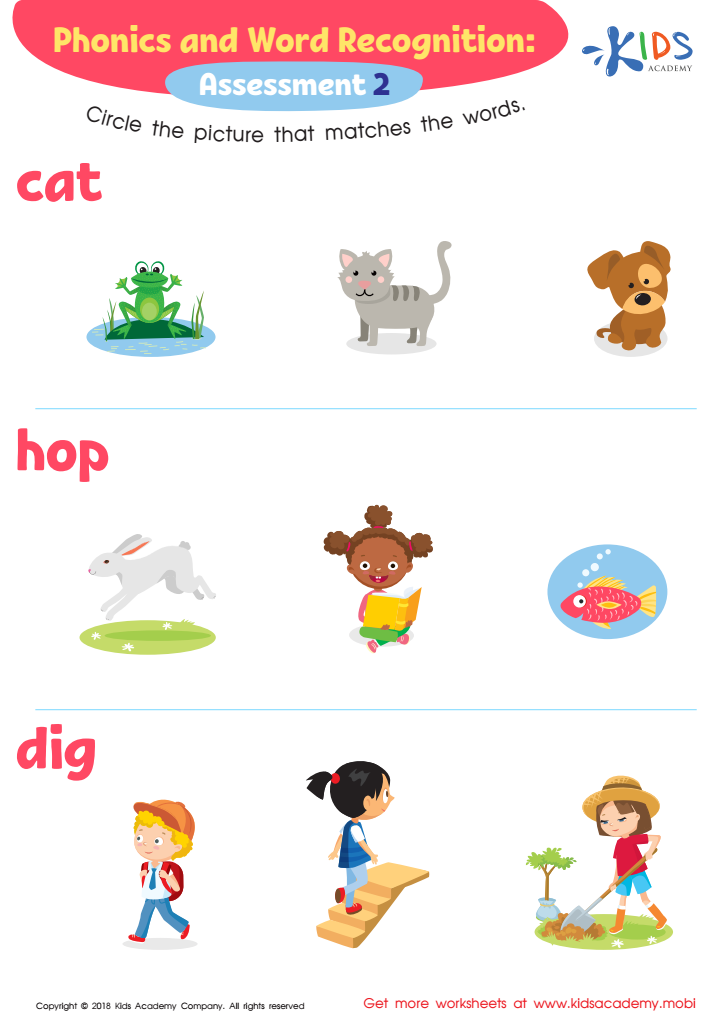
Phonological Awareness: Assessment 2 ELA Worksheet
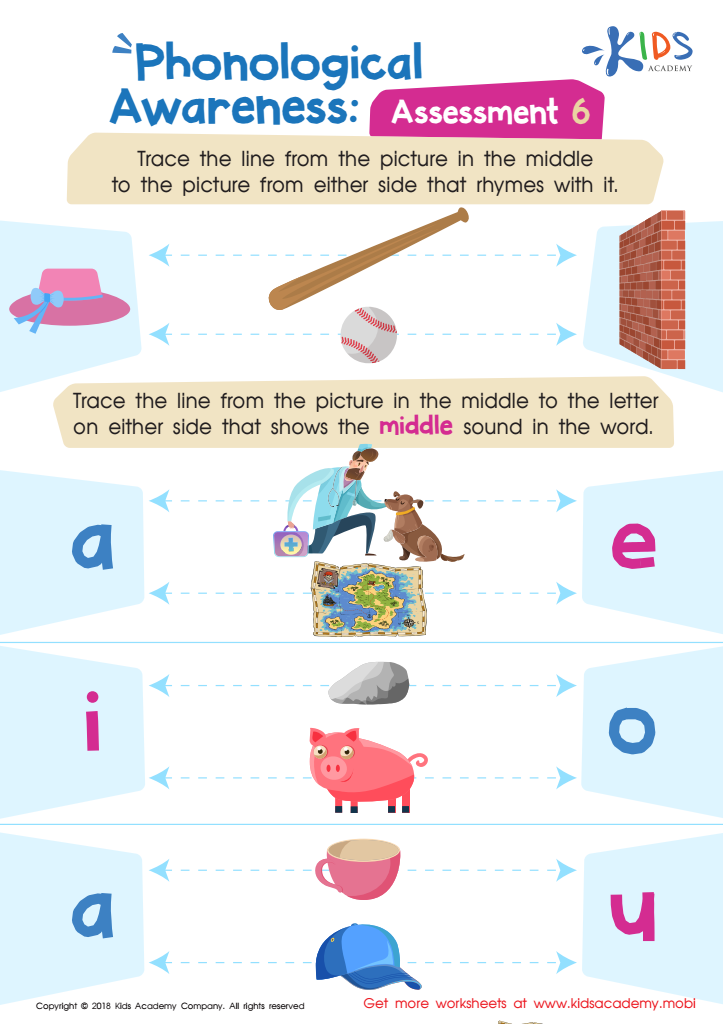
Phonological Awareness: Assessment 6 Worksheet
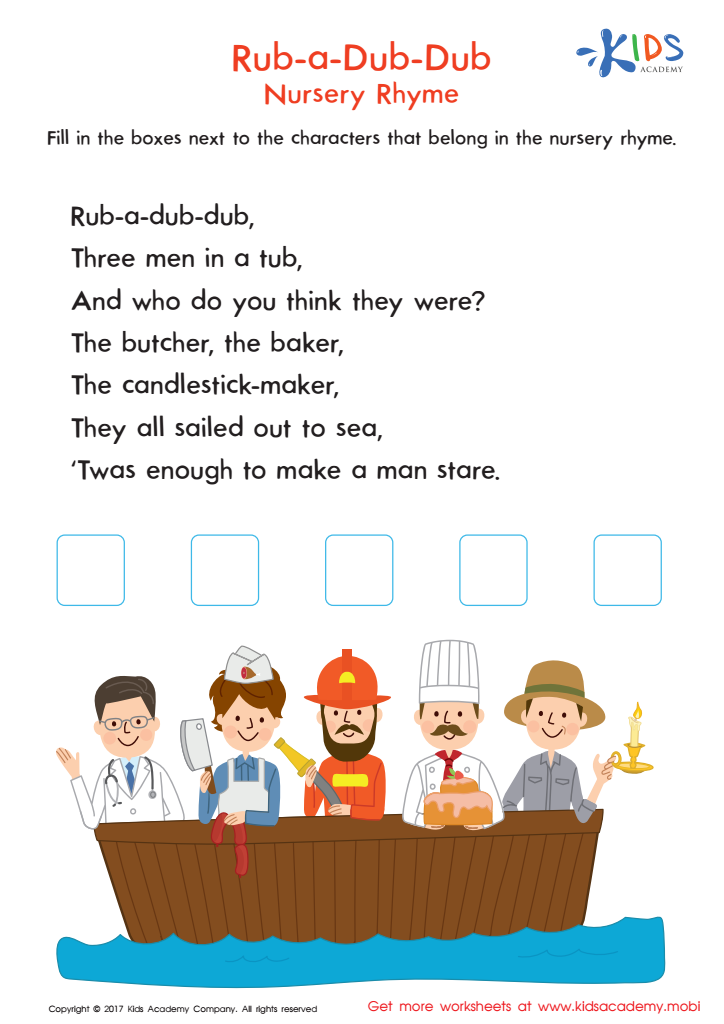
Rub a Dub Dub Printable






Rhyming skills are crucial for children aged 4-8 as they lay the foundation for successful reading and language development. When children learn to recognize and produce rhymes, they enhance their phonemic awareness—the ability to hear, identify, and manipulate individual sounds in words. This skill is integral to understanding how words are constructed, thus making it easier for children to decode new words and develop their reading fluency.
Moreover, engaging with rhyming helps to build vocabulary. As children explore different rhymes, they encounter a variety of words, which expands their understanding and use of language. This playful, engaging approach caters to young learners' developmental needs, making learning feel like a fun activity rather than a chore.
Parents and teachers should also recognize that rhyming improves listening and memory skills. Activities involving rhymes sharpen auditory processing, beneficial not just for literacy but for overall communication abilities.
Collaborative rhyming exercises promote creativity and self-expression, fostering a love for language that can inspire future learning. Ultimately, developing strong rhyming skills during these formative years equips children with essential tools for academic success and lifelong learning.







