Lowercase identification Letter Recognition Worksheets for Ages 4-8
5 filtered results
-
From - To
Introducing our fun and engaging Lowercase Identification Letter Recognition Worksheets for children ages 4-8! These printables are designed to provide young learners with essential practice in recognizing lowercase letters, helping to build a strong foundation in early literacy. Each worksheet is packed with delightful activities that capture attention and make learning enjoyable, from coloring and tracing to matching and identifying letters in various contexts. Perfect for preschool and early elementary students, these worksheets support the development of critical reading readiness skills in an enjoyable and interactive way. Prepare your child for academic success with our expertly crafted resources!
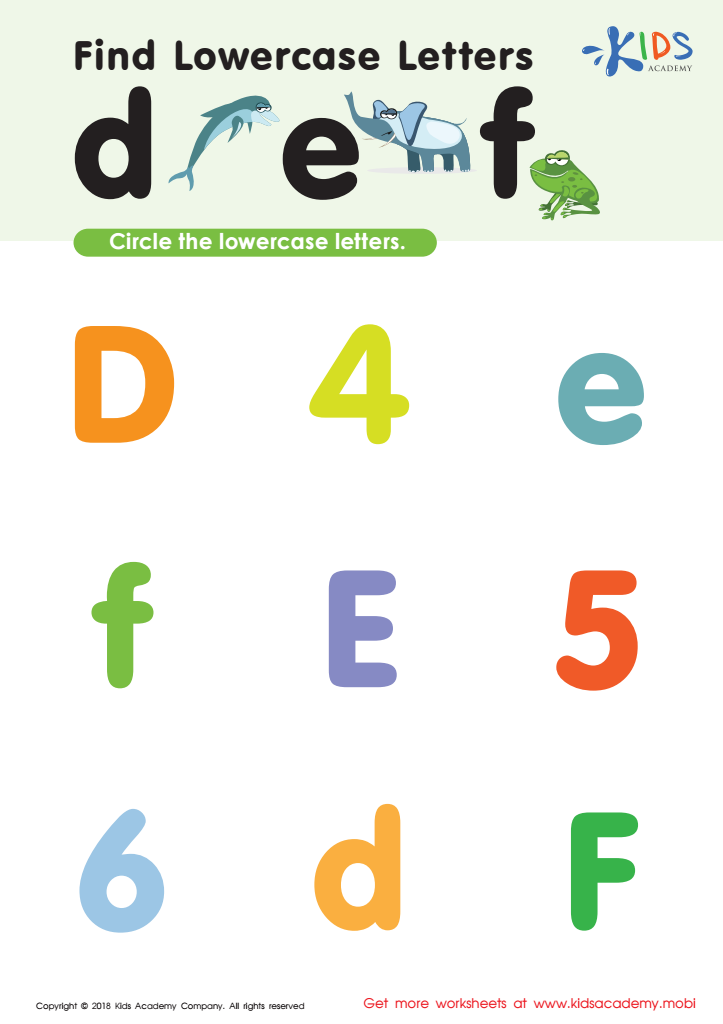
Find Lowercase Letters d e f Worksheet
 Assign to My Students
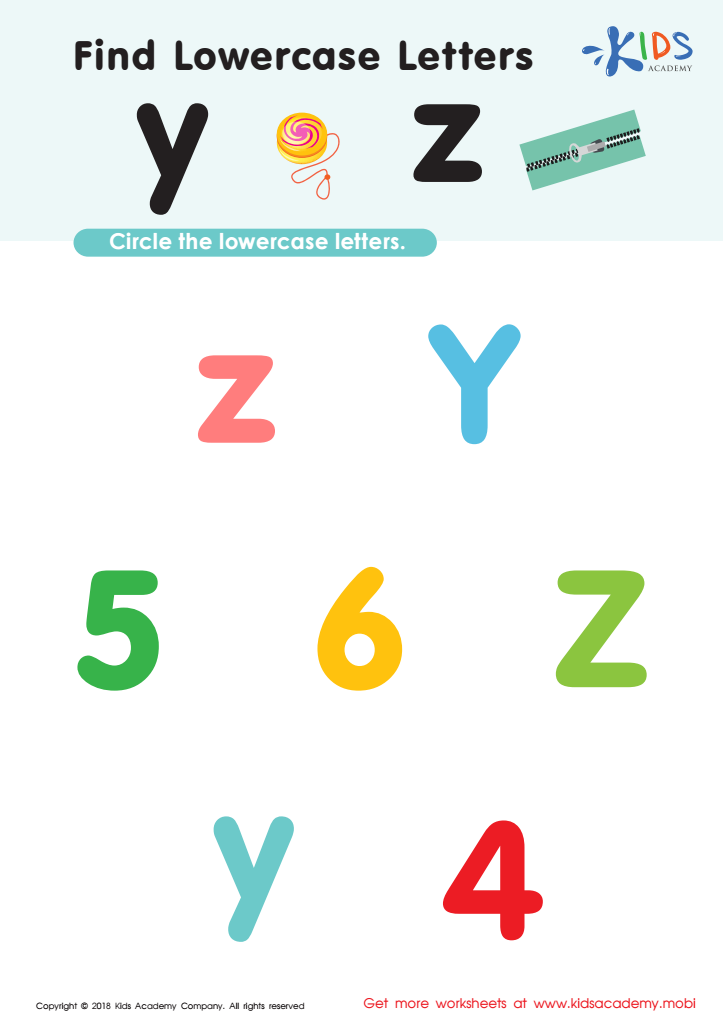
Find Lowercase Letters y z Worksheet
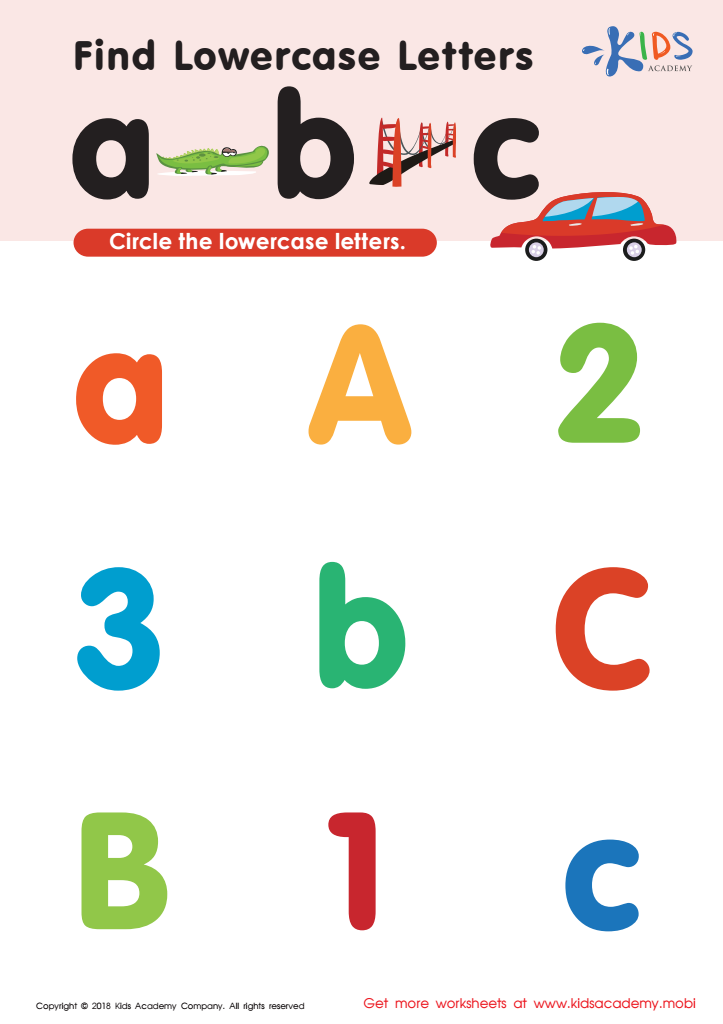
Find lowercase letters a b c Worksheet
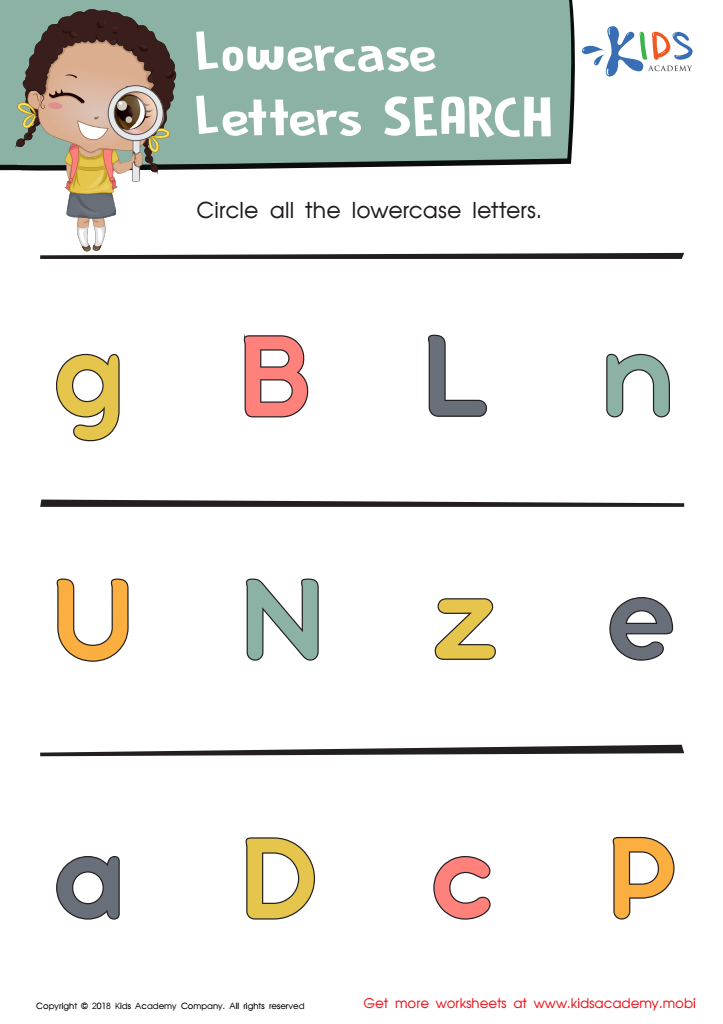
Lowercase Letters Search: Assessment Worksheet
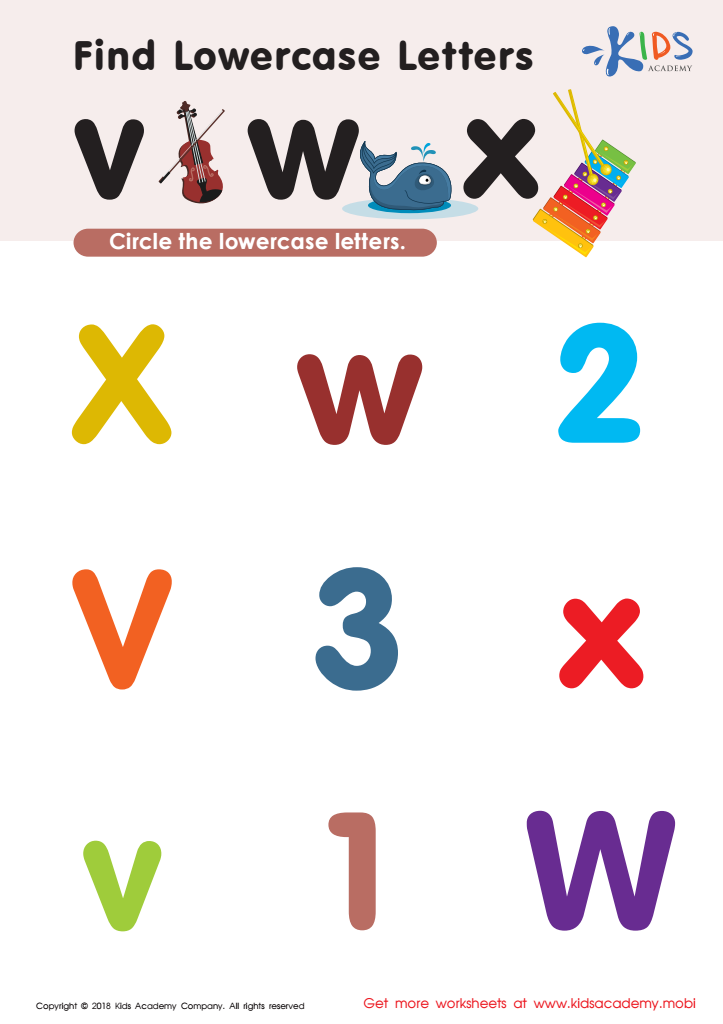
Find Lowercase Letters v w x Worksheet








Lowercase letter recognition in ages 4-8 is a fundamental aspect of early literacy development, playing a critical role in a child's reading and writing abilities. This skill helps children differentiate and identify letters in their everyday print, laying the groundwork for more complex literacy skills.
First, lowercase letters constitute the majority of text in books, newspapers, and digital media. Recognizing these letters aids in word identification, improving reading fluency and comprehension. When children can instantly identify lowercase letters, they can read smoothly and understand the material better, reducing frustration and increasing a love for reading.
Additionally, learning to recognize lowercase letters enhances phonemic awareness. Phonics instruction, which teaches the correlation between sounds and their written representations, largely depends on the ability to identify lowercase letters. This knowledge is crucial for decoding words and spelling accurately.
Moreover, consistent exposure to and practice with lowercase letters cultivates fine motor skills necessary for writing. Writing activities, from tracing to freehand letters, are vital for muscle memory development and handwriting proficiency.
Neglecting lowercase letter recognition may lead to delays in reading and writing, affecting a child’s overall academic performance and confidence. Educators and parents should engage children in playful, multi-sensory activities that reinforce lowercase letter recognition, ensuring a strong foundation for all future literacy endeavors.







