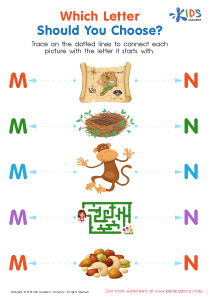
Letter recognition Lowercase/Small Letters Worksheets for Ages 4-8
11 filtered results
-
From - To
Boost your child's literacy skills with our engaging Lowercase/Small Letters Worksheets, designed specifically for ages 4-8. These worksheets focus on letter recognition, helping young learners identify and become familiar with lowercase letters in a fun, interactive way. Each worksheet is crafted to promote fine motor skills, enhance cognitive development, and instill a love for reading at an early age. Perfect for both classroom and home learning, these resources offer a variety of activities, including tracing, matching, and coloring. Encourage your little ones to explore the world of letters while building a strong foundation for their reading journey!
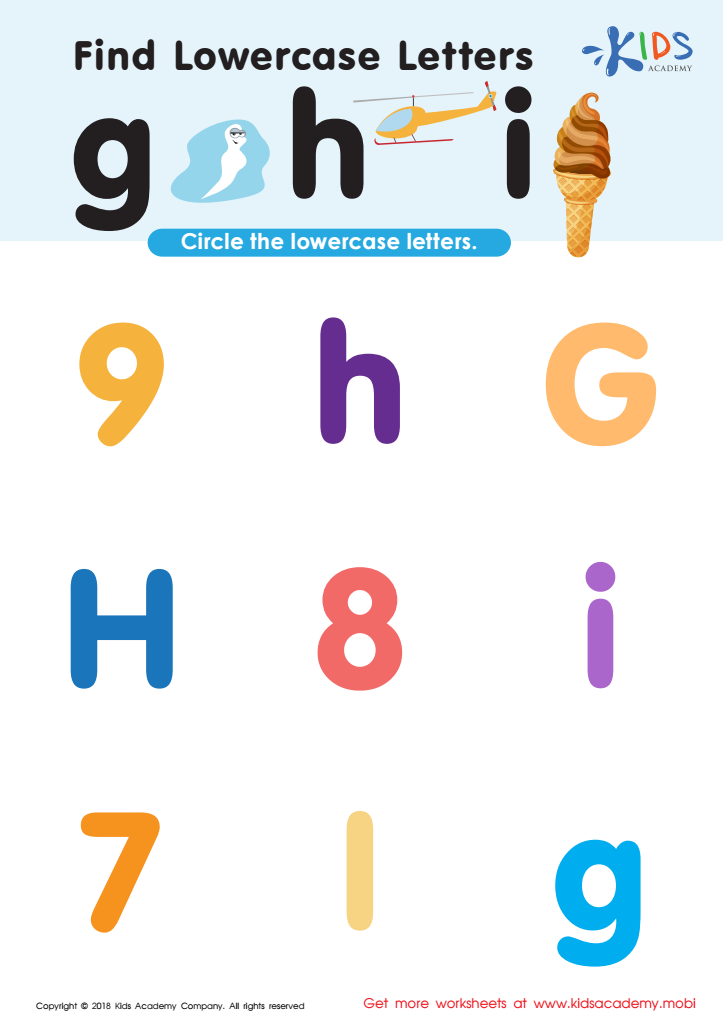
Find Lowercase Letters g h i Worksheet
 Assign to My Students
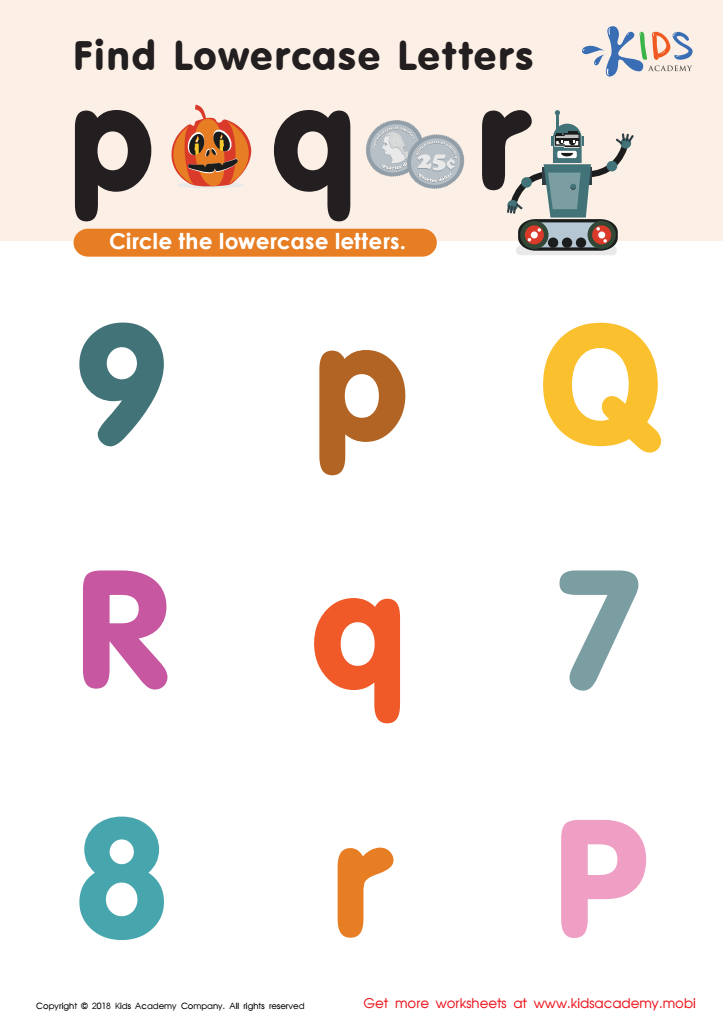
Find lowercase Letters p q r Worksheet
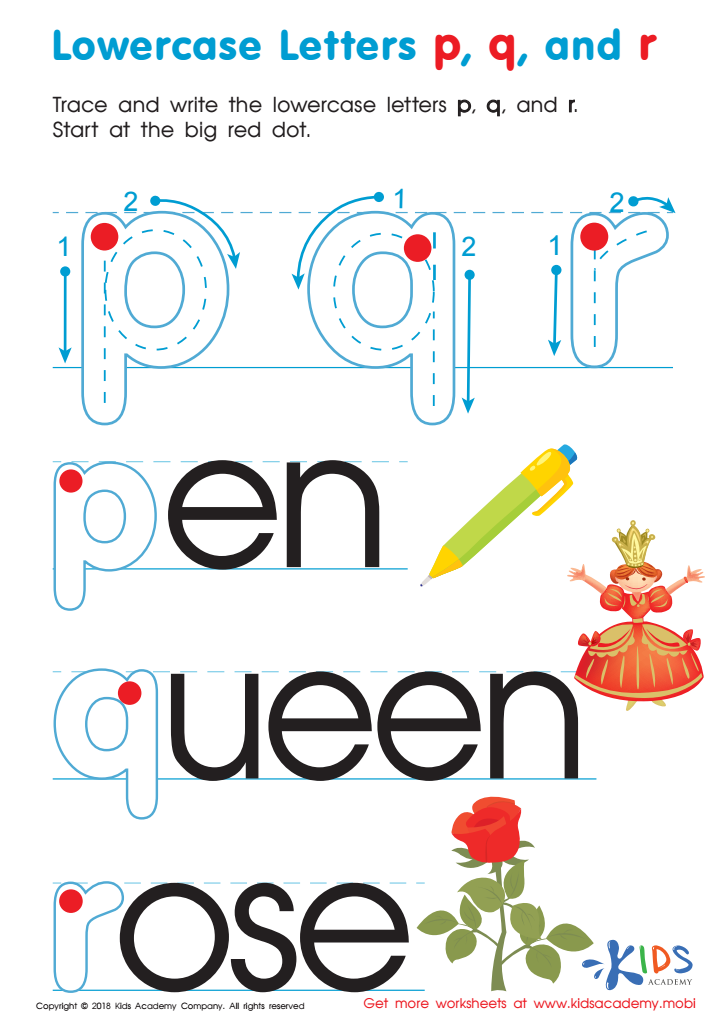
Lowercase Letters p q r Worksheet
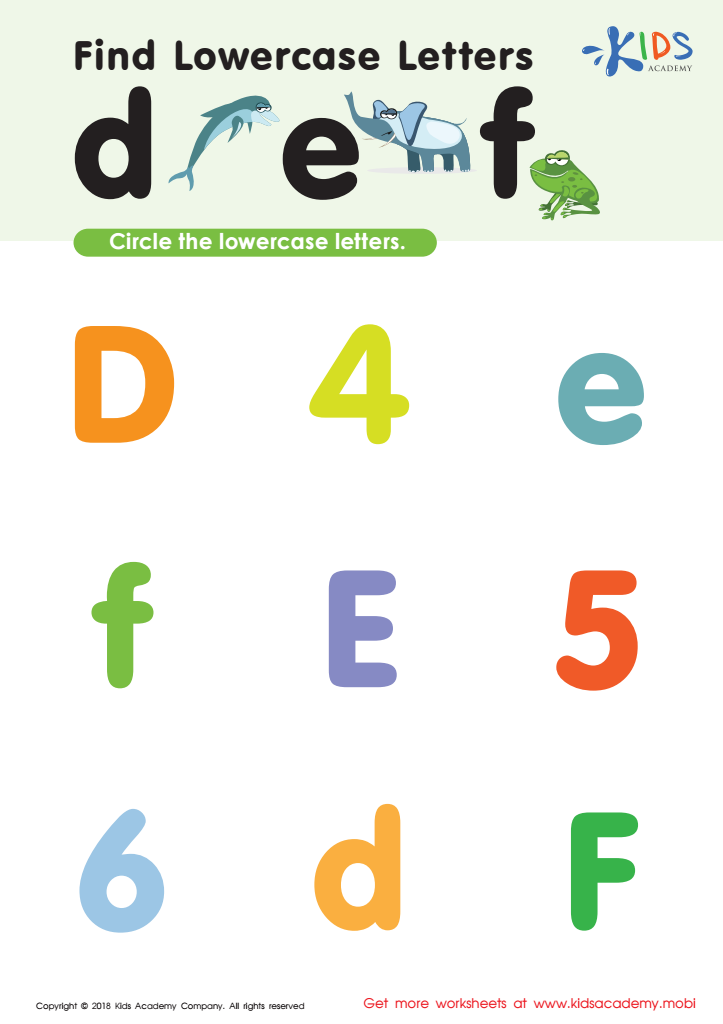
Find Lowercase Letters d e f Worksheet
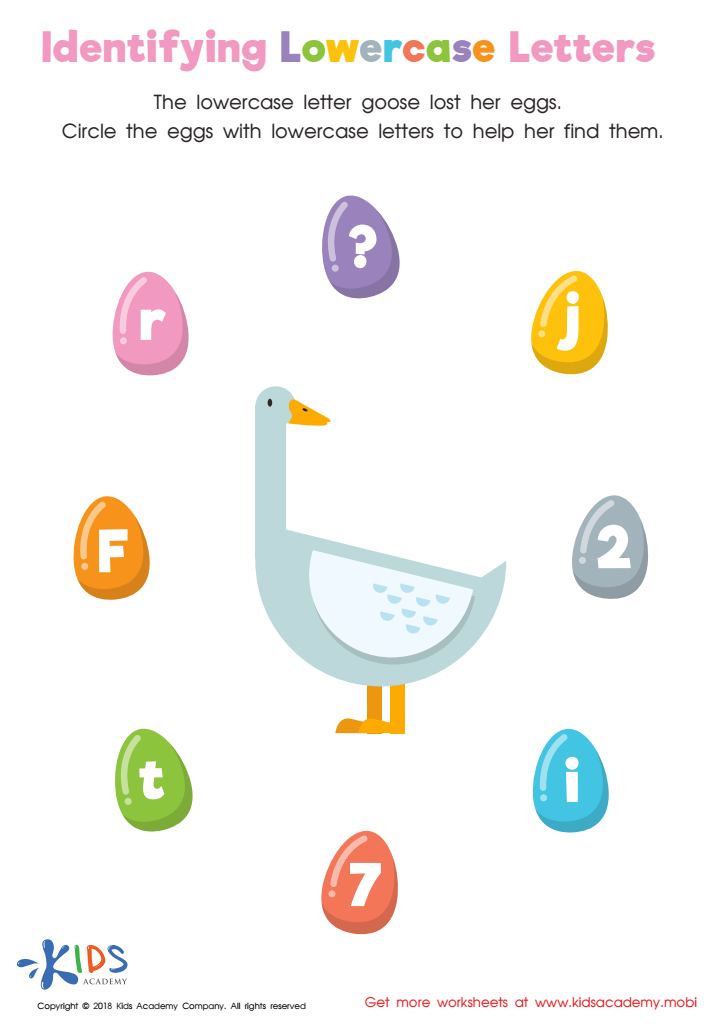
Identifying Lowercase Letters Worksheet
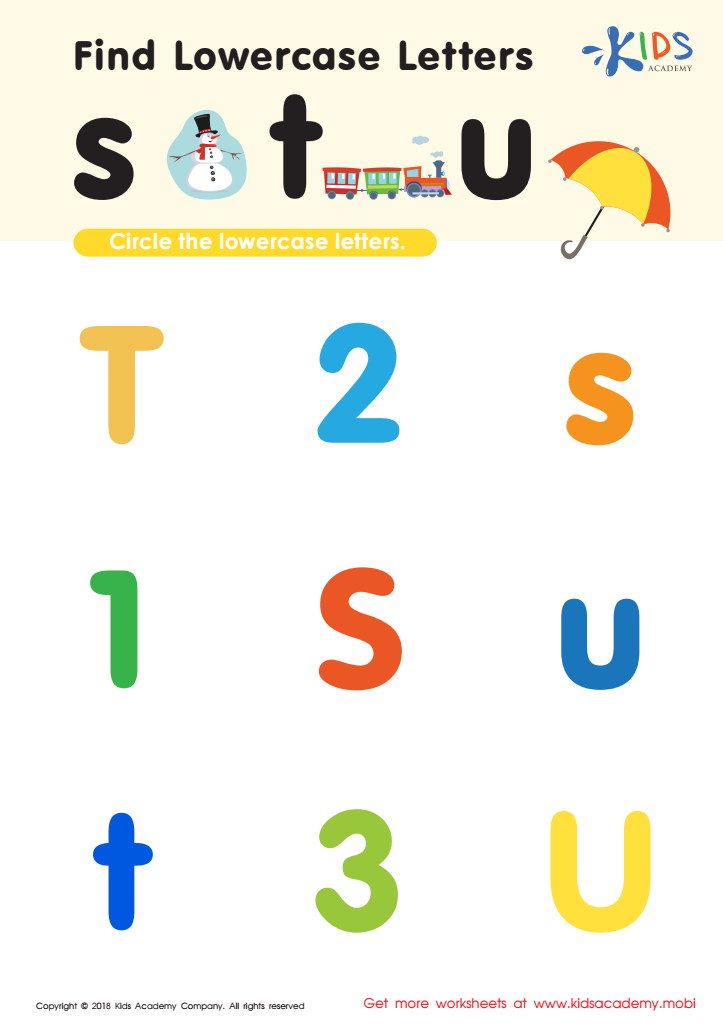
Find lowercase Letters s t u Worksheet
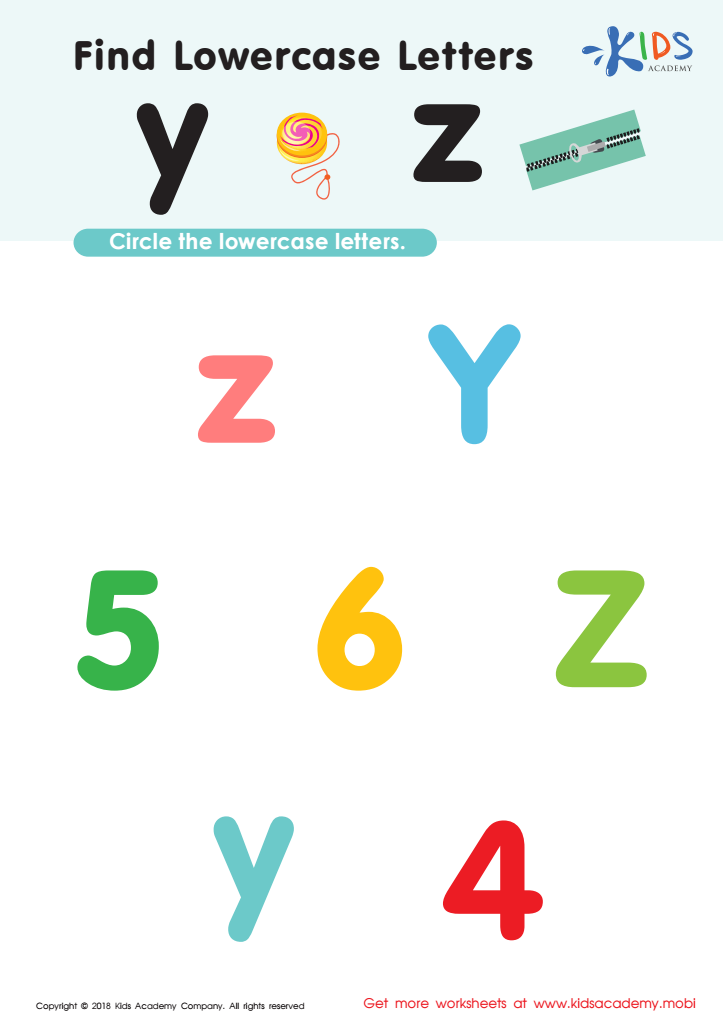
Find Lowercase Letters y z Worksheet
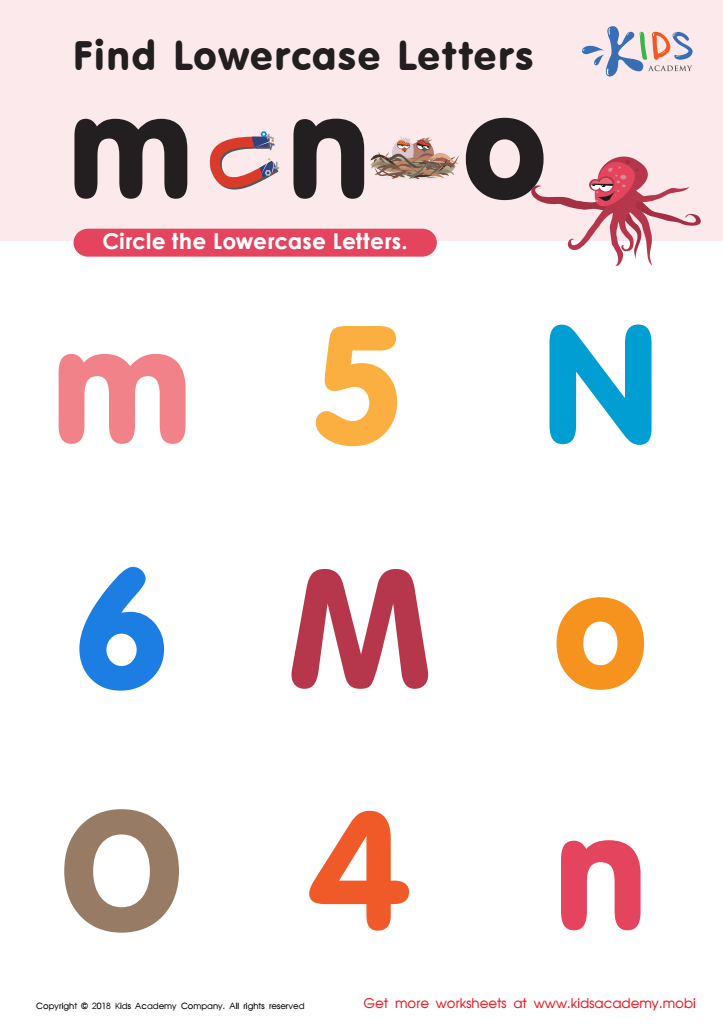
Find Lowercase Letters m n o Worksheet
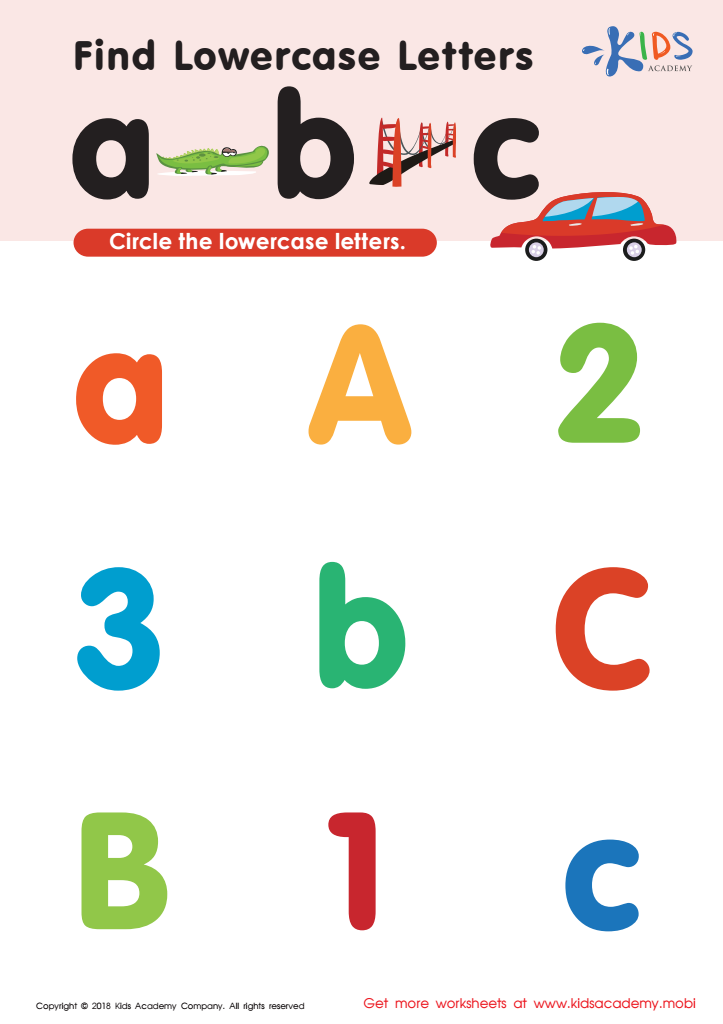
Find lowercase letters a b c Worksheet
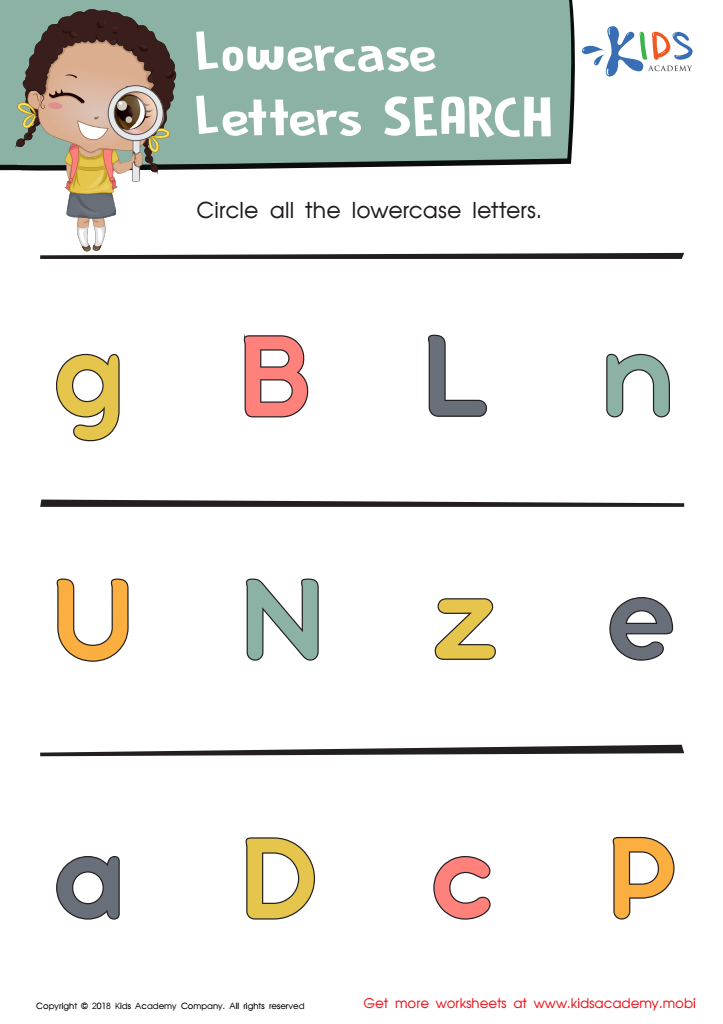
Lowercase Letters Search: Assessment Worksheet
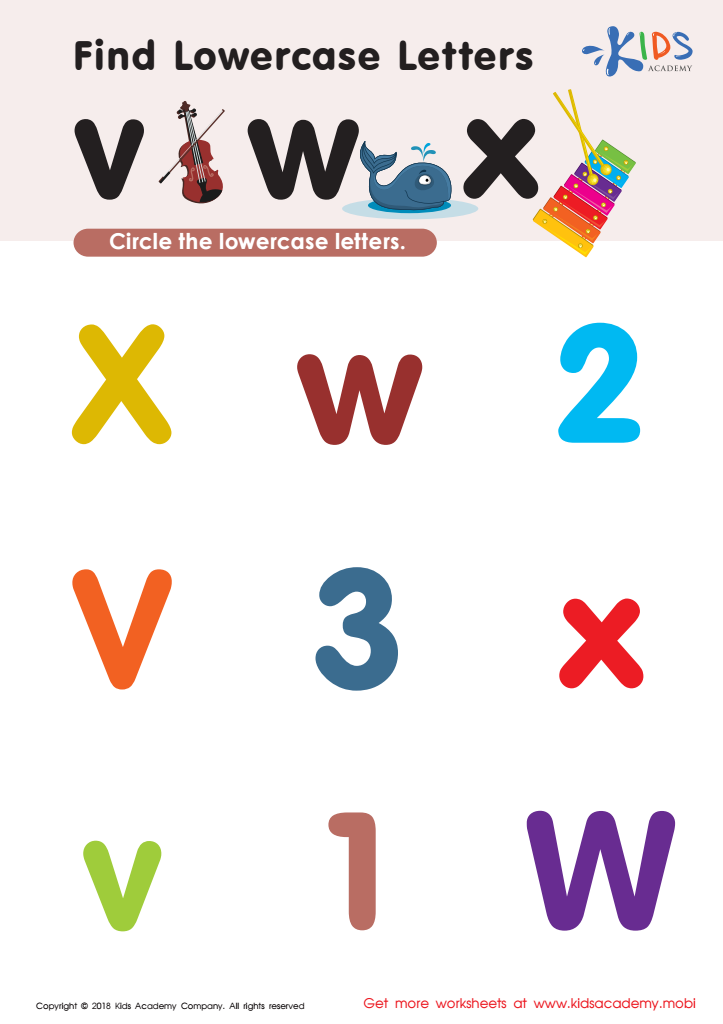
Find Lowercase Letters v w x Worksheet


Letter recognition, particularly lowercase letters, is a foundational skill for early literacy development in children aged 4 to 8. Parents and teachers should prioritize this aspect of learning because it significantly influences a child's reading and writing abilities.
Firstly, consolidating lowercase letter recognition helps children transition smoothly into reading familiar words, as most text is printed in lowercase. Recognizing letters automatically in their small form allows children to focus on comprehension rather than decoding, enhancing their overall reading fluency.
Secondly, lowercase letter mastery directly impacts writing skills. When children learn to spell and write, they typically use lowercase letters for common words, and the ability to quickly identify these letters can boost their confidence in composition and communication.
Moreover, fostering this skill nurtures cognitive development. Engaging activities related to letter recognition can improve memory, phonemic awareness, and critical thinking. The early recognition of lowercase letters also promotes the joy of reading as children start to connect letters to sounds, leading to successful phonics instruction.
In summary, understanding lowercase letters is crucial for literacy progression, encouraging independent reading and writing, which are essential for lifelong learning. Consequently, both parents and educators should invest time in supporting this vital skill.