Rhyming skills development Phonics Worksheets for Ages 4-8
5 filtered results
-
From - To
Enhance your child’s phonics skills with our engaging Rhyming Skills Development Worksheets, designed for ages 4-8. These worksheets provide fun and interactive activities that help young learners recognize and generate rhymes, a crucial step in developing reading abilities. Each worksheet is carefully crafted to promote phonemic awareness, boost vocabulary, and strengthen early literacy skills through playful exercises. Ideal for use at home or in the classroom, these resources make learning enjoyable while fostering a love for language. Explore our user-friendly worksheets today and watch your child's confidence soar as they master the playful world of rhyming!
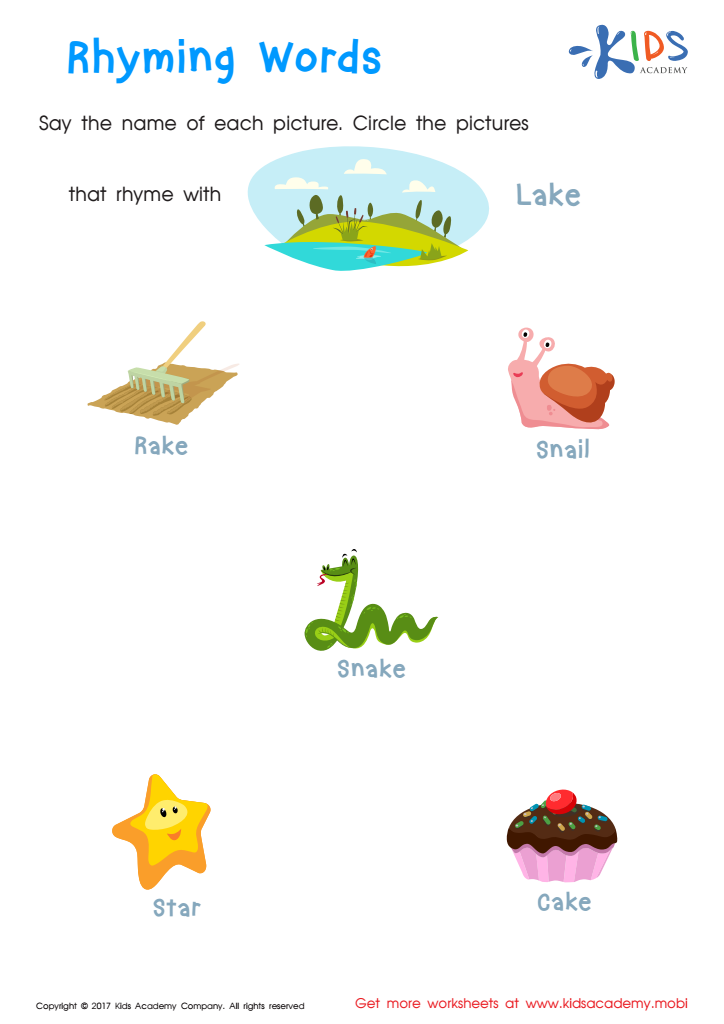
Rhyming Words Rhyming Worksheet
 Assign to My Students
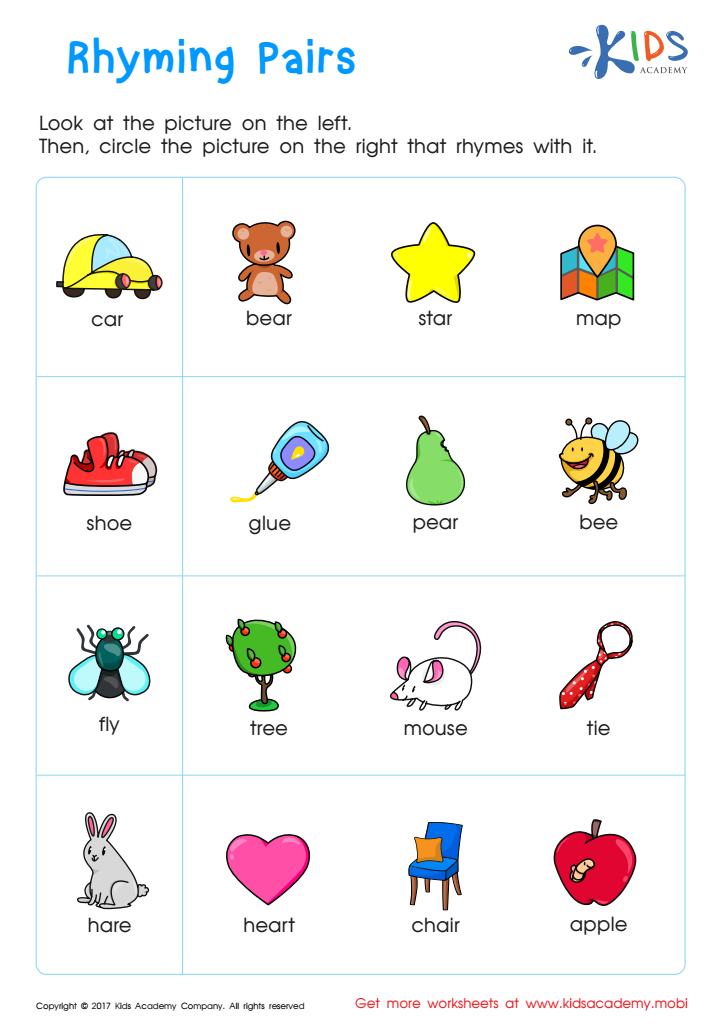
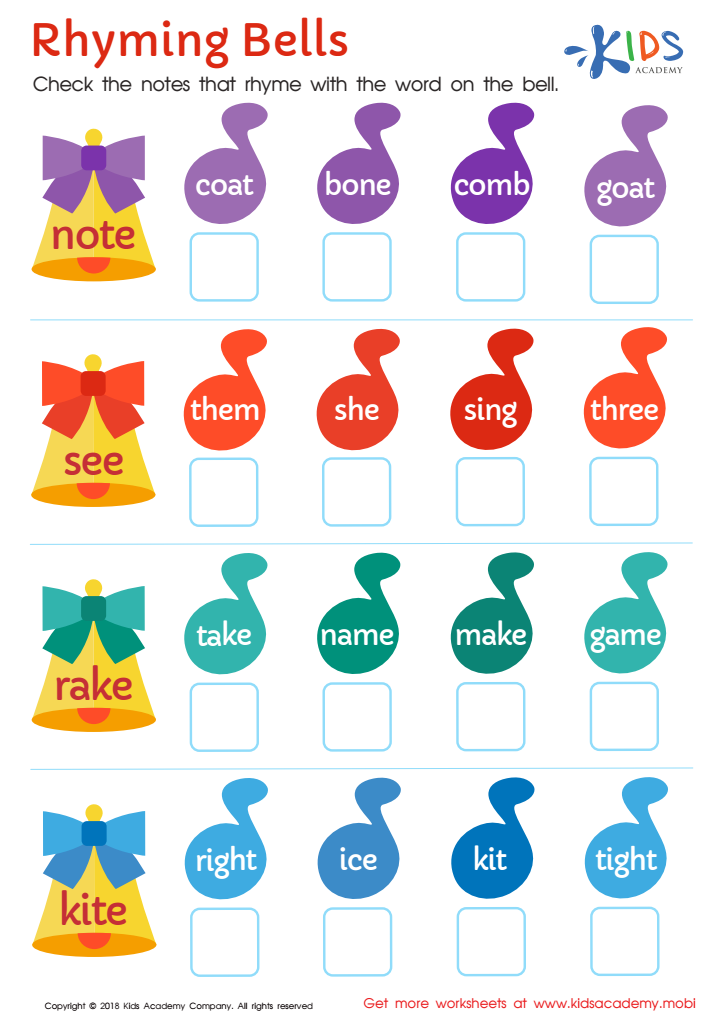
Rhyming Bells Worksheet
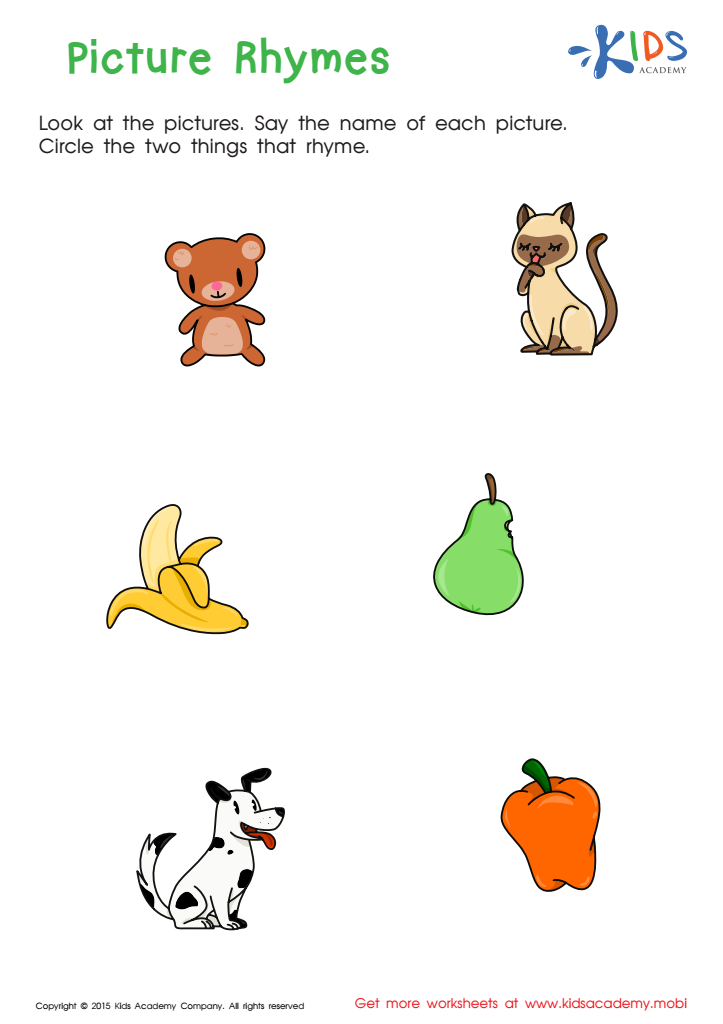
First Words: Picture Rhymes Worksheet
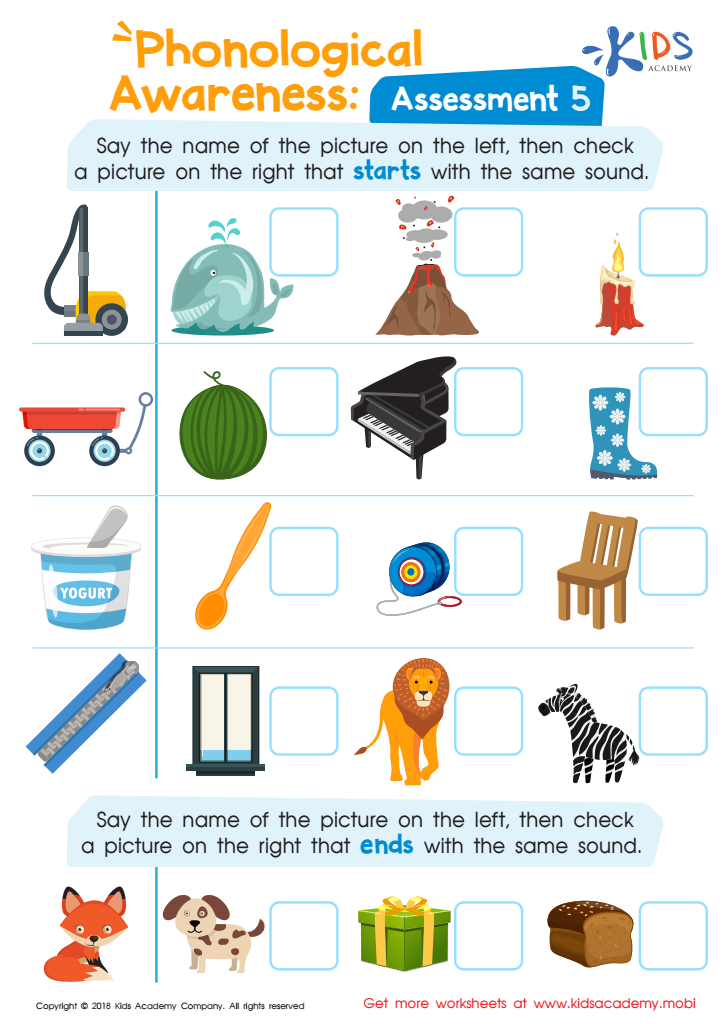
Phonological Awareness: Assessment 5 Worksheet








Rhyming skills development is a crucial aspect of phonics for children aged 4-8, as it lays the foundation for reading and writing. During this critical age range, children are developing their language skills and phonemic awareness, both of which are essential for literacy. When children engage with rhymes, they learn to recognize and manipulate sounds within words, enhancing their ability to decode unfamiliar words.
Understanding rhyme helps children grasp the concept of phonemes—the smallest units of sound—supporting their ability to blend and segment words. Additionally, rhyme improves vocabulary and language comprehension, making it easier for young learners to articulate their thoughts clearly.
Beyond academics, rhyming can foster a love for language and reading. Engaging with playful texts or nursery rhymes captures children's interest, encouraging them to explore storytelling and literature. Parents and teachers play a pivotal role in nurturing these skills through fun activities, such as singing songs and playing rhyming games.
In summary, parents and teachers should be invested in developing rhyming skills as they significantly influence a child’s literacy journey, promote cognitive development, and cultivate a lifelong appreciation for reading. Early intervention in this area can make a profound difference in a child's educational success.







