Sound-letter correlation Phonics Worksheets for Ages 4-8
3 filtered results
-
From - To
Unlock the world of reading for your children with our "Sound-letter correlation Phonics Worksheets for Ages 4-8". Designed to develop essential early literacy skills, these engaging worksheets help young learners understand the relationship between letters and their sounds. Your kids will enjoy fun-filled activities that include matching games, tracing exercises, and sound-recognition tasks, making phonics both effective and exciting. These resources are perfect for parents and teachers aiming to build a strong literacy foundation. Explore our printable worksheets today and set your child on the path to fluent reading and confident communication!
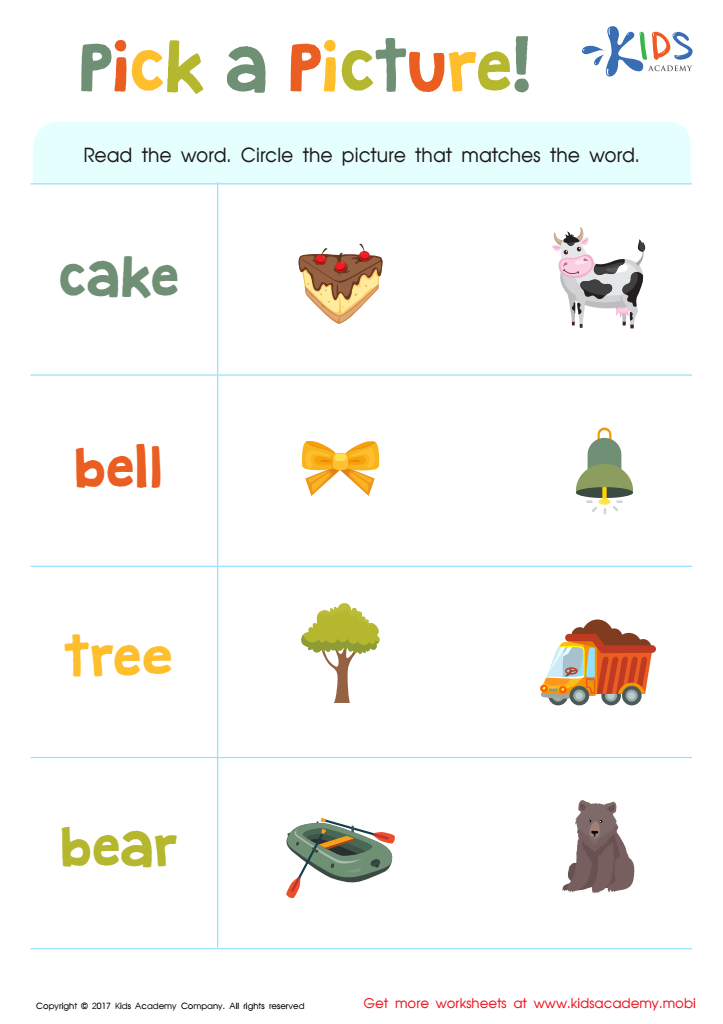
Pick a Picture Word Recognition Worksheet
 Assign to My Students
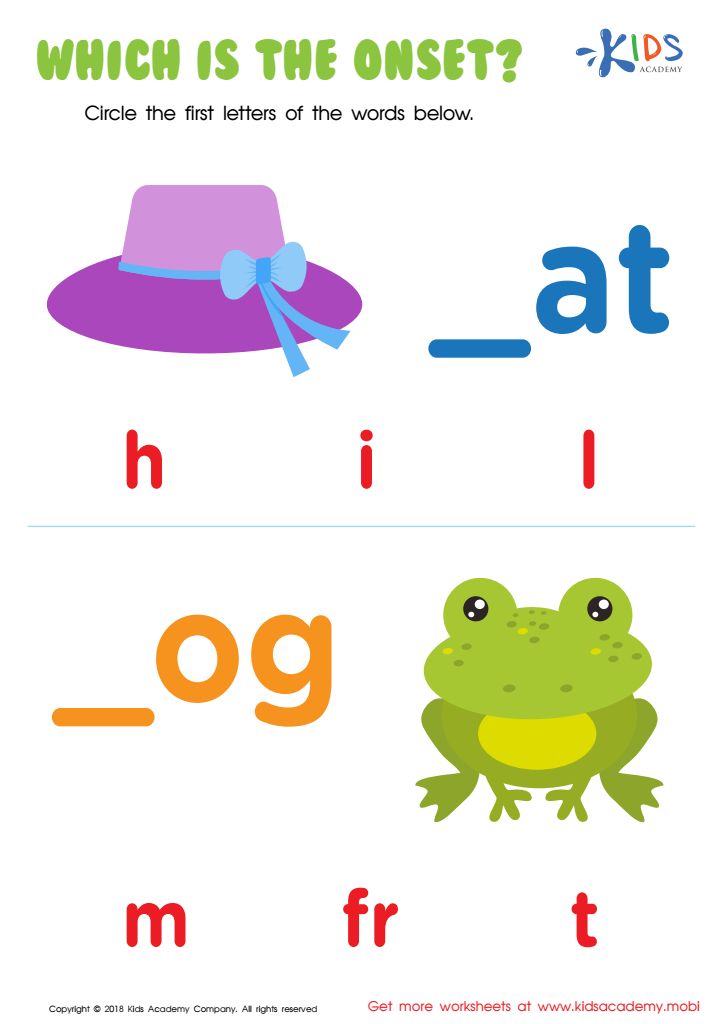
Which Is the Onset? Worksheet
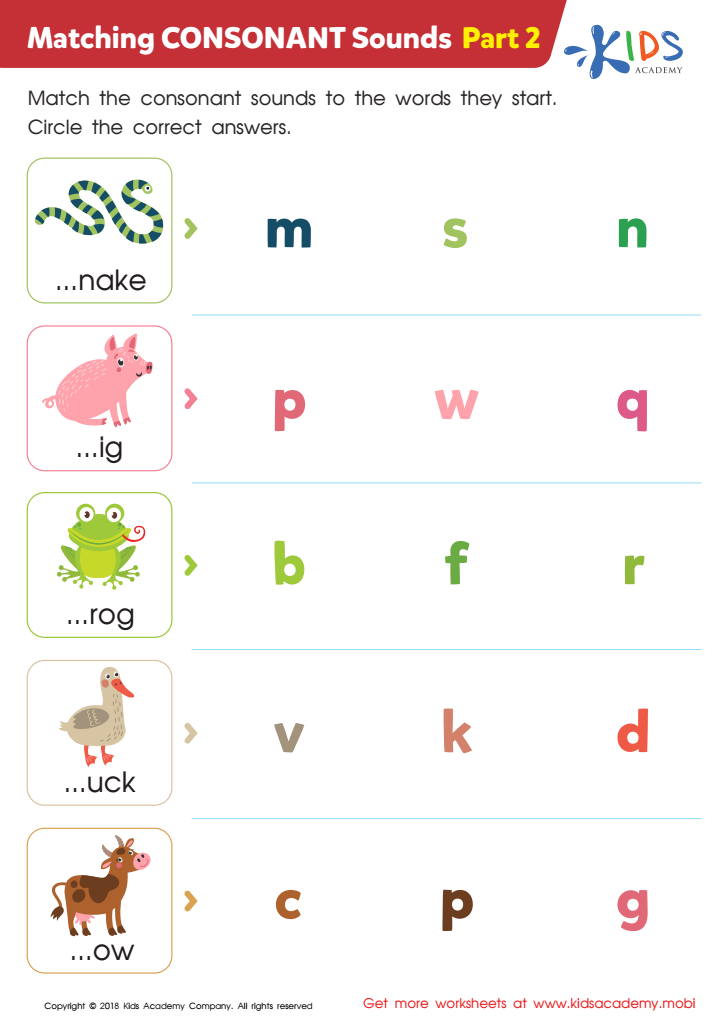
Matching Consonant Sounds: Part 2 Worksheet








Sound-letter correlation, or phonics, is crucial for children ages 4-8 because it lays the foundation for reading and writing skills. Phonics helps young learners understand the relationship between letters and their corresponding sounds, enabling them to decode words more efficiently. This decoding ability is a key component of early literacy, which fosters greater reading comprehension and fluency.
For parents, engaging in phonics-based activities allows them to take an active role in their child's education, making learning a collaborative and enjoyable experience. Simple practices such as reading aloud and playing letter-sound games can significantly boost a child's confidence and interest in reading. Cultivating these skills early can lead to academic success and a lifelong love of reading.
For teachers, including phonics in the curriculum ensures that all students, regardless of their initial skill levels, have the tools necessary to succeed. Phonics instruction can be differentiated to meet each child's needs, providing targeted support for struggling readers and additional challenges for advanced learners. An emphasis on phonics in early education focuses on building a strong literacy foundation, which is critical for mastering more advanced language arts skills as children progress through their academic journeys. Overall, phonics is an essential aspect of early childhood education that supports and benefits the development of pivotal reading and writing skills.







