Spelling improvement Phonics Worksheets for Ages 4-8
8 filtered results
-
From - To
Boost your child's spelling skills with our engaging Phonics Worksheets designed for ages 4-8! These expertly crafted materials shift learning into high gear by blending fun with fundamental practices. Each worksheet is rich with colorful imagery and interactive activities to grasp essential phonics rules and enhance language skills. Whether they're identifying sounds, matching letters, or constructing words, your kids will amp up their spelling proficiency while enjoying every minute. A committed approach to literacy begins at home—explore our collection of Spelling Improvement Phonics Worksheets today and transform your little ones into confident readers and spellers!
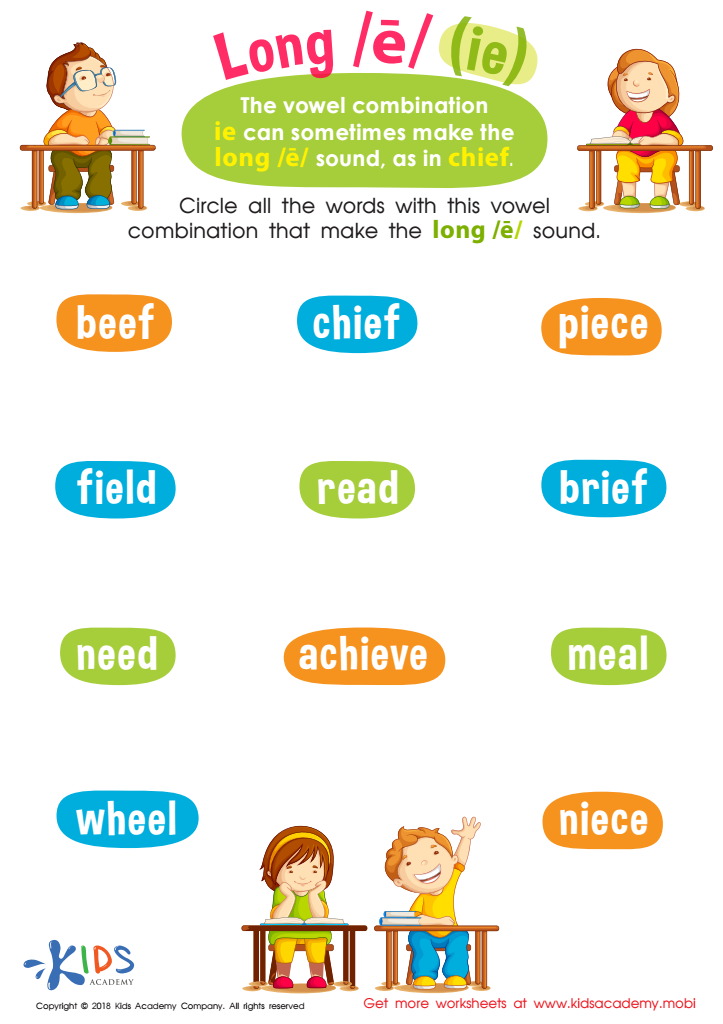
Reading: Long E and IE Worksheet
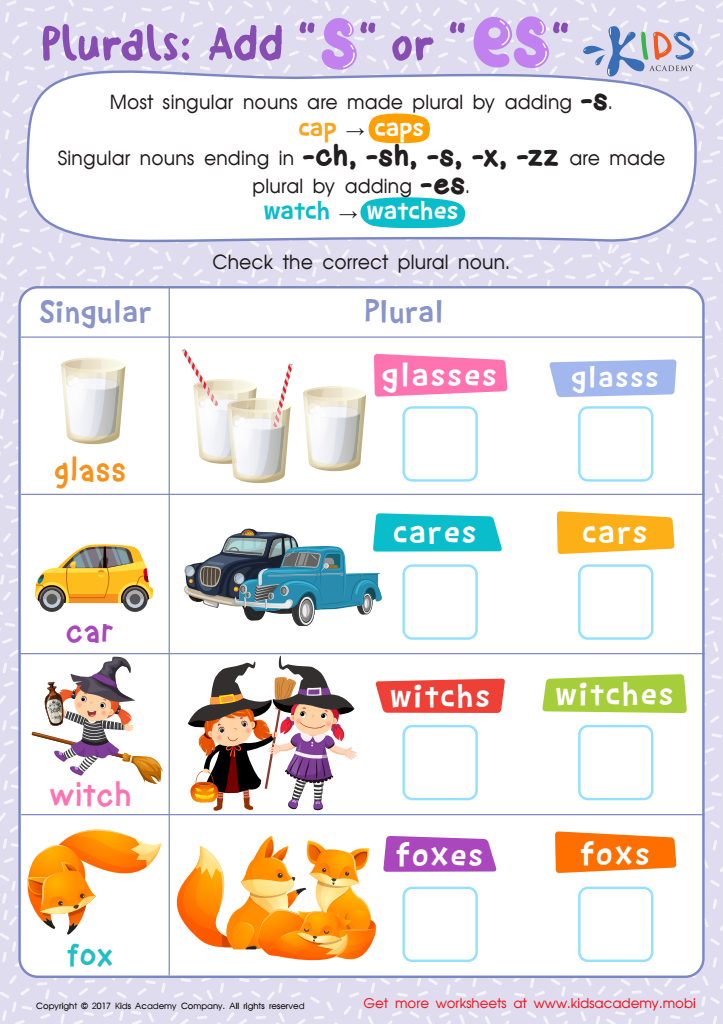
Plurals: "–es" or "–es"? Worksheet
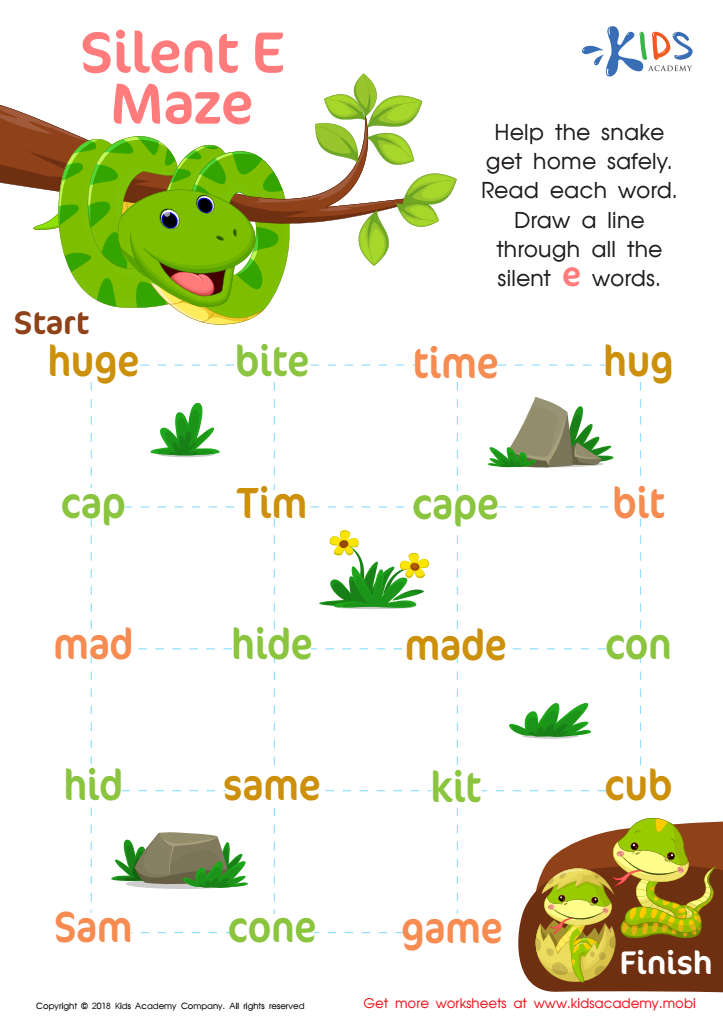
Silent E Maze Worksheet
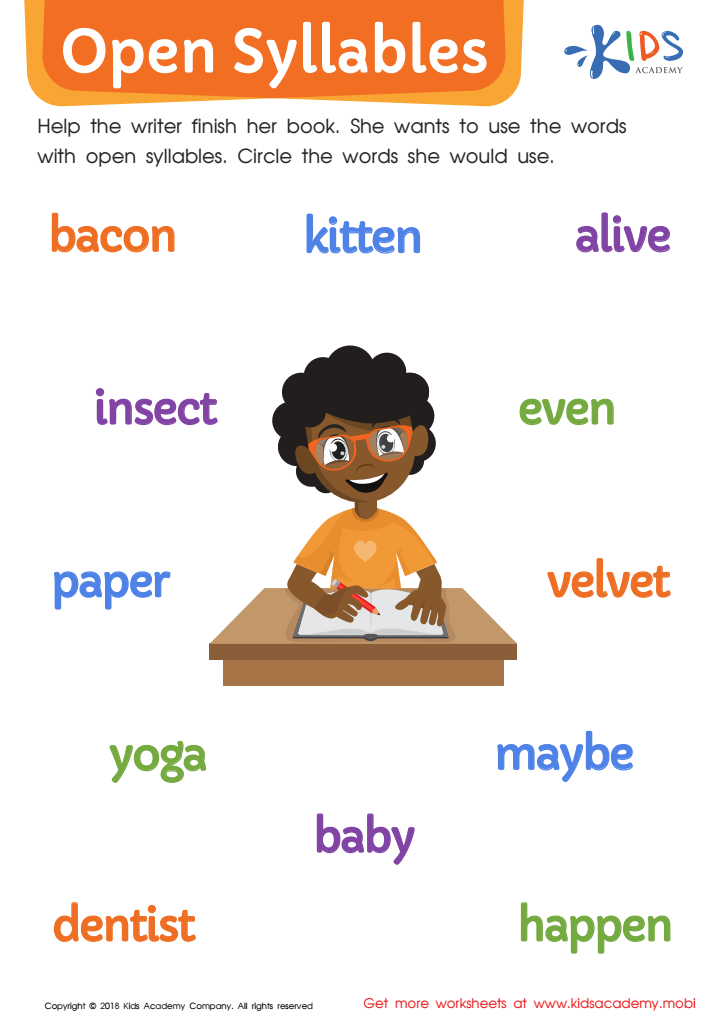
Open Syllables Worksheet
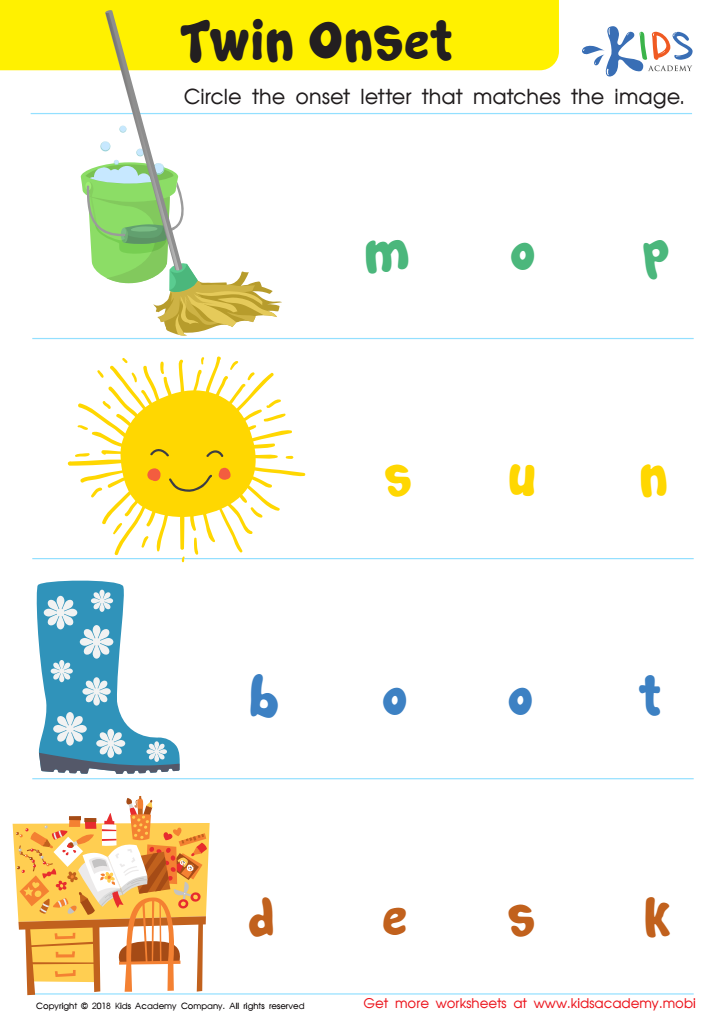
Twin Onset Worksheet
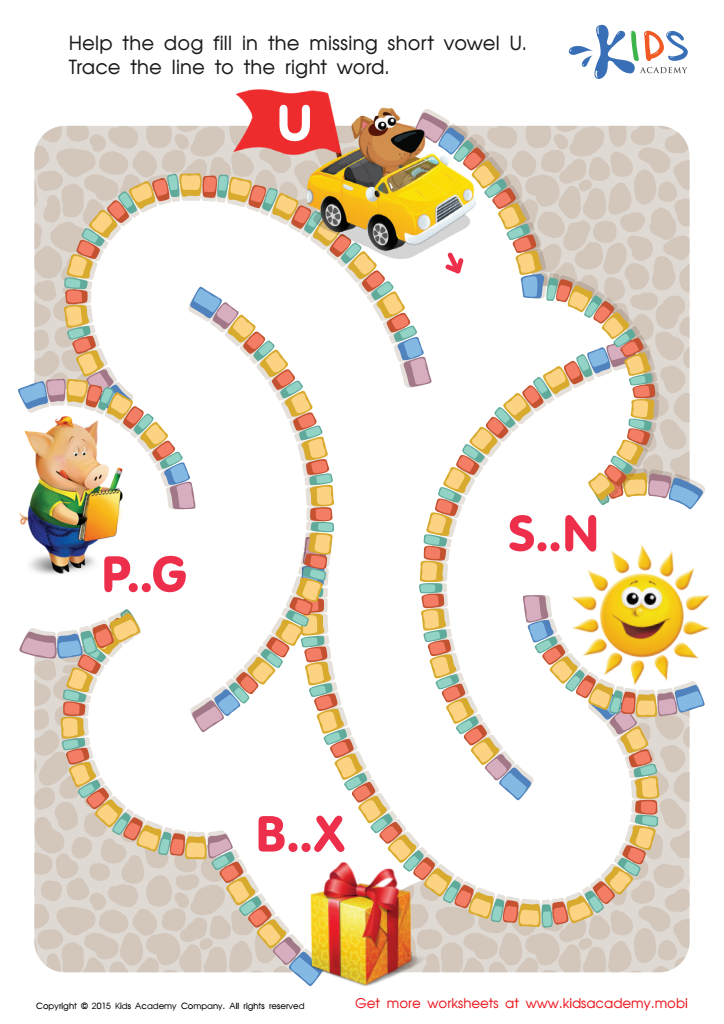
Short Vowel Sound U Worksheet
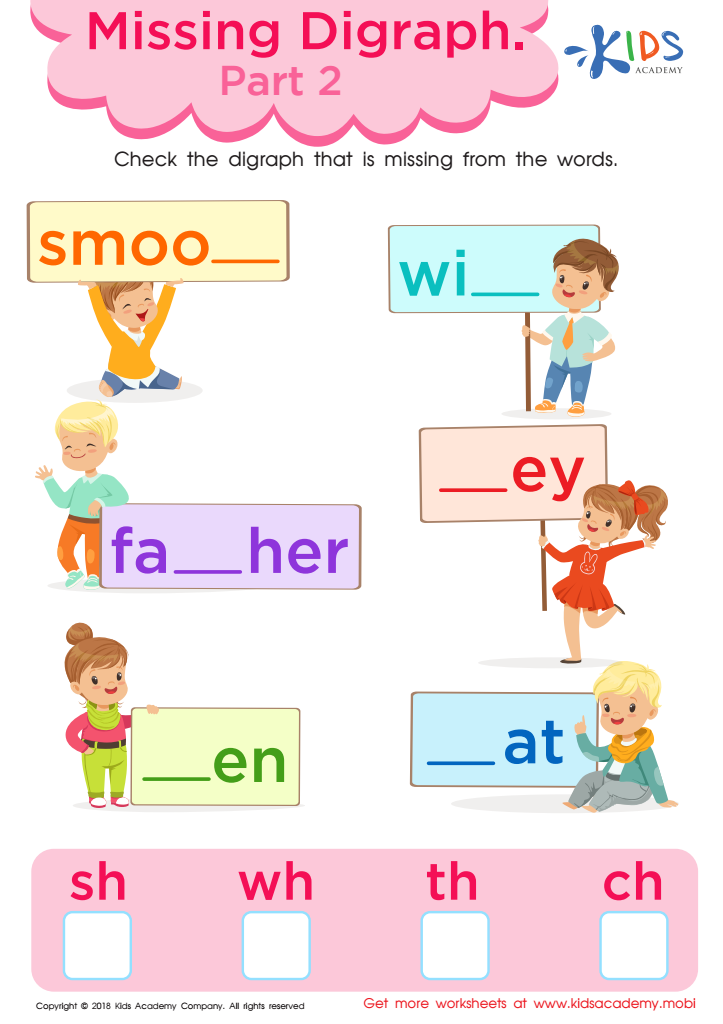
Missing Digraph: Part 2 Worksheet
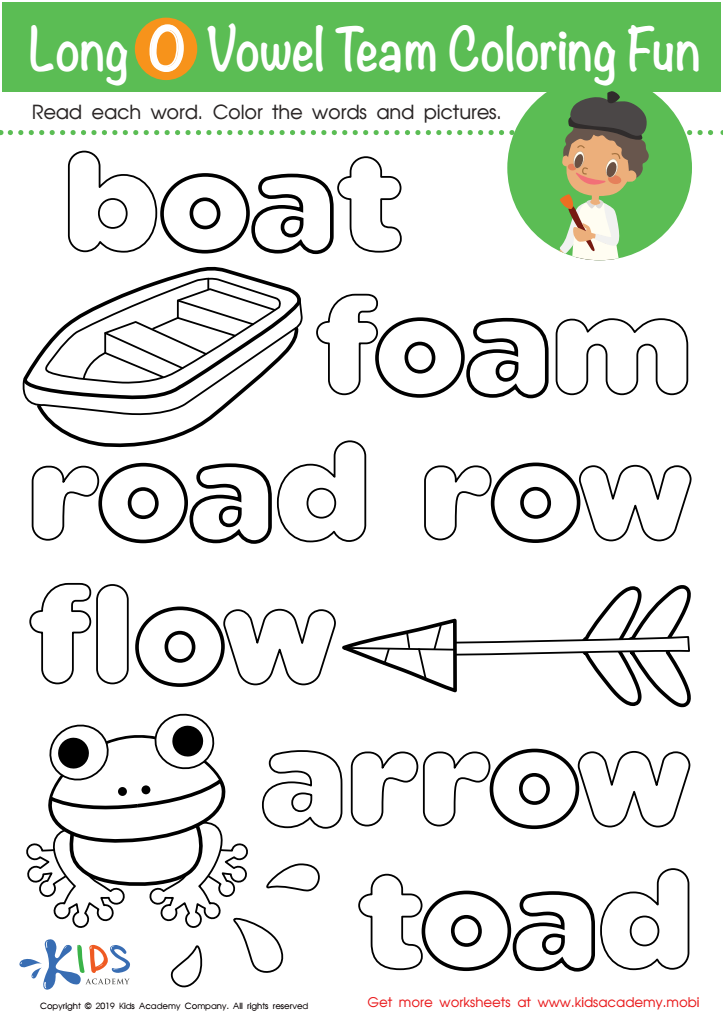
Long O Vowel Team Coloring Worksheet
 Assign to My Students








Parents and teachers should prioritize spelling improvement and phonics for children aged 4-8 because these foundational skills are crucial for their literacy development. Spelling helps children understand the relationship between letters and sounds, which is essential for reading and writing. When children master phonics, they can decode words accurately, enhancing their reading fluency and comprehension.
At this developmental stage, kids are naturally curious and capable of learning new concepts rapidly. Introducing them to phonics in a structured manner enables them to recognize patterns in language, aiding in vocabulary building. Good spelling skills also bolster their confidence, making reading and writing less frustrating and more enjoyable.
Moreover, early literacy skills are strong predictors of future academic success. Children who excel in spelling and phonics are more likely to do well in other subjects, as reading is integral to understanding most educational content. Additionally, strong literacy skills contribute to better communication, both orally and in writing, fostering social and emotional development.
By focusing on these skills, parents and teachers not only support academic achievement but also equip children with the tools they need for effective learning and self-expression throughout their lives. Ignoring this critical phase can lead to learning gaps that are harder to bridge later on, making early intervention key.







