Handwriting practice Tracing Letters Worksheets for Ages 4-8 - Page 2
28 filtered results
-
From - To
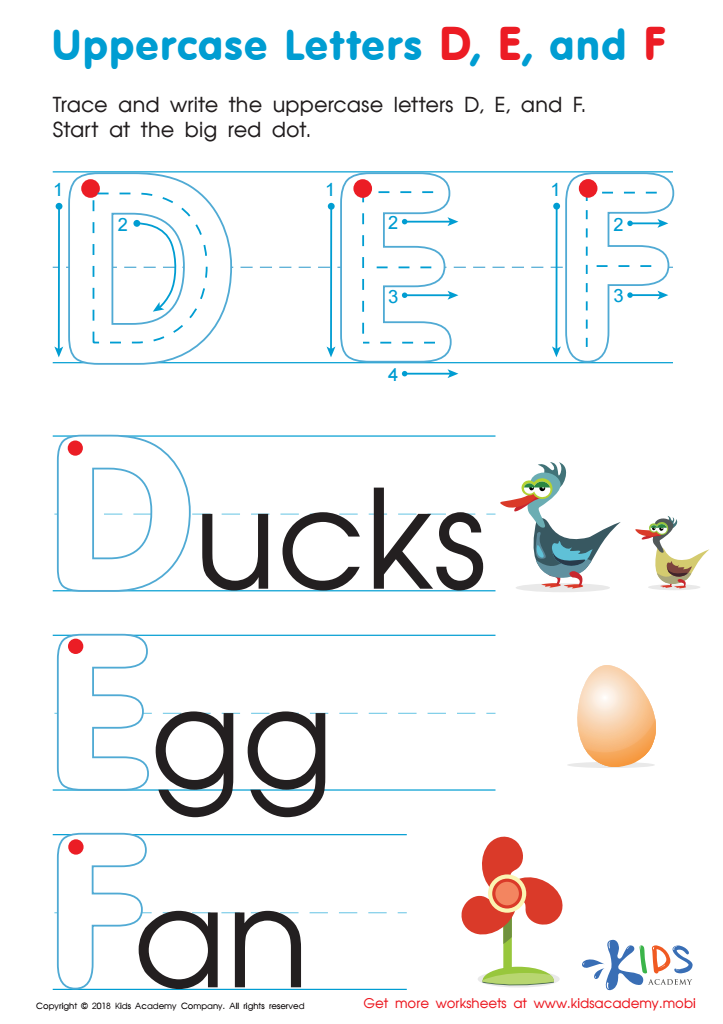
Uppercase Letters D, E, and F Worksheet
 Assign to My Students
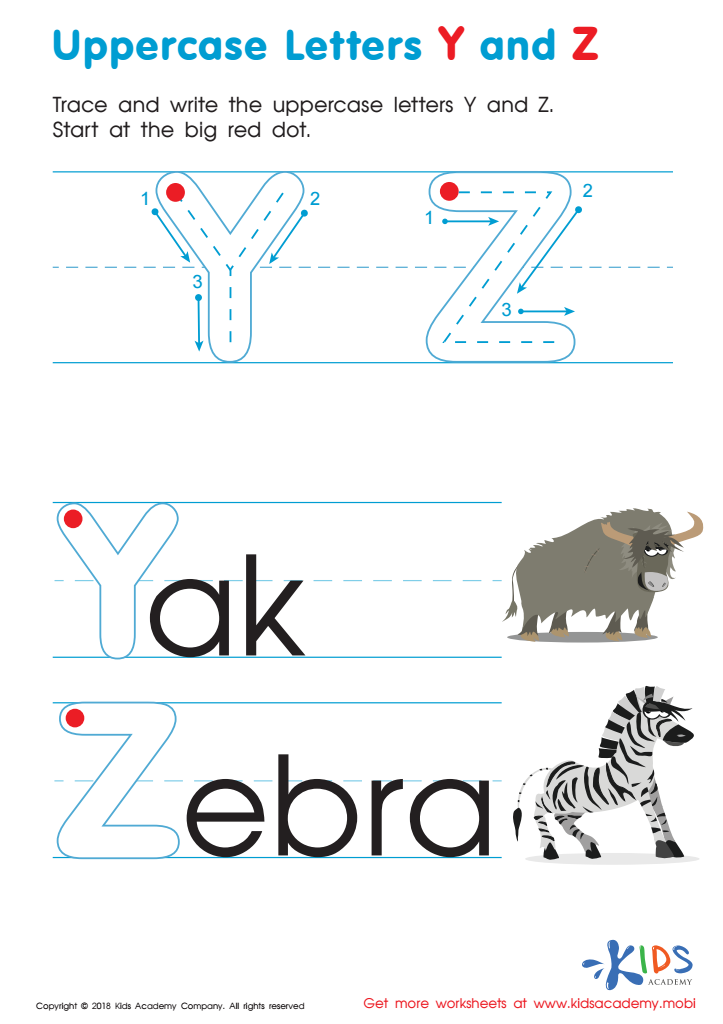
Uppercase Letters Y Z Worksheet
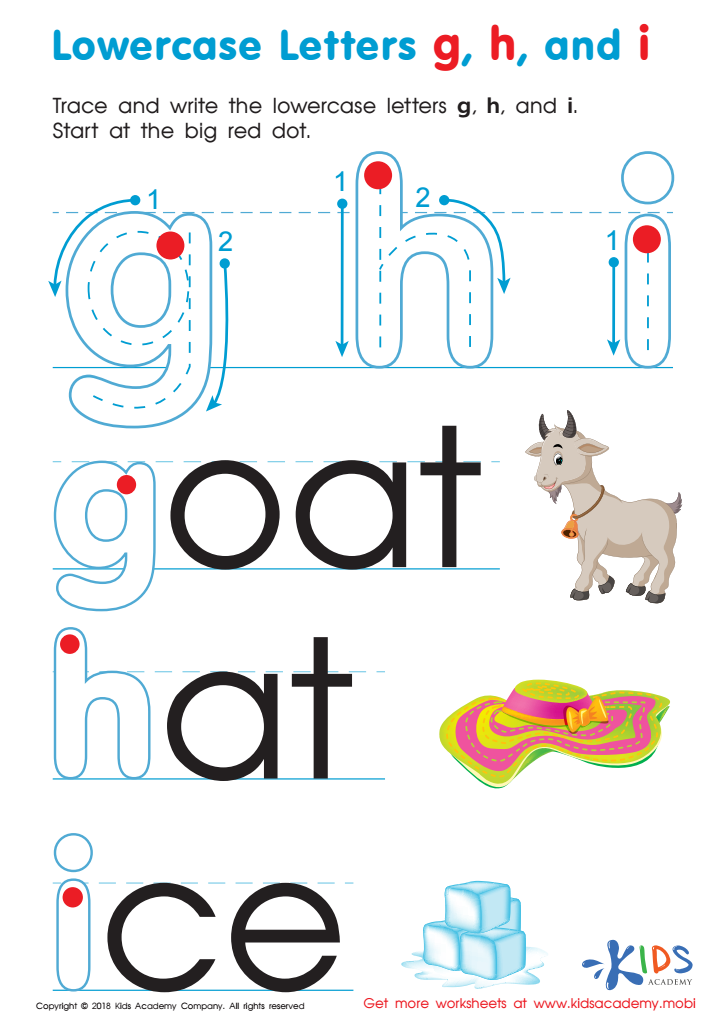
Lowercase Letters g h i Worksheet
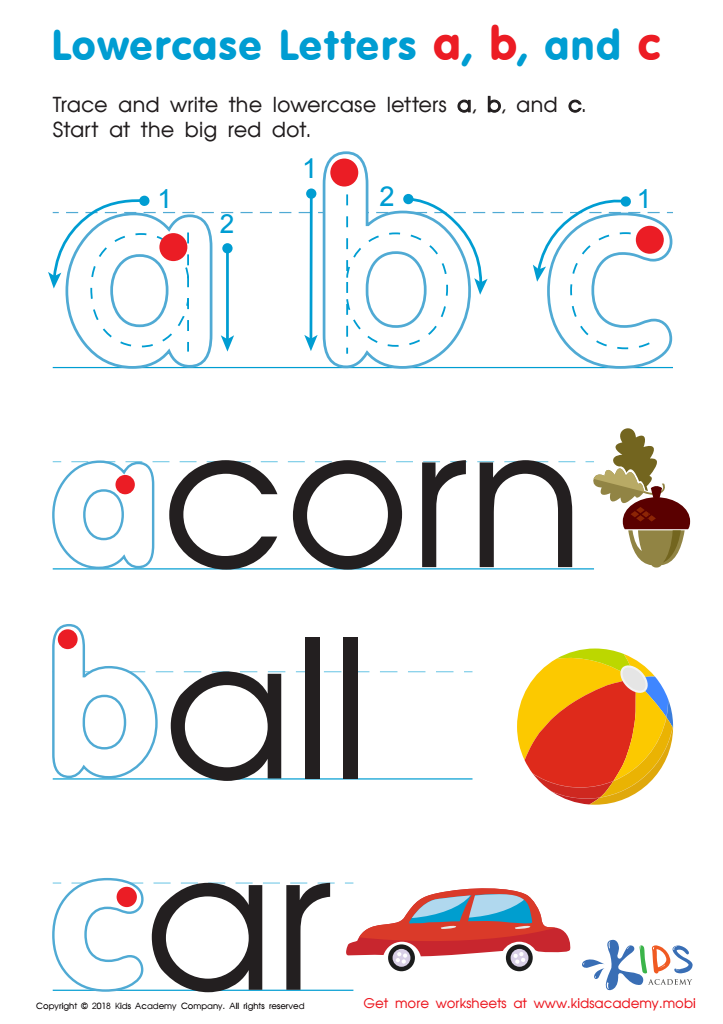
Lowercase Letters a b c Worksheet







Handwriting practice, particularly tracing letters, is a fundamental developmental activity for children ages 4-8. This formative stage lays the groundwork for essential literacy and motor skills that impact future academic achievement and daily activities. Tracing letters helps to enhance fine motor skills by engaging the small muscles in the hands and fingers, crucial for dexterity and overall hand-eye coordination. These motor skills are not only vital for handwriting but are also important in activities like buttoning clothes and using utensils.
By focusing on tracing letters, children develop shape recognition and visual-spatial skills. Recognizing and reproducing each letter's shape aids in cognitive development, reinforcing memory and understanding of the alphabet. The repetitive nature of tracing builds muscle memory, fostering greater writing efficiency and legibility over time.
Handwriting is often connected to higher-order thinking skills such as reading and spelling. Tracing letters melds kinesthetic and cognitive learning, helping children make stronger connections between letter forms, sounds, and words, thus supporting their reading and spelling proficiency.
Lastly, completing tracing exercises instills a sense of achievement and boosts confidence. When children see their skills develop, it encourages persistence, patience, and attention to detail. Given these broad benefits, both parents and teachers should prioritize handwriting practice to support well-rounded early development.








