Lowercase identification Upper & Lowercase Letters Worksheets for Ages 4-8
5 filtered results
-
From - To
Our "Lowercase Identification Upper & Lowercase Letters Worksheets" are expertly designed for children ages 4-8 to master letter recognition. Each worksheet offers engaging activities to help kids distinguish between uppercase and lowercase letters effectively. With fun illustrations and varied exercises, children enhance their alphabet knowledge, boosting their reading and writing skills. Ideal for preschool and early elementary students, these printables make learning enjoyable and interactive. Enhance your child’s early literacy foundation by downloading our worksheets today and watch them gain confidence in their letter identification abilities! Perfect for both classroom and at-home practice.
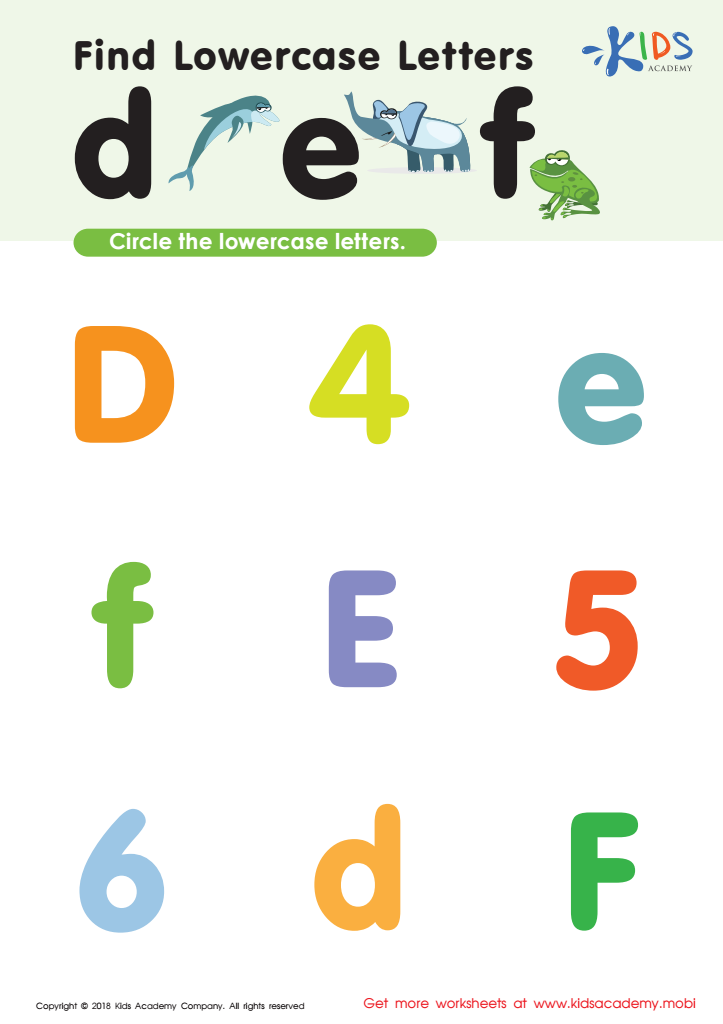
Find Lowercase Letters d e f Worksheet
 Assign to My Students

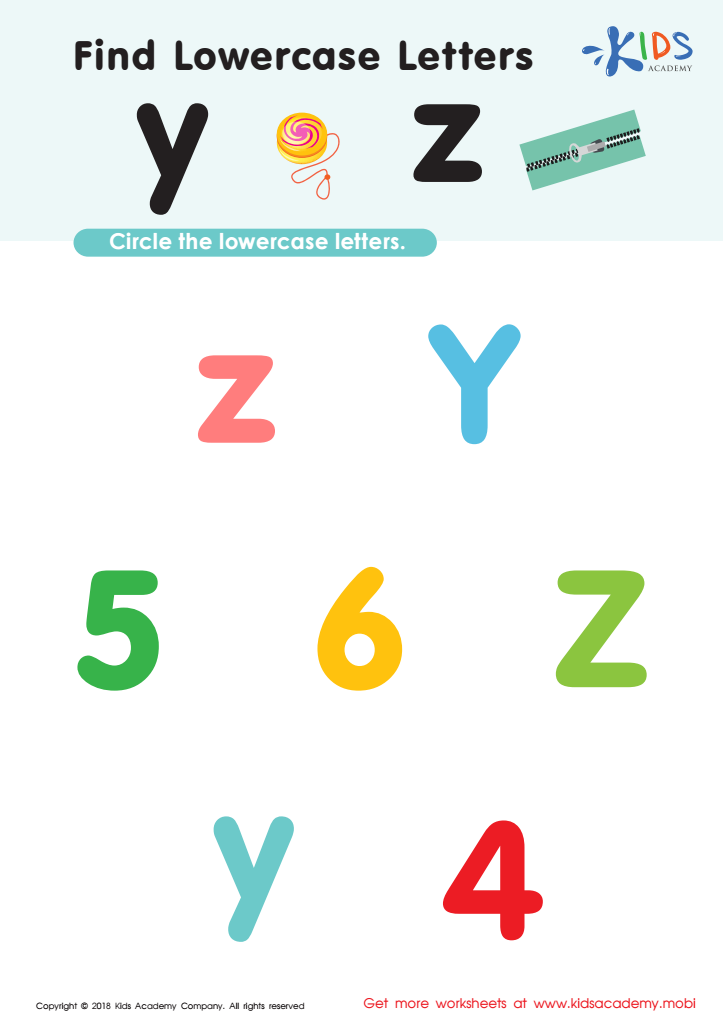
Find Lowercase Letters y z Worksheet
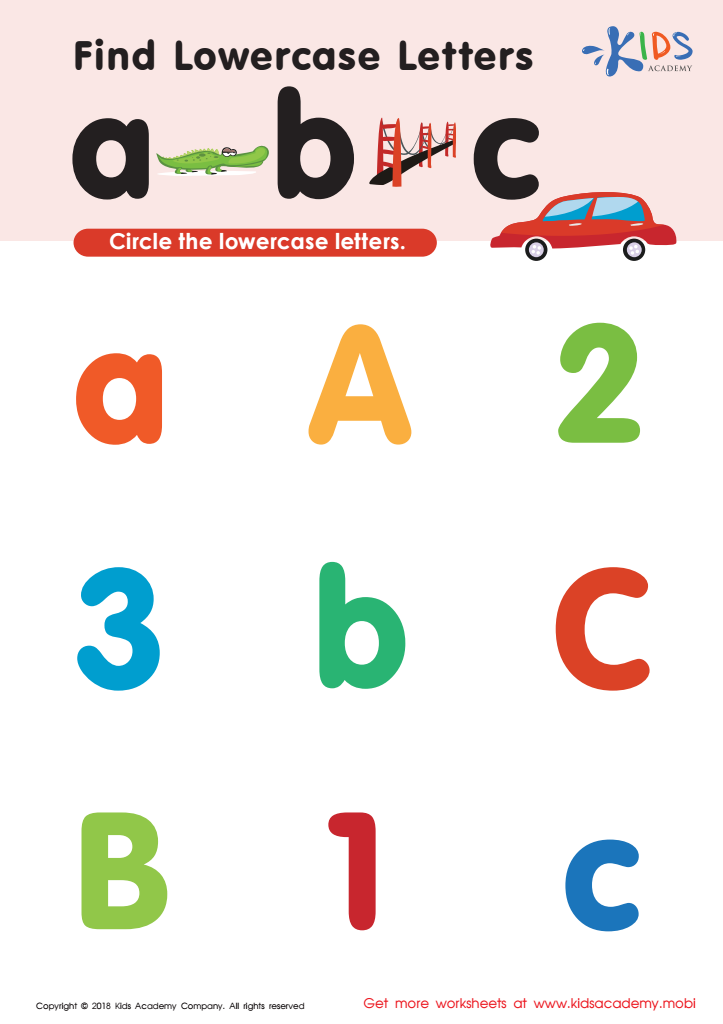
Find lowercase letters a b c Worksheet
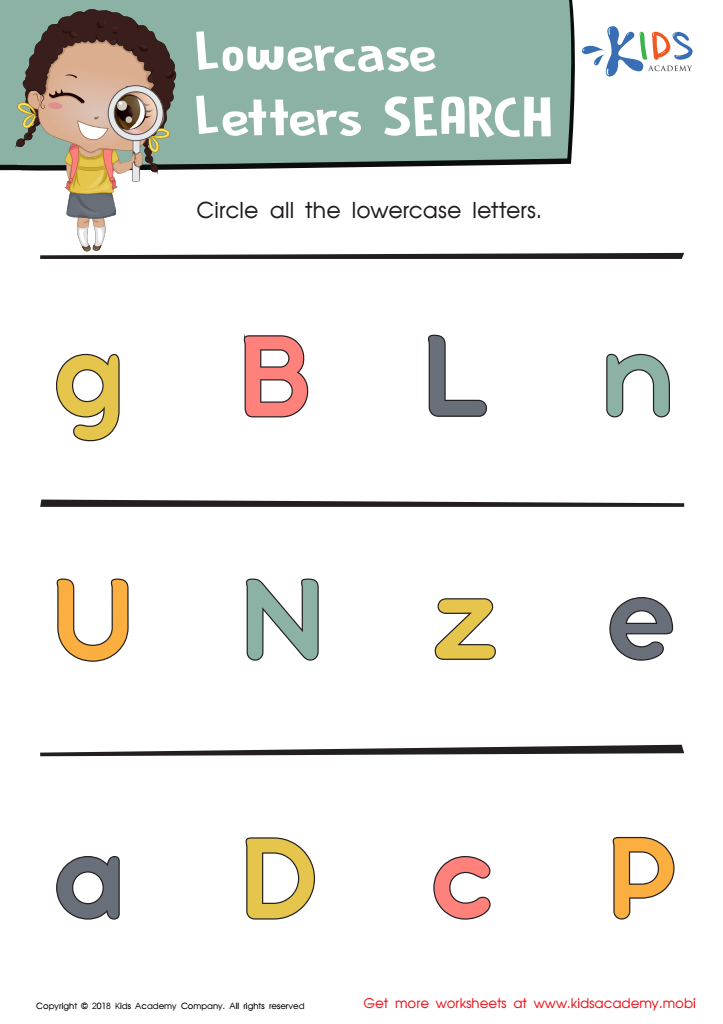
Lowercase Letters Search: Assessment Worksheet
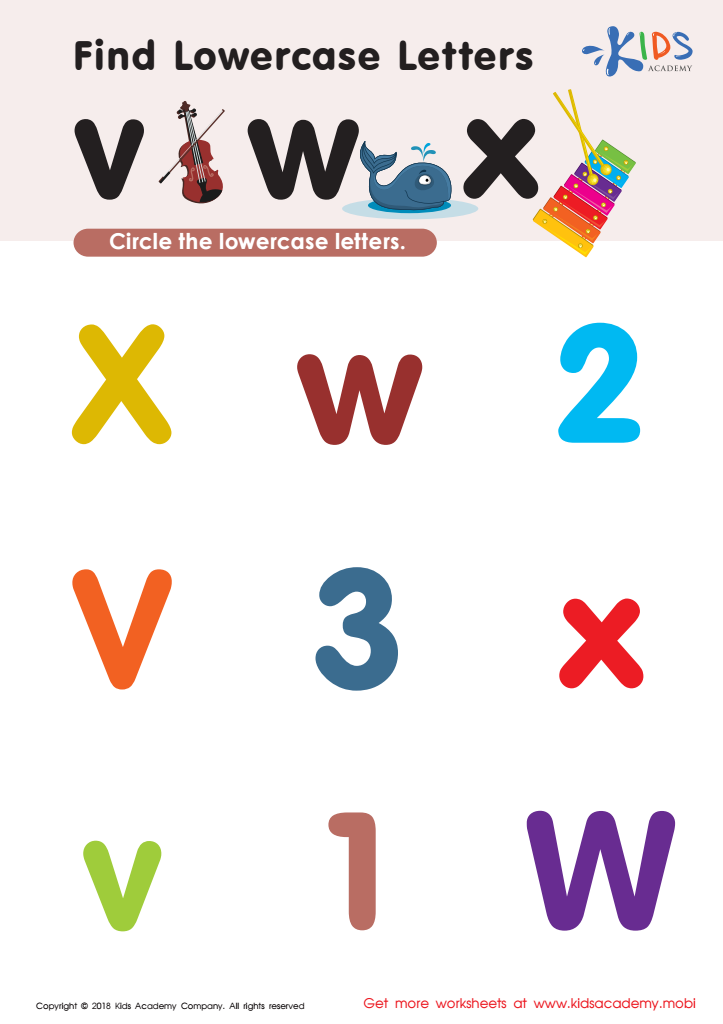
Find Lowercase Letters v w x Worksheet






Lowercase and uppercase letter identification forms the foundation of early literacy skills crucial for children aged 4-8. Understanding both cases is essential for several reasons:
-
Reading Fluency: Children need to recognize and differentiate between uppercase and lowercase letters to read smoothly. This ability enables them to identify words quickly, fostering better reading comprehension.
-
Writing Skills: Knowing how to write both uppercase and lowercase letters correctly is vital for effective written communication. It helps children write sentences that follow conventional grammar rules, ensuring clarity and readability.
-
Alphabet Recognition: Lowercase letters appear more frequently in text than uppercase letters. Thus, recognizing lowercase letters aids in faster and more accurate alphabet recognition, a prerequisite for word identification and phonics.
-
Confidence and Independence: Mastery of both letter forms builds confidence, enabling children to participate more fully in learning activities. An early understanding of letter differences empowers them to take on more complex literacy tasks independently.
-
Developmental Milestone: Differentiating between uppercase and lowercase letters is a cognitive and developmental milestone. It fosters attention to detail, pattern recognition, and memory skills.
In summary, emphasizing lowercase and uppercase letter identification at an early age sets the stage for future academic success and broader communication skills, equipping children with essential tools for their educational journey.







