Vowel Diphthongs Worksheets for Ages 4-8 - Page 2
27 filtered results
-
From - To
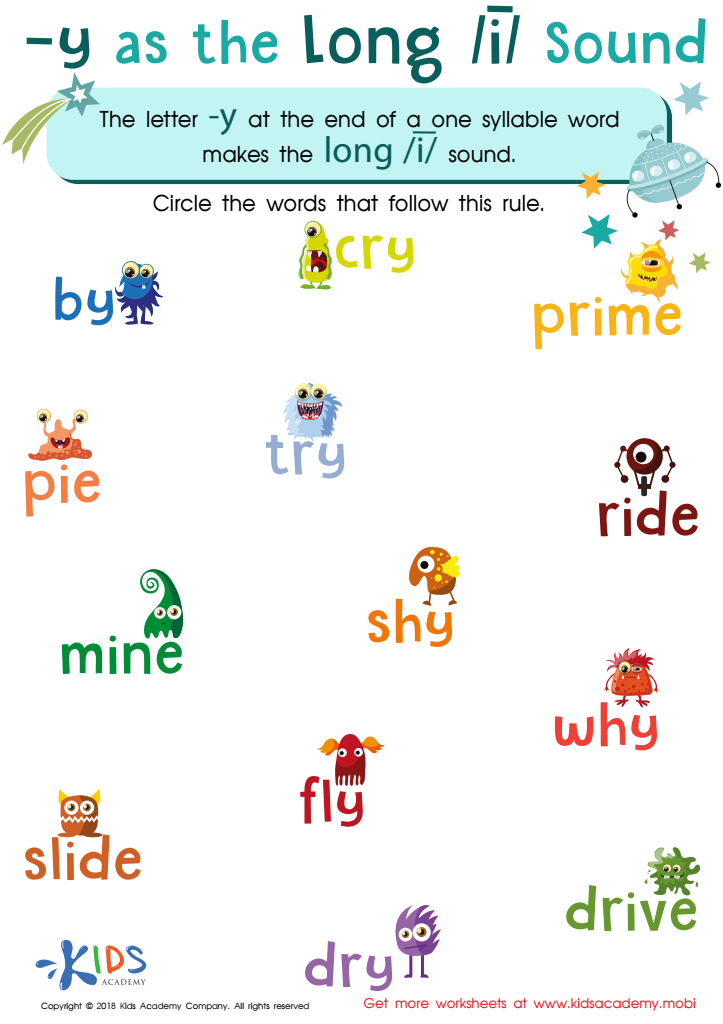
Reading: Y as Long I Worksheet
 Assign to My Students
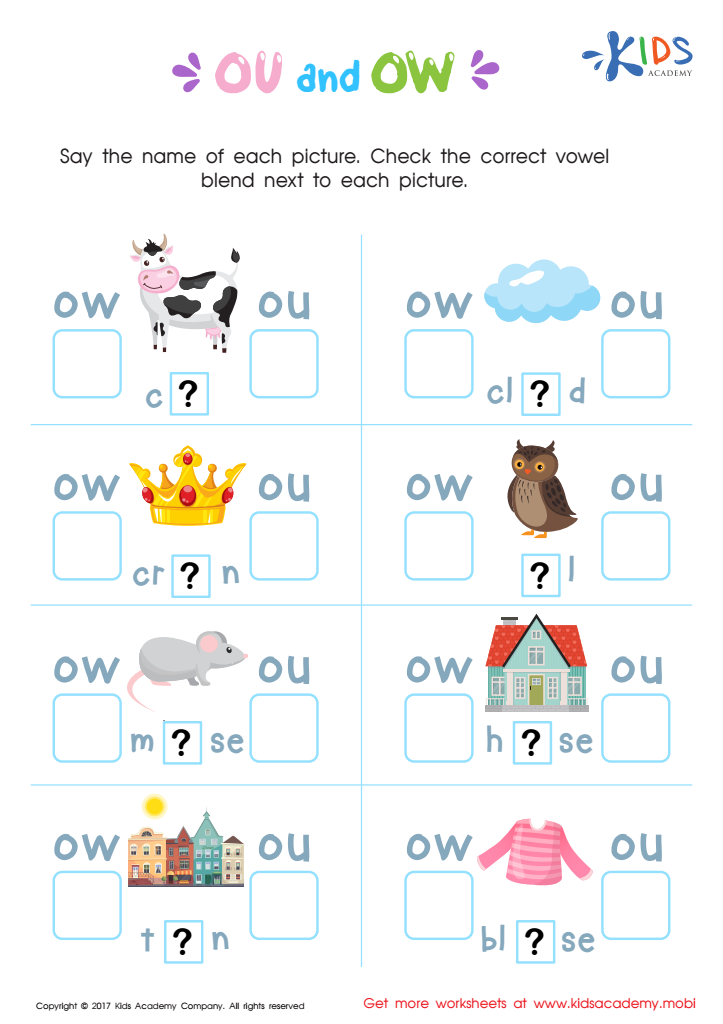
OU and OW Words Worksheet
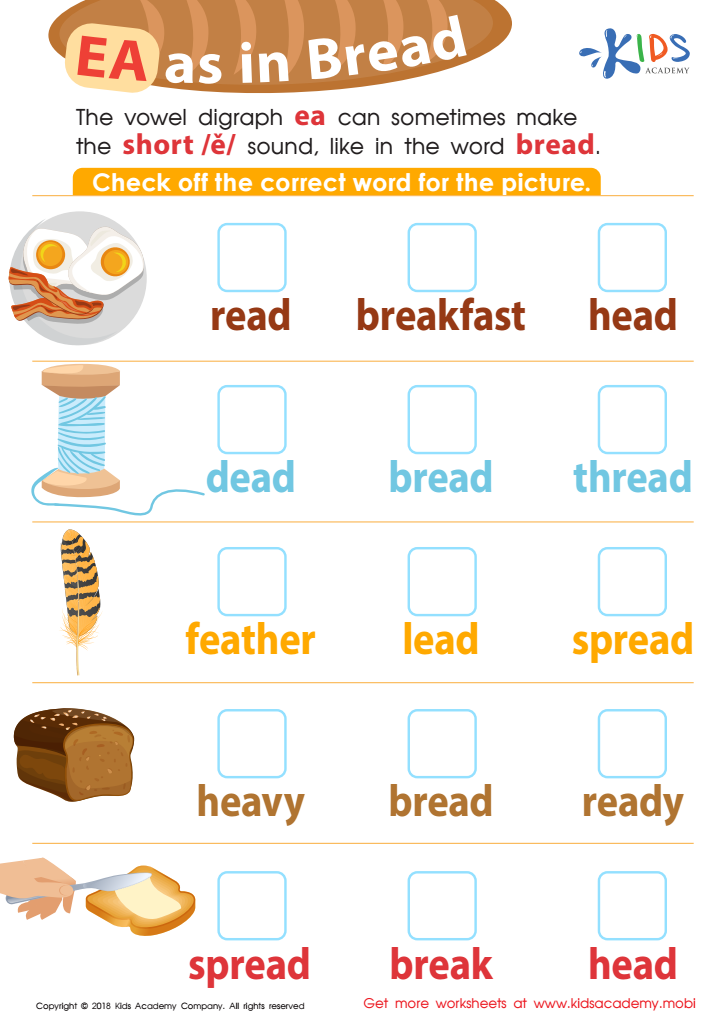
Reading: EA as in Bread Worksheet


Vowel diphthongs are crucial for early literacy and phonemic awareness, making them essential for parents and teachers of children aged 4 to 8. Understanding diphthongs—complex sounds created when two vowel sounds blend in one syllable—empowers children to recognize pronunciation patterns in words, enhancing their spelling and reading skills.
At this age, children are building foundational language abilities. By incorporating vowel diphthongs into reading activities, educators can support phonics instruction and help children identify sound blends, fostering confidence in their language use. Recognizing diphthongs, such as the sounds in “coin” or “out,” helps children decode words independently, crucial as they begin to tackle more complex texts in early grades.
Moreover, parents can support this learning journey at home through engaging phonics games and reading exercises. Encouraging exploration of words with diphthongs broadens vocabulary and deepens phonological awareness. This investment in mastering vowel sounds contributes to overall language development, critical for later communication skills and academic success.
In a world increasingly driven by effective communication, prioritizing diphthong recognition sets a strong foundation, ensuring children can engage confidently with reading, writing, and their peers. Thus, fostering these skills in early education is vital for lifelong literacy.