Spelling Skills Vowels Worksheets for Ages 4-8
4 filtered results
-
From - To
Boost your child's spelling prowess with our Spelling Skills Vowels Worksheets for Ages 4-8! These expertly crafted printable sheets are designed to enhance young learners' understanding of vowel sounds, crucial for strong spelling foundations. Engaging and educational, each worksheet focuses on different vowel combinations, helping children to recognize, pronounce, and spell with confidence. Ideal for preschool to early elementary grades, these activities ensure interactive learning through fun exercises, puzzles, and colorful illustrations. Start your child’s spelling adventure today and watch them excel with enhanced vocabulary and phonetic expertise!
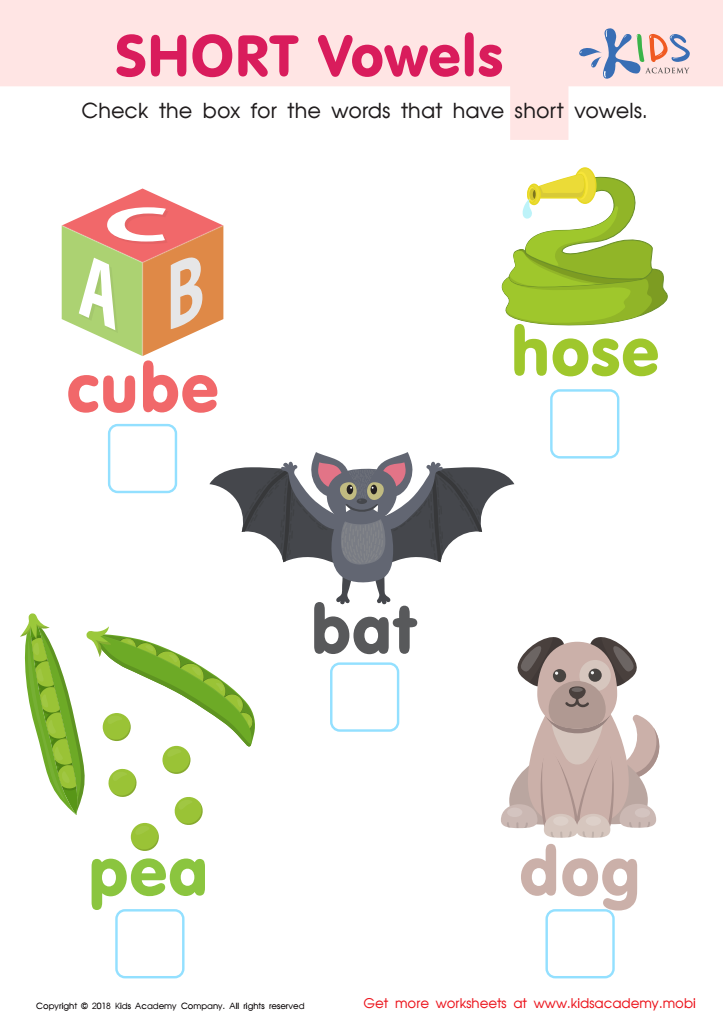
short vowels Worksheet
 Assign to My Students
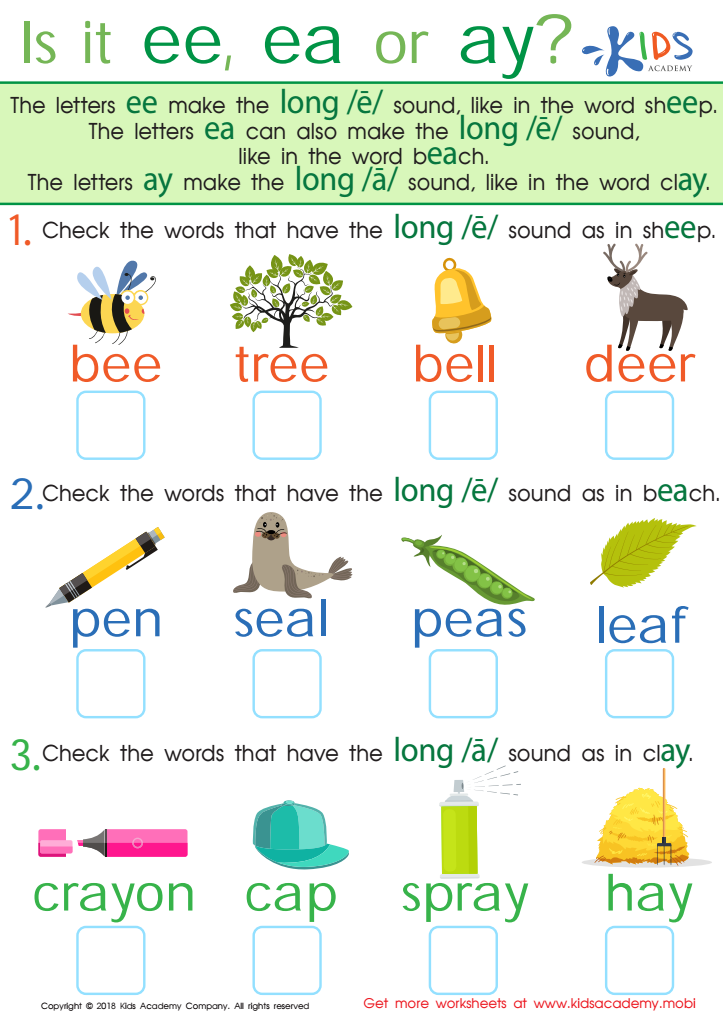
Is It EE, EA, or AY? Worksheet
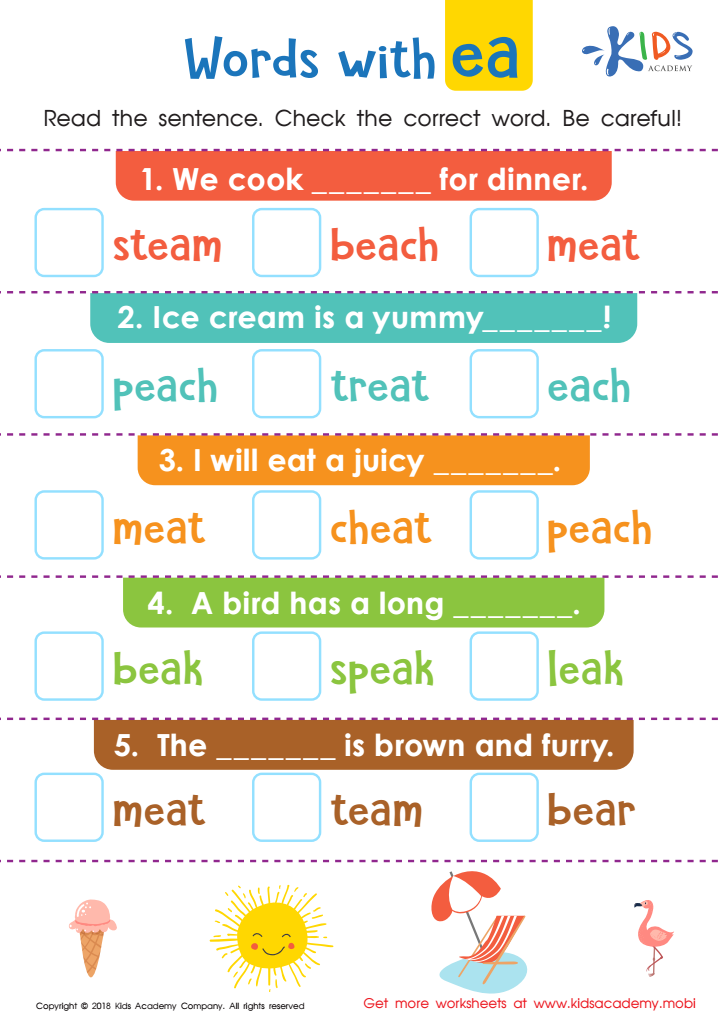
Words with ea Worksheet
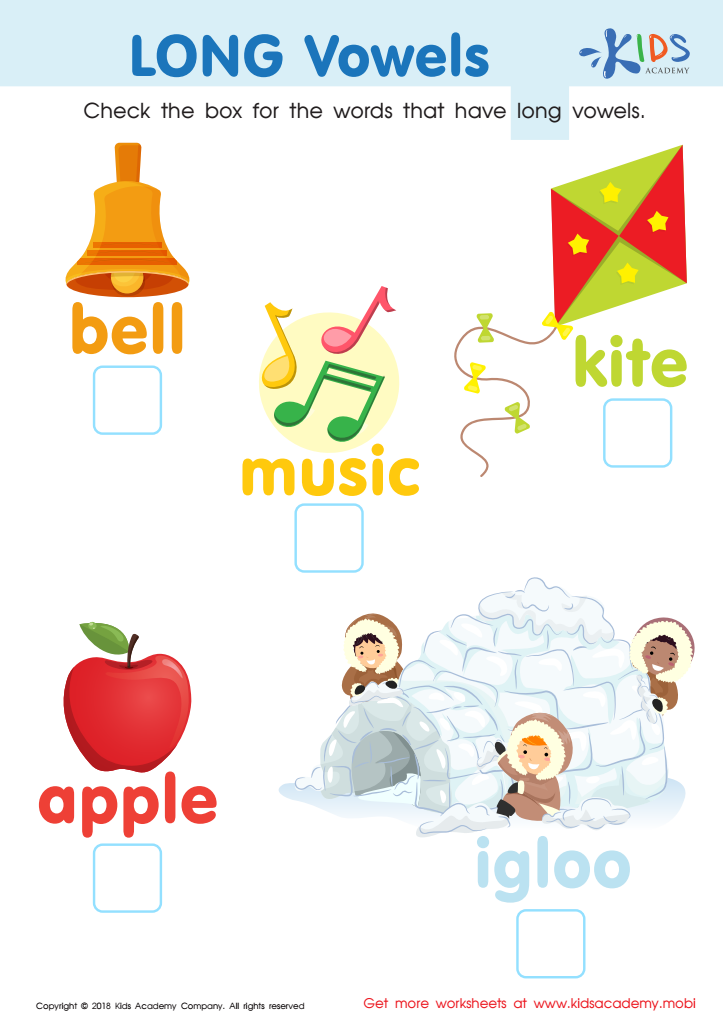
long vowels Worksheet





Spelling skills, particularly those related to vowels, are crucial for children ages 4-8 as they foundationally shape literacy development. At this age, children are actively learning to decode words and enhance their reading abilities.
Vowels are essential components of words, affecting both pronunciation and meaning. Understanding vowels helps children develop phonemic awareness, which is the ability to identify and manipulate individual sounds in spoken words—a vital skill for reading readiness. For instance, recognizing the difference between short and long vowel sounds ('cat' vs 'cake') is instrumental.
Engaging in spelling practices that emphasize vowel usage not only reinforces these auditory distinctions but also augments students' memory and cognitive connections regarding word formation and structure. This aids in better reading comprehension and fluency, as students who can spell accurately can read more efficiently without constant obstacles.
Moreover, strong vowel skills contribute to writing competency. As children gain mastery over their spellings, they can express themselves more effectively in writing, fostering creativity and confidence. This holistic development paves the way for academic success, as literacy is the cornerstone of learning across subjects.
Ultimately, prioritizing spelling skills and vowels during the early years empowers children with tools necessary for lifelong communication and learning, giving them a solid foundation to build upon as they advance in their education.







