Analog clock reading Worksheets for Ages 4-8
4 filtered results
-
From - To
Introduce your child to the timeless skill of analog clock reading with our engaging worksheets designed for ages 4-8. Our meticulously crafted activities help young learners grasp the concepts of hours and minutes, while improving their time-telling proficiencies. They offer a blend of fun exercises covering every aspect from identifying clock hands to calculating time intervals. Ideal for preschool through early elementary, these worksheets cater to various skill levels, ensuring that kids progress at their own pace. Enhance both their confidence and competence in reading analog clocks, laying a strong foundation for lifelong time management skills. Start the journey today!
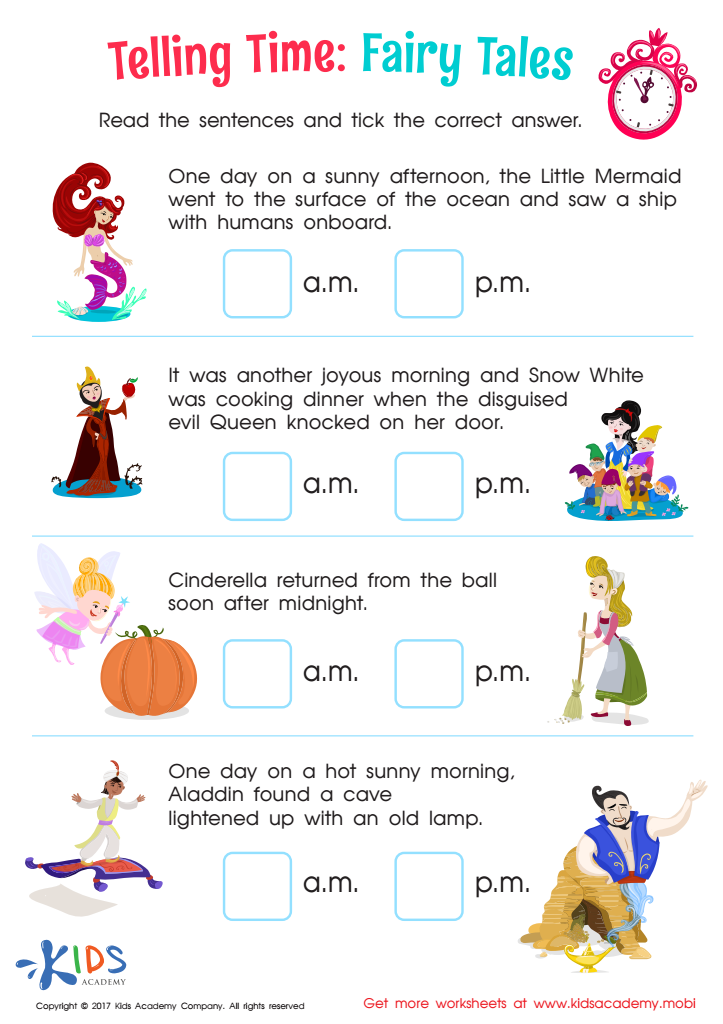
Telling Time: Fairy Tales Worksheet
 Assign to My Students
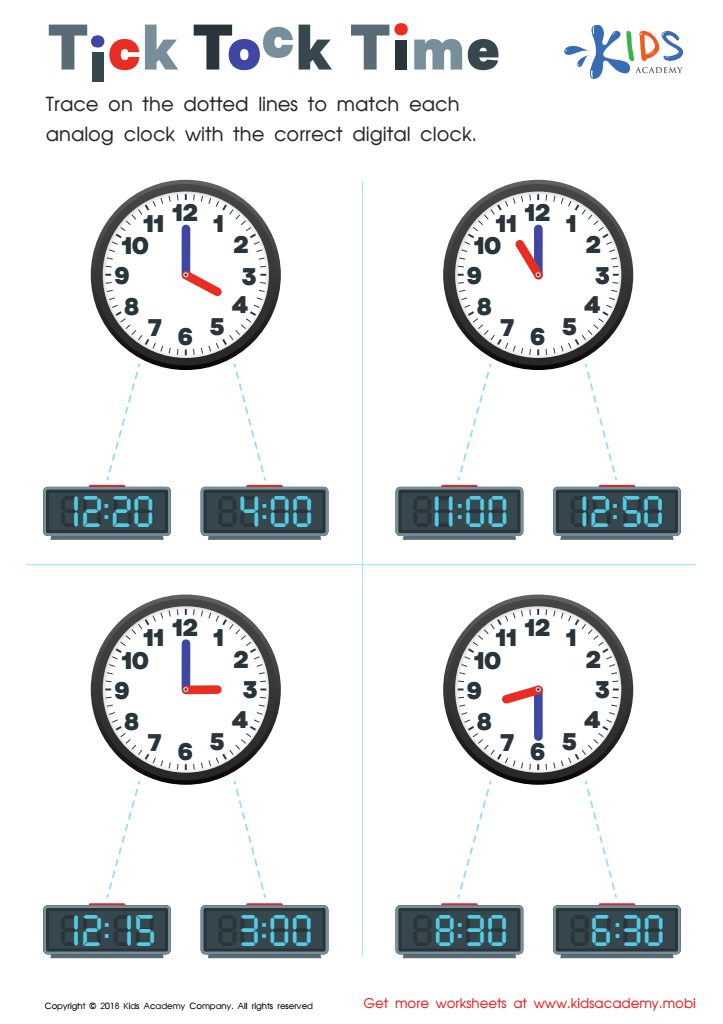
Tick Tock Time Worksheet
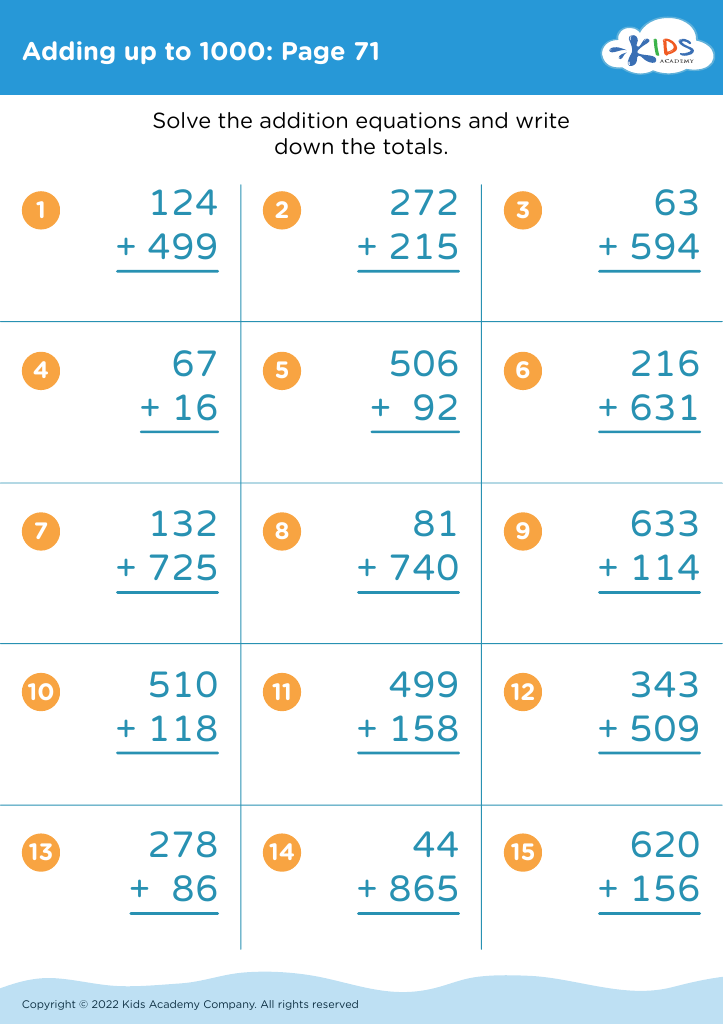
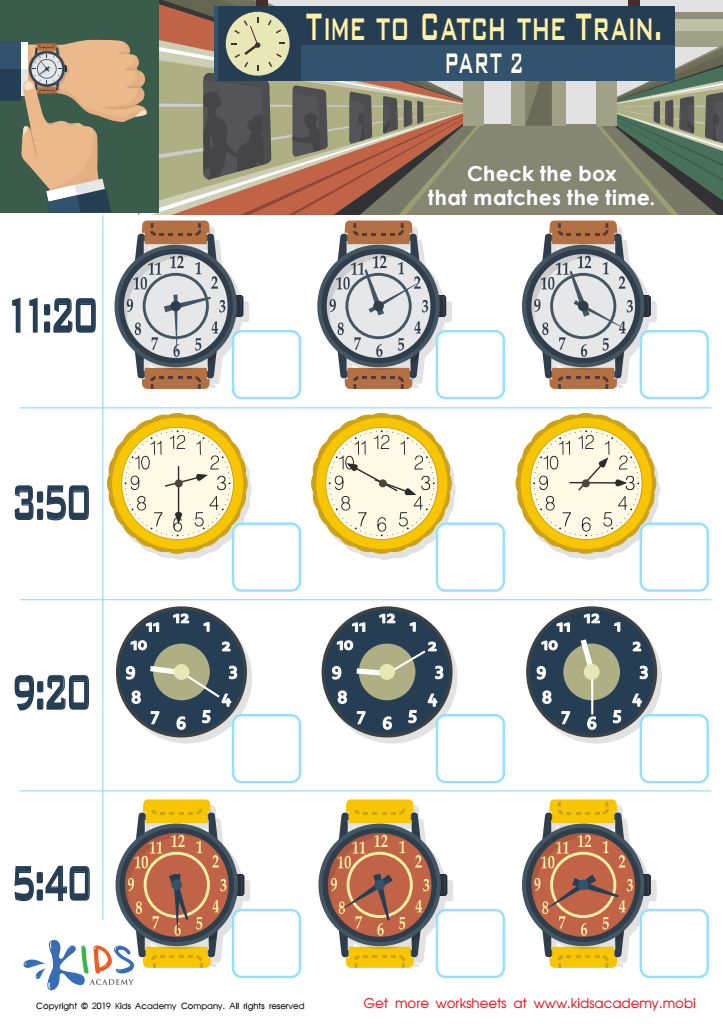
Time to Catch the Train Part 2 Worksheet







Understanding how to read an analog clock is a crucial life skill for young children aged 4-8, blending elements of math, cognitive development, and time management. Initially, it helps kids grasp number sequences, basic math operations, and fractions. Analog clocks visually represent time, helping children understand concepts like "half past" or "quarter to," which are abstract in digital form.
Reading analog clocks also improves spatial reasoning, requiring children to decode the positions of the hour and minute hands in a circular layout. This skill translates to better problem-solving abilities and spatial awareness in later academic endeavors.
Furthermore, time-telling facilitates daily routines and time management. Children who can accurately read an analog clock are better equipped to comprehend and adhere to schedules, improving their organizational skills and independence. It enhances their punctuality and ability to manage activities autonomously, aiding their overall development.
Finally, analog clock reading offers an addition to their fine motor skill development as they manipulate clock hands physically when using teaching tools. For these reasons, both parents and teachers should prioritize teaching children aged 4-8 to read an analog clock, ensuring they develop mathematical proficiency, cognitive skills, and effective time management.








