Basic arithmetic operations Worksheets for Ages 4-8
3 filtered results
-
From - To
Unlock your child's math potential with our Basic Arithmetic Operations Worksheets for Ages 4-8. Designed to make learning fun and interactive, these worksheets cover essential skills like addition, subtraction, multiplication, and division. Each activity encourages critical thinking and problem-solving, ensuring a solid foundation in arithmetic. Ideal for both classrooms and home practice, our worksheets are tailored to match individual learning paces and make math engaging for young minds. Start building your child's confidence in math with our expertly crafted, printable worksheets.
Discover more: link
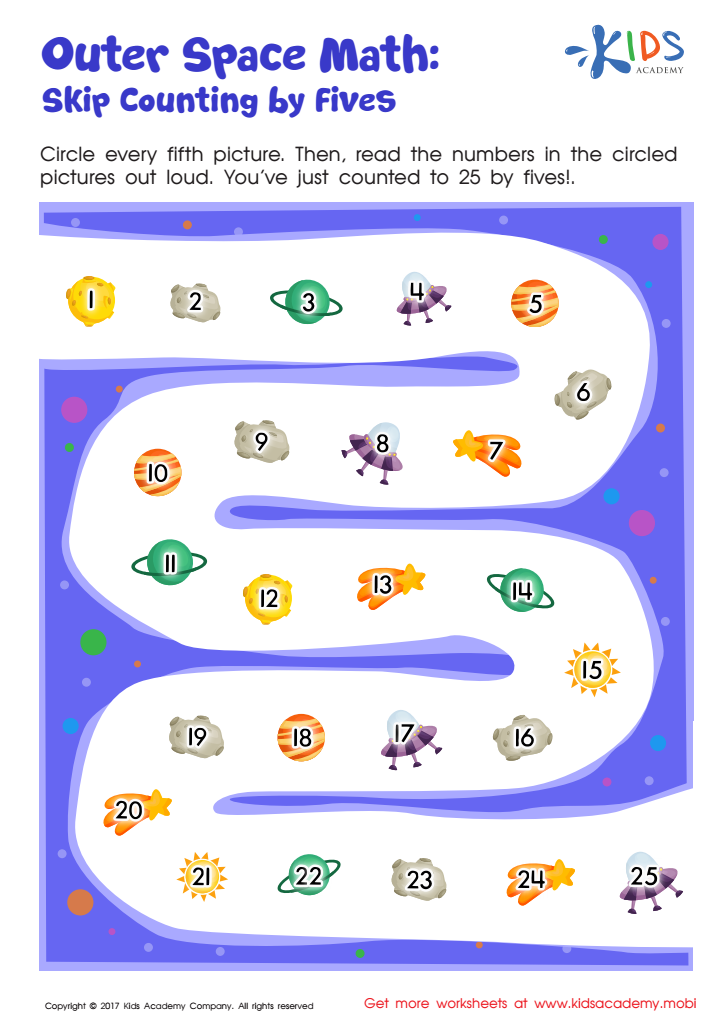
Skip Counting by 5s: Outer Space Math Printable
 Assign to My Students
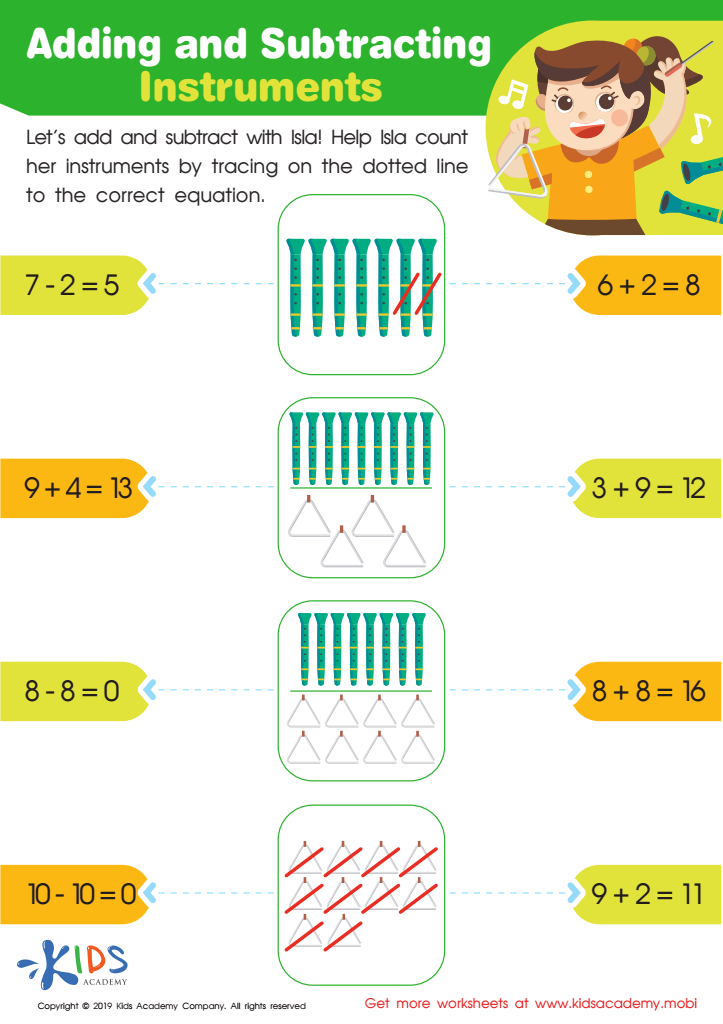
Adding and Subtracting: Instruments Worksheet
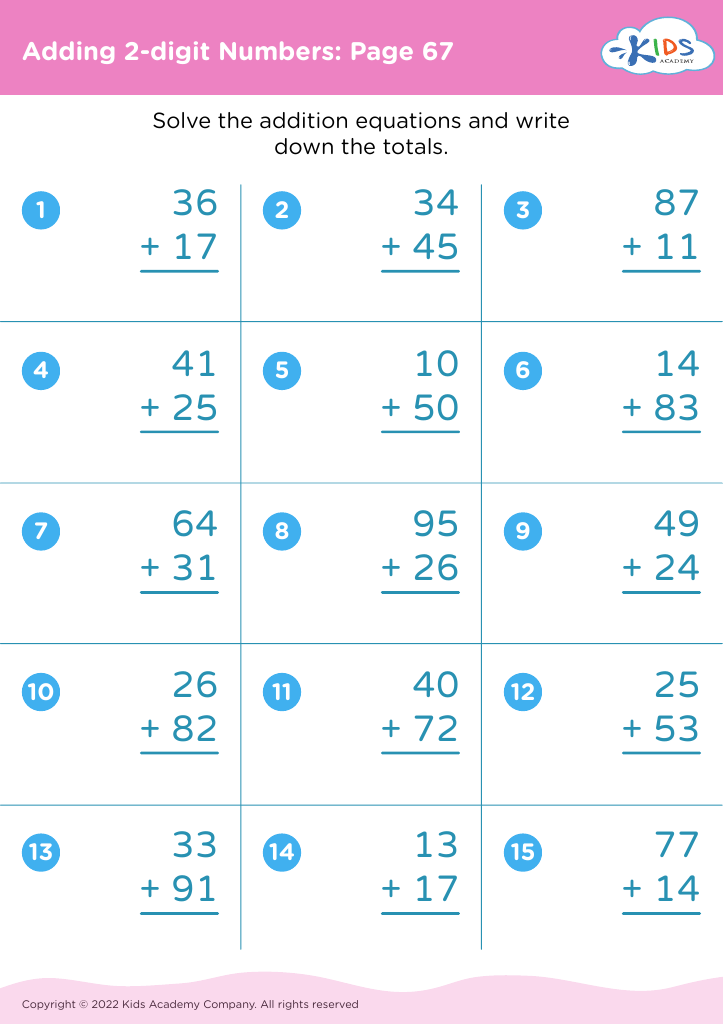








Basic arithmetic operations—addition, subtraction, multiplication, and division—serve as the foundation for all advanced mathematical concepts. For children aged 4-8, mastering these skills is crucial for several reasons.
First, early exposure to arithmetic operations fosters cognitive development. Problem-solving exercises bolster critical thinking, logical reasoning, and memory. These skills are not only useful in math but also enhance overall academic performance.
Second, arithmetic proficiency is essential for practical day-to-day activities. Counting money, understanding time, and measuring ingredients for a recipe all require a grasp of basic math. For young children, these activities make math relevant and reinforce the importance of learning these skills.
Third, early math success boosts confidence. When children understand and can manipulate numbers, it translates into a positive attitude towards learning as a whole. It sets a strong foundation for tackling more challenging subjects in later years, such as algebra and geometry.
Lastly, collaborative activities that involve math promote social skills. Group work involving arithmetic encourages communication, cooperation, and patience.
In summary, parents and teachers should prioritize basic arithmetic for young children to nurture intellectual growth, facilitate everyday tasks, build academic confidence, and foster essential social interactions, thereby setting the stage for a lifetime of learning.








