Basic subtraction practice Worksheets for Ages 4-8
3 filtered results
-
From - To
Discover our engaging Basic Subtraction Practice Worksheets designed specifically for children aged 4-8! These printable resources provide a fun and interactive way for young learners to master subtraction concepts. Our worksheets feature colorful illustrations, guided exercises, and a variety of difficulty levels to accommodate each child's pace. By practicing essential subtraction skills, your child will build confidence in their math abilities while developing problem-solving strategies. Ideal for classrooms or home learning, these worksheets are a perfect tool to reinforce mathematic foundations. Explore our dedicated collection today and support your child's journey in becoming a subtraction superstar!
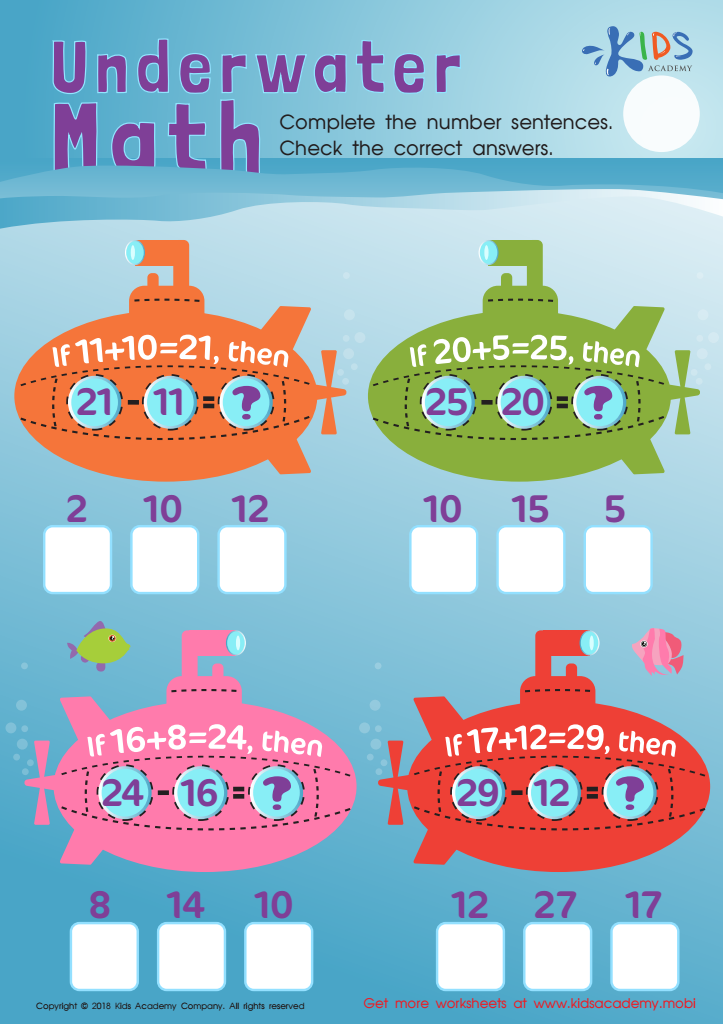
Addition and Subtraction: Underwater Math Worksheet
 Assign to My Students
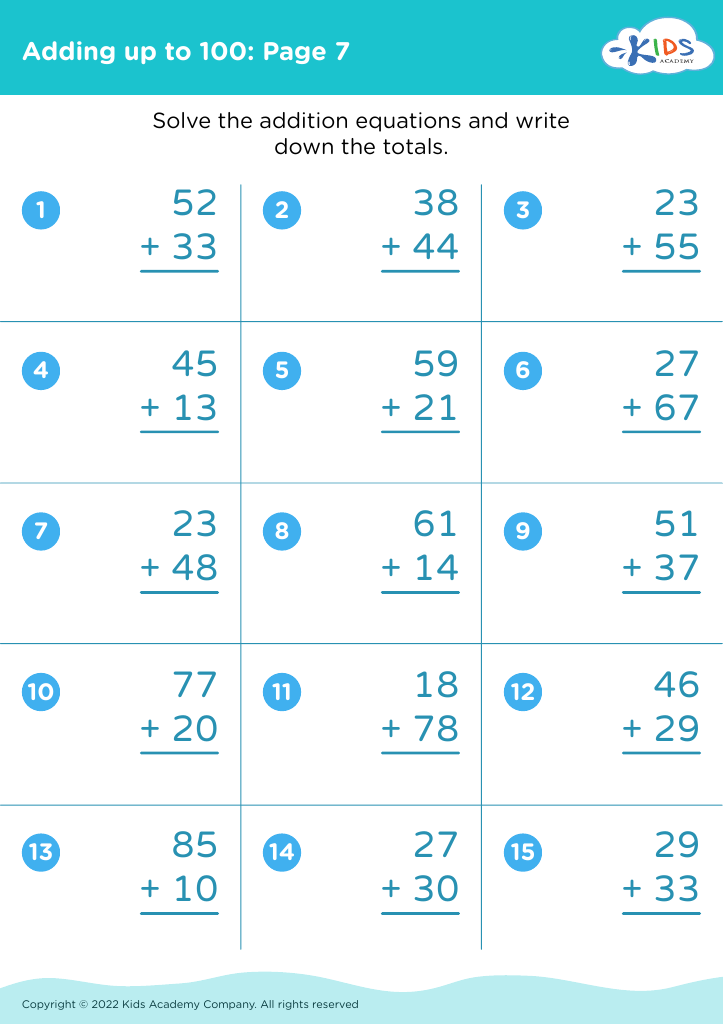
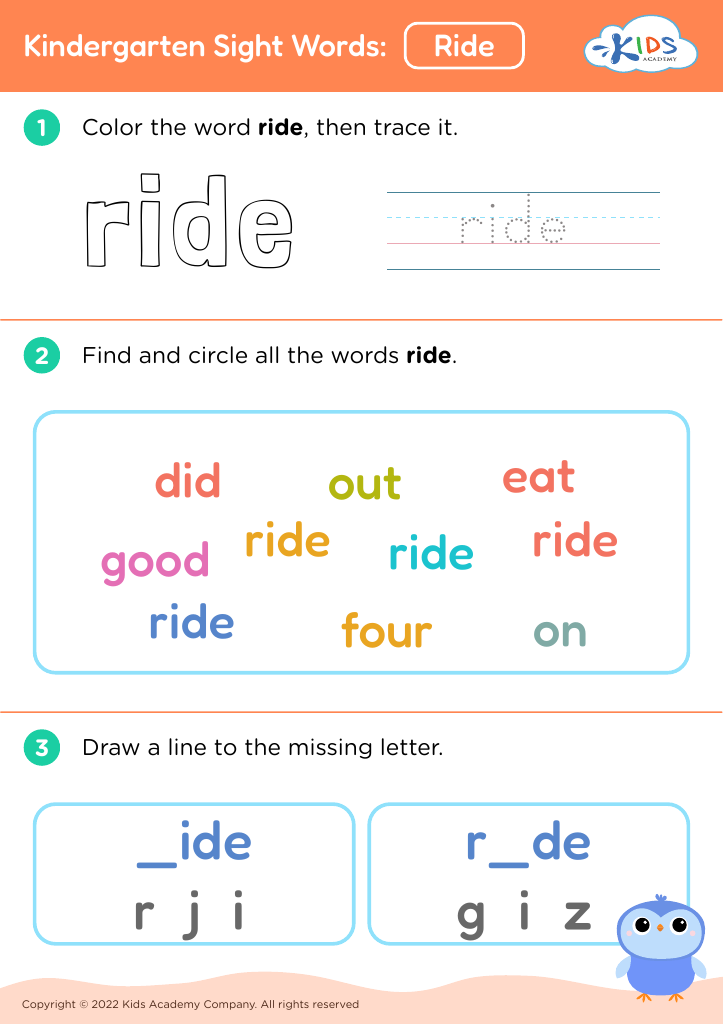








Basic subtraction practice is crucial for children aged 4-8 as it lays the foundation for their mathematical development and cognitive growth. At this age, kids are naturally curious about numbers and relationships between them. Engaging in subtraction practice helps enhance their problem-solving skills, logical thinking, and understanding of quantity. When children learn to subtract, they begin to grasp the concept of "taking away," which is fundamental for comprehending more complex mathematical operations later on.
Additionally, mastering basic subtraction boosts children's confidence in their abilities, fostering a positive attitude toward math. This early proficiency can lead to a stronger understanding of future topics such as addition, multiplication, and division. Beyond academics, subtraction exercises encourage perseverance and resilience when faced with challenges, teaching students that struggle is a part of the learning process.
Moreover, involvement from parents and teachers in practicing subtraction creates a supportive learning environment, reinforcing the idea that learning can be fun and collaborative. Educational games or hands-on activities can make subtraction enjoyable, bridging the gap between learning and play. Ultimately, nurturing these foundational skills at an early age not only prepares children for academic success but also equips them with essential life skills.








