
Categorizing objects Worksheets for Ages 4-8
5 filtered results
Difficulty Level
Grade
Age
-
From - To
Subject
Activity
Standards
Discover our engaging "Categorizing Objects Worksheets" designed for children ages 4-8! These fun and educational resources help young learners identify, group, and classify various objects, nurturing their critical thinking and problem-solving skills. Each worksheet features colorful illustrations and simple instructions, making it easy for kids to understand the concepts of categorization based on different attributes such as color, size, and type. Ideal for both home and classroom use, these worksheets not only support early learning but also facilitate sensory development and creativity. Encourage your child’s growth in a fun way while preparing them for future academic success with our vibrant categorizing worksheets!
Favorites
With answer key
Interactive
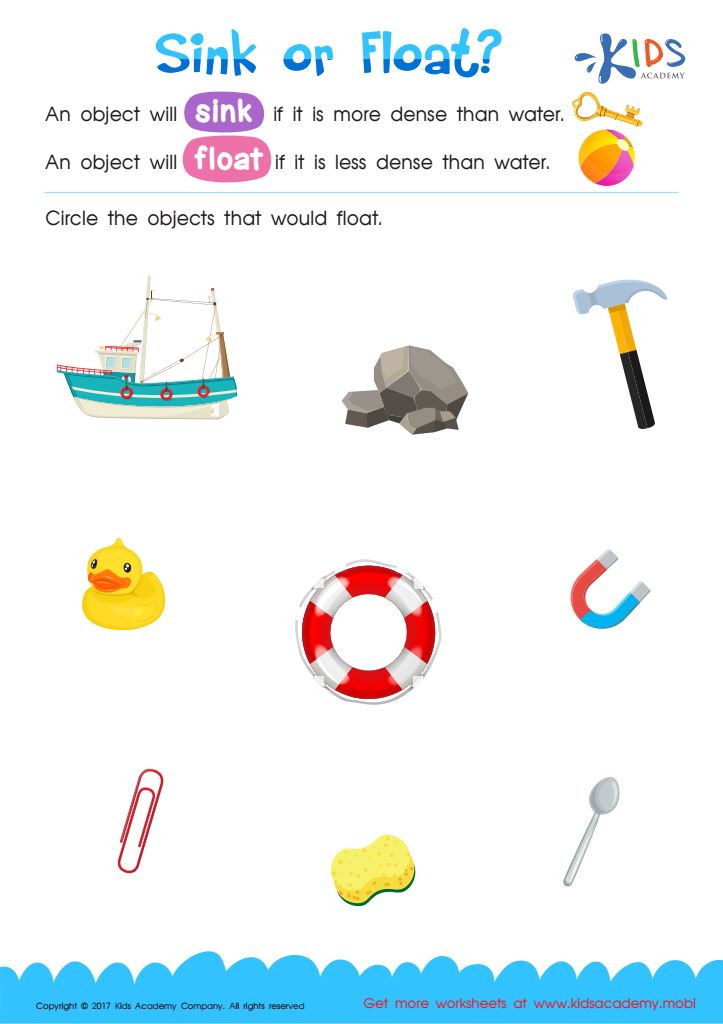
Sink or Float Printable
They'll learn why some things stay on the surface and others sink to the bottom. (80 words)
 Assign to My Students
Sink or Float Printable
Worksheet
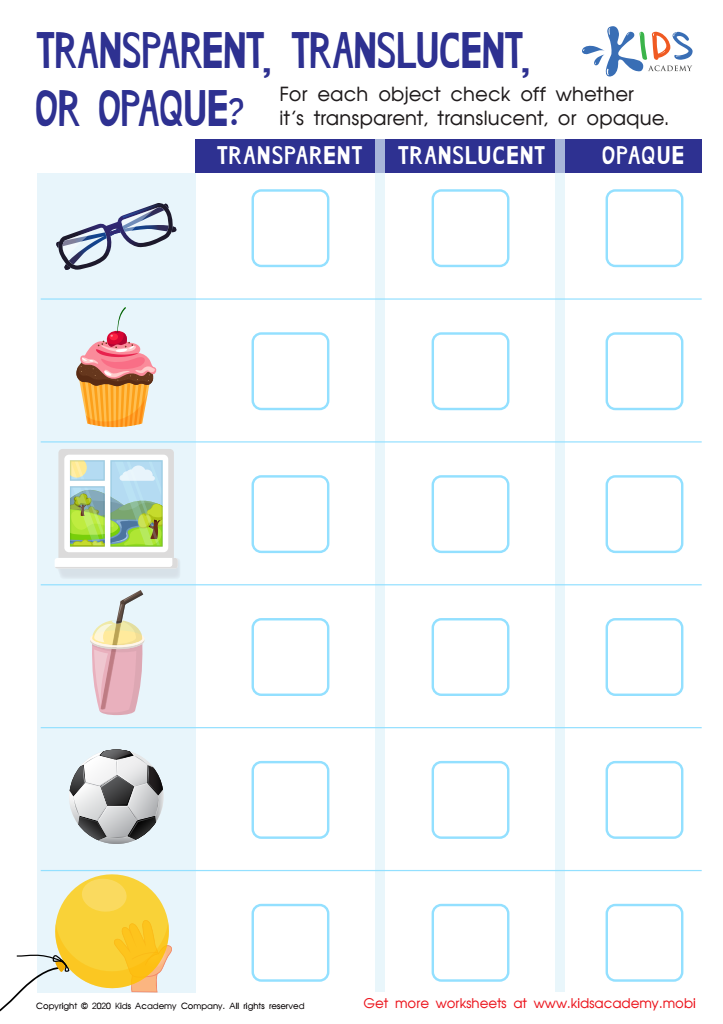
Transparent, Translucent, or Opaque Worksheet
Remind students that transparent objects allow us to see through them, translucent objects let some light pass through, and opaque objects block all light. Have them look at pictures and decide if each object is transparent, translucent, or opaque.
Transparent, Translucent, or Opaque Worksheet
Worksheet
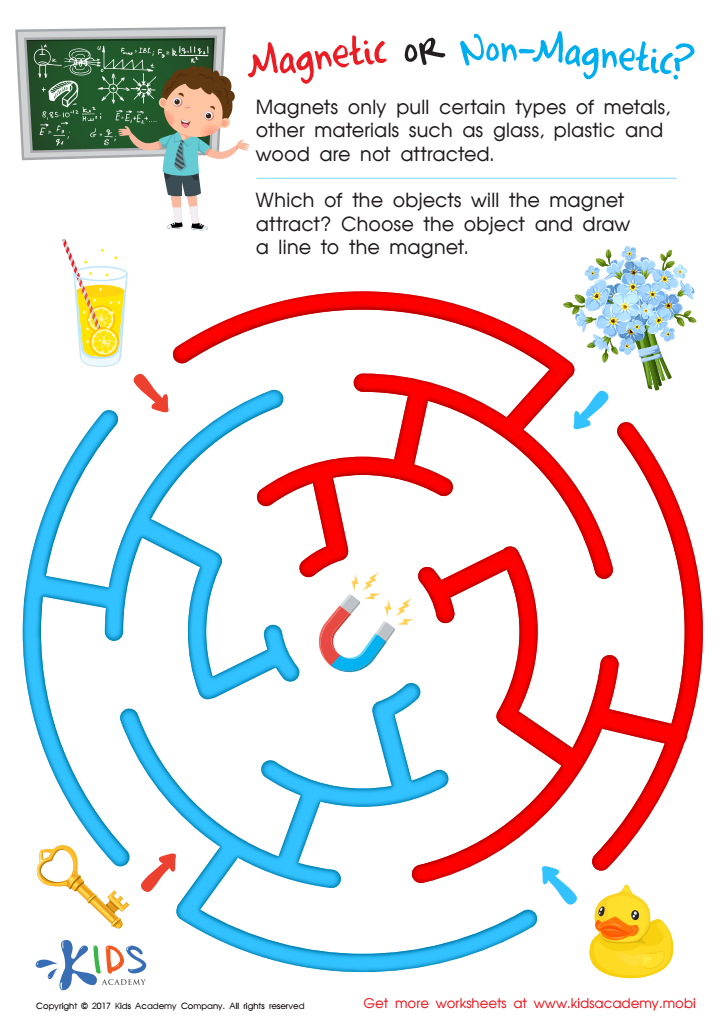
Magnetic or Non–Magnetic Worksheet
Introduce your child to magnetism with this fun maze! Read the summary to explain the concept, then help them find the magnetic object as they navigate the maze. It's a great way to learn and have fun!
Magnetic or Non–Magnetic Worksheet
Worksheet
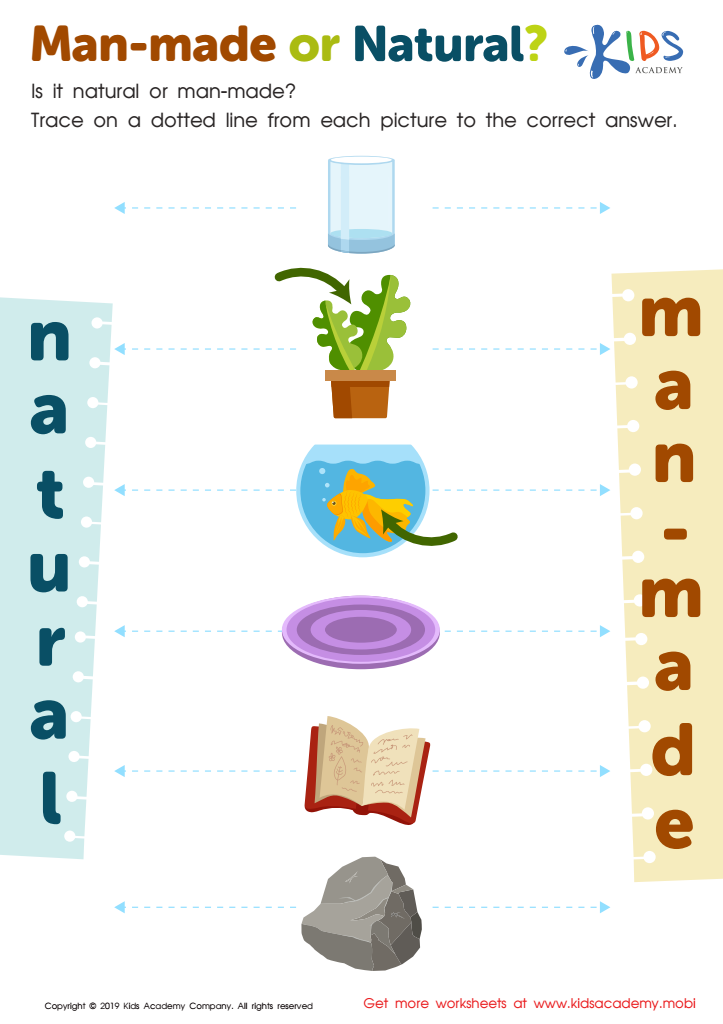
Man-Made or Natural? Worksheet
Ask your students to name natural and man-made objects. Check the worksheet to help them identify the objects, then trace the dotted line to determine if it's natural or man-made.
Man-Made or Natural? Worksheet
Worksheet
Join Kids Academy for Free
Who is primarily going to use this learning content?





.jpg)


Categorizing objects is a fundamental cognitive skill that plays a crucial role in the development of children aged 4-8. Parents and teachers should care about this skill for several reasons. Firstly, categorization fosters critical thinking as children learn to group items based on shared attributes, such as size, shape, color, or function. This process enhances their ability to analyze and draw connections between different concepts.
Secondly, categorization is essential for language development. As children classify objects, they learn new vocabulary words and improve their understanding of language structures, which helps in effective communication.
Moreover, this skill supports math readiness. Identifying patterns and classifications lays the groundwork for more complex mathematical concepts, such as sorting, algebraic thinking, and problem-solving.
Socially, when children categorize and compare items, they learn cooperation and negotiation during group activities, nurturing their social skills.
Ultimately, engaging in categorization provides children with a framework to make sense of the world around them, boosts their confidence, and encourages a love for learning. By emphasizing these activities, parents and teachers contribute to children's holistic development, ensuring they are better prepared for future academic challenges and real-life situations.








