Data analysis skills Worksheets for Ages 4-8
3 filtered results
-
From - To
Unlock your child's potential with our Data Analysis Skills Worksheets, designed specifically for ages 4-8. These engaging, print-friendly worksheets introduce young learners to essential data skills through fun, interactive activities. From sorting and organizing information to interpreting simple graphs, students will develop critical thinking and problem-solving abilities essential for their academic journey. Perfect for both classroom and at-home learning, our worksheets cater to varying skill levels, ensuring each child can excel at their own pace. Foster a solid foundation in data analysis while making learning enjoyable – download our worksheets today and watch your child's confidence grow!
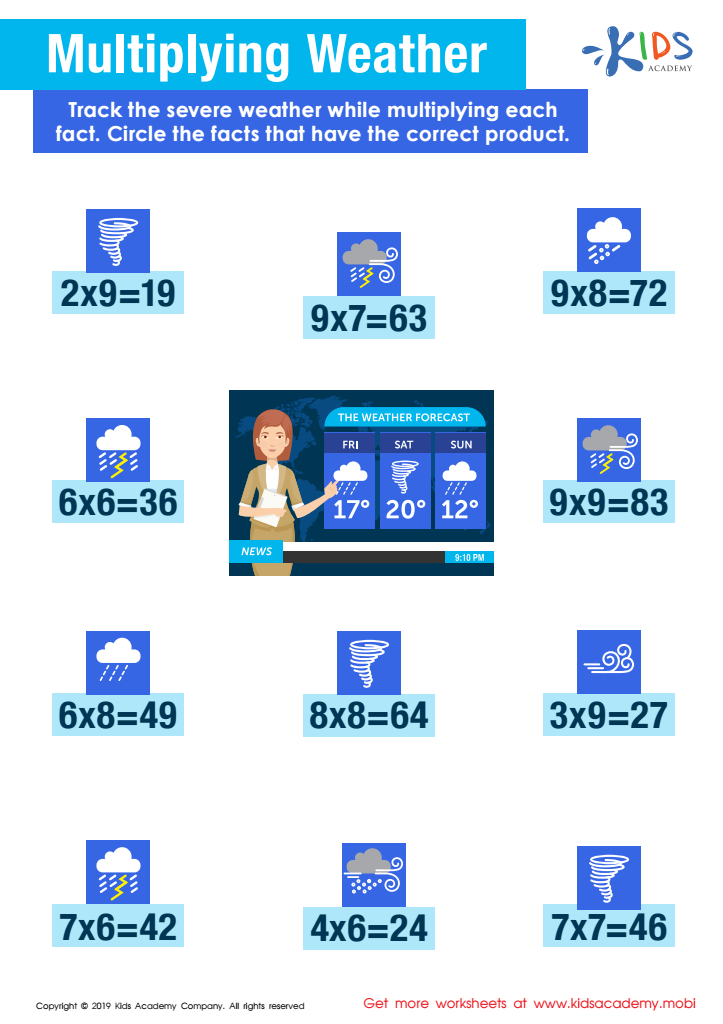
Multiplying Weather Worksheet
 Assign to My Students
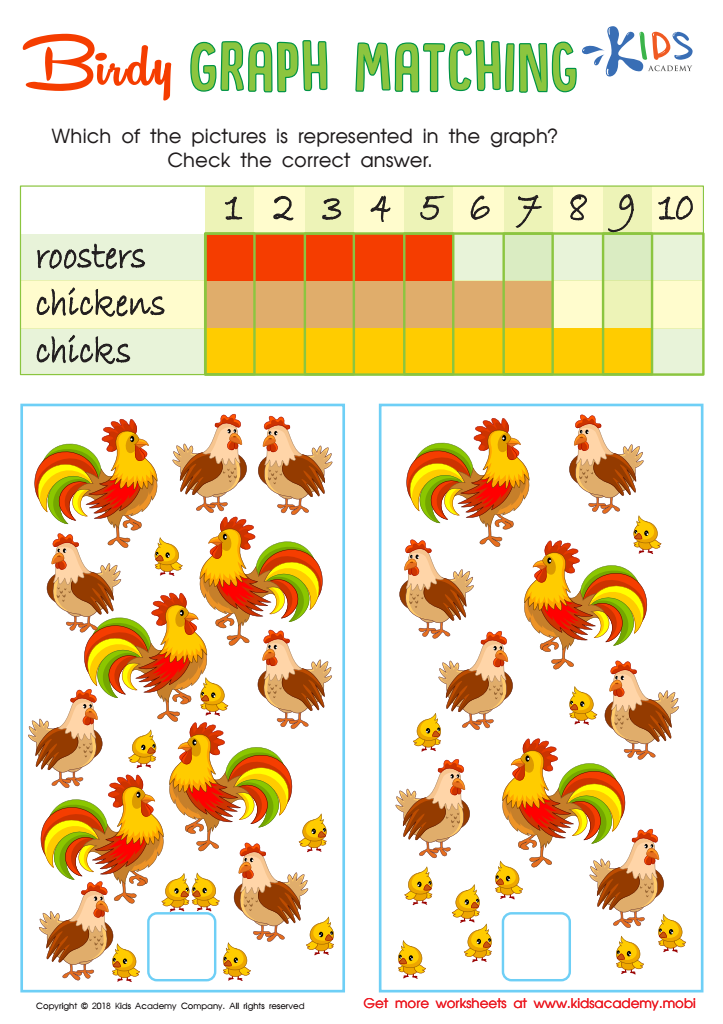
Birdy Graph Matching Worksheet




.jpg)


Data analysis skills are crucial for children aged 4-8, and both parents and teachers play a vital role in fostering these abilities. At this early stage, children start to develop foundational cognitive skills, making it an ideal time to introduce basic data concepts. Understanding data helps kids make sense of the world around them, encouraging critical thinking and problem-solving. For instance, simple activities like counting toys or charting weather patterns cultivate their ability to gather, represent, and interpret information.
Additionally, data analysis skills equip children with the ability to visualize and draw conclusions from information, essential in today's data-driven society. By engaging them in activities that involve sorting, categorizing, and graphing, parents and teachers instill a sense of inquiry and curiosity. These interactions support the development of numeracy skills, as well as literacy through narrative formation around data.
Moreover, integrating data analysis at a young age builds confidence and a positive attitude toward learning. It encourages collaboration when children work together on projects that involve data collection and interpretation. Overall, by valuing data analysis skills, parents and teachers not only prepare children for academic success but also empower them to navigate an increasingly complex world.








