Developing problem-solving abilities Worksheets for Ages 4-8
9 filtered results
-
From - To
Unlock your child’s potential with our engaging "Developing Problem-Solving Abilities Worksheets" designed for ages 4-8. These thoughtfully crafted worksheets offer a variety of fun activities that encourage critical thinking, logical reasoning, and creativity. By tackling age-appropriate challenges, your child will enhance their ability to analyze situations and come up with effective solutions. From puzzles and activities to real-life problem simulations, our resources are perfect for at-home learning or classroom use. With colorful illustrations and interactive tasks, these worksheets not only make learning enjoyable but also build a strong foundation for academic success. Start fostering essential problem-solving skills today!
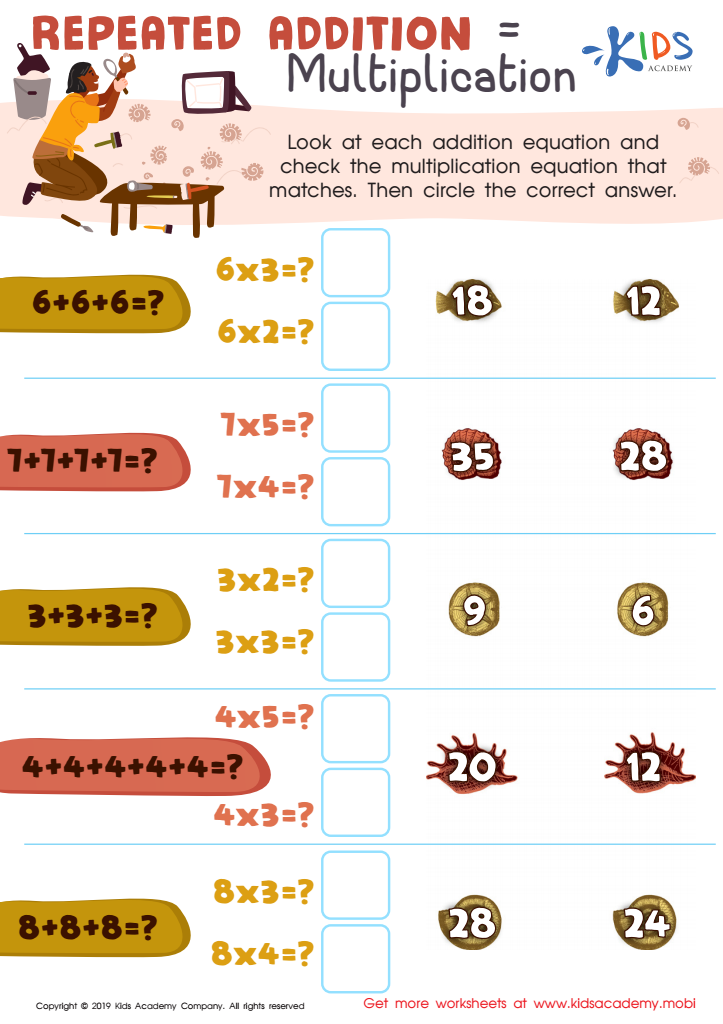
Repeated Addition = Multiplication Worksheet
 Assign to My Students
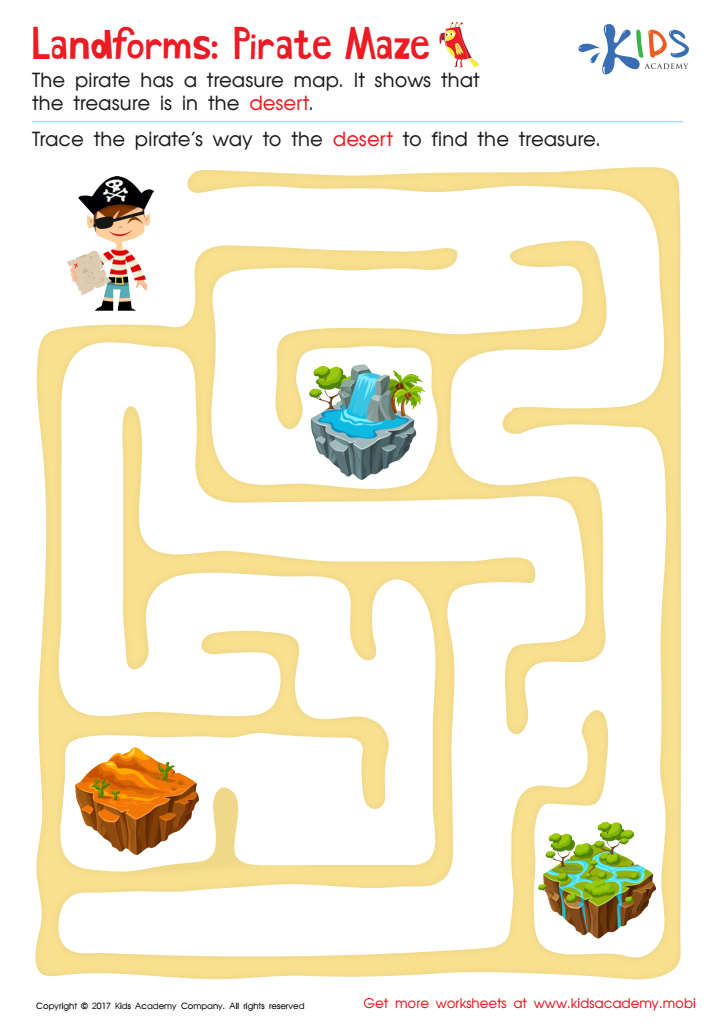
Landforms: Pirate Maze Printable
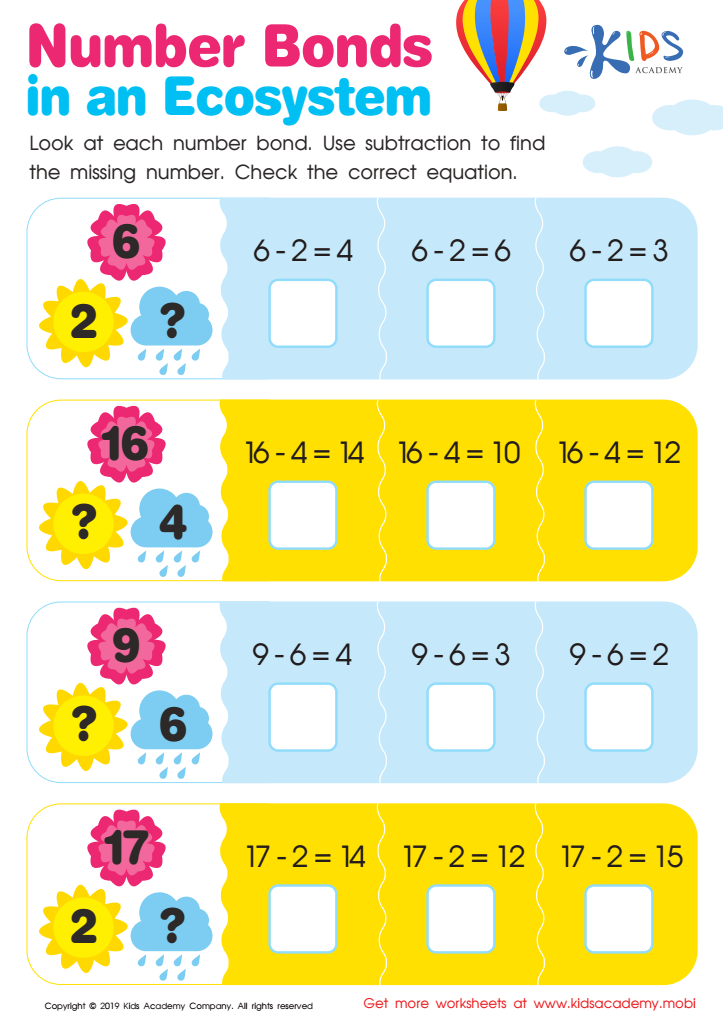
Number Bonds in an Ecosystem Worksheet
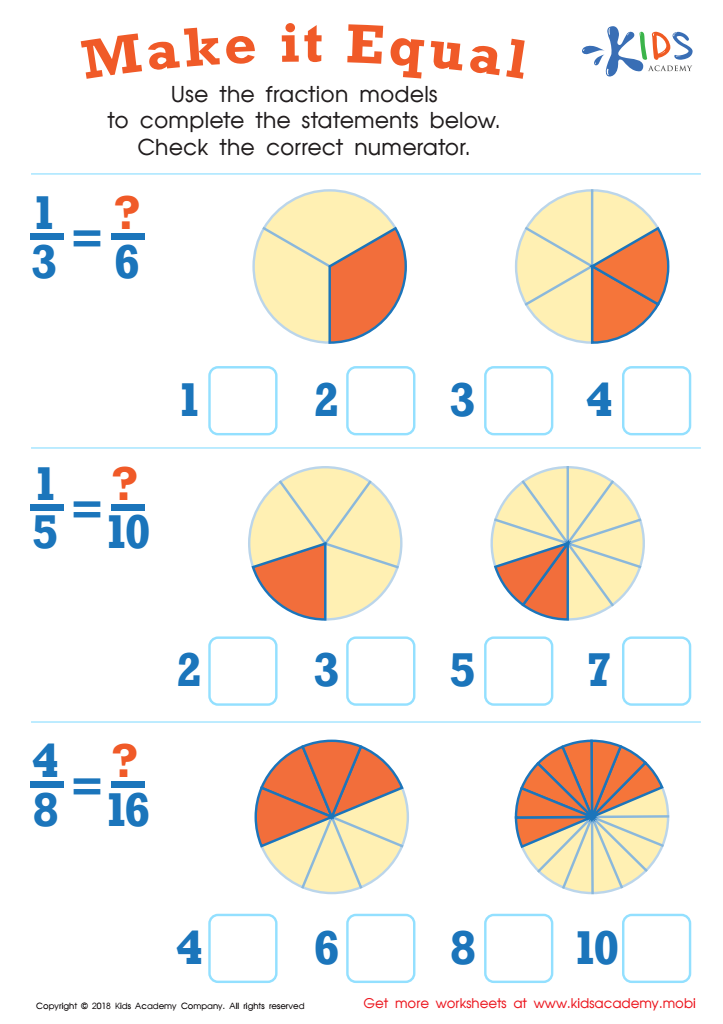
Make It Equal Worksheet
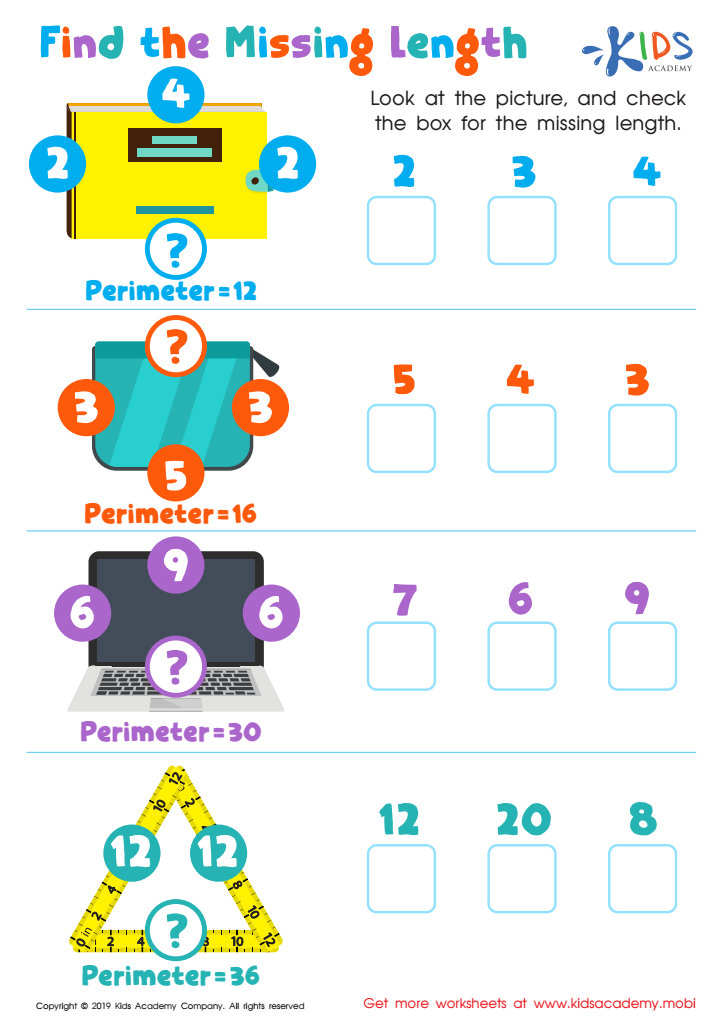
Find the Missing Length Worksheet
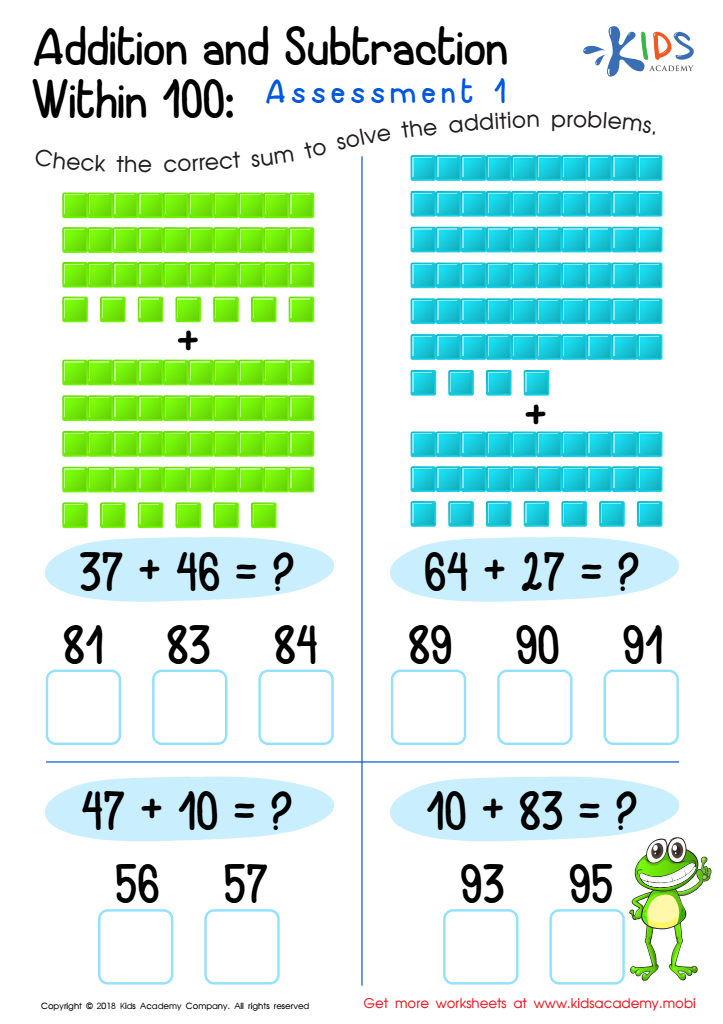
Addition and Subtraction Within 1: Assessment 1 Worksheet
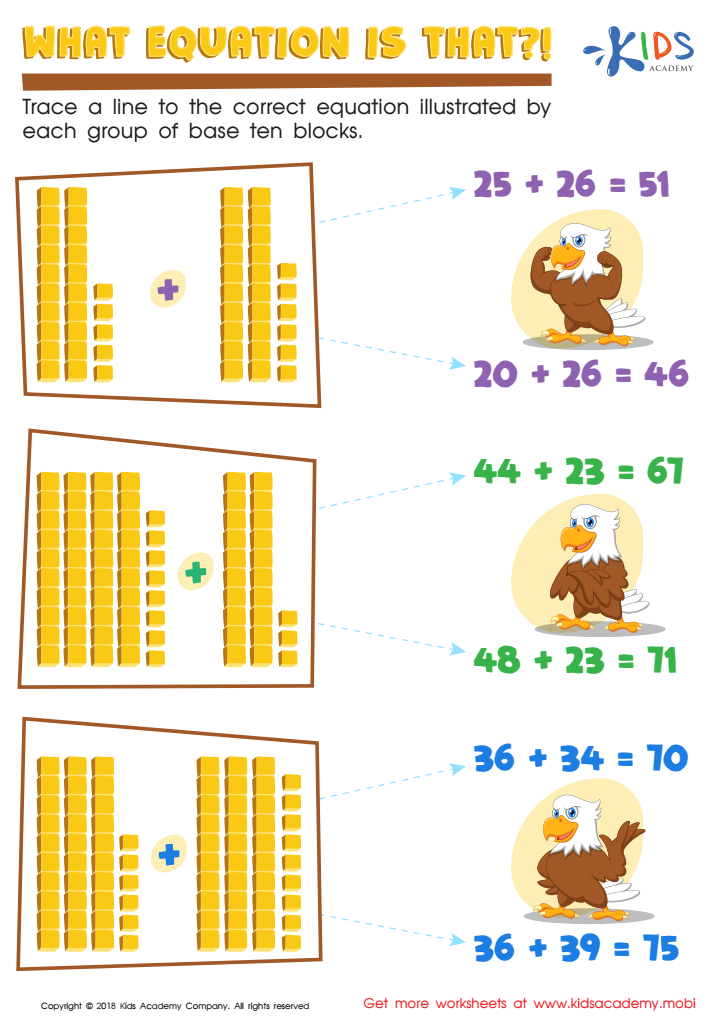
What Equation Is That? Worksheet








Developing problem-solving abilities in children aged 4 to 8 is crucial for several reasons. At this developmental stage, children are naturally curious and eager to explore their environments. Encouraging problem-solving helps them make sense of the world around them, fostering critical thinking and creativity. When parents and teachers engage children in problem-solving activities, they nurture their ability to think independently, analyze situations, and generate solutions.
Moreover, strong problem-solving skills promote resilience. Children learn that challenges are surmountable and that failures can be lessons for future attempts. This mindset not only equips them with important life skills but also supports their emotional intelligence by teaching them how to manage frustration and adapt to new situations.
Collaboration is another vital aspect; problem-solving often occurs in group settings. By working with others, children build communication skills and learn to appreciate different perspectives, aiding their social development.
Ultimately, problem-solving abilities set the foundation for academic success and personal growth. They empower children to navigate complexities, become responsible decision-makers, and contribute positively to their communities, making it essential for parents and teachers to prioritize this crucial skill during these formative years.








