
Differentiating push/pull Worksheets for Ages 4-8
3 filtered results
Difficulty Level
Grade
Age
-
From - To
Subject
Activity
Standards
Explore our engaging Differentiating Push/Pull Worksheets designed for children ages 4-8! These interactive resources foster critical thinking and enhance understanding of forces and movement through fun, age-appropriate activities. Our worksheets cater to diverse learning styles, ensuring that every child grasps the concepts at their own pace. With colorful illustrations and clear instructions, students will enjoy identifying and sorting push and pull actions in their everyday lives. Perfect for both classroom use and homeschooling, these worksheets will inspire curiosity and support skill development. Download now and make learning about physical forces both exciting and educational!
Favorites
With answer key
Interactive
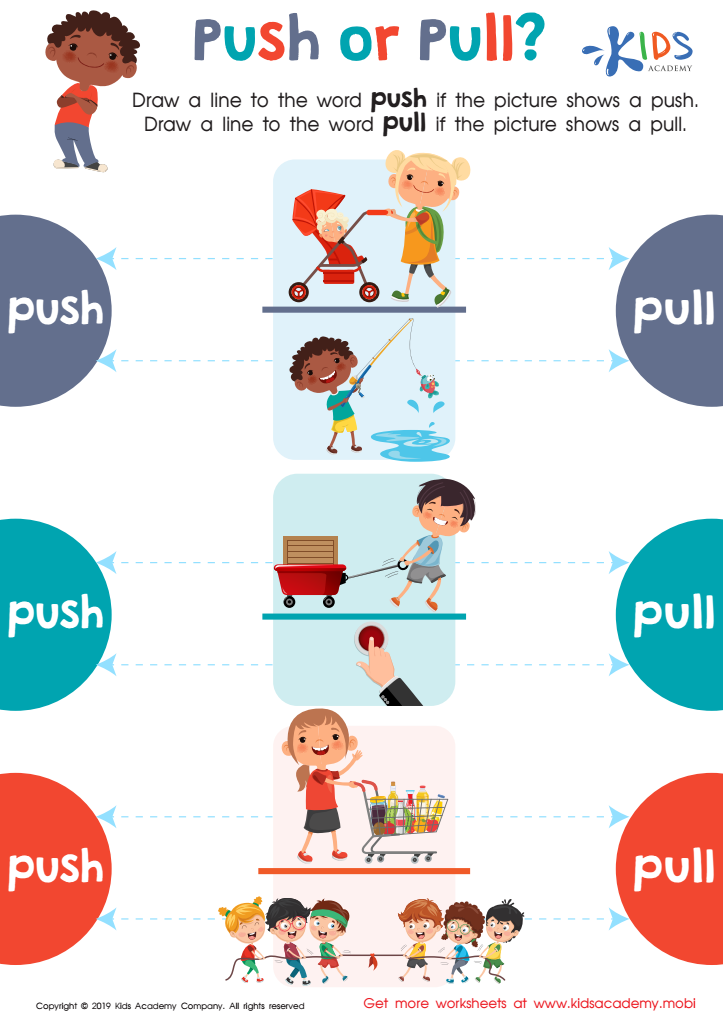
Push or Pull? Worksheet
Young kids may struggle to differentiate push and pull. When they start writing, they may use them interchangeably and wrongly. This worksheet clarifies the concepts: pushing means moving something away, pulling means bringing something closer. It provides pictures and traceable lines for kids to connect each image to the correct word. This helps them understand and remember the difference for future writing and reading.
 Assign to My Students
Push or Pull? Worksheet
Worksheet
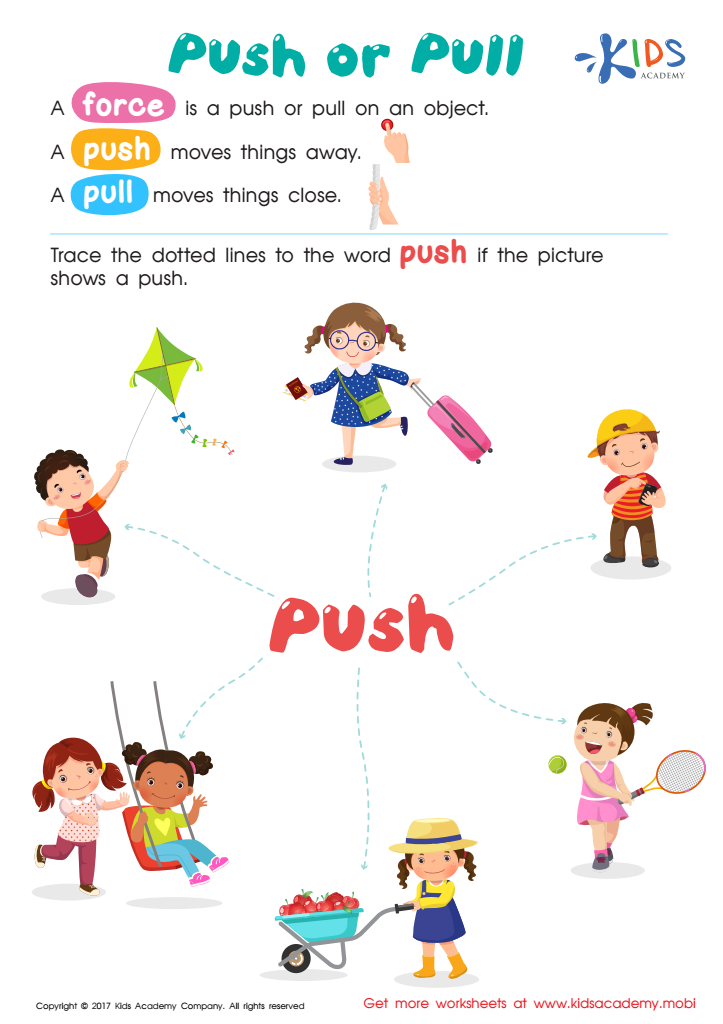
Push or Pull Worksheet
and which involve pulling! With this fun worksheet, your child will learn about force and its simple application in everyday activities. Get them started with Push or Pull! (80 words)
Push or Pull Worksheet
Worksheet
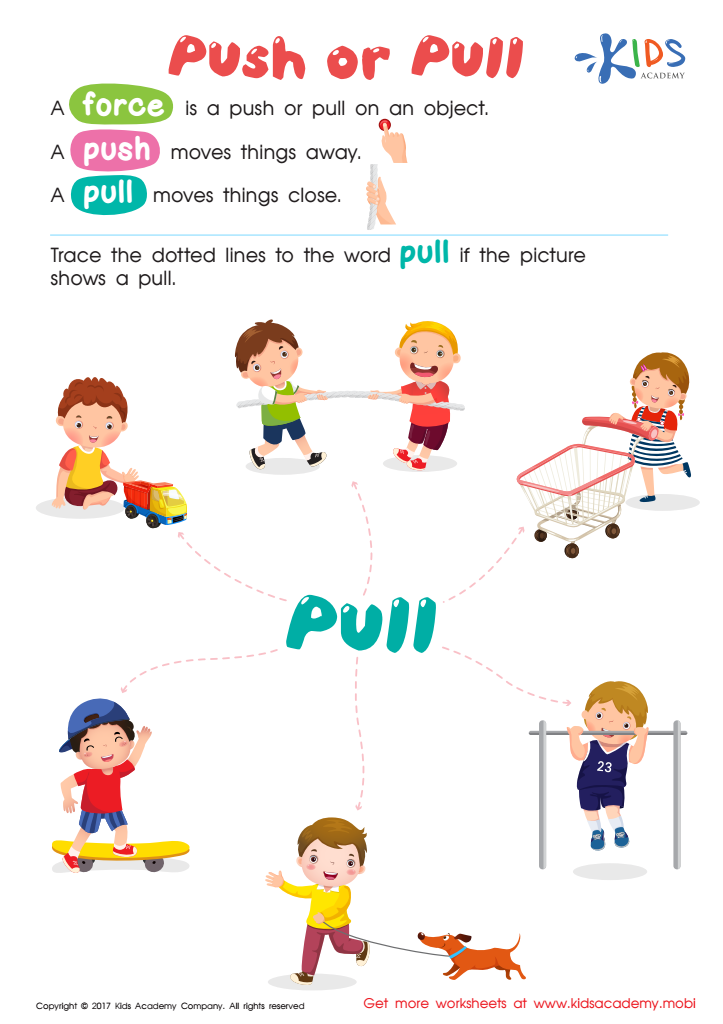
Pull or Push Worksheet
With this fun worksheet, they'll explore physics by sorting objects into categories according to their mode of motion. It's a great way to get them interested in science.
Pull or Push Worksheet
Worksheet
Join Kids Academy for Free
Who is primarily going to use this learning content?






Differentiation, particularly through push/pull strategies, is essential in education for children aged 4-8 because it addresses the diverse learning needs of young learners. These methods allow educators to modify instruction based on students’ varying abilities, interests, and learning styles, thereby fostering an inclusive classroom environment.
When teachers utilize push strategies, they intervene actively to provide additional support to students who may struggle with the material. This can include providing targeted tasks, creating smaller group activities, or offering one-on-one assistance, ensuring that no child falls behind. Conversely, pull strategies encourage independent exploration and self-directed learning for advanced students. This can involve advanced tasks or projects that challenge gifted learners and keep them engaged.
For parents, understanding differentiation can help them support their children's education more effectively at home. It encourages openness to varied learning paths, nurtures their child’s individual strengths, and helps to build resilience while fostering a love for learning. Ultimately, emphasizing these differentiation practices equips teachers and parents to collaborate effectively, resulting in enhanced academic and emotional outcomes for all children, thus setting a strong foundation for lifelong learning.








