Event sequencing Worksheets for Ages 4-8
3 filtered results
-
From - To
Boost your child's narrative skills with our Event Sequencing Worksheets, designed specially for ages 4-8. These engaging printables help young learners develop critical thinking by organizing events in a logical order. Perfect for enhancing comprehension and storytelling, our worksheets encourage creativity and cognitive growth. From simple picture-based exercises to more complex scenarios, these activities are tailored to suit varying skill levels. Ideal for use at home or in the classroom, our Event Sequencing Worksheets make learning fun while building essential skills. Empower your child to become a confident storyteller and problem solver today! Explore our vibrant collection now!
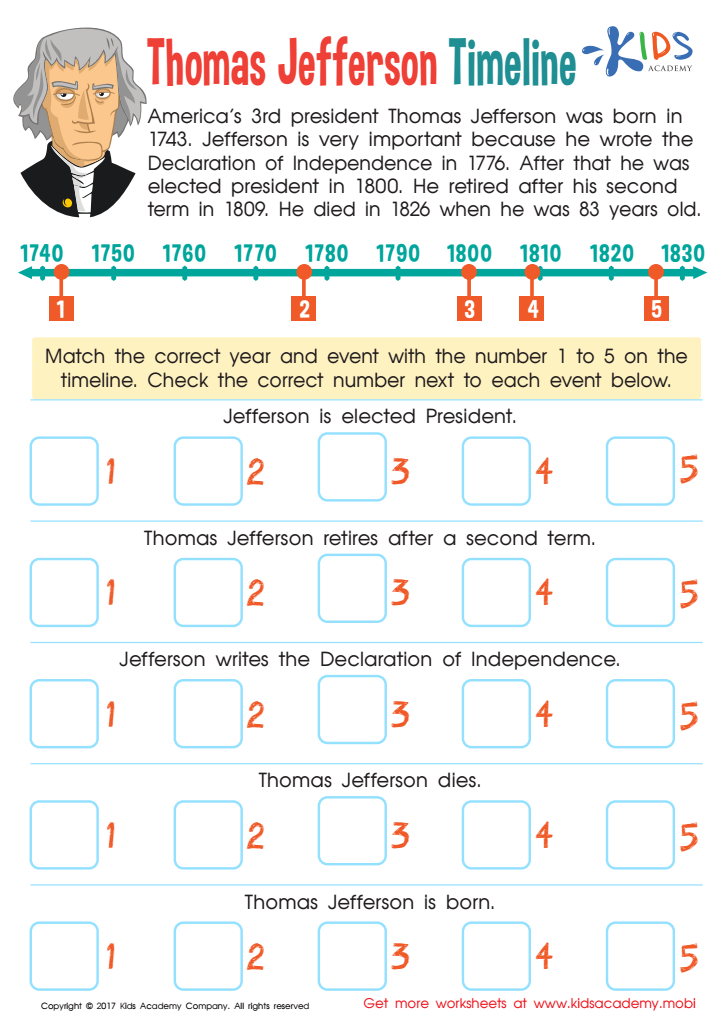
Thomas Jefferson Timeline Worksheet
 Assign to My Students
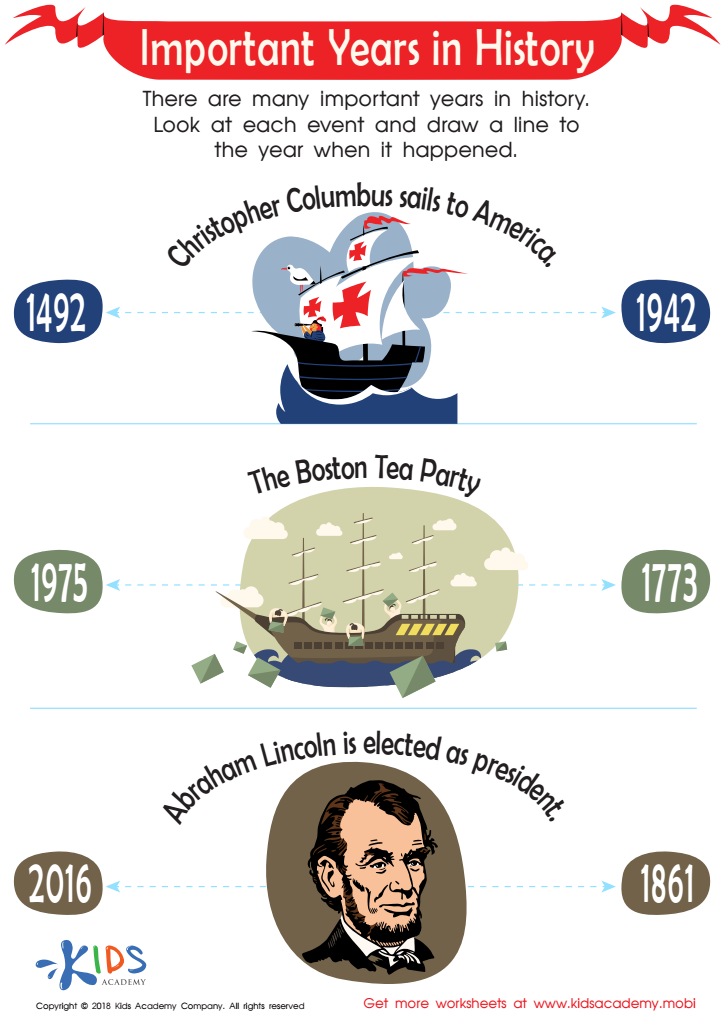
Important Years in History Worksheet
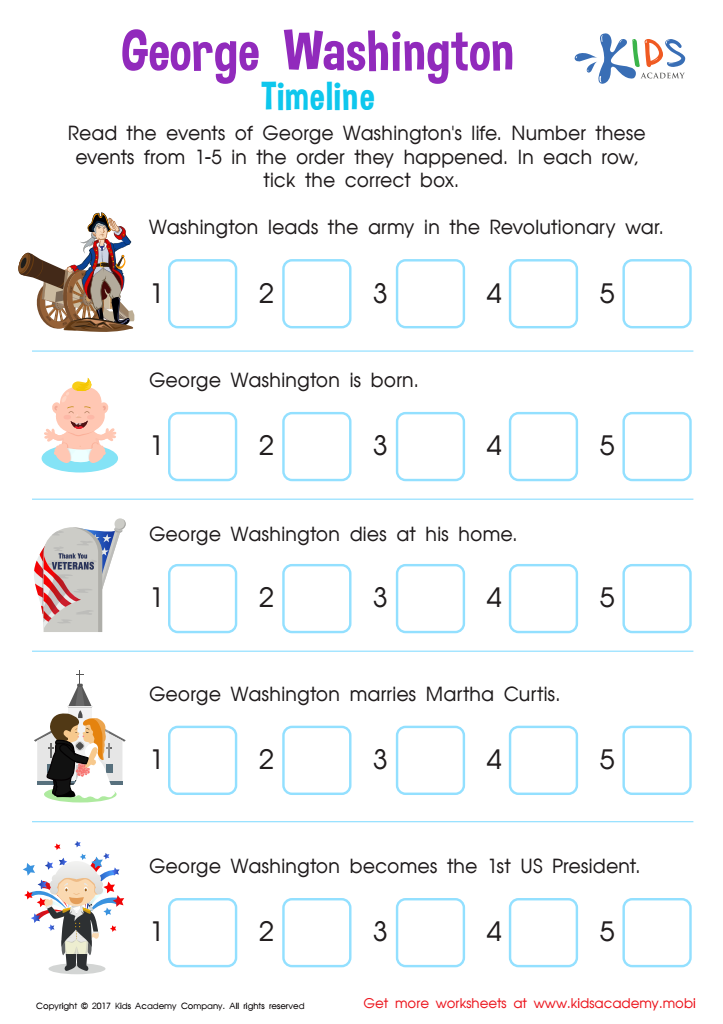
George Washington Timeline Worksheet







Event sequencing is a crucial developmental skill for children aged 4 to 8, and both parents and teachers should prioritize nurturing this competency. Understanding the sequence of events helps children make sense of stories, improve their comprehension skills, and enhance their ability to articulate thoughts logically. As they learn to identify the beginning, middle, and end of a narrative, children develop critical thinking skills and gain the foundation necessary for effective communication.
Moreover, event sequencing encourages planning and organization in children's daily activities. By learning how to arrange events in logical order, youngsters can improve their problem-solving skills and better navigate tasks in their routines, from getting ready for school to conducting simple science experiments.
Additionally, this skill impacts academic success across various subjects. Parents and teachers can incorporate activities that enhance event sequencing, such as storytelling, cooking, and play. By caring about this developmental stage, adults can support social-emotional learning, as understanding sequences promotes empathy—children learn to predict outcomes and perspectives based on context. Ultimately, fostering event sequencing cultivates essential cognitive, communication, and social skills, providing children with important tools for lifelong learning and relationship-building.








