Historical Knowledge Worksheets for Ages 4-8 - Page 2
38 filtered results
-
From - To
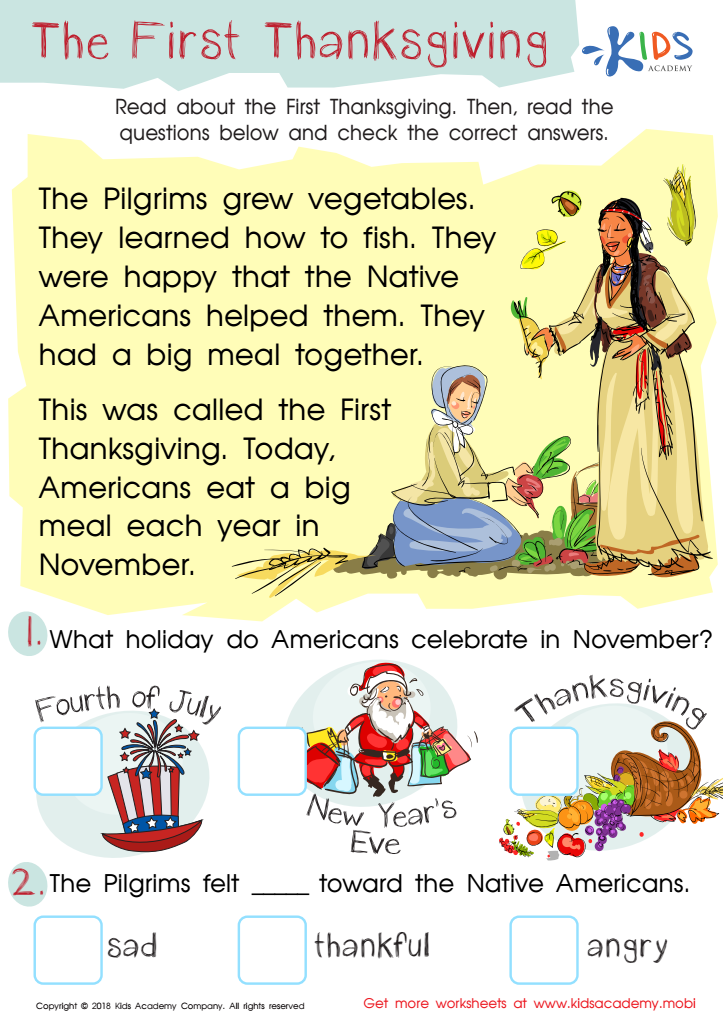
Assessment: First Thanksgiving Worksheet
 Assign to My Students
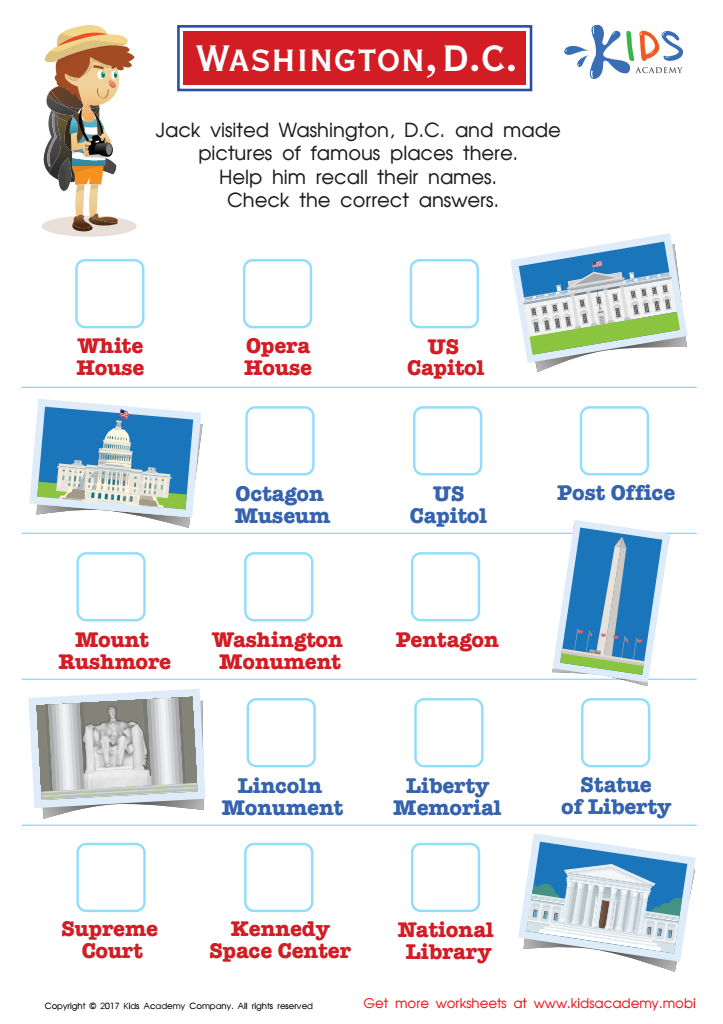
Washington D.C. Printable Worksheet
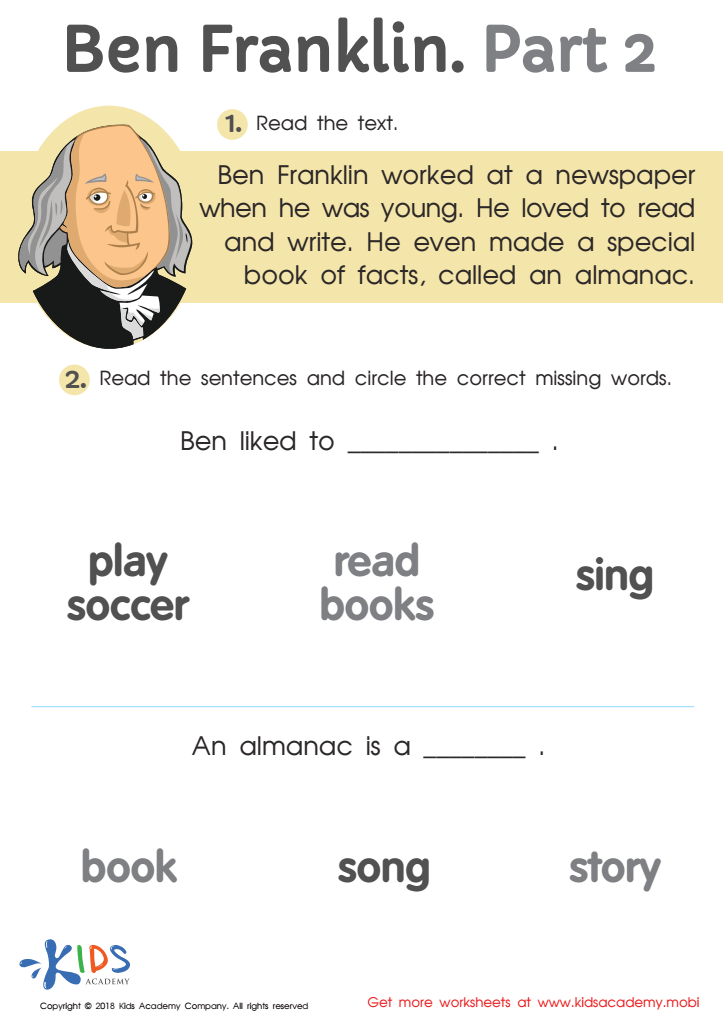
Ben Franklin Part 2 Worksheet
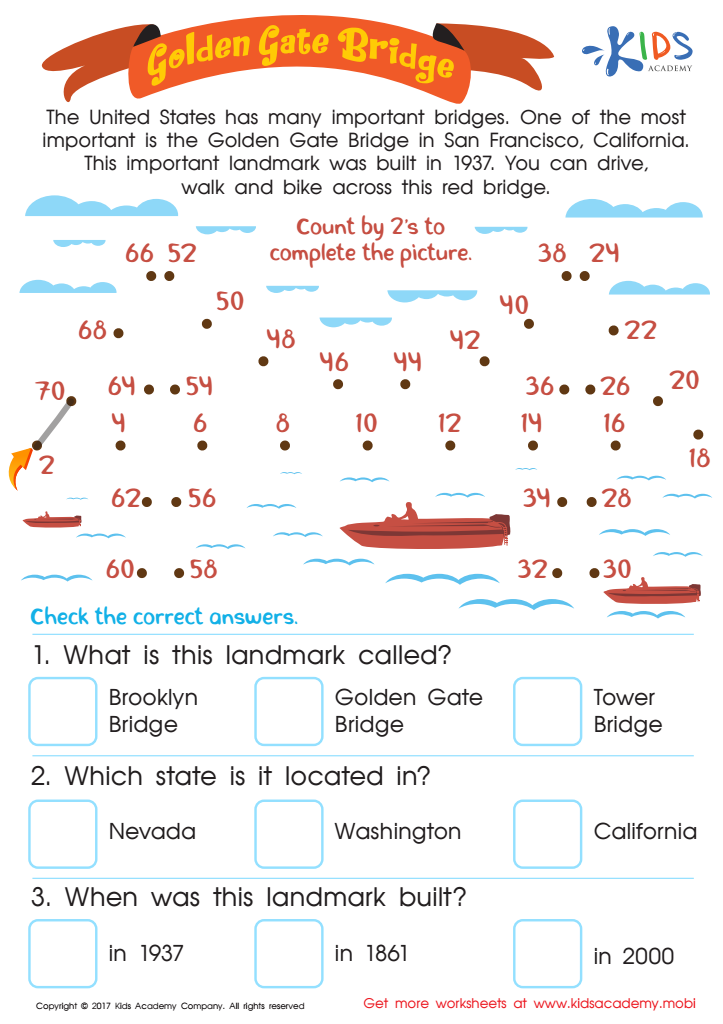
Golden Gate Bridge Worksheet
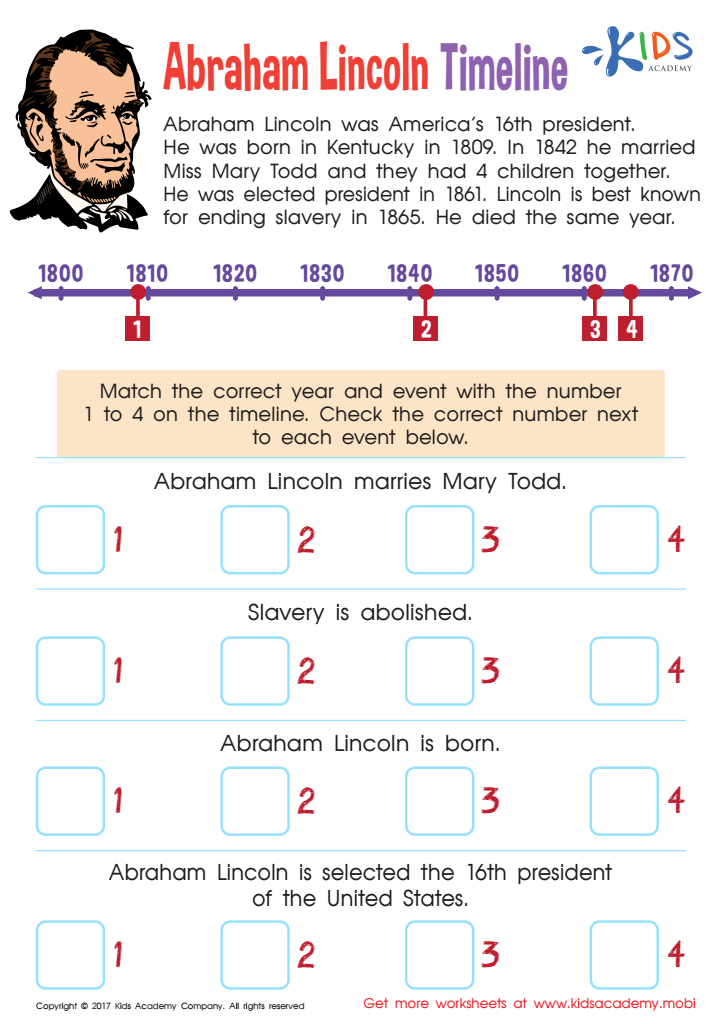
Abraham Lincoln Timeline Worksheet
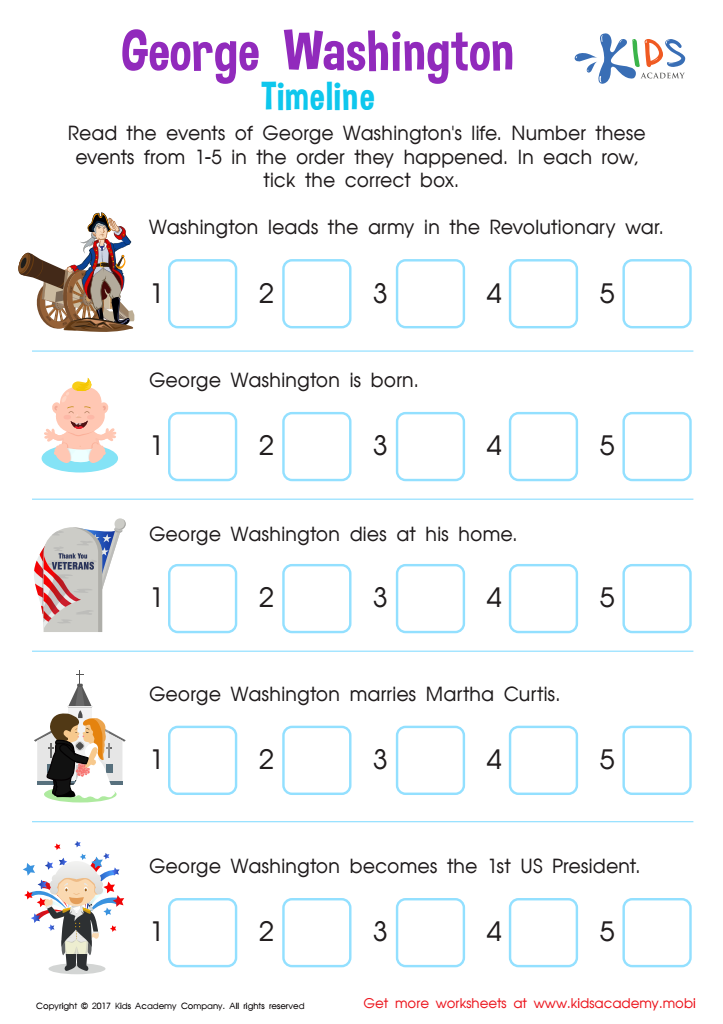
George Washington Timeline Worksheet
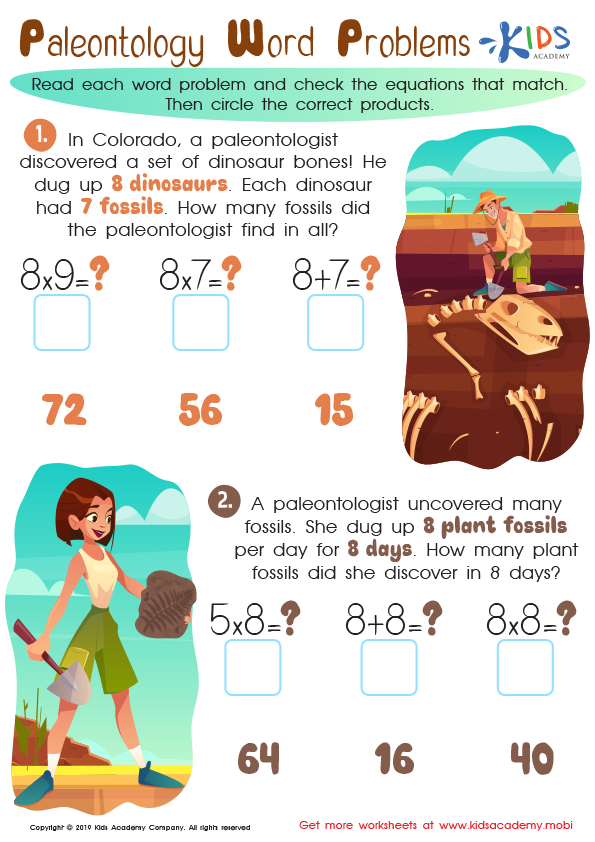
Archeology Word Problems Worksheet
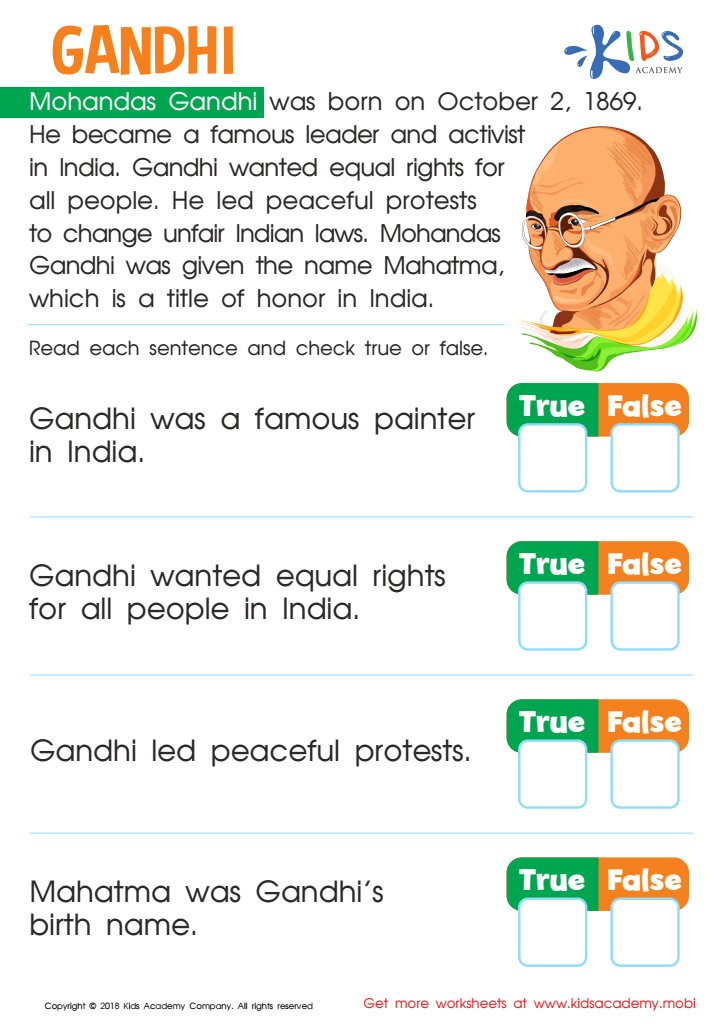
Gandhi Worksheet
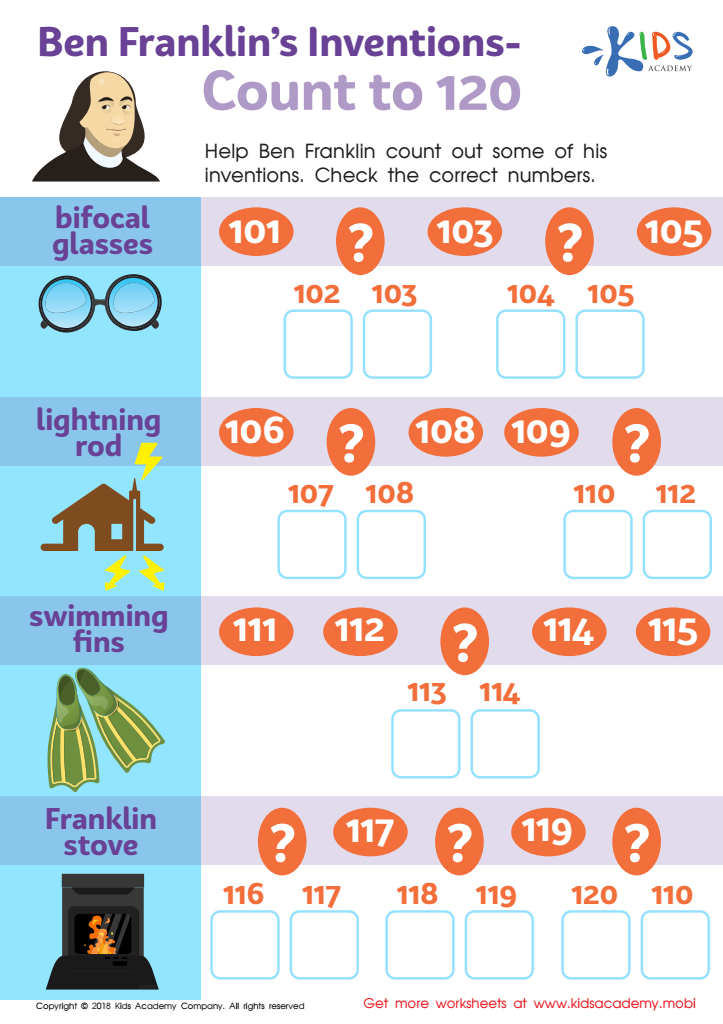
Ben Franklin’s Inventions – Count to 120 Worksheet
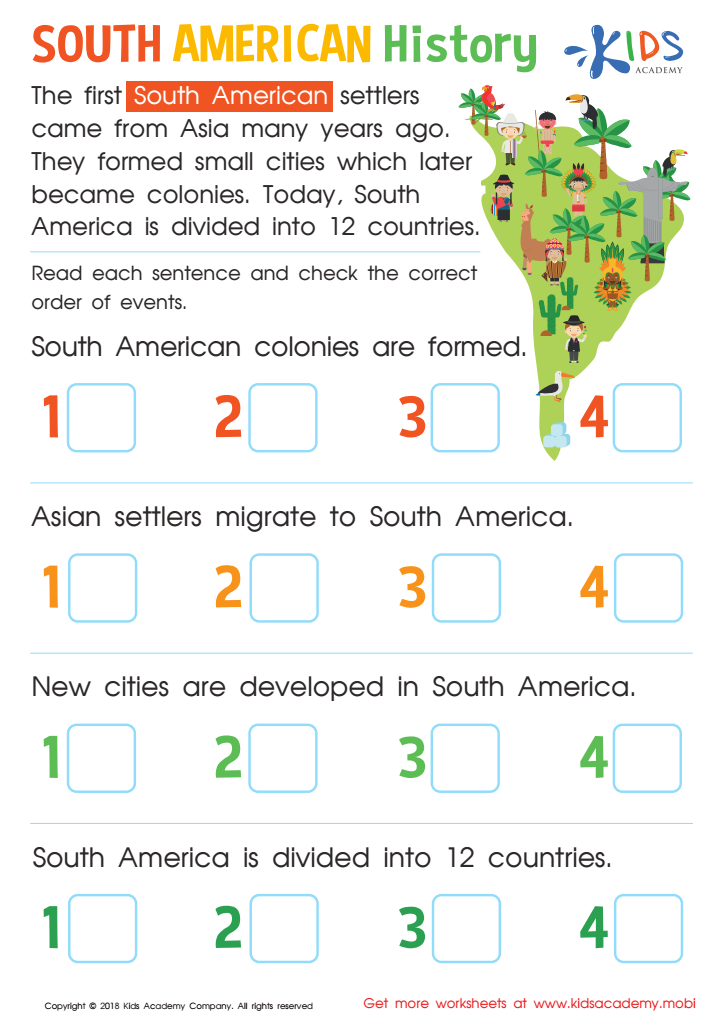
South American History Worksheet








Parents and teachers should prioritize historical knowledge for children aged 4-8 because early exposure to history shapes a child's understanding of the world and their place in it. At this young age, children are naturally curious and begin to form connections with people, events, and communities. Teaching them historical narratives fosters critical thinking, encouraging them to ask questions about the past and its relevance to their present lives.
Understanding history also helps children develop a sense of identity and belonging as they learn about diverse cultures, traditions, and influential figures. This can promote empathy and appreciation for diversity, vital skills in today's interconnected society. Furthermore, learning history in engaging ways, such as through storytelling and interactive activities, makes abstract concepts more tangible and relatable.
Additionally, historical knowledge supports literacy development as children explore a variety of texts around topics, enhancing their vocabulary and comprehension skills. By incorporating history into early education, parents and teachers not only nurture informed citizens but also instill a love of learning and discovery, laying a strong foundation for lifelong curiosity and engagement with the world.








