Improve counting skills Worksheets for Ages 4-8 - Page 3
64 filtered results
-
From - To
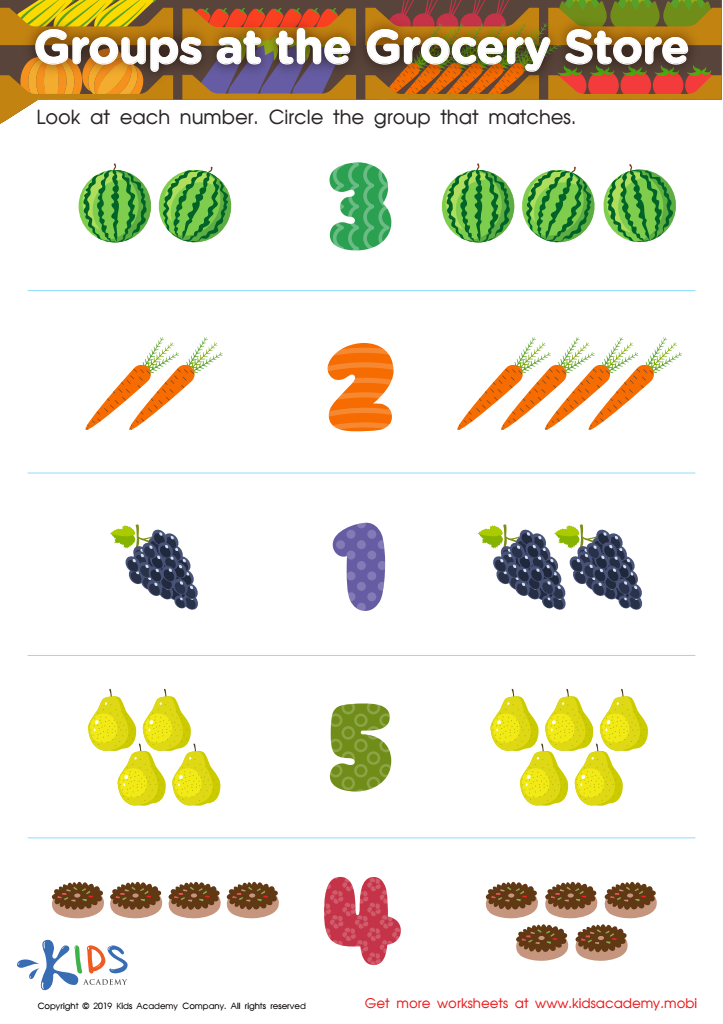
Groups at the Grocery Store Worksheet
 Assign to My Students
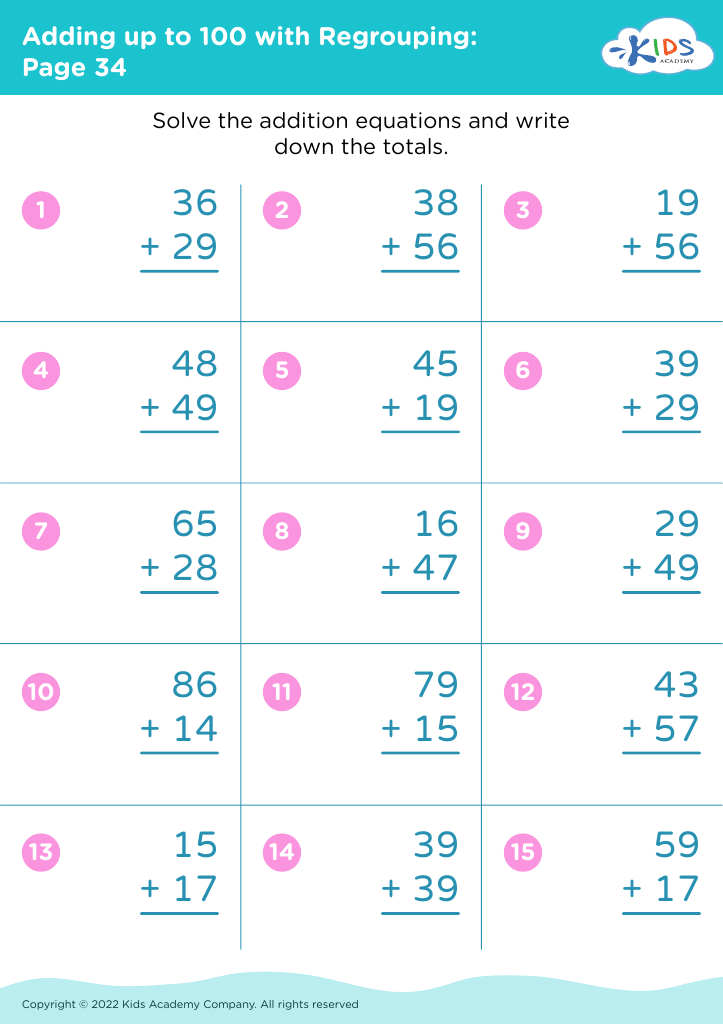
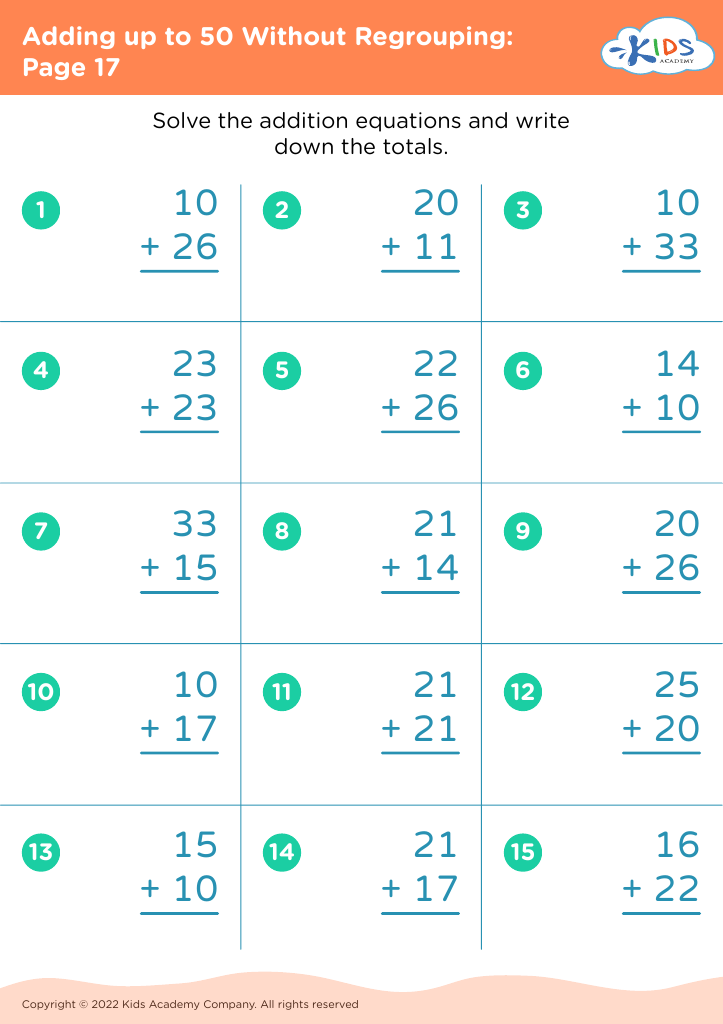
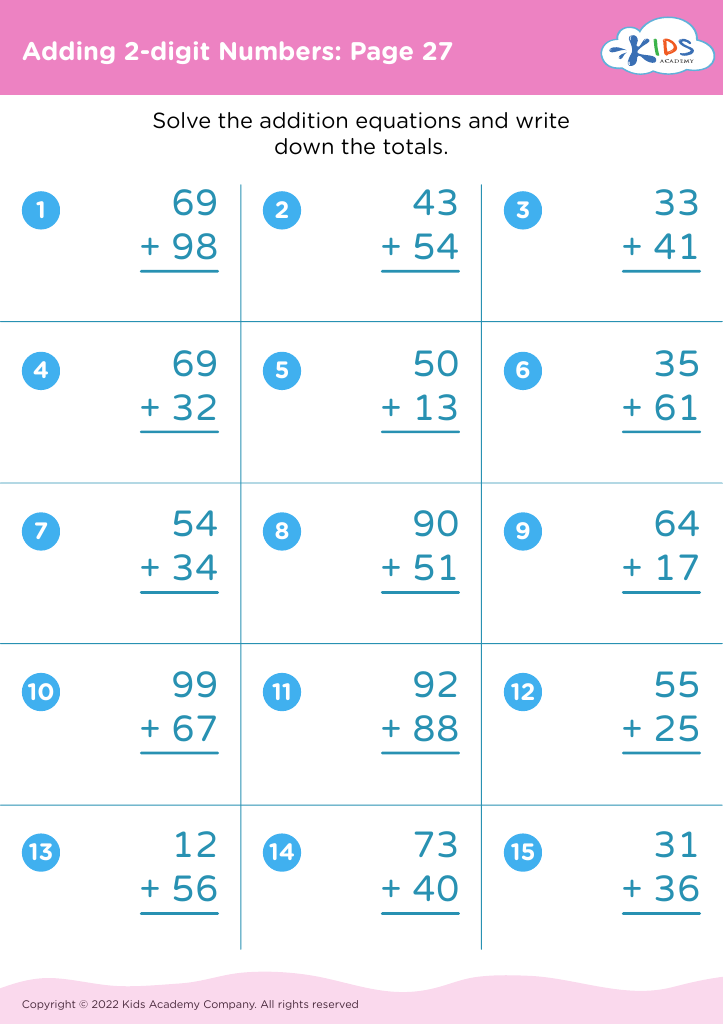
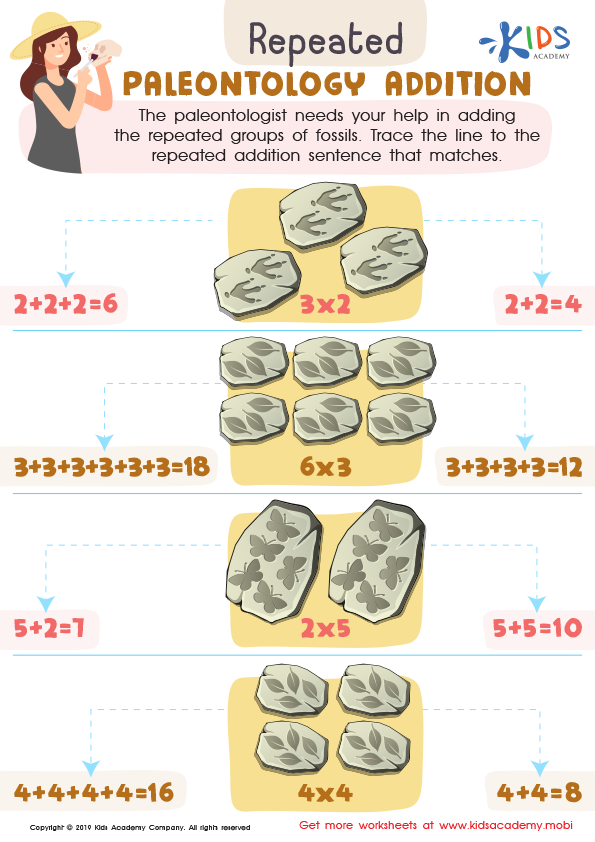
Repeated Archaeology Addition Worksheet
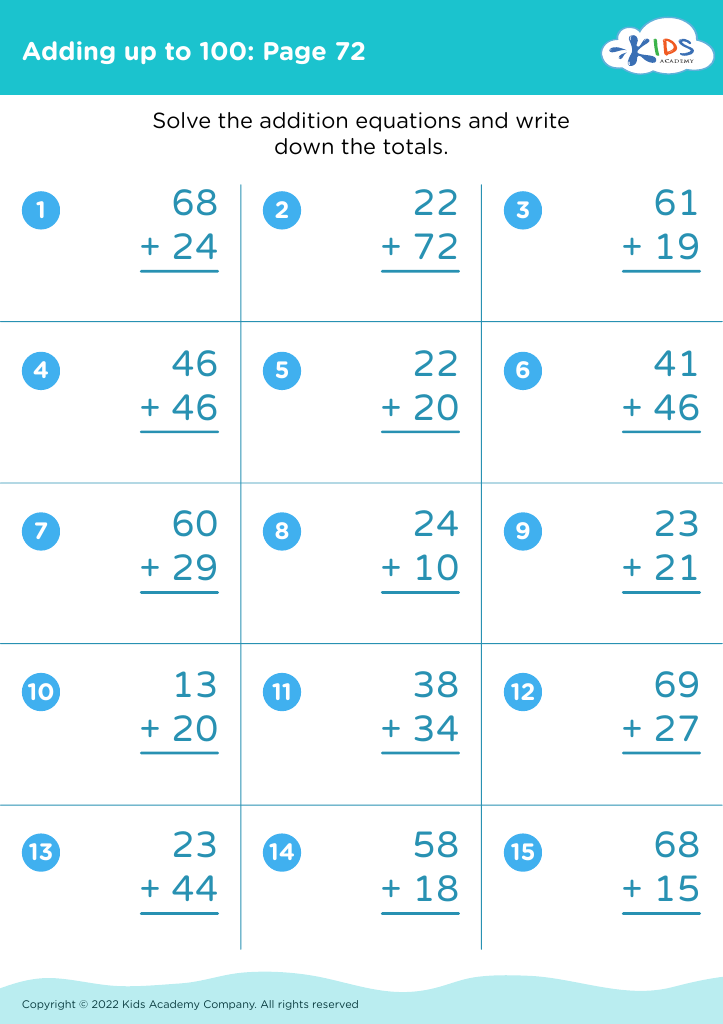
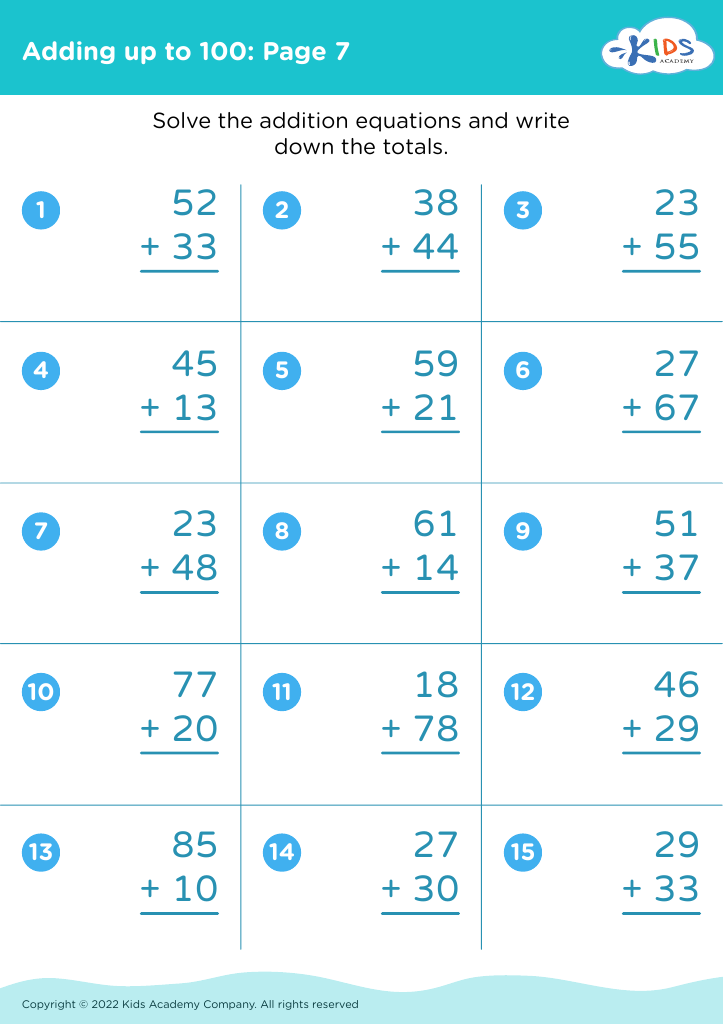
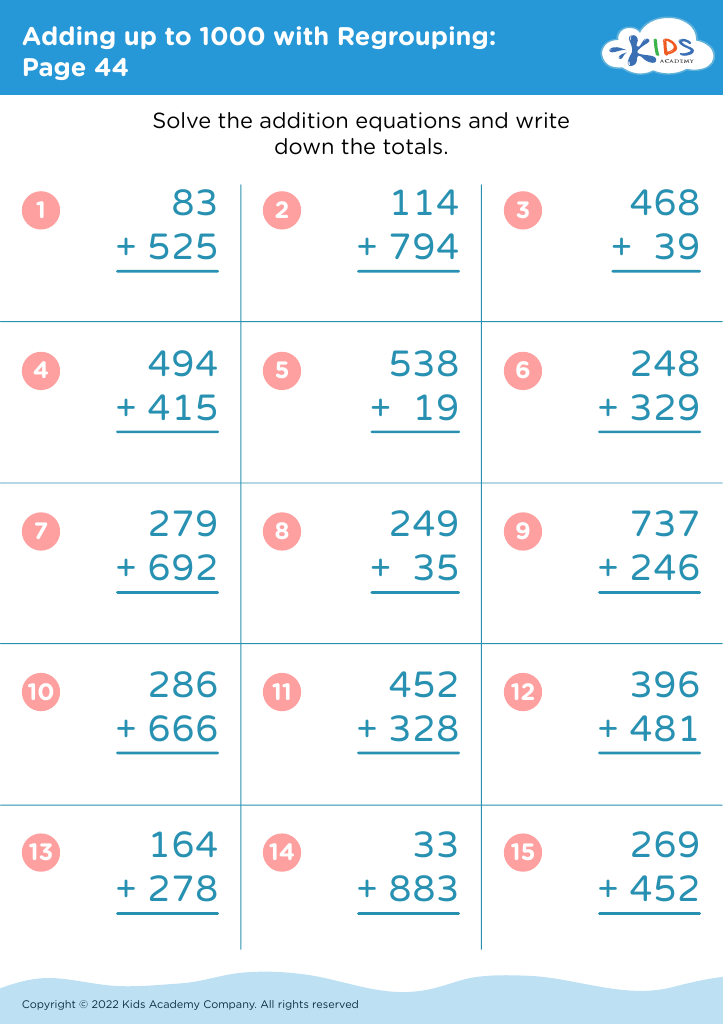
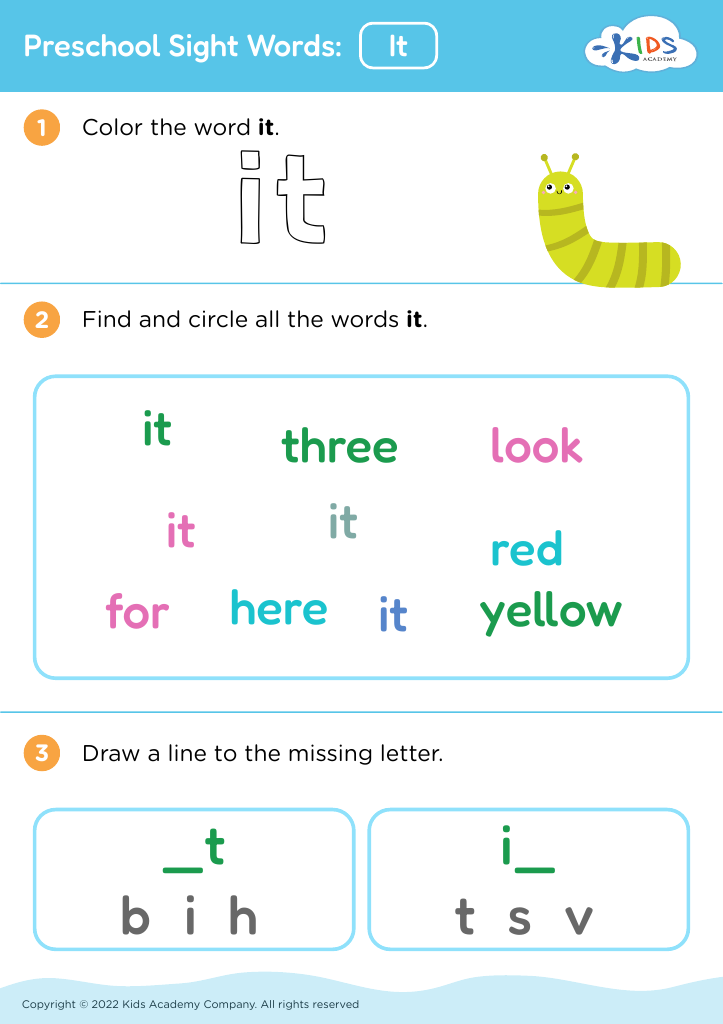
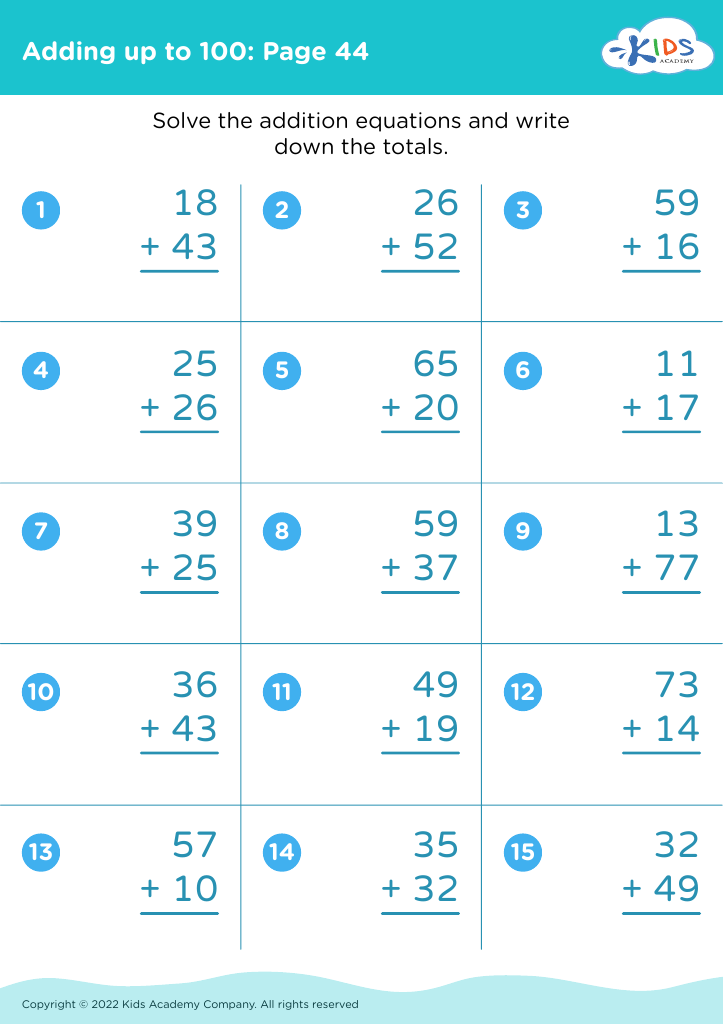
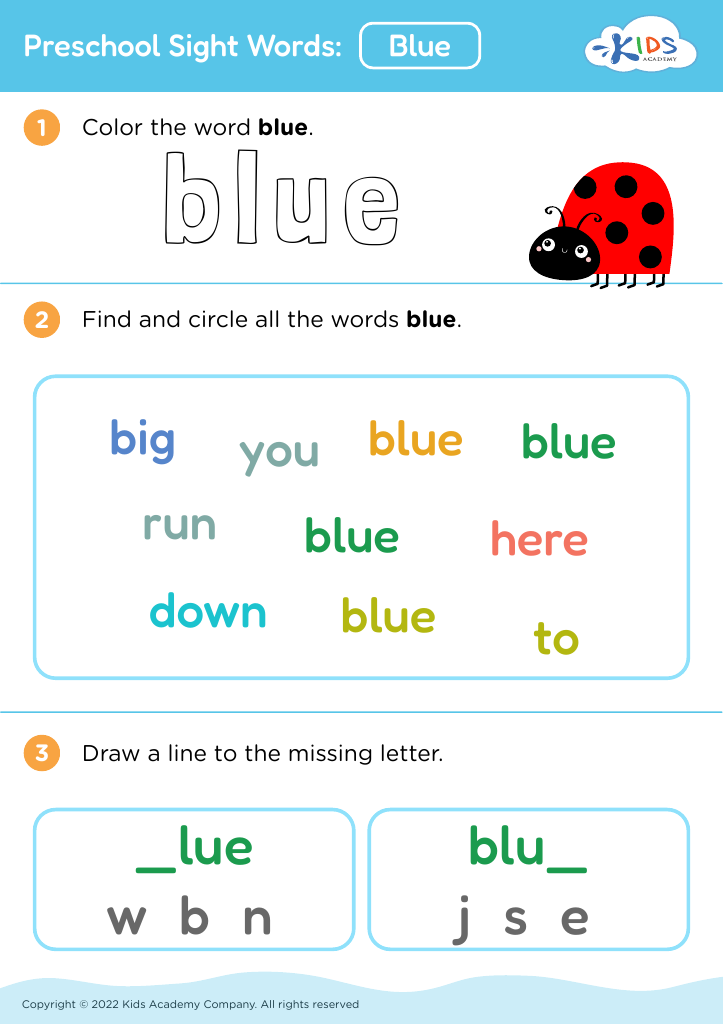
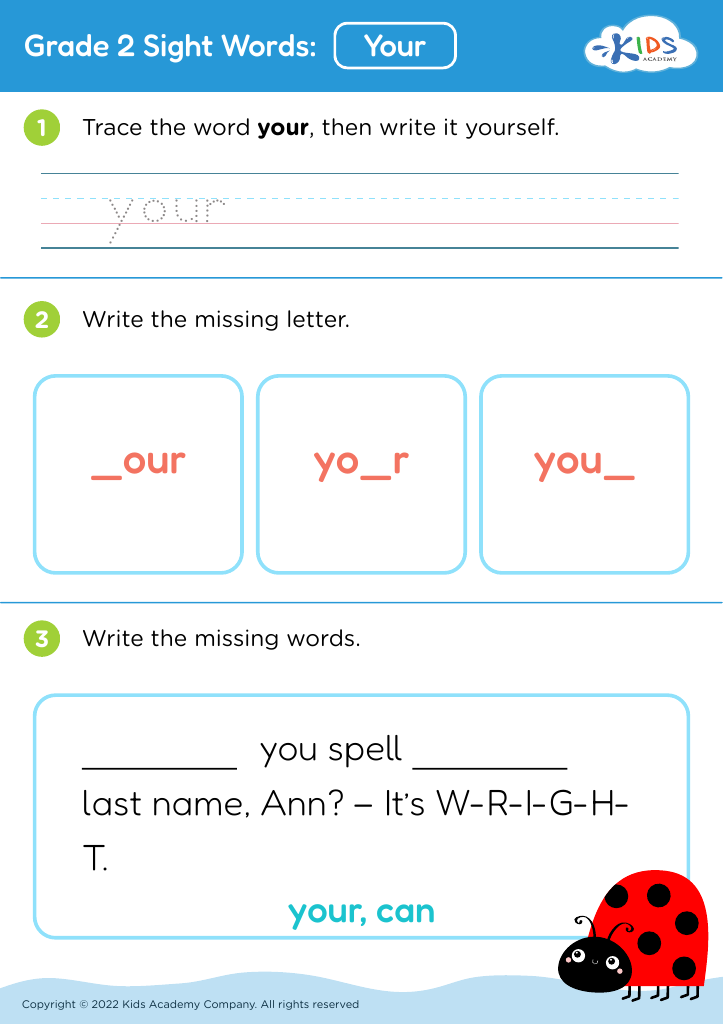
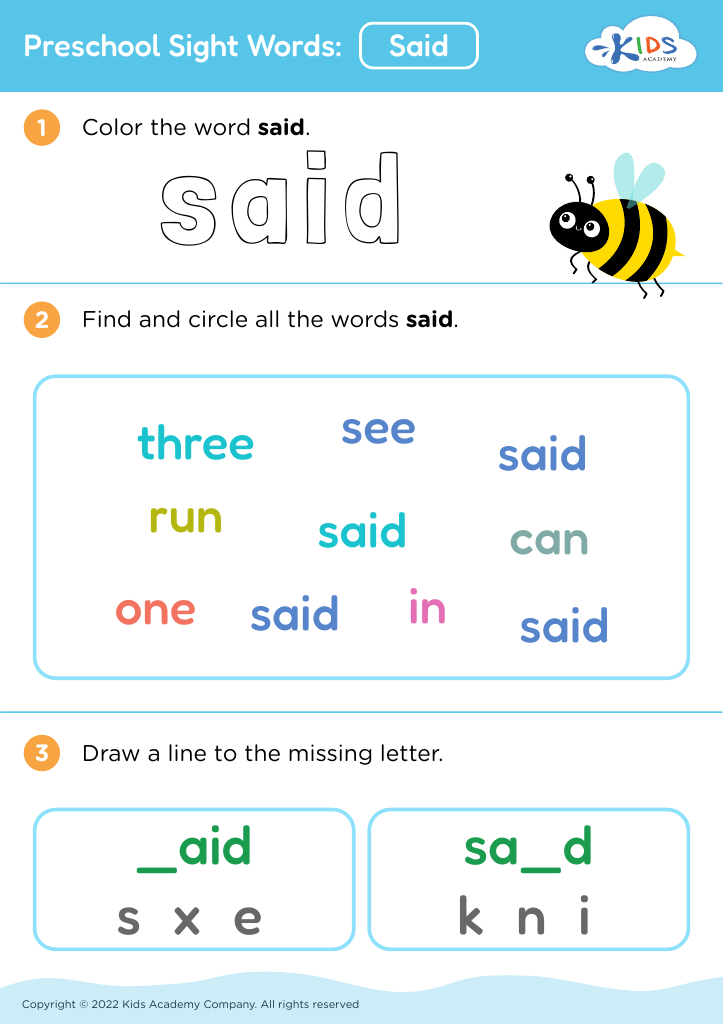
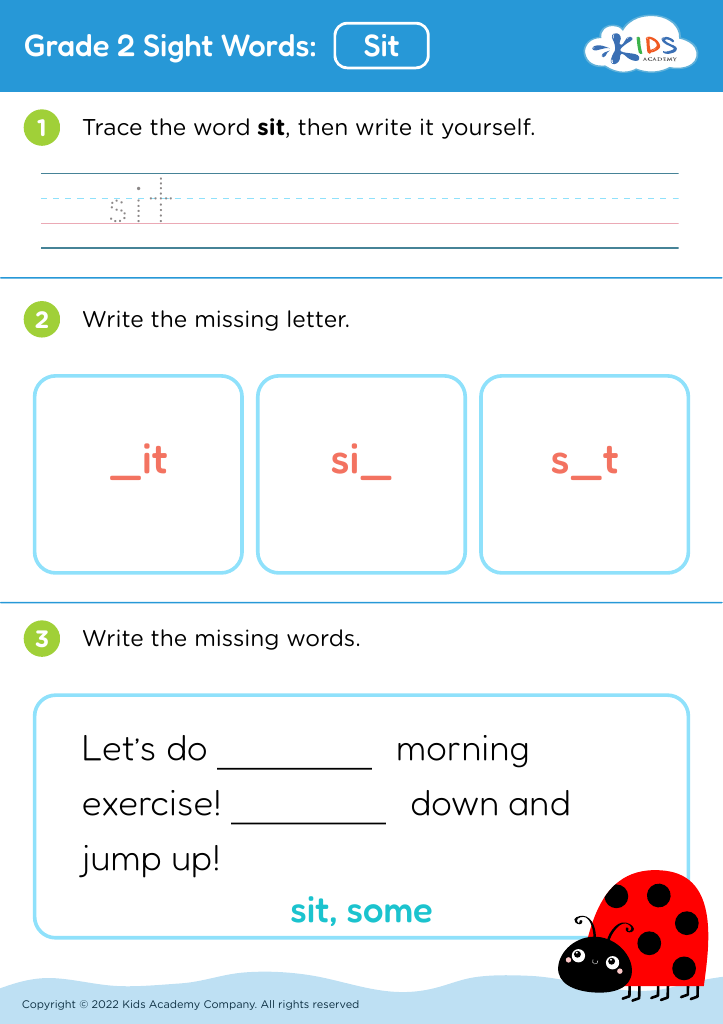
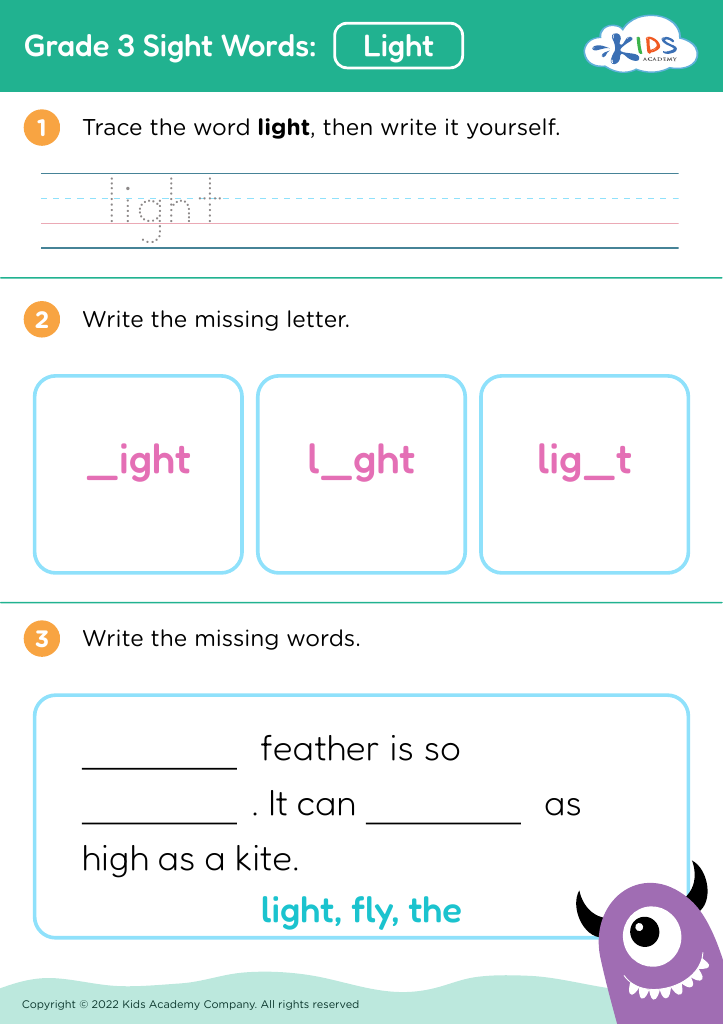
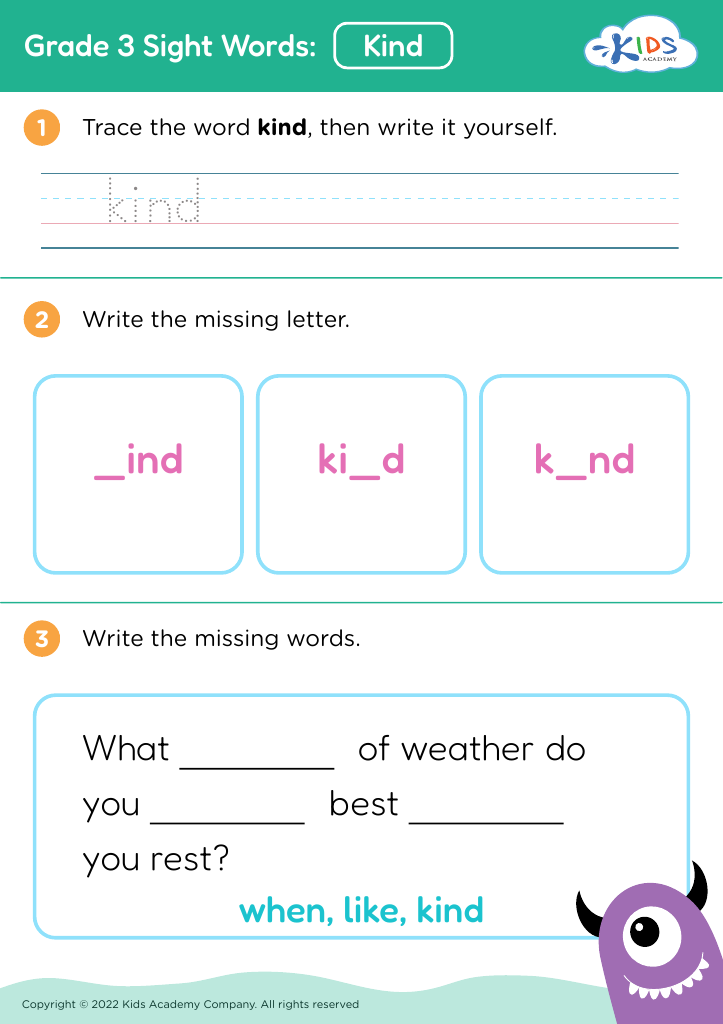








Improving counting skills in children ages 4-8 is foundational for their future success in mathematics and overall cognitive development. Counting is not just reciting numbers, it is about understanding quantities, which directly correlates to more complex math concepts like addition, subtraction, and problem-solving later on. Early exposure to strong counting skills helps children build confidence and reduces math anxiety, laying a solid groundwork for academic readiness.
For parents, fostering these skills can be a significant contributor to a child's educational trajectory. Engaging in counting activities supports a positive parent-child interaction, encouraging curiosity and perseverance. It can turn routine activities, like grocery shopping or playing with toys, into valuable learning experiences, strengthening the parent-child bond through shared achievements.
Teachers, on the other hand, benefit from strong counting skills in their students as it facilitates smoother transitions into structured learning environments. Students with a strong grasp of counting are more likely to stay engaged and participate actively in class. This foundational knowledge allows teachers to introduce more complex arithmetic and problem-solving concepts progressively. Ensuring children have robust counting skills fosters a more dynamic and effective learning environment for everyone, positioning them to succeed in their current studies and future educational pursuits.








