
Improve handwriting skills Worksheets for Ages 4-8
3 filtered results
Difficulty Level
Grade
Age
-
From - To
Subject
Activity
Standards
Enhance your child's handwriting skills with our engaging and comprehensive worksheets designed specifically for ages 4-8. These interactive activities promote fine motor development and letter formation through a variety of fun exercises. Our worksheets feature colorful illustrations and guided practice to keep young learners excited and motivated. From tracing letters to practicing sentences, each sheet is thoughtfully curated to cater to different skill levels, ensuring that every child can flourish at their own pace. Use our handwriting worksheets to foster confidence and a love for writing, setting the foundation for academic success. Download and watch your child's penmanship transform!
Favorites
With answer key
Interactive
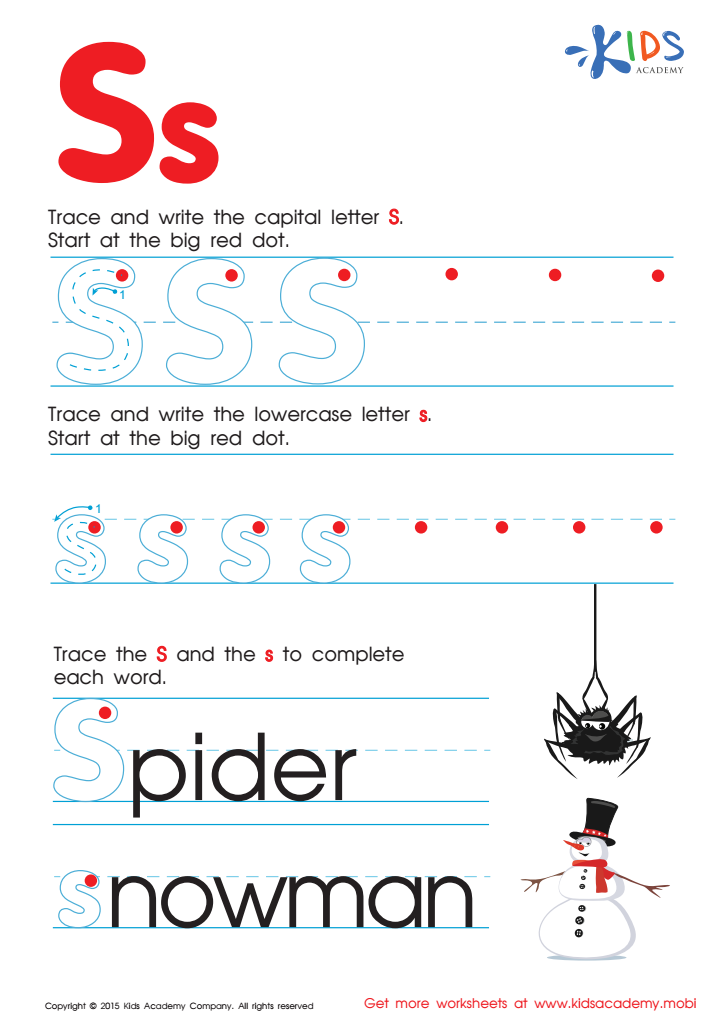
Letter S Tracing Page
Trace and write the capital and lowercase "S" on this ABC worksheet for kindergarten. Start with the big red dot and be careful. When you finish, help the spider and snowman in the pictures restore their words with the capital and lowercase letters. Continue learning the alphabet with Kids Academy.
 Assign to My Students
Letter S Tracing Page
Worksheet
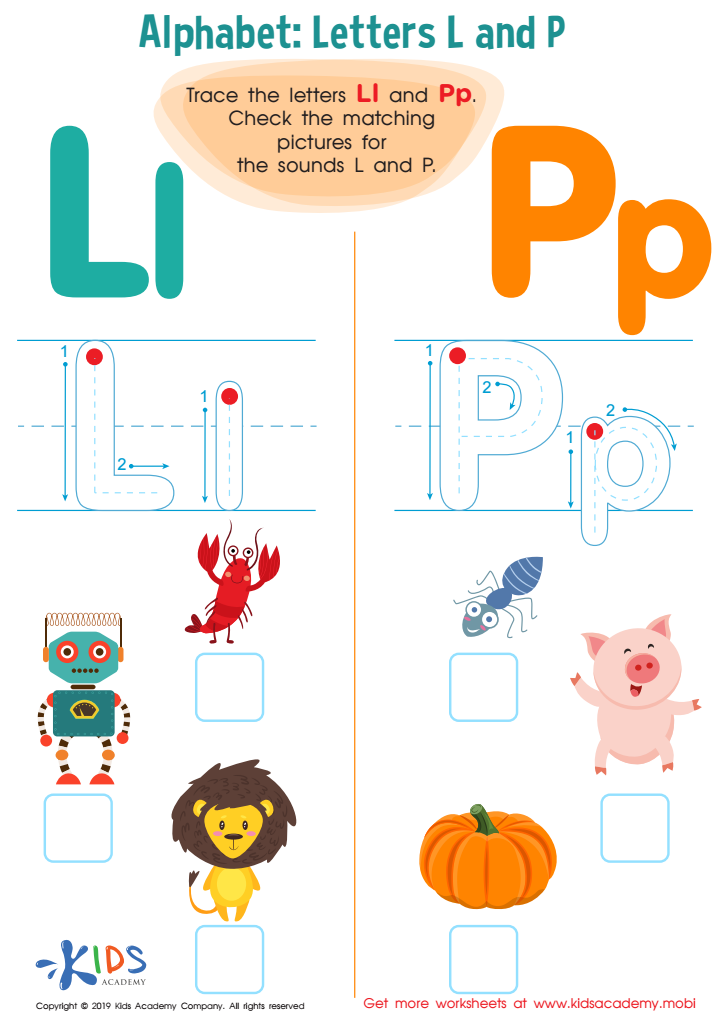
Letter L and P Tracing Worksheet
This traceable worksheet can motivate your students to learn and practice core skills. They'll trace the letters 'L' and 'P' and identify the pictures next to them. With this exercise, they'll unlock their learning abilities and excel in the subject!
Letter L and P Tracing Worksheet
Worksheet
Join Kids Academy for Free
Who is primarily going to use this learning content?







Improving handwriting skills in children aged 4-8 is crucial for several reasons that impact their overall development and future academic success. Firstly, handwriting is a foundational skill that promotes fine motor development. It enhances hand-eye coordination, dexterity, and muscle control, essential for children as they engage in various tasks throughout their lives.
Additionally, clear and legible handwriting allows children to express their thoughts and ideas more effectively. During early schooling, students are required to write essays, respond to prompts, and complete worksheets. If their handwriting is difficult to read, their insights may go unnoticed, which can lead to frustration and reduced motivation.
Moreover, handwriting impacts self-esteem. Children who struggle with legibility may feel embarrassed during activities such as classroom sharing or assessments, potentially affecting their willingness to participate.
Practicing handwriting not only reinforces literacy skills, such as spelling and vocabulary, but it also engages creativity through writing activities like storytelling and journaling. Encouraging good handwriting in young learners sets the stage for success in academics and instills lifelong skills that contribute to confidence and effective communication. Therefore, parents and teachers should prioritize and foster handwriting development in these formative years.








