Improve mathematical skills Worksheets for Ages 4-8
3 filtered results
-
From - To
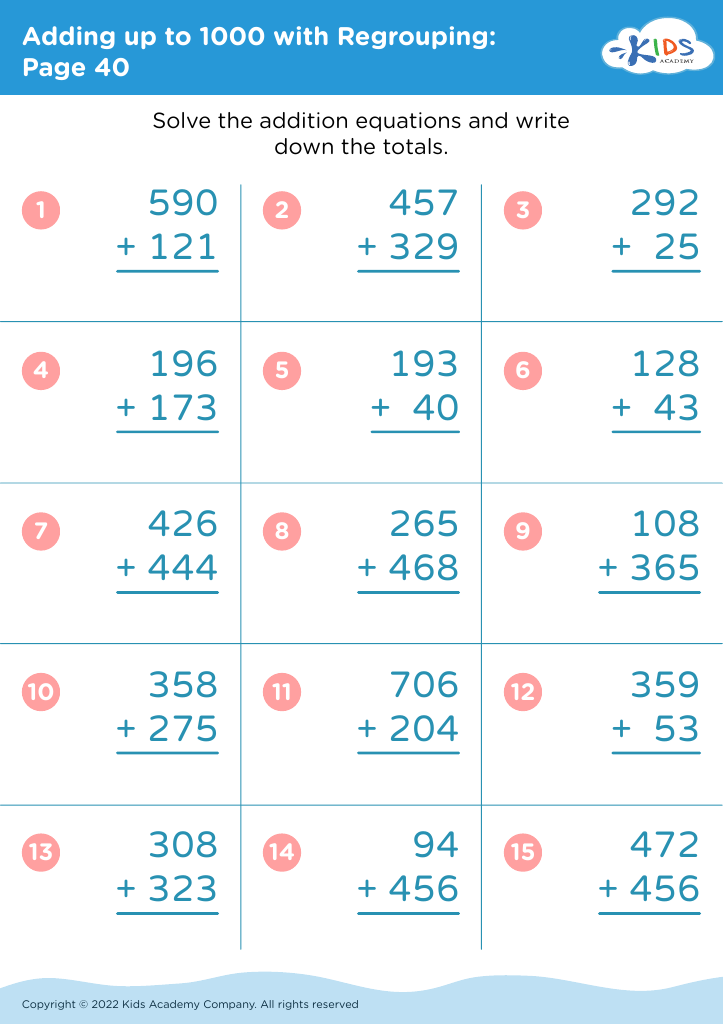
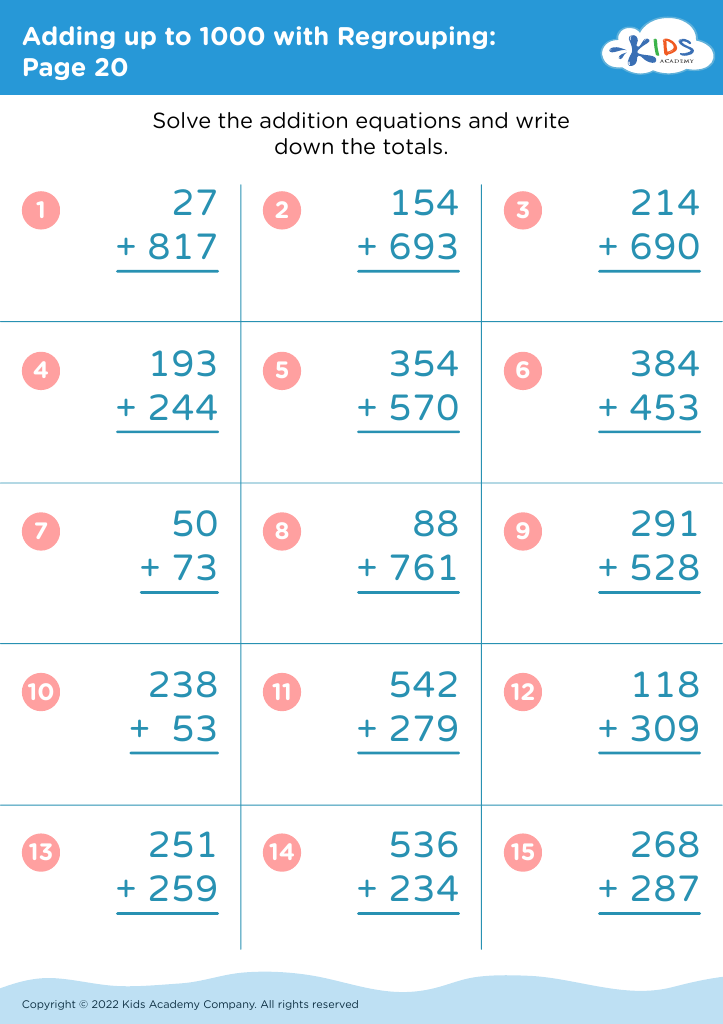
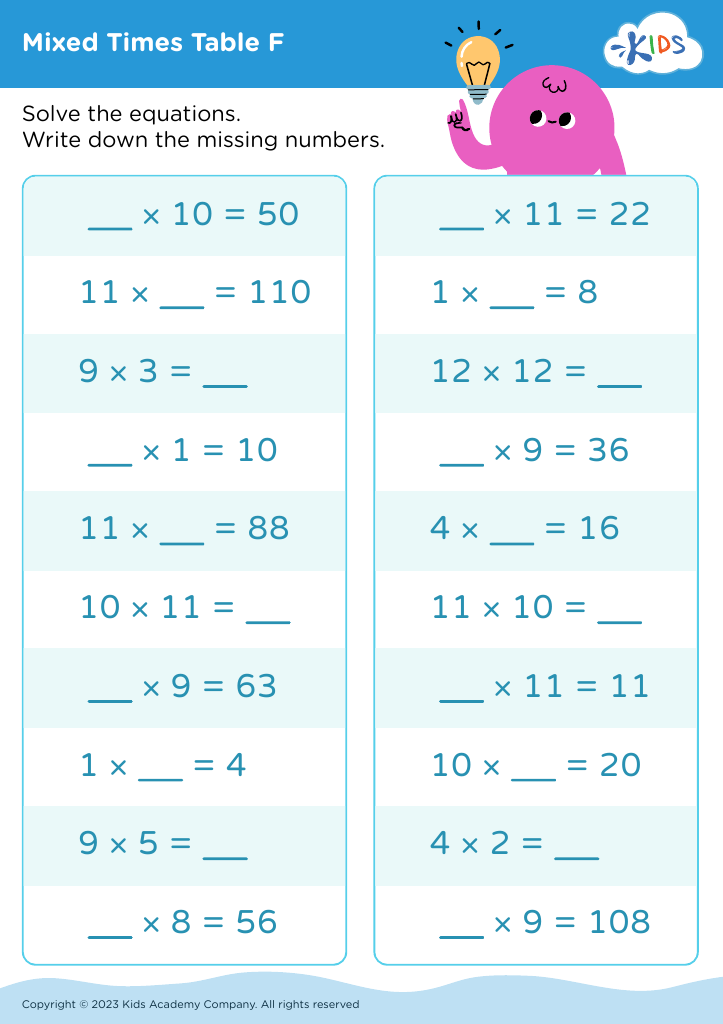
Unlock your child's potential with our "Improve Mathematical Skills Worksheets for Ages 4-8" from Kids Academy. Designed to make learning fun and engaging, our worksheets cover essential math topics like counting, addition, subtraction, shapes, and patterns. Each worksheet is crafted to enhance problem-solving abilities, critical thinking, and number recognition in young learners. Perfect for both classroom and at-home practice, our printable worksheets provide a solid foundation for future math success. Join us today and turn math from a chore into an exciting adventure for your child!





.jpg)


Improving mathematical skills in children aged 4-8 is essential because it sets a strong foundation for future learning and everyday life. During these early years, children's brains are highly receptive, making it an ideal time to develop crucial numeric and problem-solving skills. Early math education goes beyond learning to count or recognize numbers; it helps children understand patterns, shapes, measurements, and basic arithmetic, all of which are fundamental concepts they'll build on in later stages of their education.
Research shows that early mathematical skills are strong predictors of later academic success, even more so than early literacy skills. A child who develops a robust understanding of math early on is better equipped to tackle complex subjects in the future, such as algebra, geometry, and calculus. Moreover, math skills are vital for everyday tasks like budgeting, cooking, and even time management.
Parents and teachers play a pivotal role in fostering a positive attitude toward math by integrating playful and hands-on activities that make learning enjoyable. Educational games, interactive apps, and real-world problem-solving tasks can spark curiosity and confidence in young learners. When children achieve early math competency, they gain a sense of accomplishment and build the critical thinking skills that will benefit them throughout their lives. Therefore, focusing on mathematical skill development during these formative years has long-term advantages, laying the groundwork for academic and life-long success.








