
Knowledge reinforcement Worksheets for Ages 4-8
3 filtered results
Difficulty Level
Grade
Age
-
From - To
Subject
Activity
Standards
Unlock your child's potential with our engaging Knowledge Reinforcement Worksheets designed specifically for ages 4-8. These interactive printables enhance foundational skills by providing fun activities that reinforce essential concepts such as math, reading, and critical thinking. Each worksheet is tailored to foster curiosity and encourage independent learning, making it easy for young learners to absorb information while enjoying the process. Whether at home or in the classroom, our thoughtfully crafted resources help solidify knowledge and boost confidence. Discover the joy of learning with Kids Academy’s collection of knowledge reinforcement worksheets, designed to inspire young minds and support educational growth. Perfect for every budding scholar!
Favorites
With answer key
Interactive
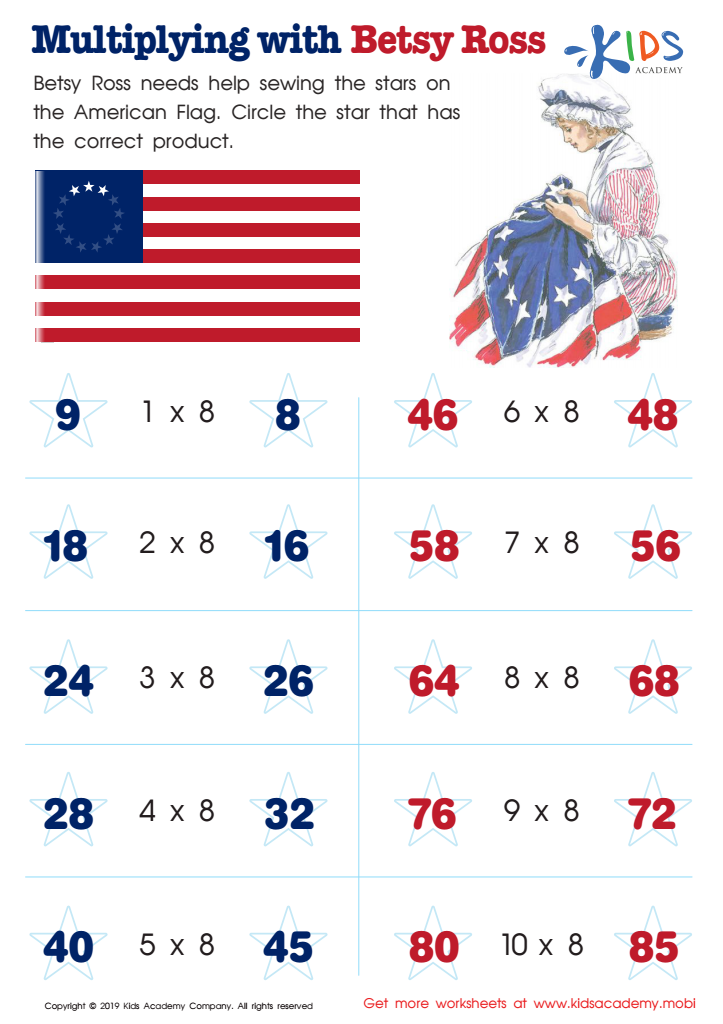
Multiplying with Betsy Ross Worksheet
Before getting into the worksheet, have your students take a quick history lesson on Betsy Ross. Ask them if they know her role in American history. On the printout, ask your kids to identify what Betsy Ross is doing - sewing the stars on the American Flag. Have them circle the star that has the correct pattern.
 Assign to My Students
Multiplying with Betsy Ross Worksheet
Worksheet
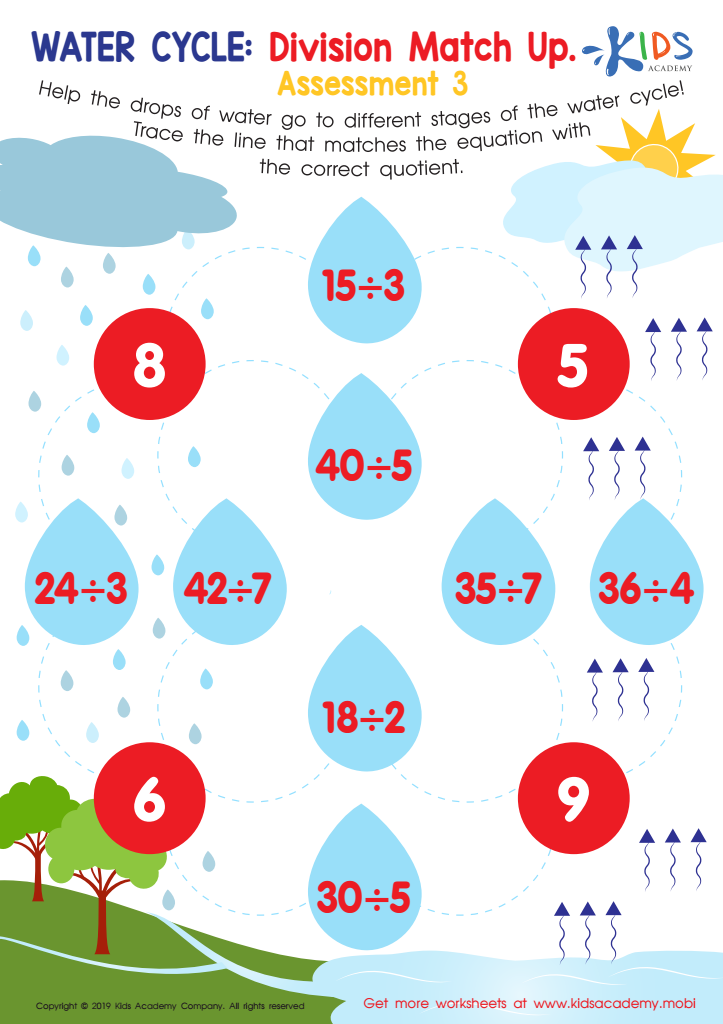
Water Cycle Division Match Up Assessment 3 Worksheet
Division is more fun than schoolwork with this assessment! Traceable lines let kids match equations to quotients, helping them build automaticity and giving you an easy way to see their progress.
Water Cycle Division Match Up Assessment 3 Worksheet
Worksheet
Join Kids Academy for Free
Who is primarily going to use this learning content?







Knowledge reinforcement is critical for children ages 4-8, a stage when their brains are particularly receptive to learning. During these formative years, children are developing foundational skills in literacy, numeracy, and critical thinking. Reinforcing knowledge helps solidify these skills, enabling them to build upon what they’ve learned, which is essential for their academic growth.
Parents and teachers should prioritize knowledge reinforcement because it promotes confidence in young learners. When children can recall and apply previously taught concepts, they feel more competent and willing to engage with new material. This sense of accomplishment fosters a love for learning, motivating them to explore further.
Additionally, knowledge reinforcement helps students retain information long-term. Generally, if concepts are revisited strategically, they become part of a child's long-term memory, aiding in future academic endeavors. Moreover, consistency in reinforcement—from home and school—creates a supportive learning environment, allowing children to connect lessons across different contexts.
Ultimately, by investing in knowledge reinforcement, parents and teachers ensure that students not only grasp essential concepts but also develop lifelong learning habits, critical thinking skills, and a resilient attitude towards facing challenges in their educational journeys.








