Learn addition Worksheets for Ages 4-8
4 filtered results
-
From - To
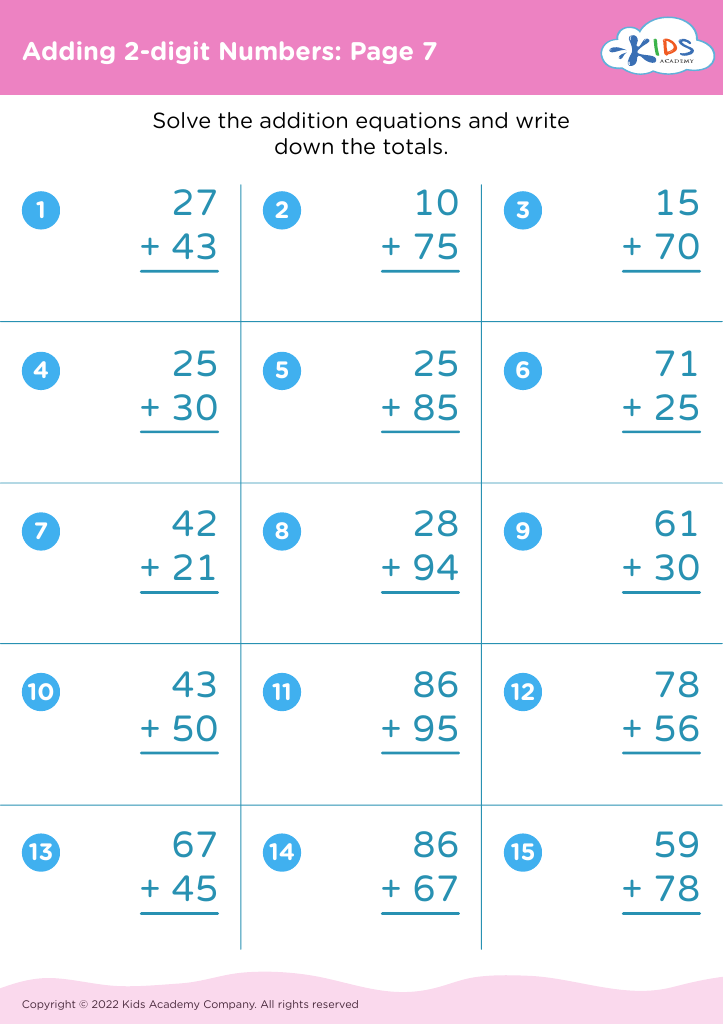
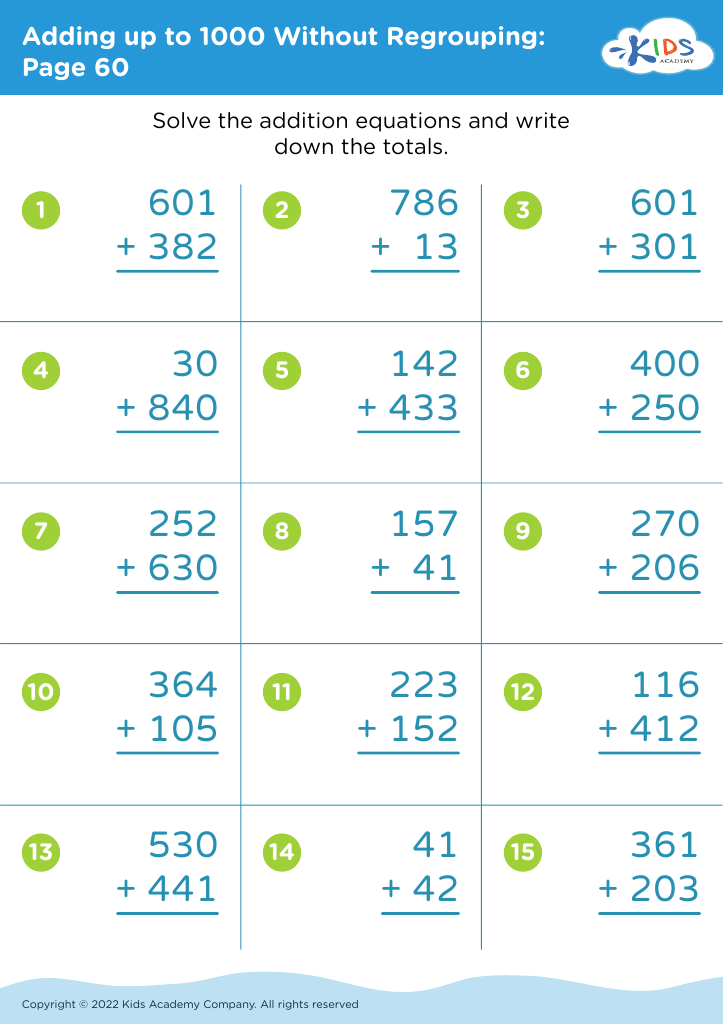
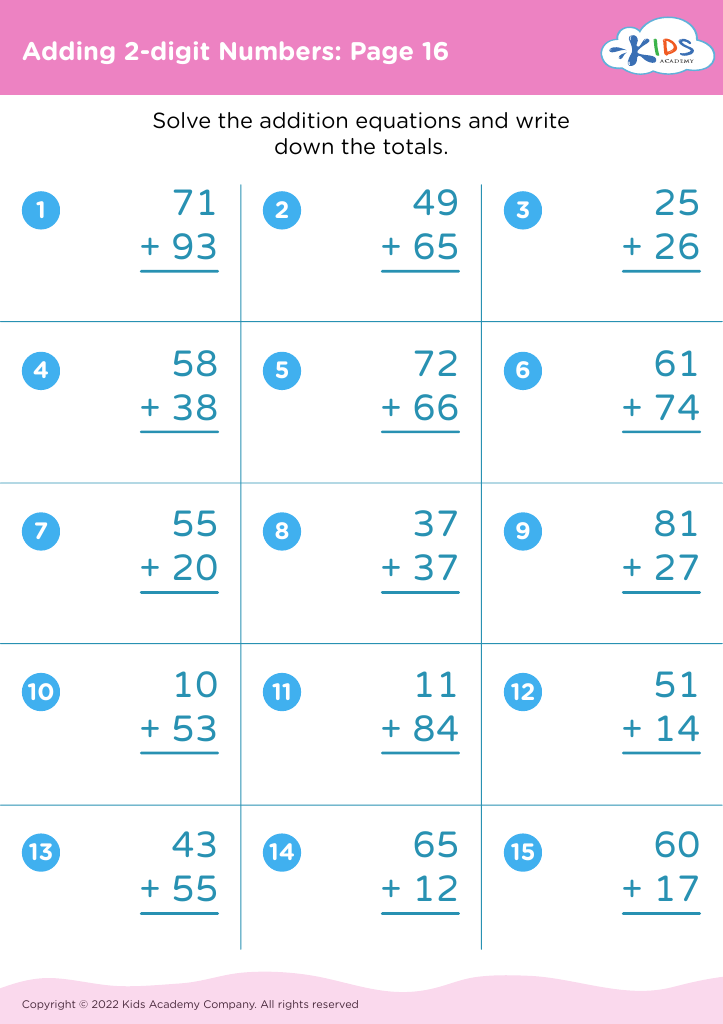
Unlock your child’s mathematical potential with our "Learn Addition Worksheets for Ages 4-8"! Tailored for early learners, these engaging worksheets combine fun and skill-building to help young children grasp the fundamentals of addition. Designed with vibrant illustrations and interactive activities, they make learning math enjoyable and effective. From simple one-digit problems to visual aids that boost comprehension, our resources cater to various learning styles. Ideal for home or classroom use, these worksheets encourage self-paced learning, reinforcing crucial math skills and fostering a love for numbers. Empower your child’s journey in mathematics with our thoughtfully crafted addition worksheets!







Learning addition for children aged 4-8 is crucial for several reasons. Firstly, this foundational skill sets the stage for future mathematical understanding. Addition is one of the first math concepts that children encounter, and mastering it can build confidence and a positive attitude towards STEM subjects. By engaging in fun and interactive addition activities, teachers and parents can foster a love for learning that lasts a lifetime.
Additionally, understanding addition enhances critical thinking skills and problem-solving abilities. Children learn to analyze situations, devise strategies, and come to conclusions—skills that are applicable beyond mathematics and into everyday life. Furthermore, early math skills are linked to later academic success; studies show that children who develop a strong grasp of basic math concepts perform better in school.
Socially, learning to add can encourage collaboration among peers, as children often learn best through group activities. This nurtures communication skills and teamwork. Lastly, parents and teachers should care because the age of 4-8 is a prime time for cognitive development. Engaging children in meaningful addition practices during these years lays a robust foundation for their educational journey, equipping them with essential skills for the future.








