Lowercase identification Worksheets for Ages 4-8
5 filtered results
-
From - To
Enhance your child's literacy skills with our engaging Lowercase Identification Worksheets, designed specifically for ages 4-8. These fun and interactive activities help kids learn to recognize, trace, and write lowercase letters, laying a strong foundation for their reading and writing journey. Each worksheet is crafted to align with educational standards while igniting creativity and curiosity in young learners. With a variety of colorful sheets and playful themes, your child will enjoy mastering their lowercase letters. Perfect for classroom activities or at-home practice, our worksheets make learning fun and effective. Explore our collection today and watch your child's confidence soar!
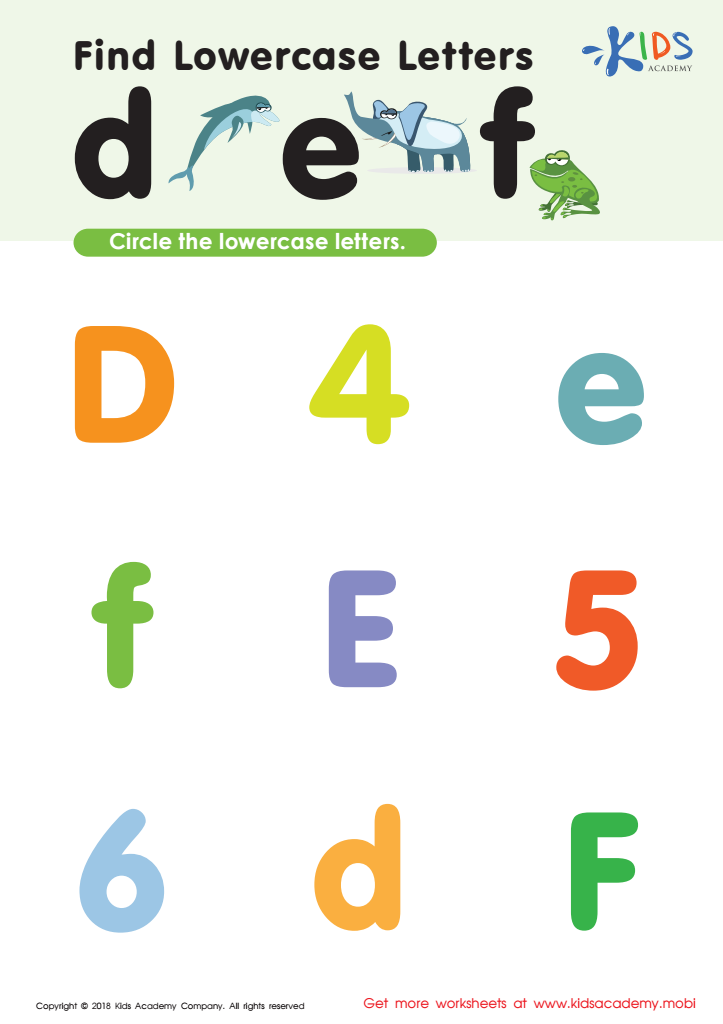
Find Lowercase Letters d e f Worksheet
 Assign to My Students
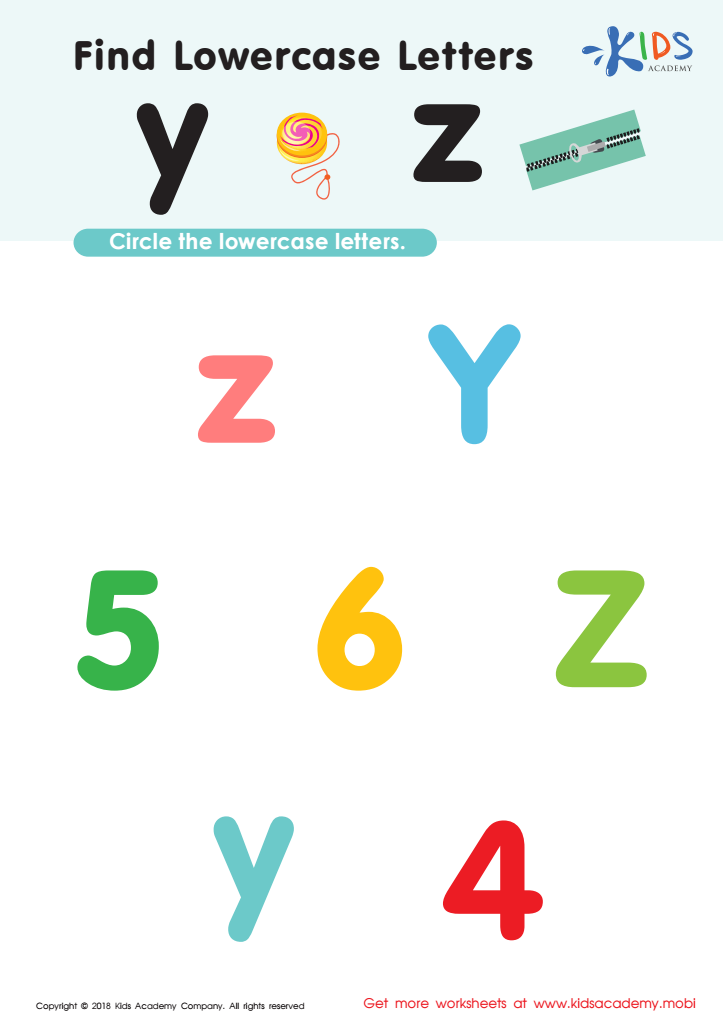
Find Lowercase Letters y z Worksheet
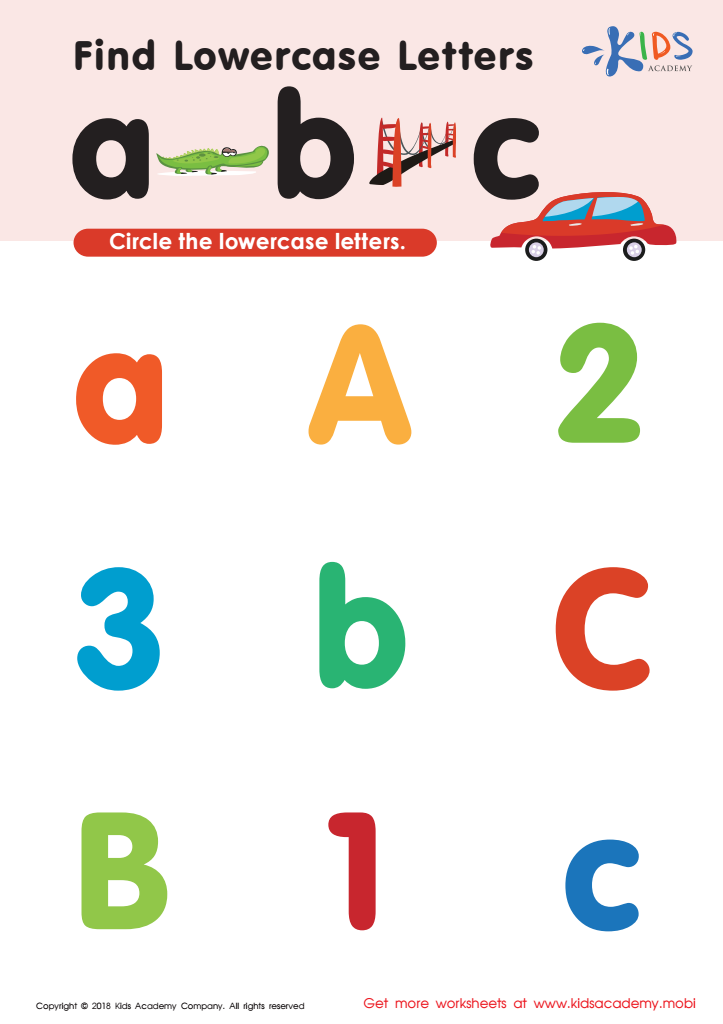
Find lowercase letters a b c Worksheet
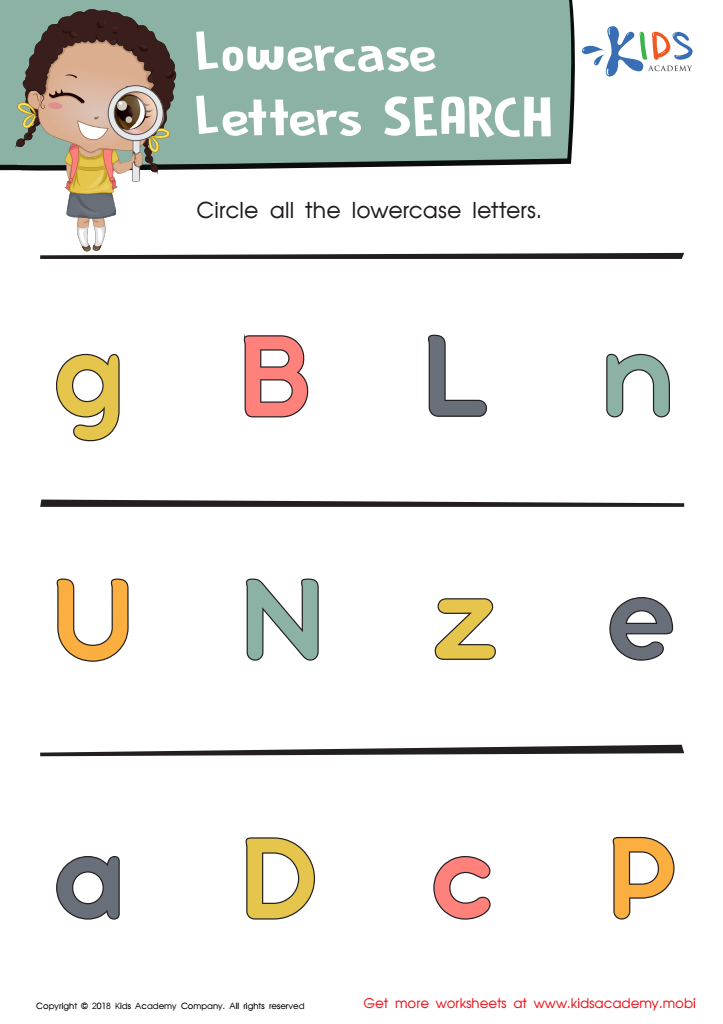
Lowercase Letters Search: Assessment Worksheet
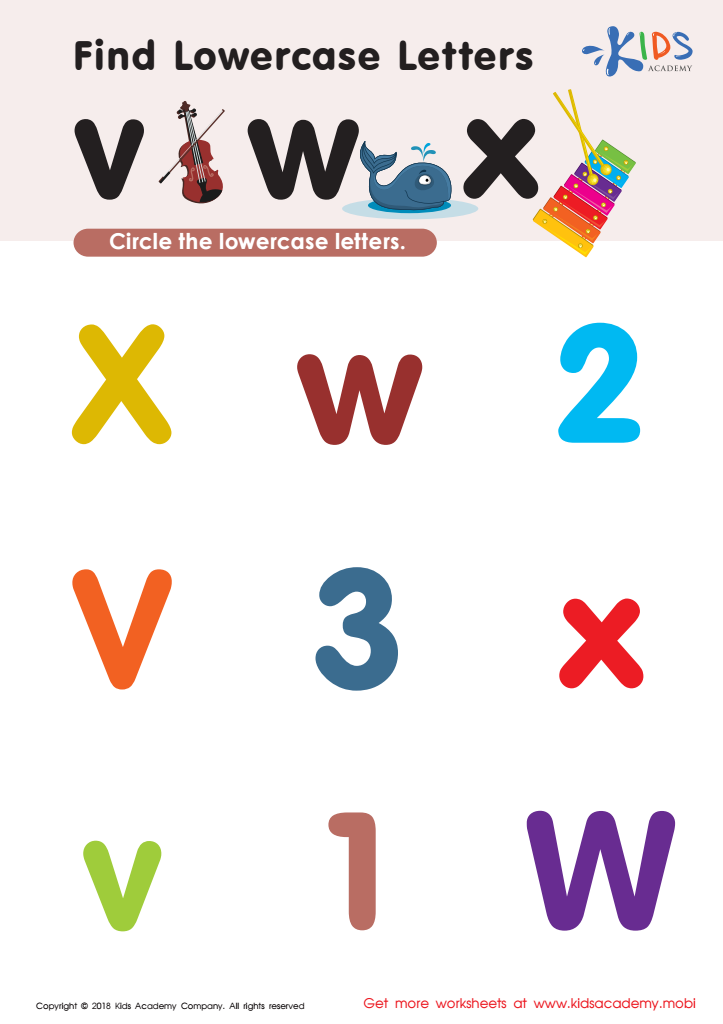
Find Lowercase Letters v w x Worksheet







Lowercase letter identification is crucial for children aged 4-8 as it lays the foundation for reading and writing skills. During these formative years, children begin to encounter text and are introduced to letters in various contexts. Recognizing lowercase letters is essential since most written material, including storybooks, worksheets, and everyday signs, predominantly features them. By familiarizing children with lowercase letters, parents and teachers help strengthen their phonemic awareness and letter-sound associations, unlocking reading potential.
Furthermore, lowercase identification supports a child's ability to write effectively. As they learn to form little letters, they gain confidence in their writing skills, which fosters self-expression. In addition, correct identification assists in decoding; as children encounter letters in words, understanding their shapes and sounds assists them in sounding out words and reads fluently.
Additionally, knowing lowercase letters can prevent frustration often encountered when kids transition from recognizing print to engaging with text. Overall, prioritizing lowercase letter identification supports a child's literacy journey, promotes academic success, and encourages a love for reading from an early age. Thus, it's vital for parents and teachers to invest time in these fundamental skills for developing confident, capable learners.








