Mental arithmetic Worksheets for Ages 4-8
6 filtered results
-
From - To
Enhance your child’s math skills with our engaging Mental Arithmetic Worksheets designed specifically for ages 4-8. These worksheets foster number sense and problem-solving abilities, making learning fun and challenging. With a variety of exercises covering addition, subtraction, counting, and early mathematical concepts, your child will develop essential arithmetic skills in a colorful and interactive format. Perfect for homeschoolers or supplementary practice, our worksheets promote independent learning and critical thinking. Explore our collection to support your child’s academic journey while boosting their confidence in math. Download today and turn arithmetic challenges into enjoyable learning experiences!
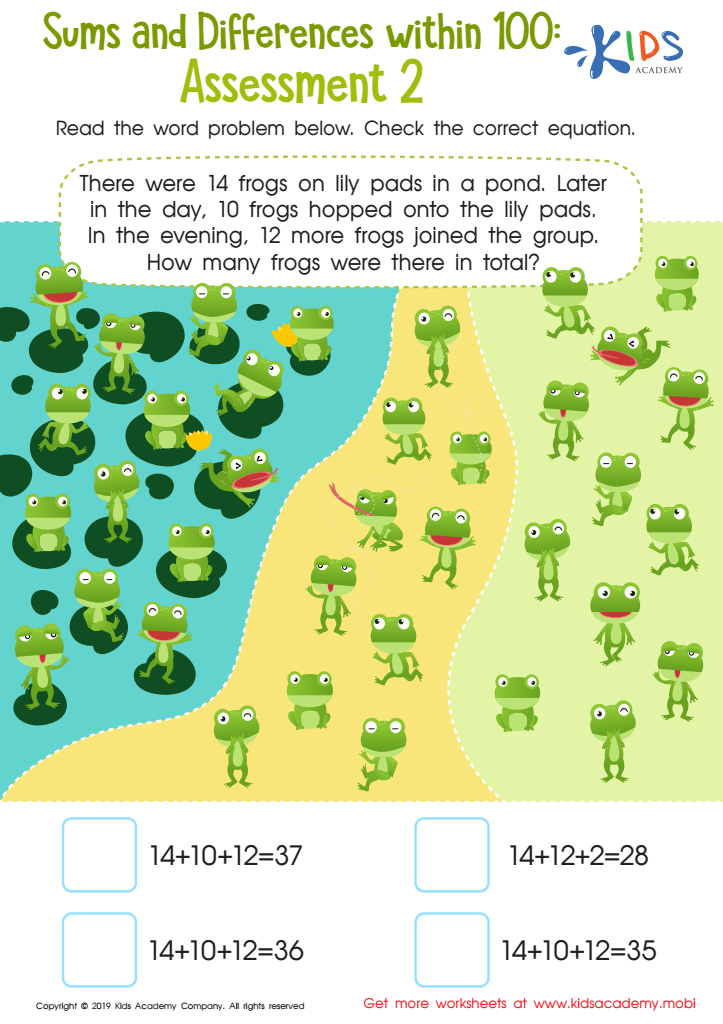
Sums and Differences Within 1 - Assessment 2 Worksheet
 Assign to My Students
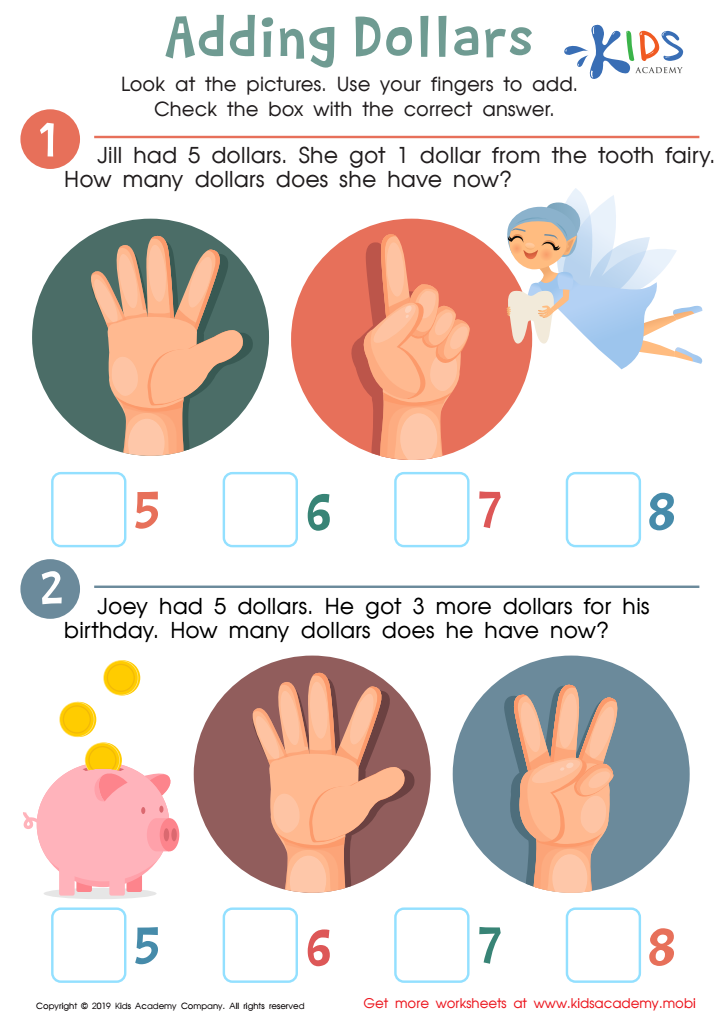
Tooth Fairy Addition Worksheet
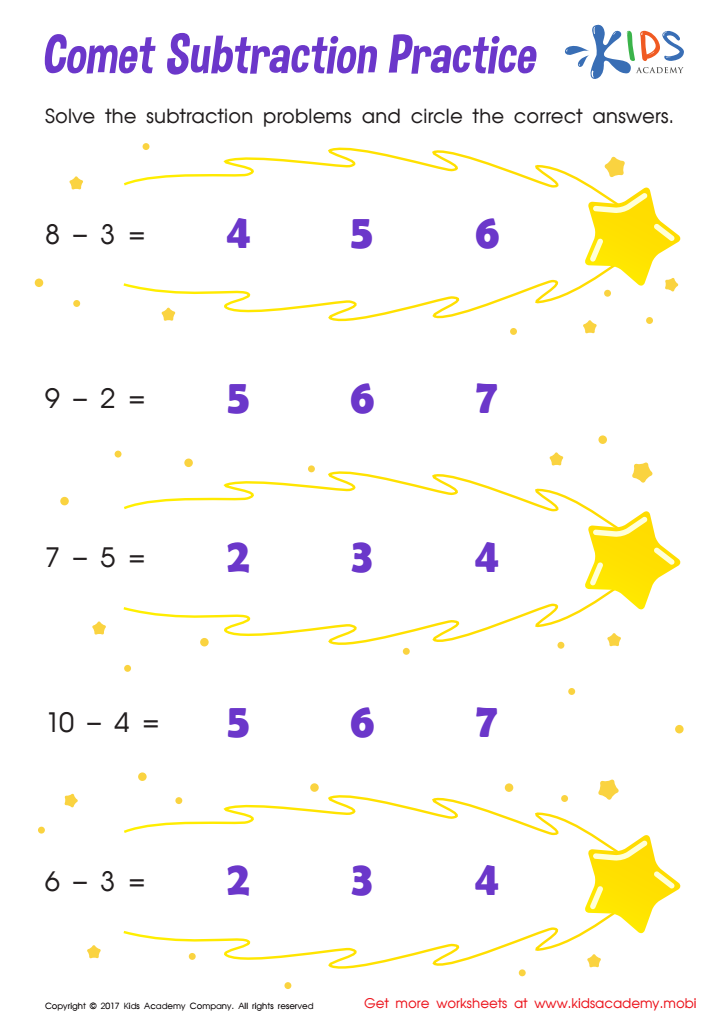
Comet Subtraction Practice Substraction Worksheet
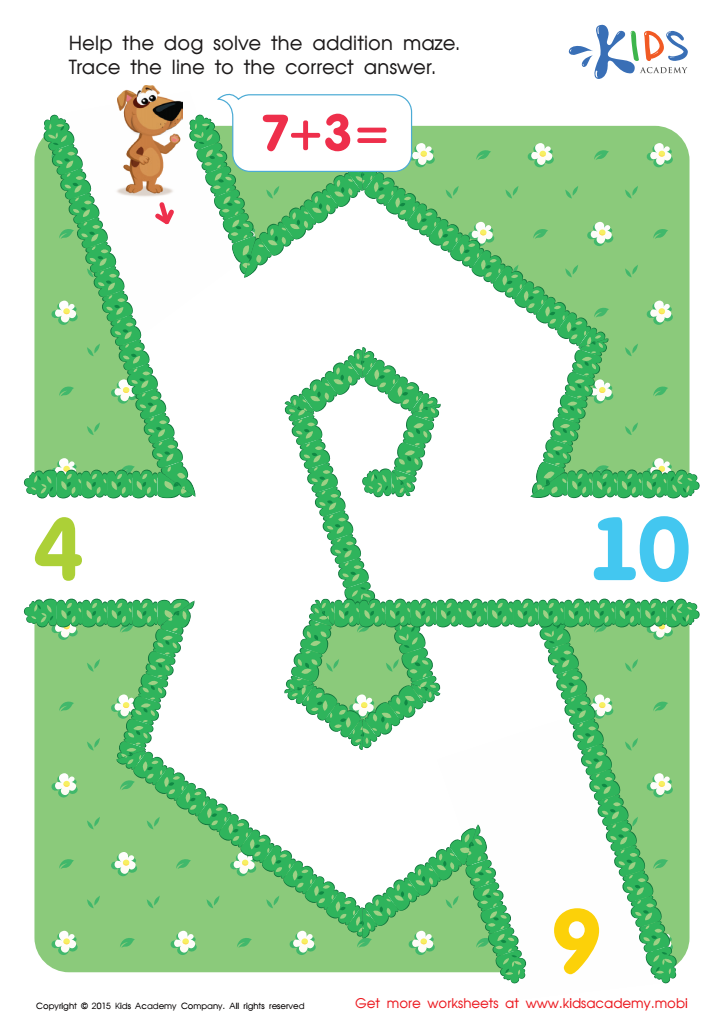
Seven Plus Three Worksheet
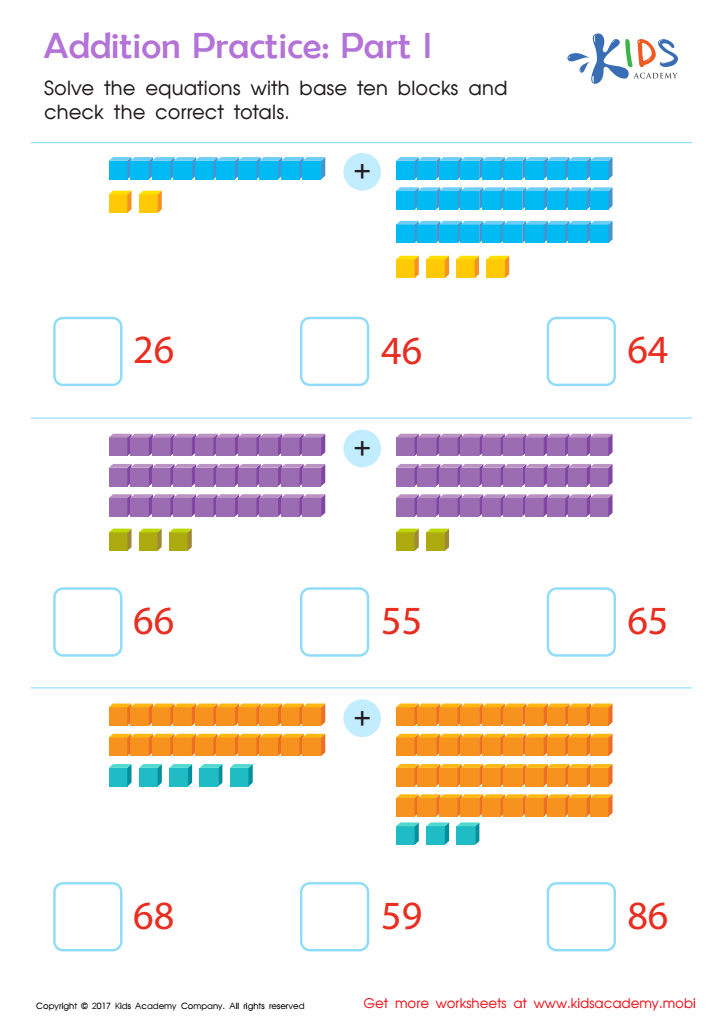
Addition Practice Sheet: Part 1
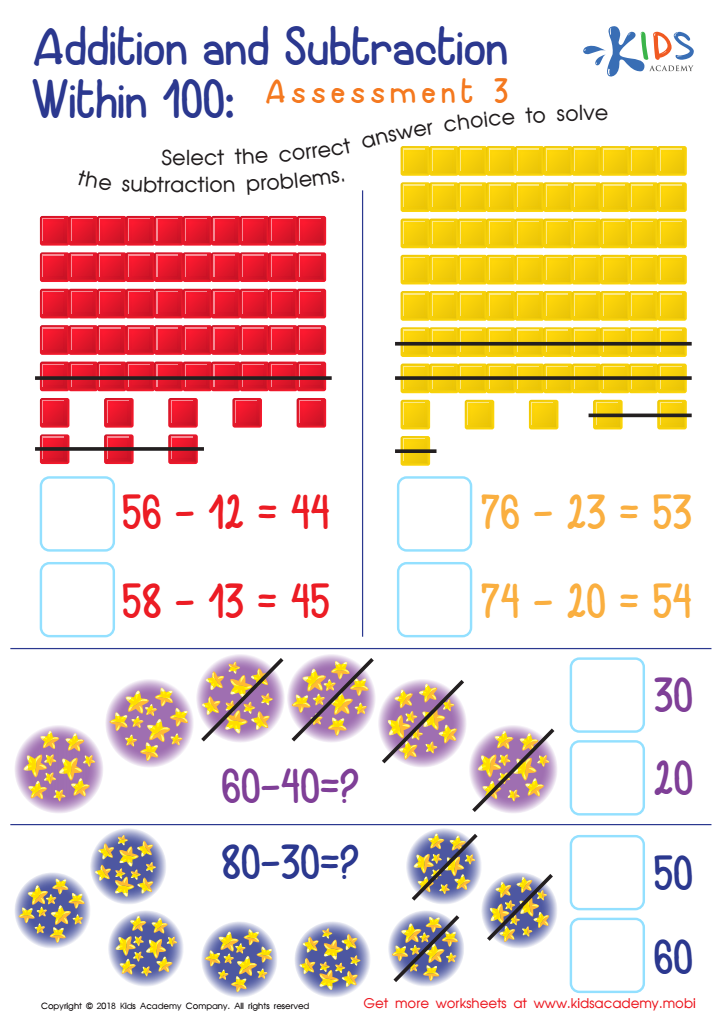
Addition and Subtraction Within 1: Assessment 3 Worksheet








Mental arithmetic is a crucial skill for children ages 4-8, as it lays the foundation for a lifetime of mathematical understanding and problem-solving abilities. At this early age, when cognitive development is rapid, fostering mental arithmetic can enhance children's numerical fluency, which in turn bolsters their confidence and enthusiasm for math. Engaging in mental calculations encourages children to visualize numbers and think critically, teaching them the mechanisms behind addition, subtraction, and basic multiplication or division.
Furthermore, developing these skills early can help prevent future math anxiety. Kids who practice mental arithmetic gain comfort in their mathematical competence, reducing frustration as they progress through more complex math concepts. Moreover, it aids in enhancing other cognitive skills such as memory, attention, and concentration.
For parents and teachers, supporting mental arithmetic can transform math from a dull subject into an enjoyable and interactive experience. It simplifies complex concepts by encouraging the use of mental shortcuts and strategies, making real-life applications, such as budgeting or cooking, tangible for kids. Ultimately, prioritizing mental arithmetic is an investment in a child's academic success and helps nurture lifelong learners who view math with positivity and curiosity.








