
Motor skills Worksheets for Ages 4-8
3 filtered results
Difficulty Level
Grade
Age
-
From - To
Subject
Activity
Standards
Unlock your child's potential with our engaging Motor Skills Worksheets designed specifically for ages 4-8. These printable resources help young learners develop essential fine and gross motor skills through fun and interactive activities. From cutting and pasting to coloring and tracing, our worksheets ensure an enjoyable learning experience while promoting hand-eye coordination, dexterity, and strength. Tailored to meet early childhood milestones, these activities support school readiness and boost confidence in physical abilities. Perfect for home or classroom use, our motor skills worksheets are an excellent way to make learning active and enjoyable. Explore our collection and watch your child thrive!
Favorites
With answer key
Interactive
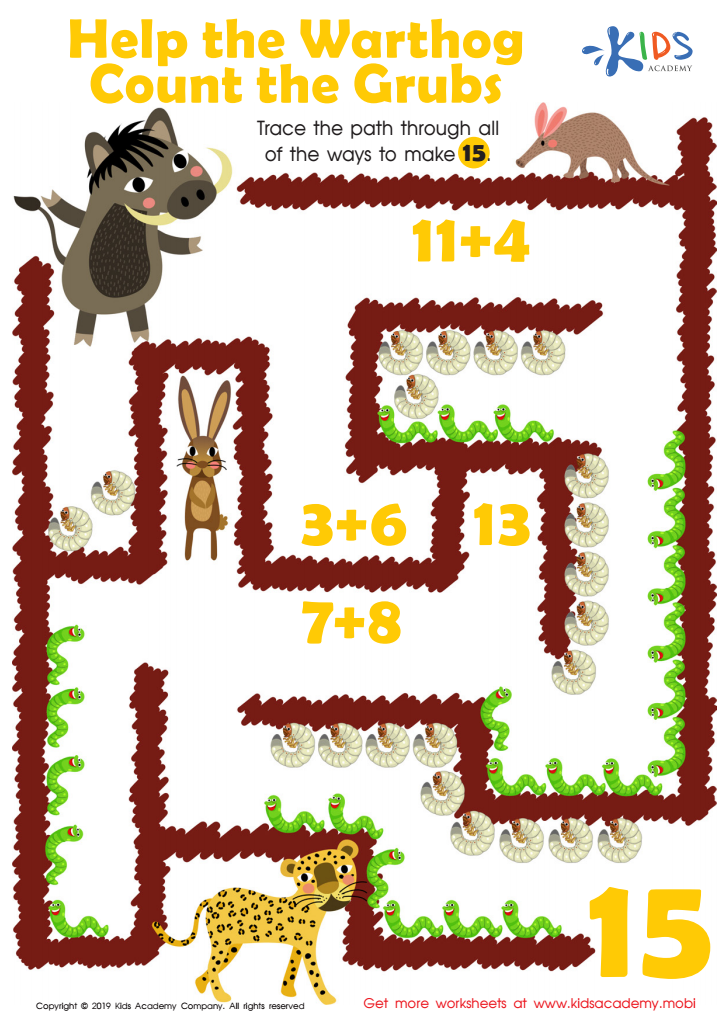
Help the Warthog Count the Grubs Worksheet
Test your kids' knowledge of wild animals. Ask them to name some they know, then have them identify the animals on this worksheet. If they can't, take the time to tell them the names. Finally, trace the warthog's path through the maze by solving the equations and going through paths that make 15.
 Assign to My Students
Help the Warthog Count the Grubs Worksheet
Worksheet
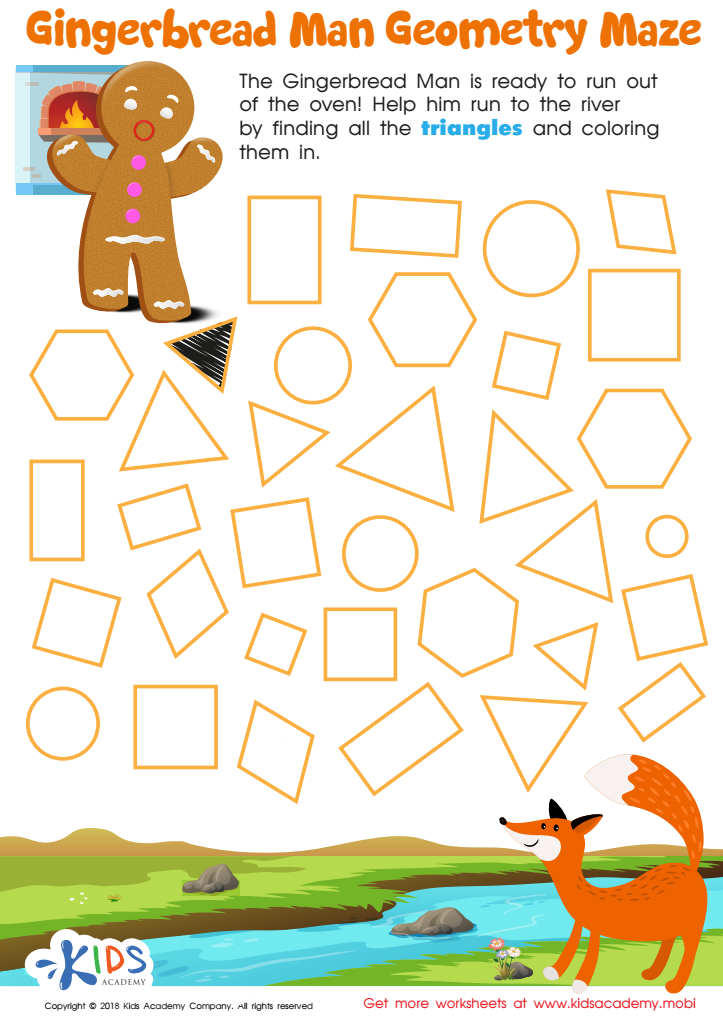
Gingerbread Man Geometry Maze Worksheet
Help a beloved character escape the oven! Kids race through a sea of geometrical shapes, searching for triangles of various sizes. With this free worksheet, they can have fun while learning about similarity of geometrical shapes concepts. Run, run, run as fast as they can!
Gingerbread Man Geometry Maze Worksheet
Worksheet
Join Kids Academy for Free
Who is primarily going to use this learning content?








Motor skills are crucial for children aged 4-8 as they serve as the foundation for physical, social, and cognitive development. During these formative years, children refine their fine and gross motor skills, which encompass everything from hand-eye coordination to balance and mobility.
Parents and teachers should care because well-developed motor skills directly impact a child’s ability to engage in everyday activities. For instance, strong fine motor skills affect tasks such as writing, tying shoelaces, and using utensils, which are vital for school readiness and independence. Meanwhile, gross motor skills such as running, jumping, and climbing contribute to physical fitness and overall health, setting a precedent for lifelong habits.
Moreover, motor skill development helps children gain confidence and fosters connection through group physical activities or sports, enhancing social skills and teamwork. It's essential for cognitive learning as well, as active play and movement boost attention span and memory.
Encouraging children to practice motor skills through play, arts and crafts, and physical activities can help build their capabilities, independence, and connection to the world around them. In short, fostering these skills now equips children with the essential tools they need for success in later life.








