Multiplication practice Worksheets for Ages 4-8 - Page 4
83 filtered results
-
From - To
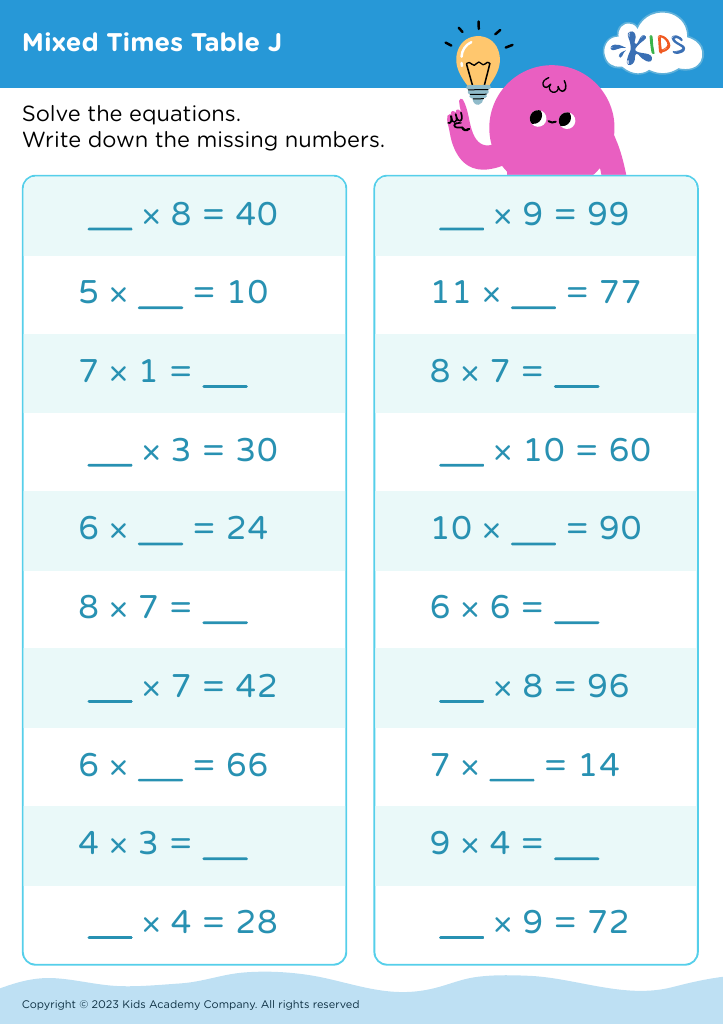
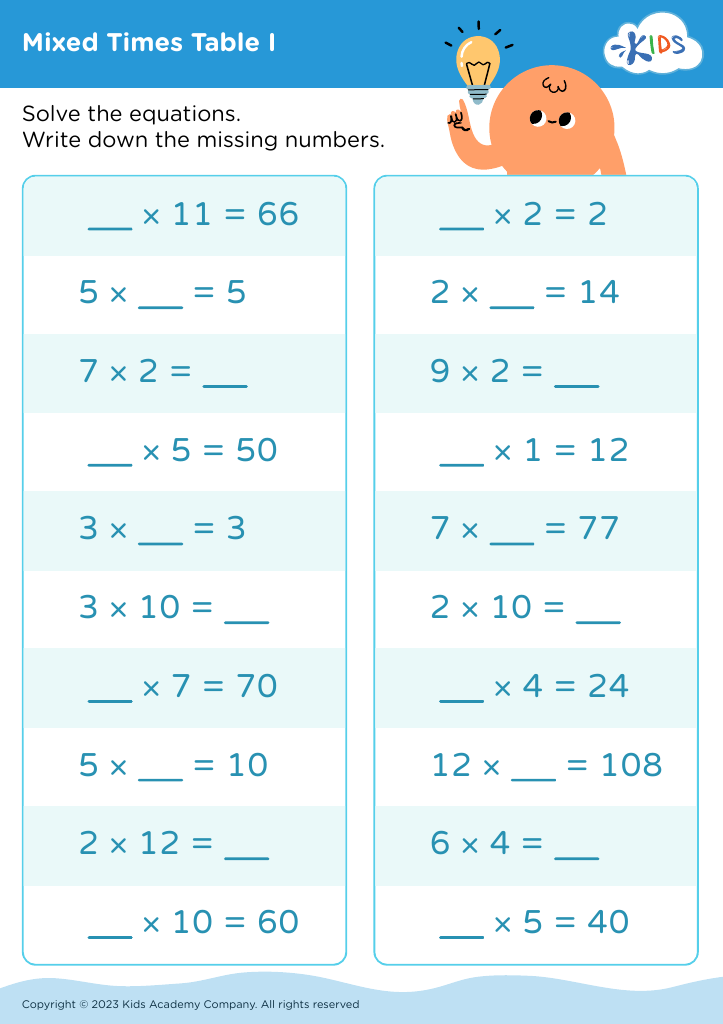
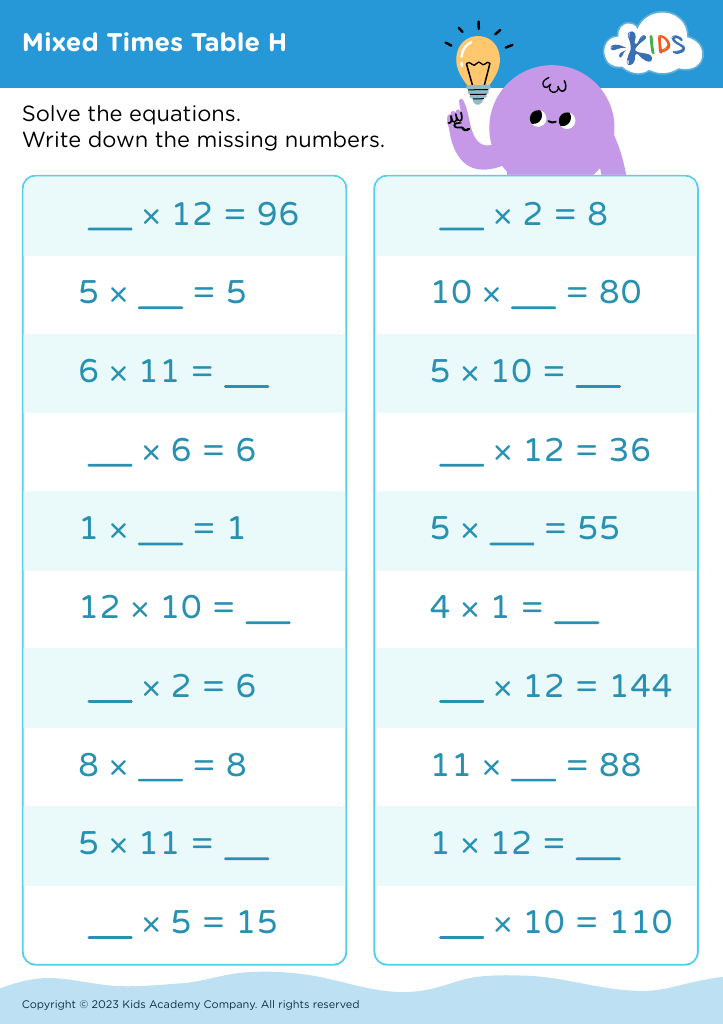
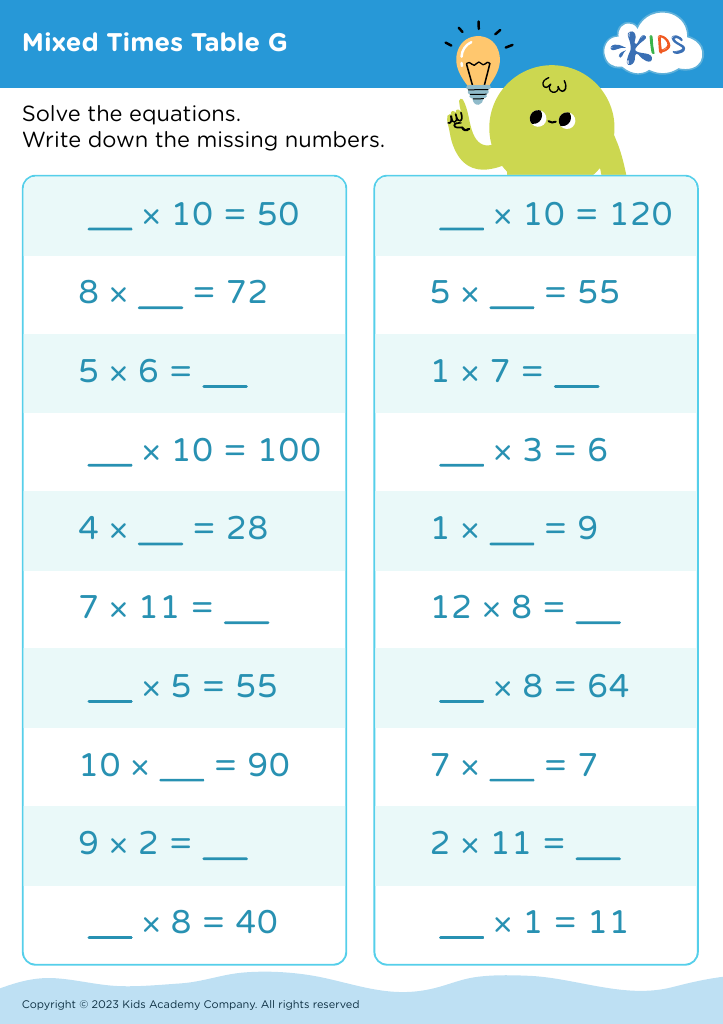
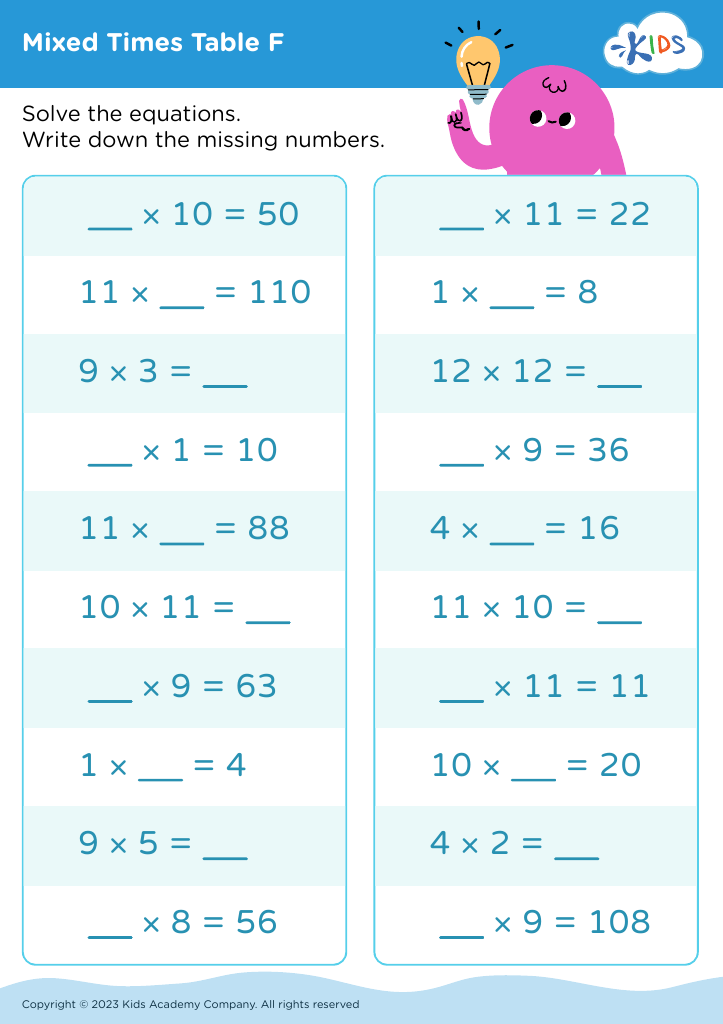
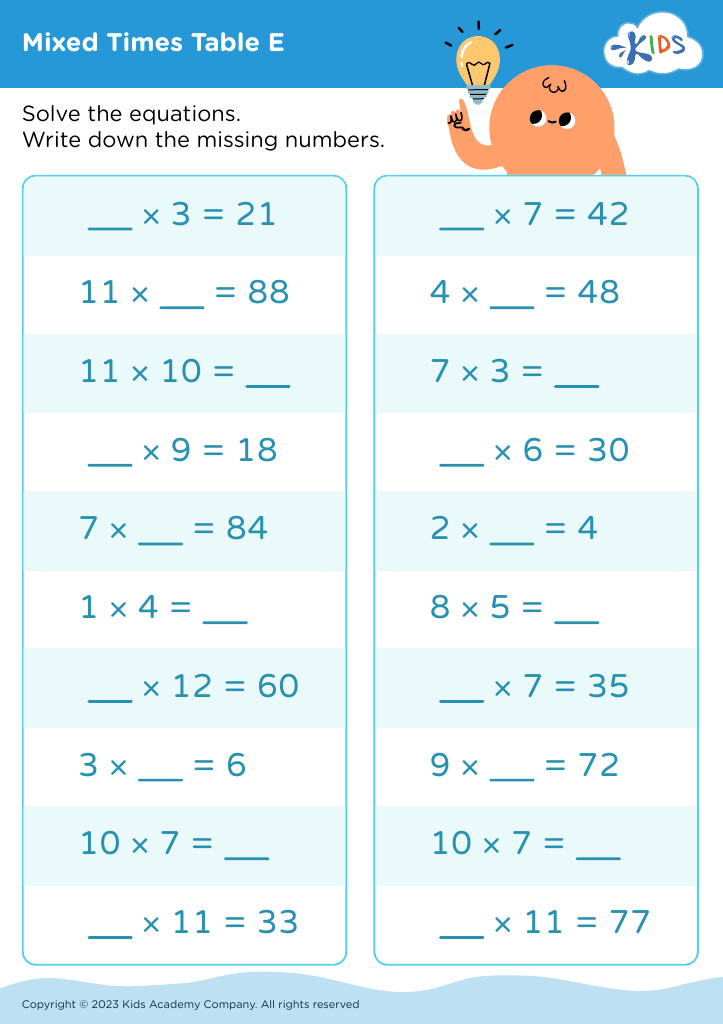
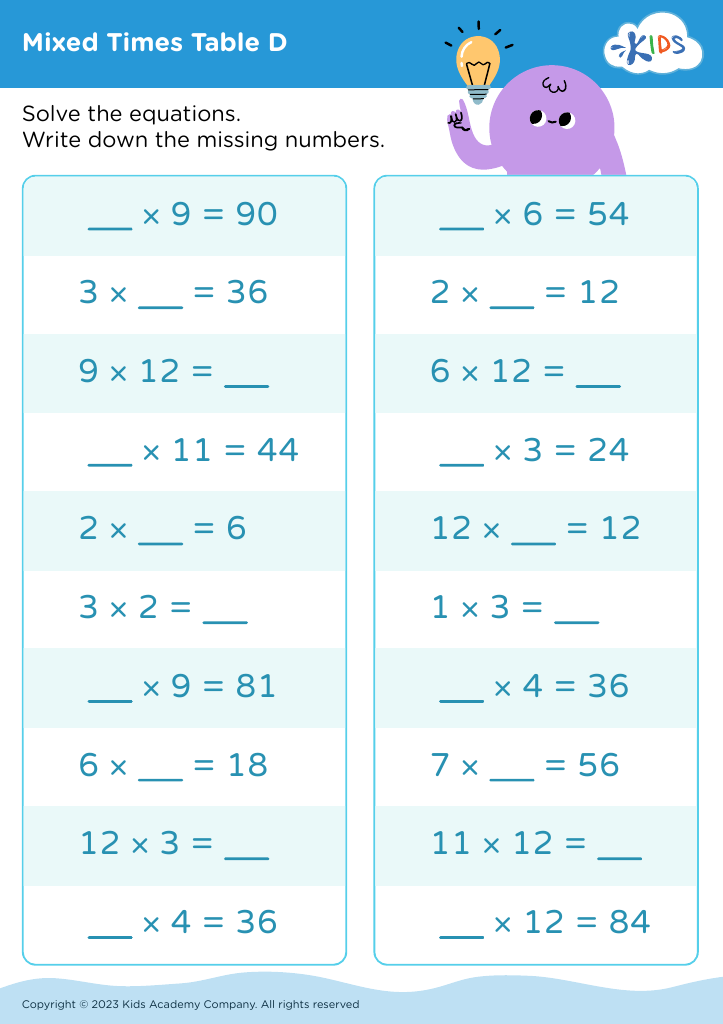
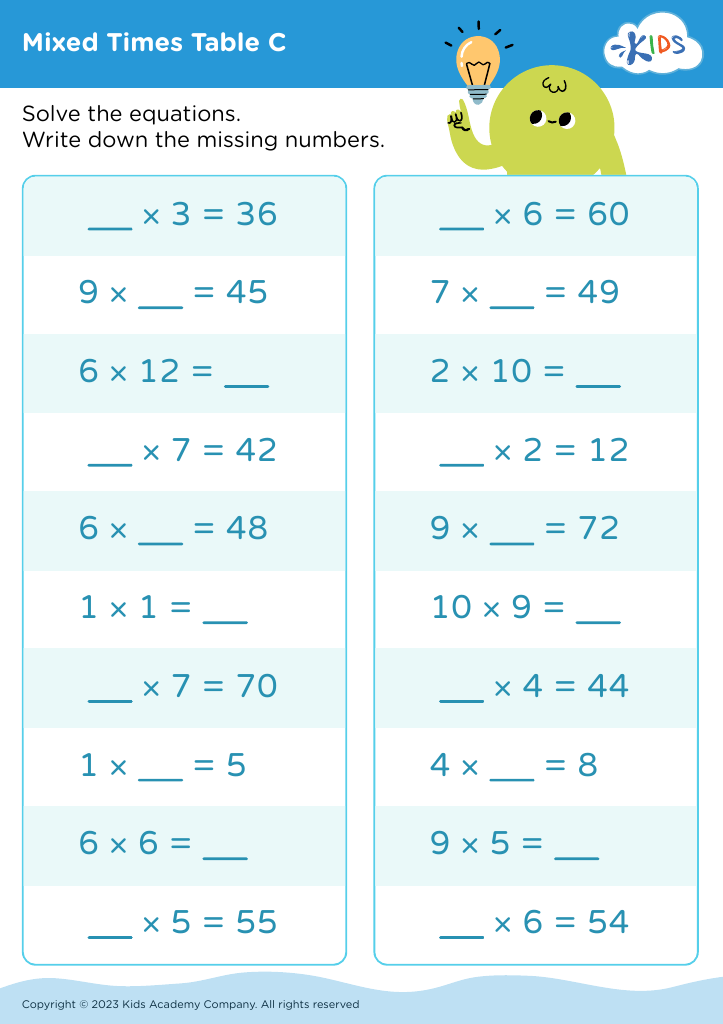








Parents and teachers should prioritize multiplication practice for children aged 4-8 due to its foundational role in mathematical understanding and overall cognitive development. At this early stage, children begin recognizing patterns, which supports their grasp of multiplication concepts as repeated addition. By engaging with multiplication, kids can develop essential problem-solving skills and enhance their logical reasoning abilities, laying a crucial groundwork for future math topics.
Furthermore, mastery of multiplication facts boosts confidence and fluency in math, reducing math anxiety as students progress to more complex operations. Engaging children in multiplication practice encourages a positive attitude towards mathematics and sets the tone for lifelong learning. Key developmental milestones occur during these years, making it an ideal time to cultivate mathematical skills.
Additionally, regular practice in multiplication fosters a collaborative and supportive learning environment when parents and teachers participate together, strengthening bonds and enhancing curiosity about math. By making practice fun with games or interactive activities, educators and parents can keep children motivated. In summary, multiplication practice at ages 4-8 is vital not only for academic success but also personal development, ensuring that young learners are prepared for future challenges in mathematics and beyond.








