Number comparison skills Worksheets for Ages 4-8
3 filtered results
-
From - To
Enhance your child's mathematical skills with our engaging Number Comparison Skills Worksheets designed for ages 4-8. These worksheets offer an interactive approach to teaching kids how to effectively compare numbers through fun activities and exercises. Tailored to support early learners, our resources include visuals, colorful illustrations, and relatable themes that make learning exciting. Children will practice identifying greater than, less than, and equal sets, building a solid foundation for their math capabilities. Ideal for both classroom and home use, our worksheets encourage critical thinking and promote confidence in numeracy. Explore our collection today and watch your child's math skills flourish!
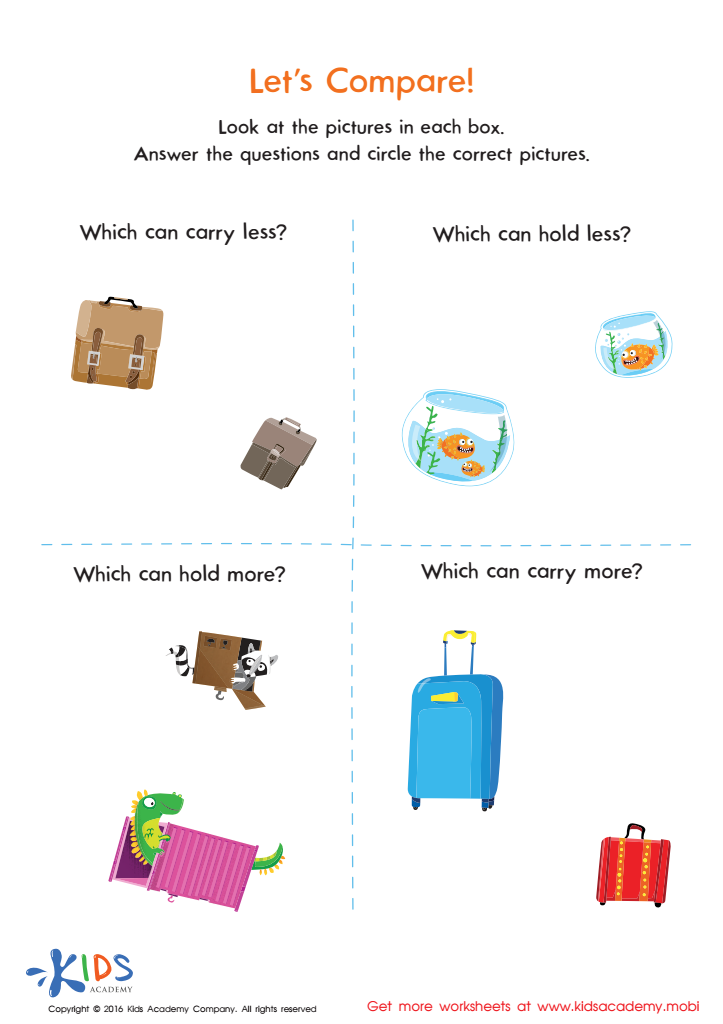
Let's Compare Worksheet: Big or Small
 Assign to My Students
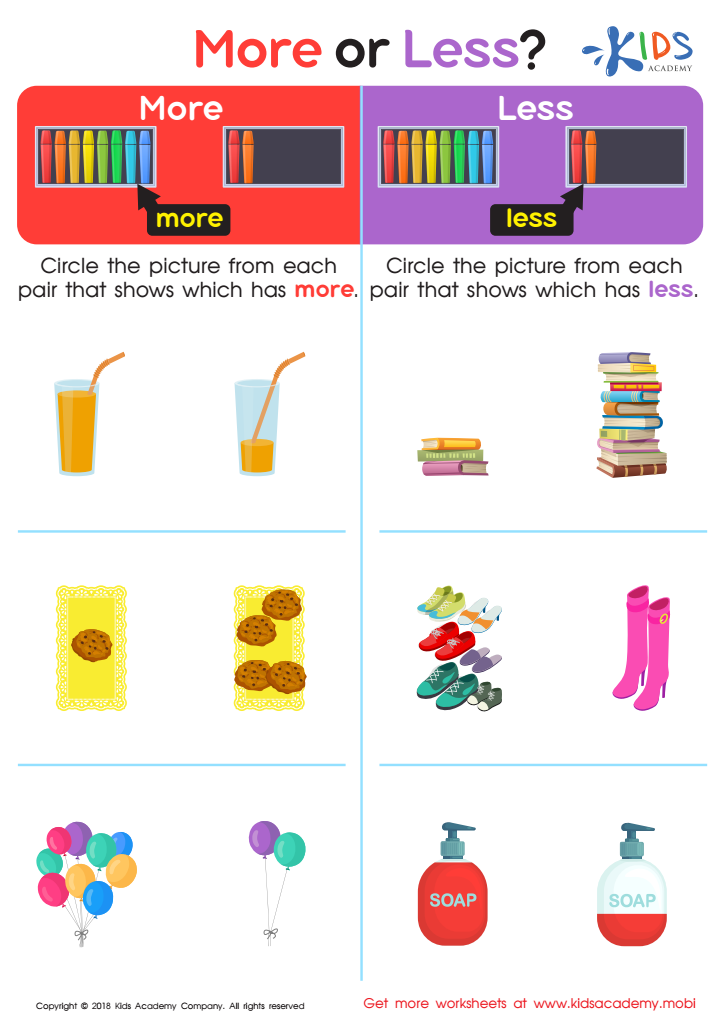
More or Less? Worksheet
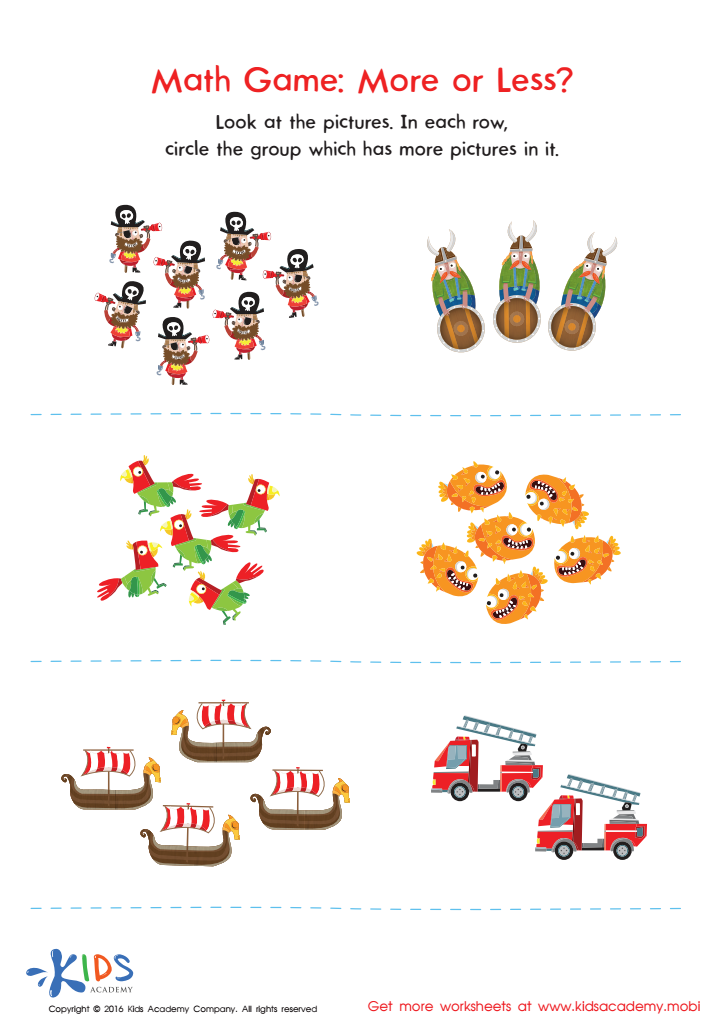
More or Less Worksheet







Number comparison skills are foundational to early mathematical understanding and critical for developing a child's overall cognitive abilities. For children ages 4 to 8, developing these skills lays the groundwork for more complex mathematical concepts such as addition, subtraction, and problem-solving, which they will encounter in later grades.
Parents and teachers should prioritize number comparison skills because they help children understand quantities and numerical relationships. By differentiating between "more," "less," and "equal," children enhance their ability to make informed decisions, not just in math but in everyday life situations. For instance, they learn to evaluate options, such as comparing prices or quantities during shopping trips.
Moreover, these skills foster logical thinking and promote early patterns of numerical literacy that are essential for later academic success. Engaging children in games and activities that focus on comparisons can make learning interactive and enjoyable, increasing their enthusiasm for math. Recognizing and addressing number comparison skills ensures that every child, regardless of their initial aptitude, builds confidence and proficiency as they navigate early education. In short, investing time in this fundamental skill benefits a child's self-esteem and academic trajectory, making it a vital aspect of early childhood education.








