Number comprehension Worksheets for Ages 4-8 - Page 2
29 filtered results
-
From - To
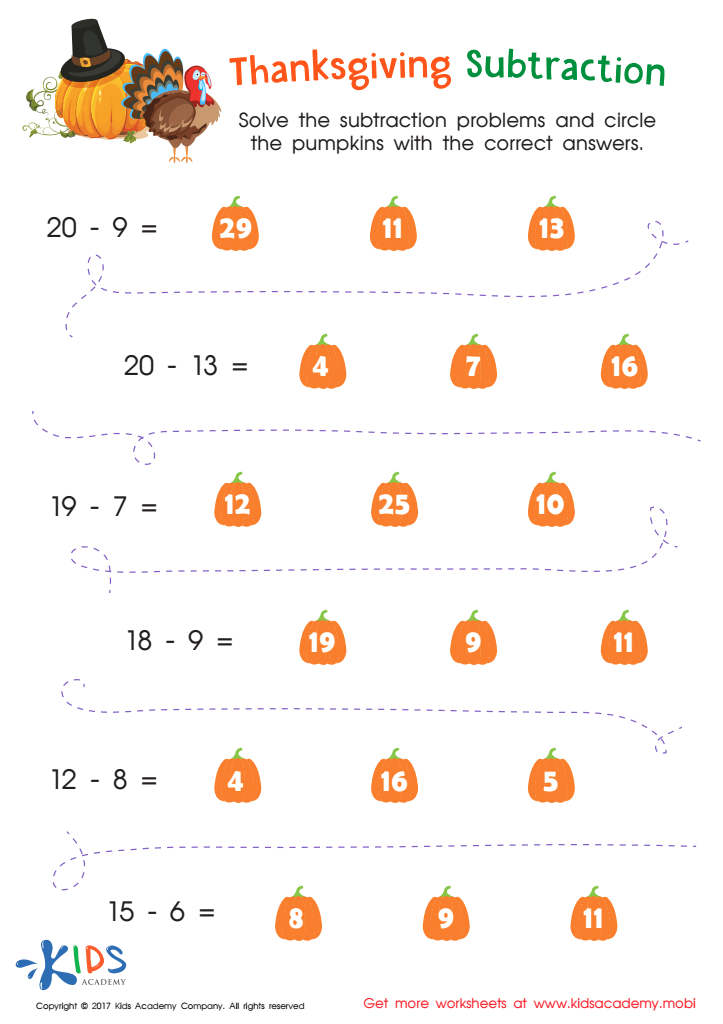
Thanksgiving Subtraction Substraction Worksheet
 Assign to My Students
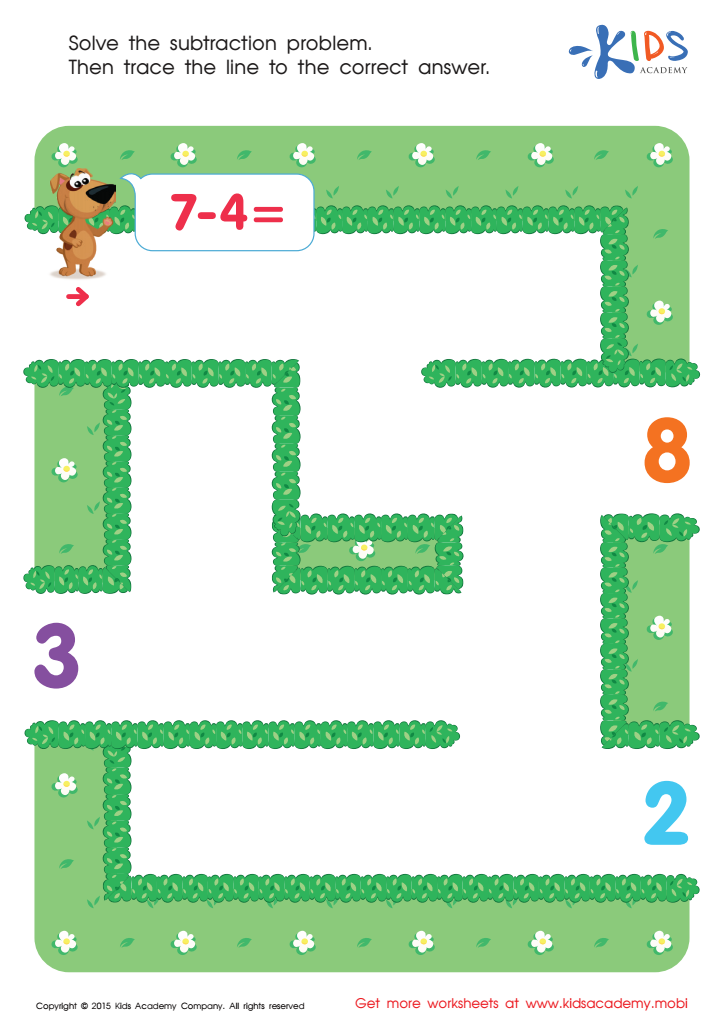
Subtraction Seven Minus Four Worksheet
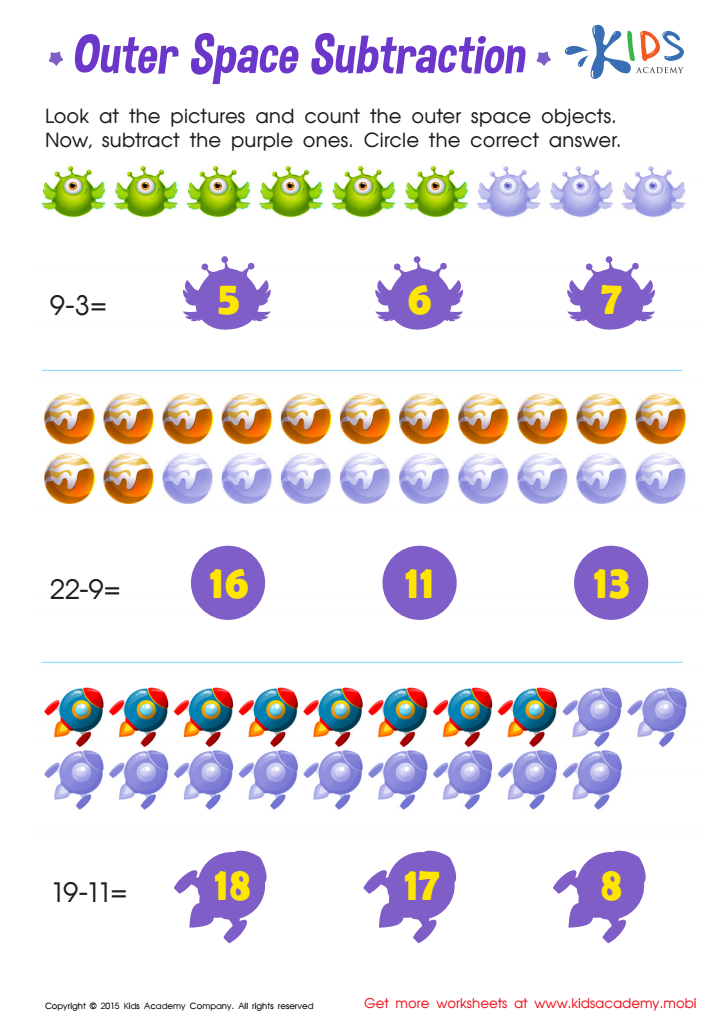
Outer Space Substraction Worksheet







Number comprehension is a critical aspect of early childhood education, especially for children aged 4-8. At this developmental stage, children are forming the foundation for their mathematical understanding and problem-solving abilities. Parents and teachers should prioritize number comprehension for several reasons.
Firstly, a solid understanding of numbers promotes confidence in mathematical skills, which can positively impact a child's overall academic performance. When children grasp basic concepts such as counting, addition, and subtraction, they are better equipped to tackle more complex mathematical ideas in the future.
Secondly, number comprehension is linked to other areas of cognitive development, enhancing logical thinking and reasoning skills. Through engaging with numbers, children learn to categorize, compare, and analyze – skills that are transferable across subjects and into everyday life.
Lastly, fostering a positive attitude towards mathematics during these formative years can reduce math anxiety in later stages. Encouraging games and interactive learning methods can make numbers enjoyable, reinforcing the idea that math is fun and practical.
Involving parents and teachers in support of number comprehension creates a collaborative learning environment, ensuring children develop the skills they need for lifelong success in mathematics. The early years are crucial, and nurturing number comprehension lays the groundwork for future learning.








