
Number tracing Worksheets for Ages 4-8
4 filtered results
Difficulty Level
Grade
Age
-
From - To
Subject
Activity
Standards
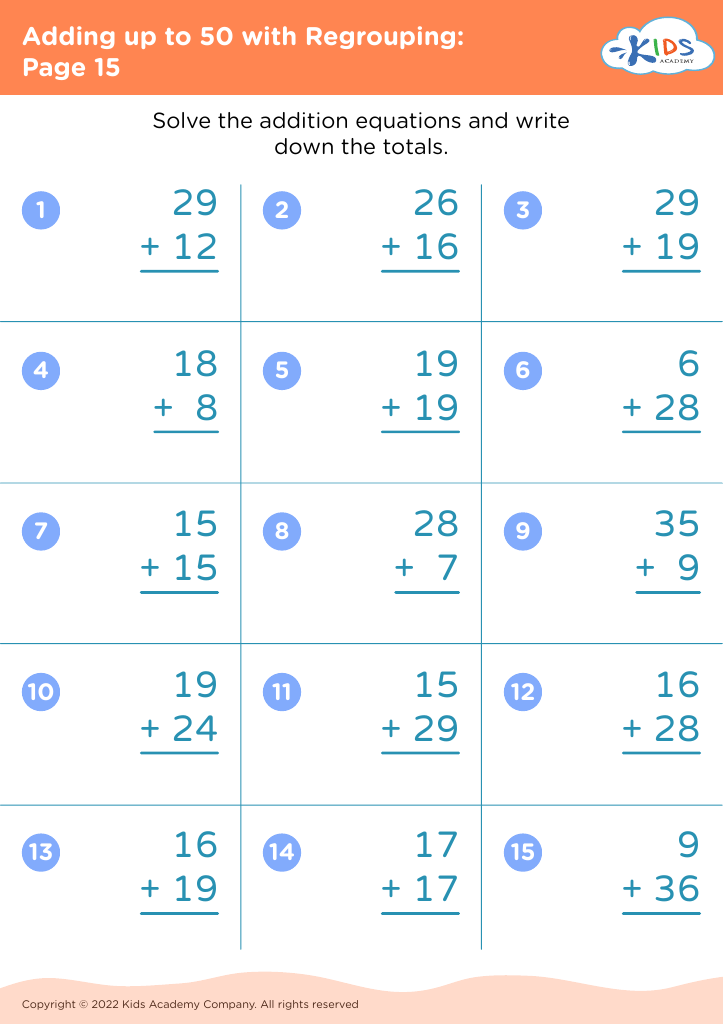
Welcome to our Number Tracing Worksheets for Ages 4-8! Designed to help young learners develop essential writing and counting skills, our fun and engaging worksheets guide children through the process of tracing numbers 0-20. Each worksheet features colorful graphics to keep kids motivated while fostering their fine motor skills and hand-eye coordination. Ideal for home or classroom use, these printable resources cater to young children who are eager to learn math concepts. Explore a variety of exercises that encourage practice and reinforce number recognition. Download now to support your child's educational journey with interactive and enjoyable tasks!
Favorites
With answer key
Interactive
 Assign to My Students
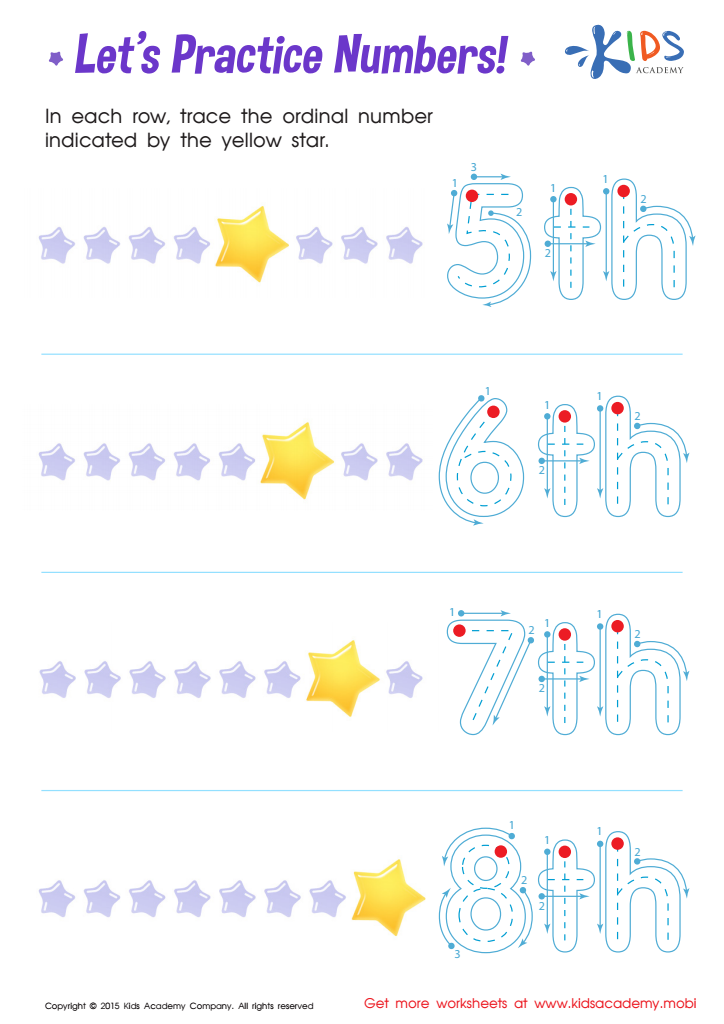
Ordinal Numbers: Let's Practice Numbers Printable
Worksheet
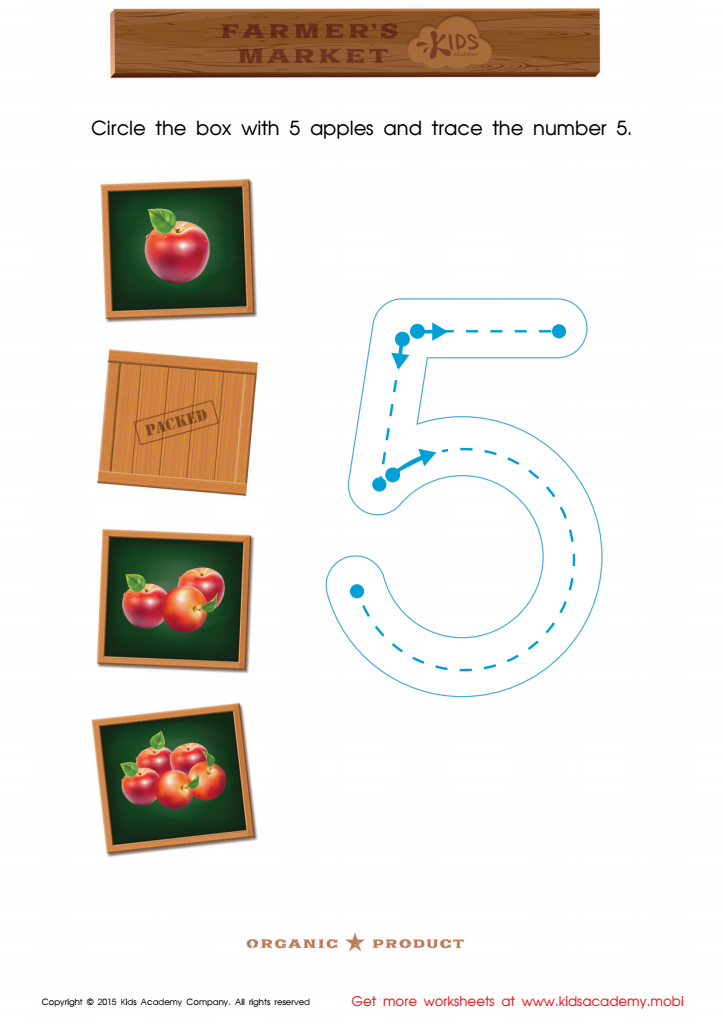
Count the Apples and Trace the Number 5 Printable
Count the juicy apples in each box, find the one with 5 and trace the number 5 following the arrows. Practice makes perfect! Print and get your little mathematician counting.
Count the Apples and Trace the Number 5 Printable
Worksheet
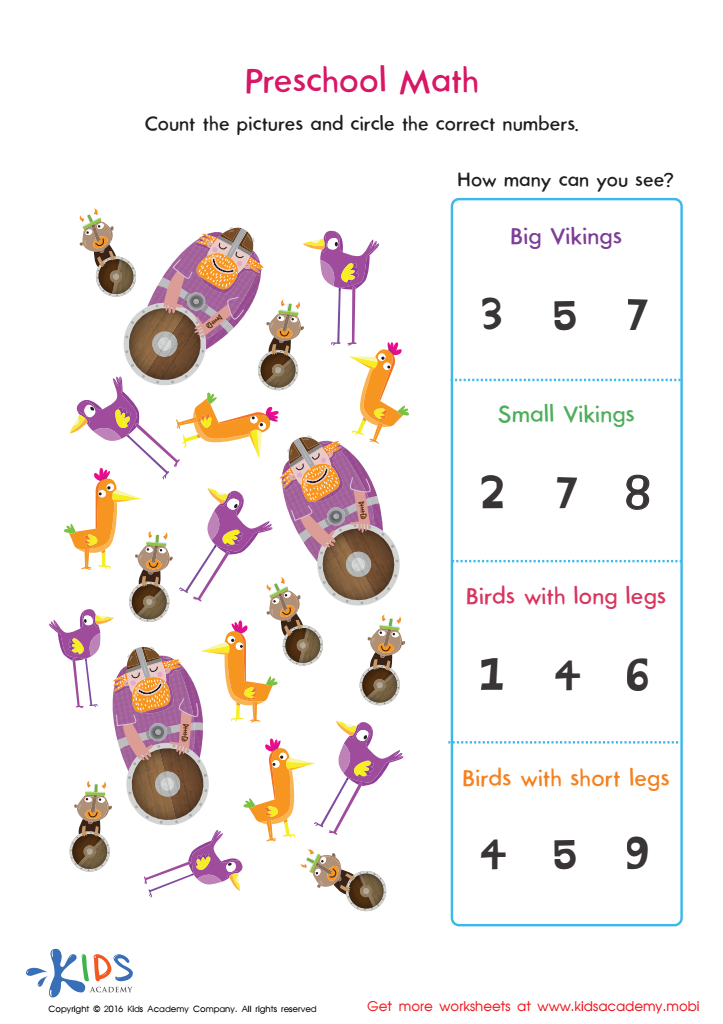
Counting Worksheet: Preschool Math
Worksheet
Join Kids Academy for Free
Who is primarily going to use this learning content?






Number tracing is a vital activity for children aged 4-8, as it lays the foundation for literacy and numeracy skills. Firstly, tracing numbers helps develop fine motor skills essential for writing, as it encourages children to control their hand movements and develop grip. This is not just about forming numbers; it cultivates overall dexterity beneficial for many everyday tasks, from tieing shoelaces to art.
Moreover, number tracing reinforces number recognition. Through repetition and practice, children become familiar with the shapes and sequences of numbers, which aids in early math comprehension. Parents and teachers should realize that mastery of number formation leads to greater confidence in mathematical concepts, including counting and basic arithmetic.
Additionally, tracing activities can be a fun and engaging way for children to learn, making math feel accessible rather than intimidating. Partnering this with verbal counting or integrating games enhances the educational experience. Lastly, as children trace numbers, they begin to understand their significance in real-world contexts, laying the groundwork for critical thinking. By embracing number tracing, parents and teachers actively contribute to well-rounded, confident learners eager to explore the world of numbers.








