Observational skills development Worksheets for Ages 4-8
3 filtered results
-
From - To
Enhance your child's critical eye and attention to detail with our "Observational Skills Development Worksheets for Ages 4-8." These expertly designed worksheets foster essential cognitive skills by encouraging young learners to notice and analyze differences, patterns, and details in various scenarios. Perfectly tailored for children aged 4-8, each activity is crafted to be both engaging and educational, ensuring that kids have fun while strengthening their observation abilities. Our comprehensive collection offers a range of exercises, from picture comparisons to pattern identification, supporting your child's development at every learning stage. Unlock their potential today!
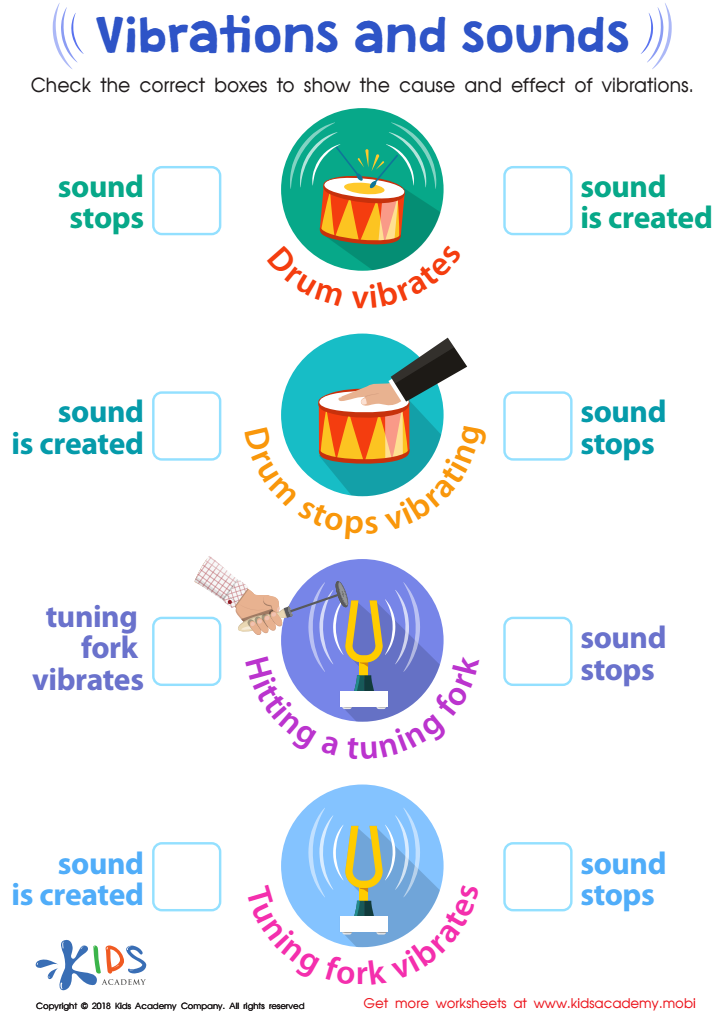
Vibrations and Sounds Worksheet
 Assign to My Students
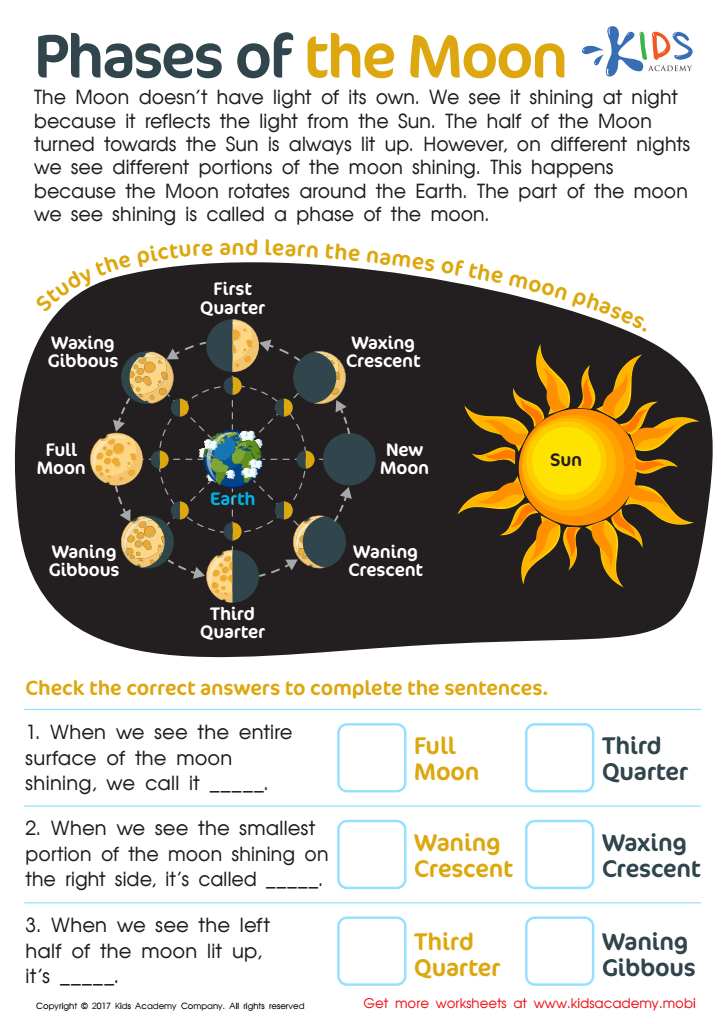
Phases of The Moon Worksheet
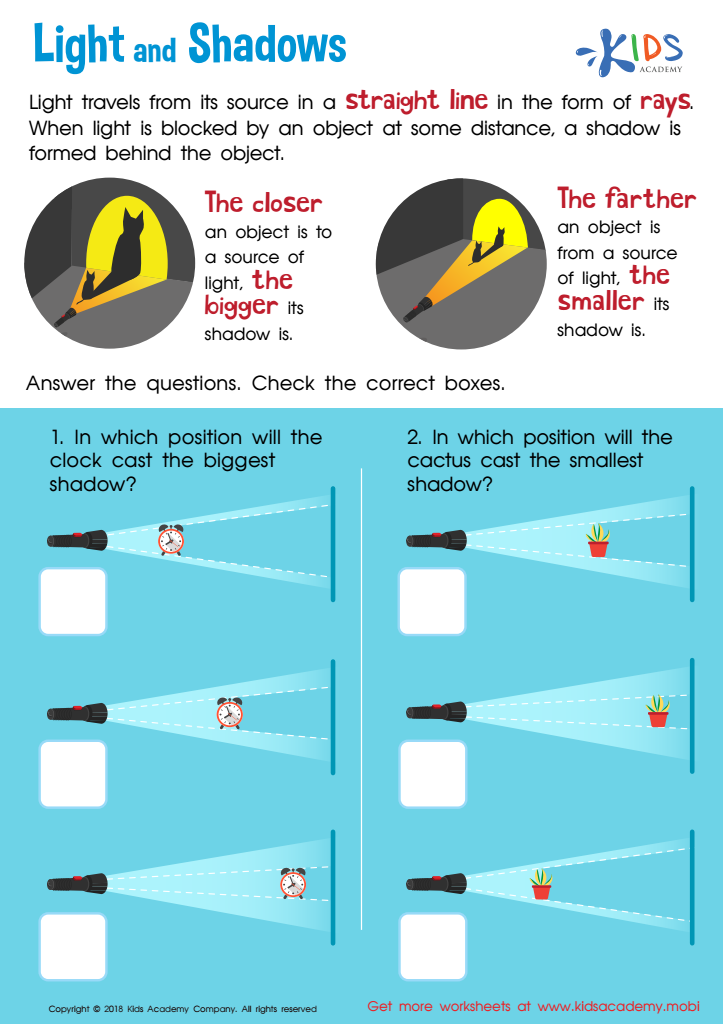
Light and Shadow Worksheet for Grade 3







Observational skills are critical for children aged 4-8 as they form a cornerstone for their cognitive, social, and emotional development. At this age, children are naturally curious and developing foundational knowledge about the world around them. Strengthening observational skills helps them make sense of their environment, enhancing their ability to notice and understand details, patterns, and differences. This kind of keen observation fosters critical thinking and problem-solving abilities, as children learn to compare, contrast, and make informed guesses based on what they see.
For parents and teachers, focusing on observational skills means actively preparing children for future academic success. Strong observation leads to better reading comprehension, as children can pick up on visual clues and textual elements, and science activities, where identifying and verbalizing observations are crucial. Furthermore, these skills underpin creativity and artistic expression, allowing children to draw or craft with thoughtful detail.
In social contexts, well-developed observational skills enable children to read non-verbal cues, understand social dynamics, and respond appropriately, fostering better friendships and emotional intelligence. Parents and teachers play essential roles by providing environments rich with stimuli, encouraging curiosity, and guiding children’s attention toward noticing and discussing their observations. This holistic development builds a solid foundation for lifelong learning and interpersonal abilities.








