Phonics skills improvement Worksheets for Ages 4-8
9 filtered results
-
From - To
Boost your child's reading proficiency with our Phonics Skills Improvement Worksheets for Ages 4-8. Tailored to enhance early literacy, these engaging worksheets develop foundational phonics skills such as letter recognition, sound identification, and word formation. Ideal for preschool through second grade, each activity is designed to be fun and interactive, ensuring young learners stay motivated while building essential reading abilities. Perfect for parents and educators, our printable resources support various learning styles and paces, making phonics practice enjoyable and effective. Help your child achieve reading success with our expertly crafted phonics worksheets today!
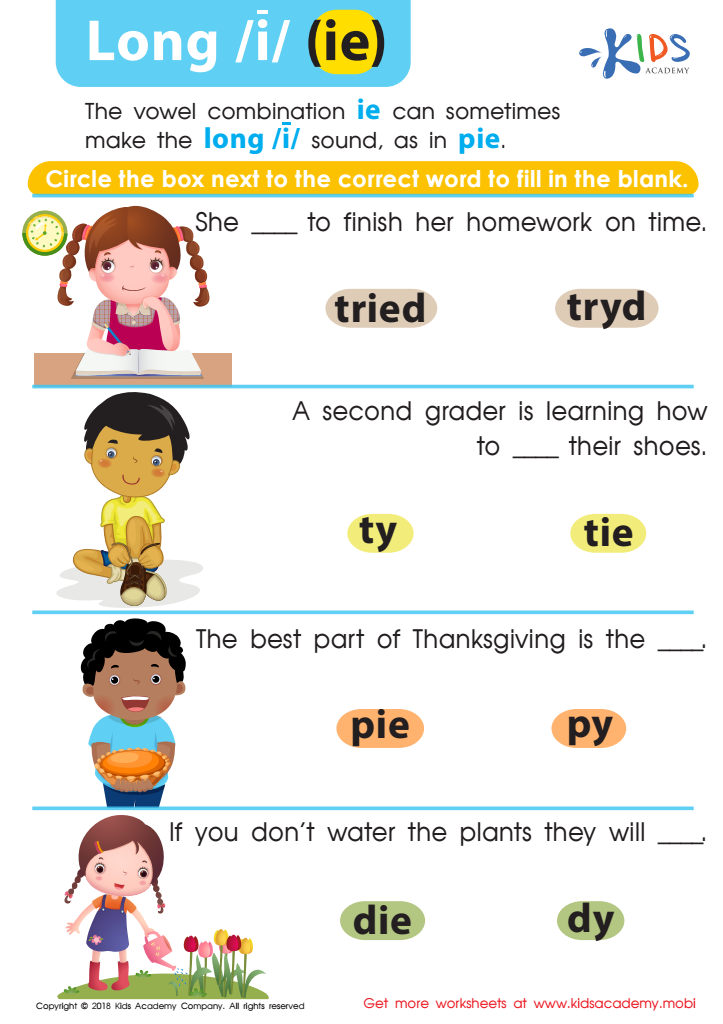
Reading: Long I and IE Worksheet
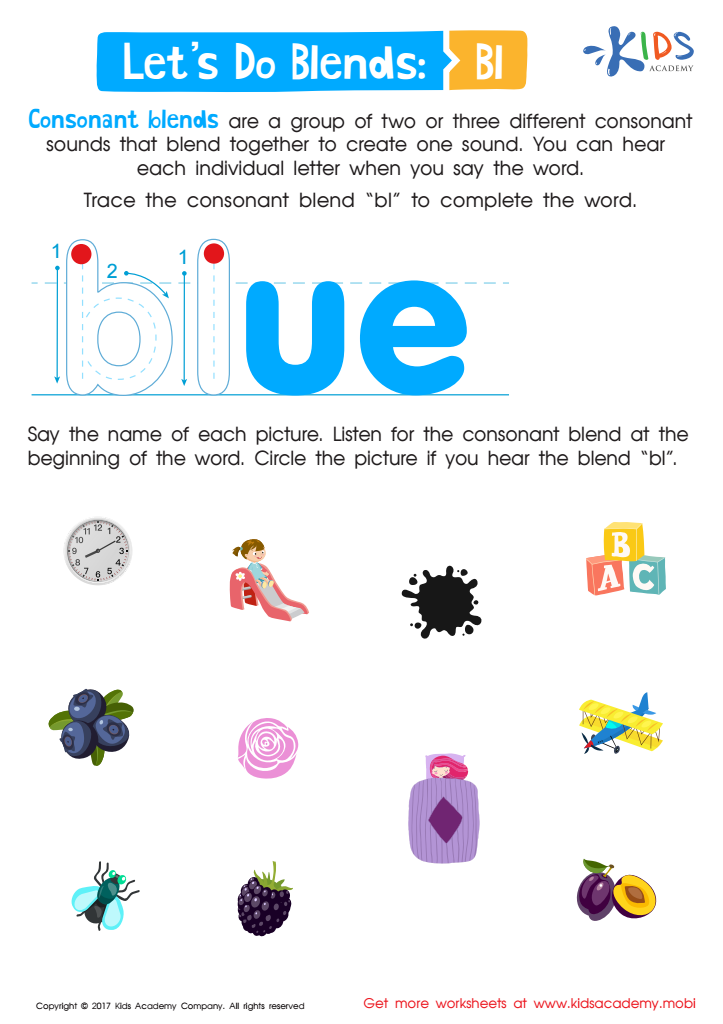
Beginning Blends: "Bl" Words Worksheet
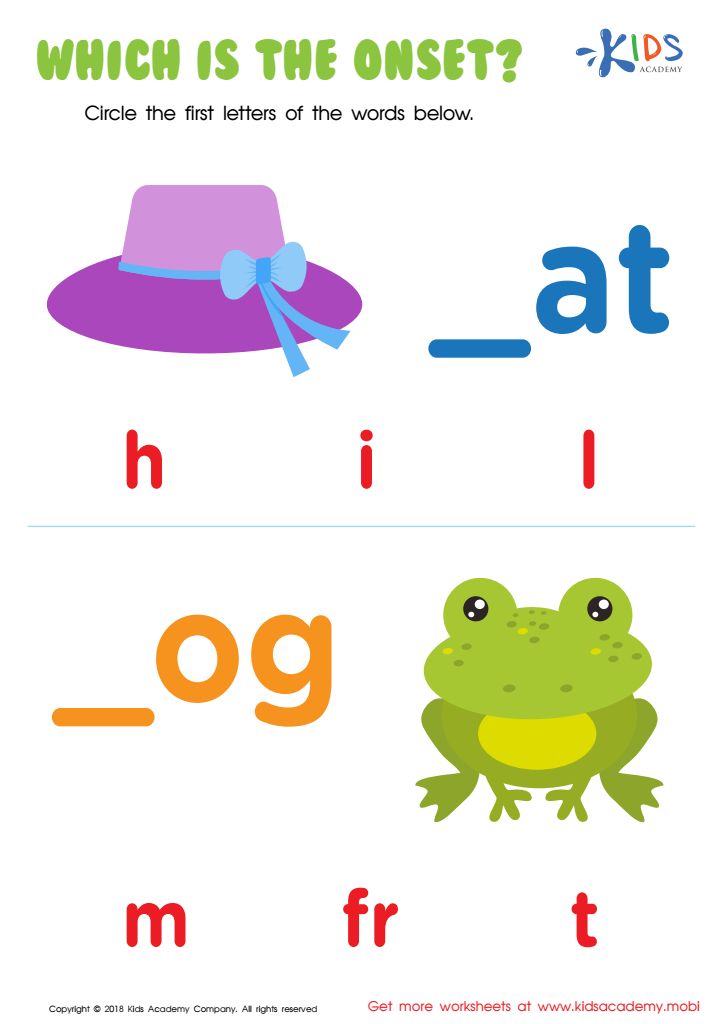
Which Is the Onset? Worksheet
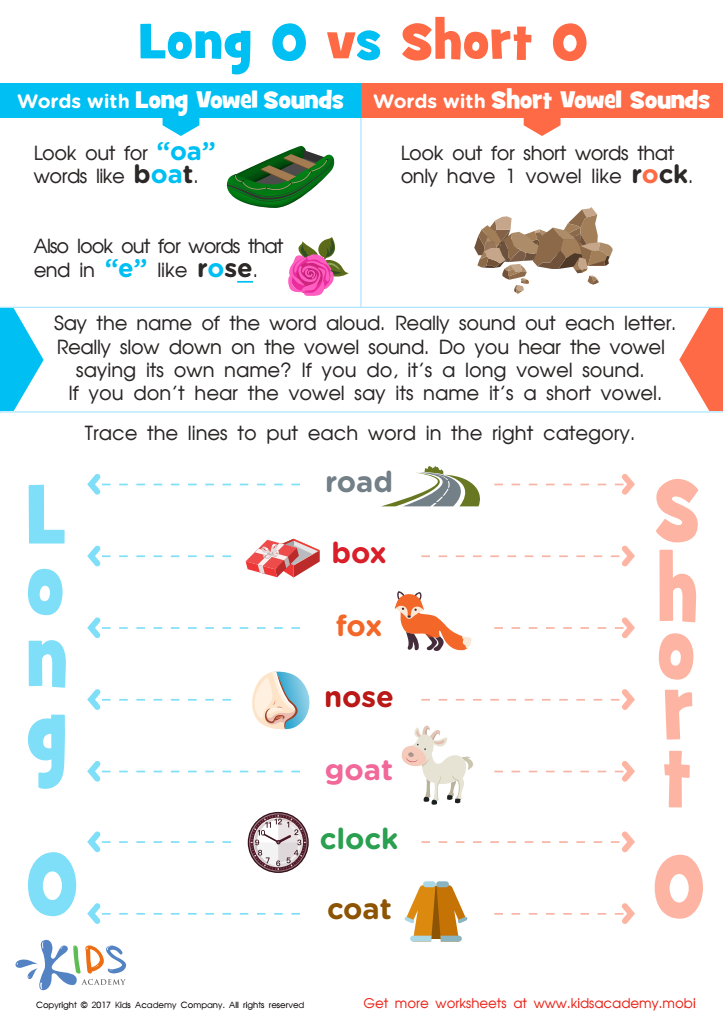
Long and Short Vowel O Spelling Worksheet

Long and Short U Worksheet
 Assign to My Students
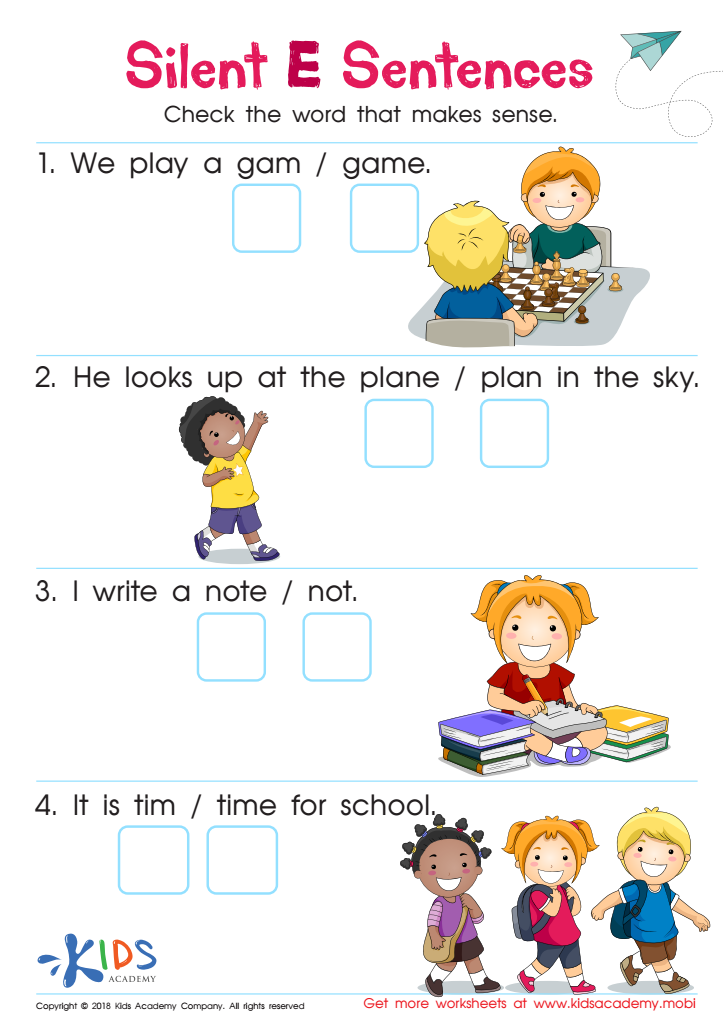
Silent E Sentences Worksheet
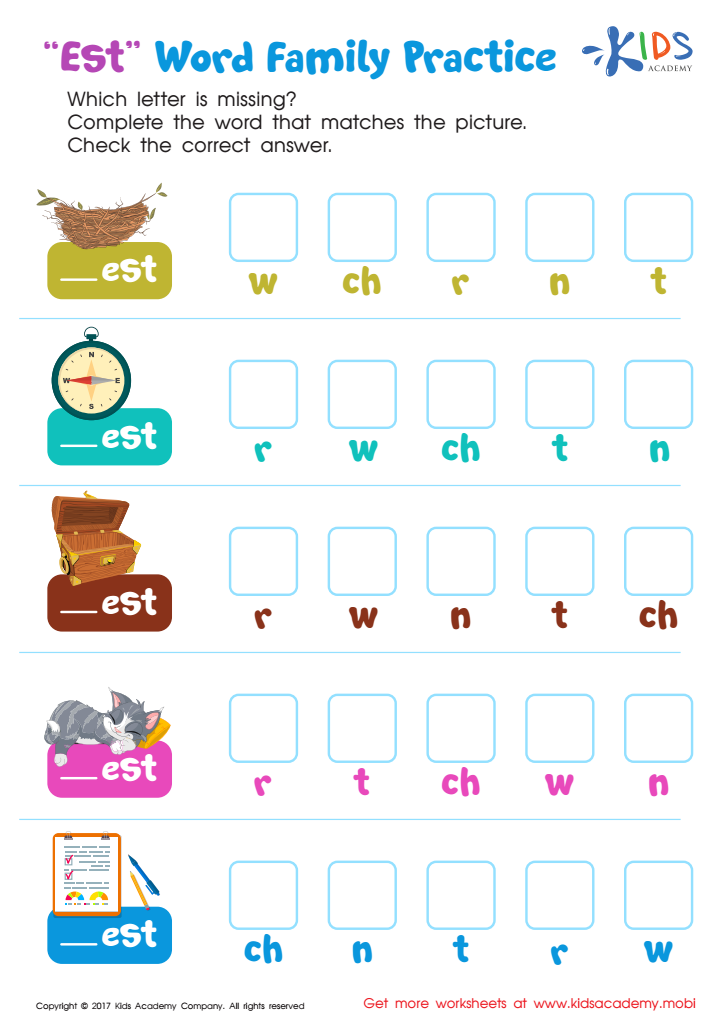
Words Family "est" Spelling Worksheet
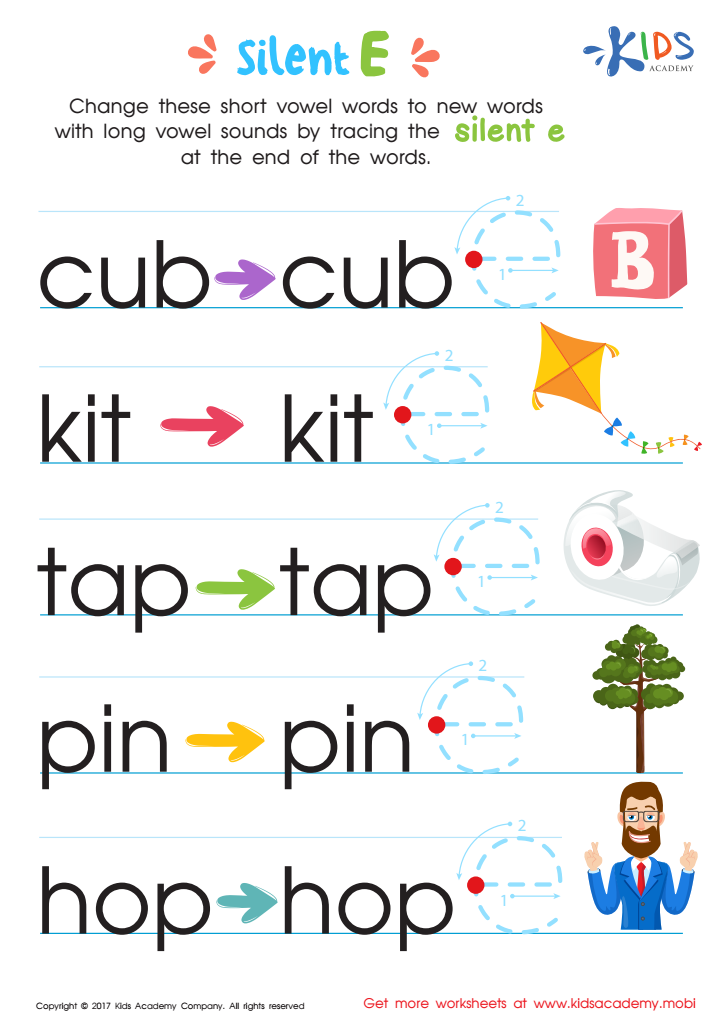
Silent E Words Worksheet
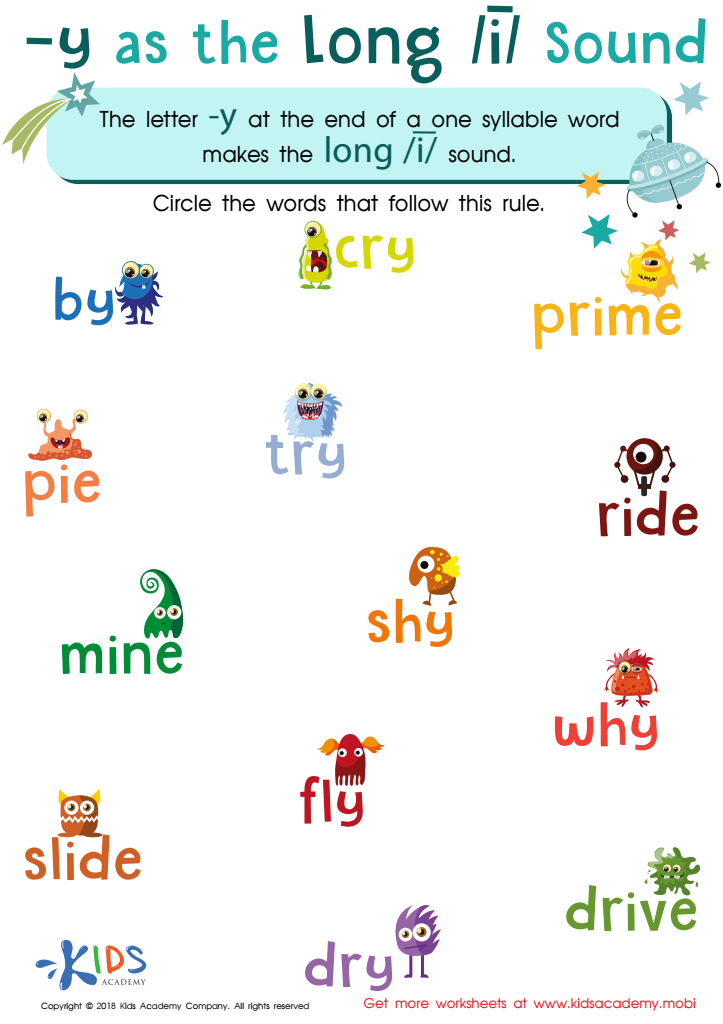
Reading: Y as Long I Worksheet




.jpg)


Phonics skills improvement is crucial for children aged 4-8 as it forms the foundation of their reading abilities, which is essential for their overall academic success and lifelong learning. Phonics involves understanding the relationship between sounds and their corresponding letters or letter combinations. When children master these skills, they develop the ability to decode new words, enhancing their reading fluency and comprehension.
Parents and teachers need to prioritize phonics skills because early reading proficiency sets the stage for future educational achievements. Children who struggle with reading in their early years are more likely to face difficulties across all subjects, since reading is integral to understanding and learning in fields such as math, science, and social studies. Early intervention through effective phonics instruction can prevent these challenges, boosting children’s confidence and motivation.
Additionally, strong phonics skills foster a love for reading by making it an accessible and enjoyable activity. As children grow more confident readers, they are more likely to seek out books independently, cultivating a habit of reading for pleasure and information. This habit not only supports academic growth but also enhances critical thinking, creativity, and empathy. Therefore, both parents and teachers play a vital role in ensuring that phonics instruction is given the attention and resources needed to help children thrive.








