Problem-solving development Worksheets for Ages 4-8
3 filtered results
-
From - To
Unlock your child's potential with our engaging Problem-Solving Development Worksheets designed for ages 4-8! These printable resources encourage critical thinking and enhance cognitive skills through fun activities and games. Each worksheet features age-appropriate puzzles, scenarios, and challenges that promote analytical reasoning and creativity. Our materials support educators and parents in cultivating problem-solving abilities that are essential for academic success and everyday life. With vibrant designs and interactive tasks, learning becomes an enjoyable adventure! Explore our variety of worksheets to help your child develop essential skills while building confidence and independence. Start fostering a love for problem-solving today!
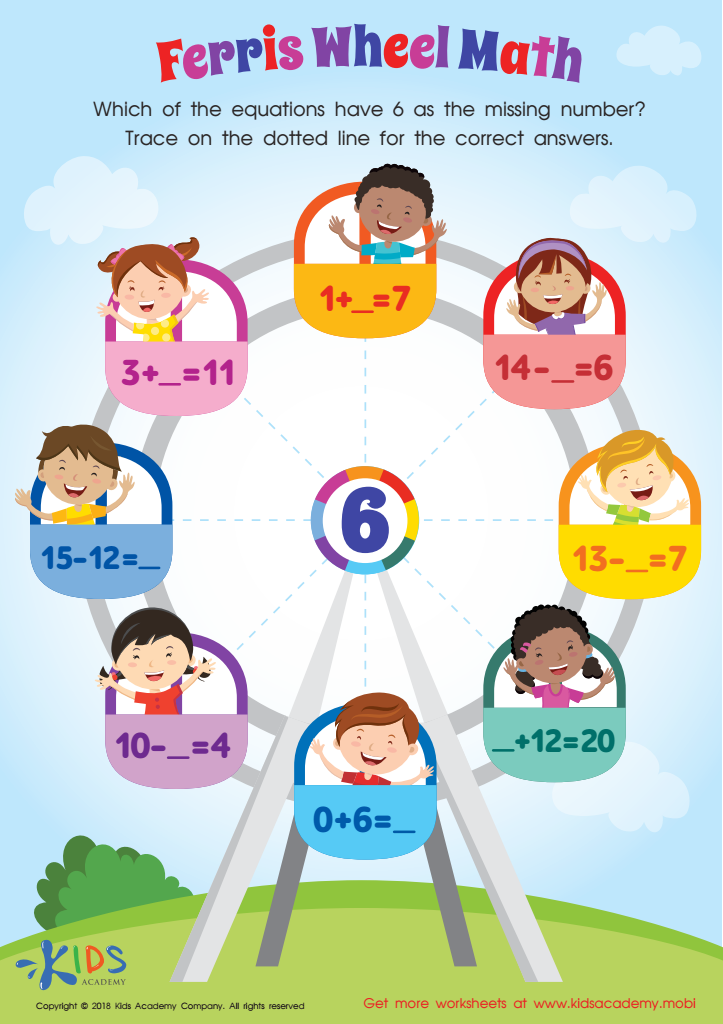
Missing Number: Ferris Wheel Math Worksheet
 Assign to My Students
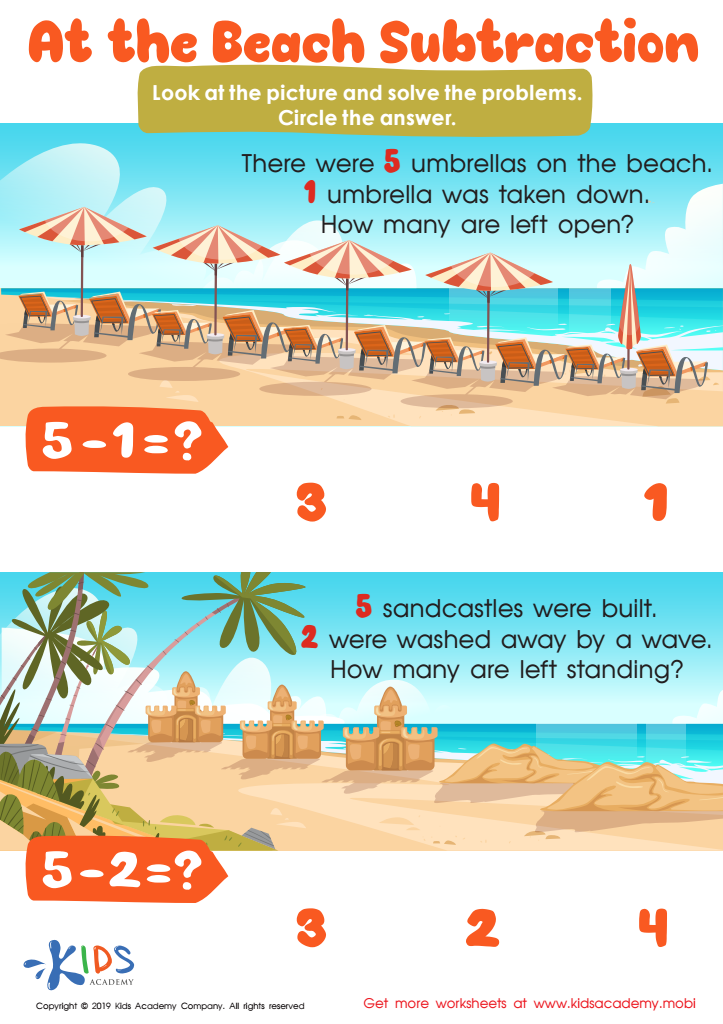
At the Beach Subtraction Worksheet
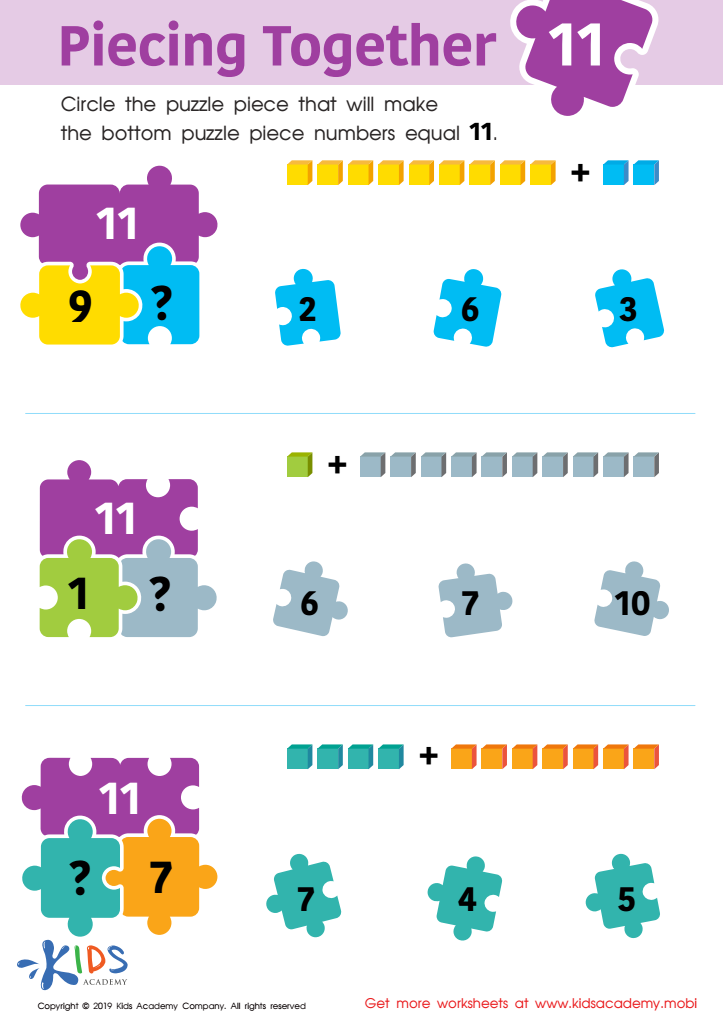
Piecing Together 11 Worksheet







Problem-solving development is crucial for children aged 4-8, as it lays the foundation for their analytical thinking, creativity, and emotional resilience. During these formative years, children are naturally curious, and nurturing their problem-solving skills helps them become critical thinkers. Engaging in problem-solving activities stimulates cognitive development by encouraging children to explore different perspectives and enhance their decision-making skills.
Parents and teachers should care about this development because effective problem solvers are better equipped to navigate challenges throughout their lives. By fostering an environment that allows children to experiment with solutions—whether through structured activities, play, or collaborative tasks—adults can significantly boost their confidence and independence.
Additionally, strong problem-solving skills support academic success across various subjects, particularly in math and science, where logical reasoning is essential. Socially, these skills help children manage conflicts, work cooperatively, and understand others' viewpoints, promoting a positive classroom and home environment.
In short, cultivating problem-solving skills in young children is vital for their overall growth. It not only shapes their academic and social abilities but also prepares them for adulthood, ultimately creating a generation of innovative, adaptable thinkers.








