Sequencing numbers Worksheets for Ages 4-8
3 filtered results
-
From - To
Explore our engaging sequencing numbers worksheets designed specifically for children aged 4 to 8. These interactive worksheets help young learners develop essential math skills by practicing the order of numbers through fun and colorful activities. With a variety of exercises, kids will enhance their cognitive abilities while learning to recognize number patterns and sequences. Ideal for both classroom and home learning environments, these worksheets promote critical thinking and boost confidence in early math skills. Encourage your child's love for learning with our thoughtfully crafted resources that make sequencing numbers a breeze. Perfect for educators and parents alike!
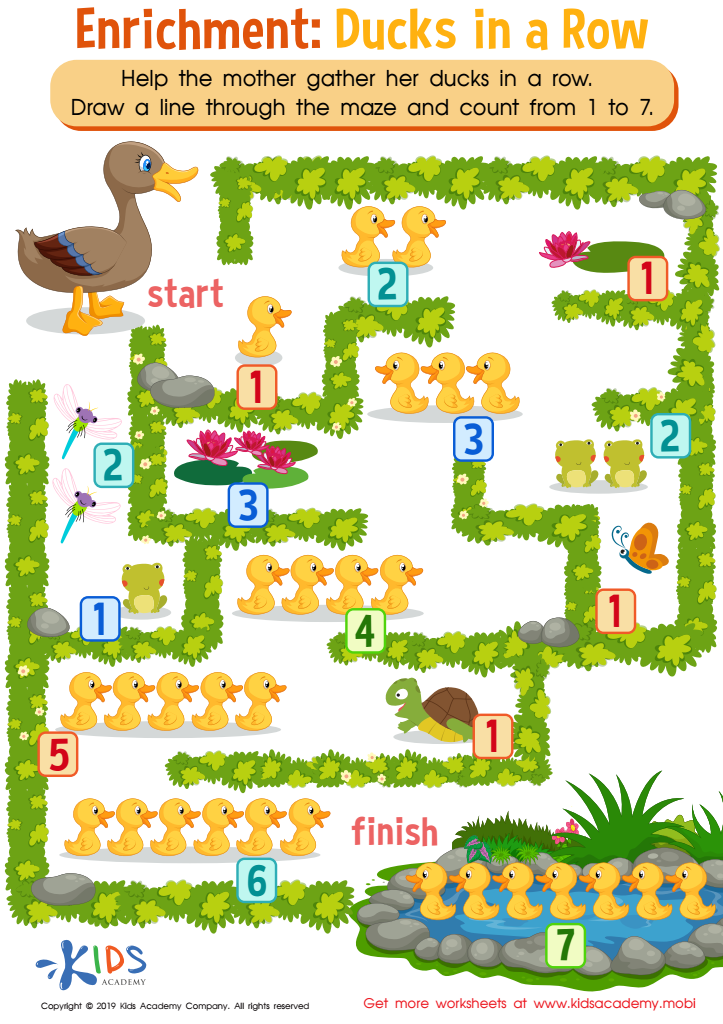
Ducks in a Row Worksheet
 Assign to My Students
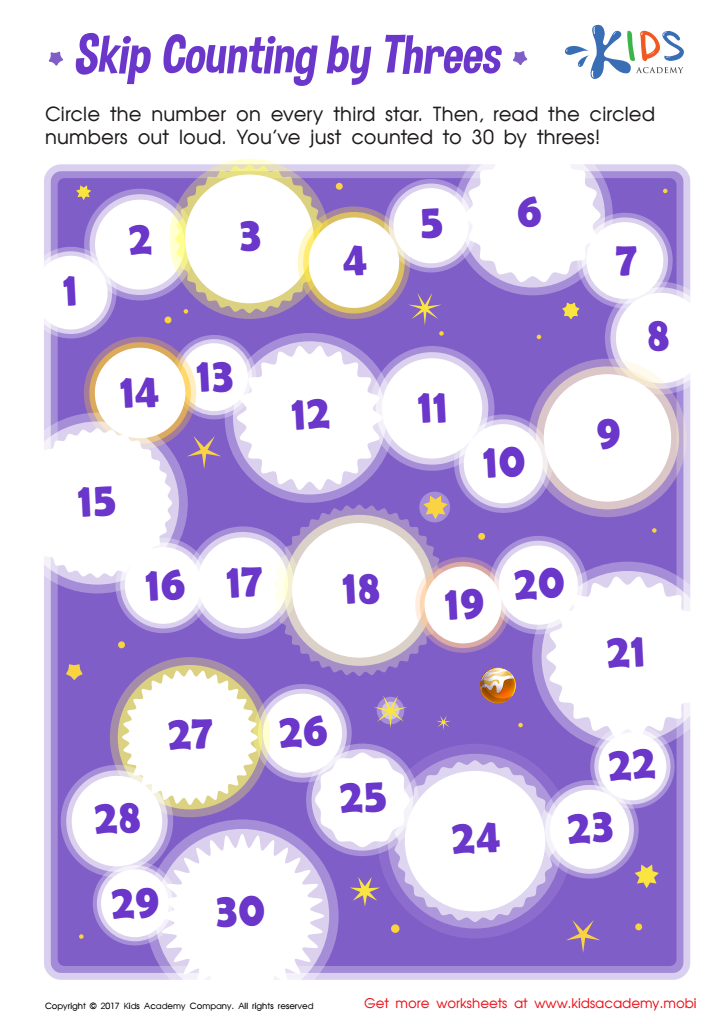
Skip Counting By Three Printable
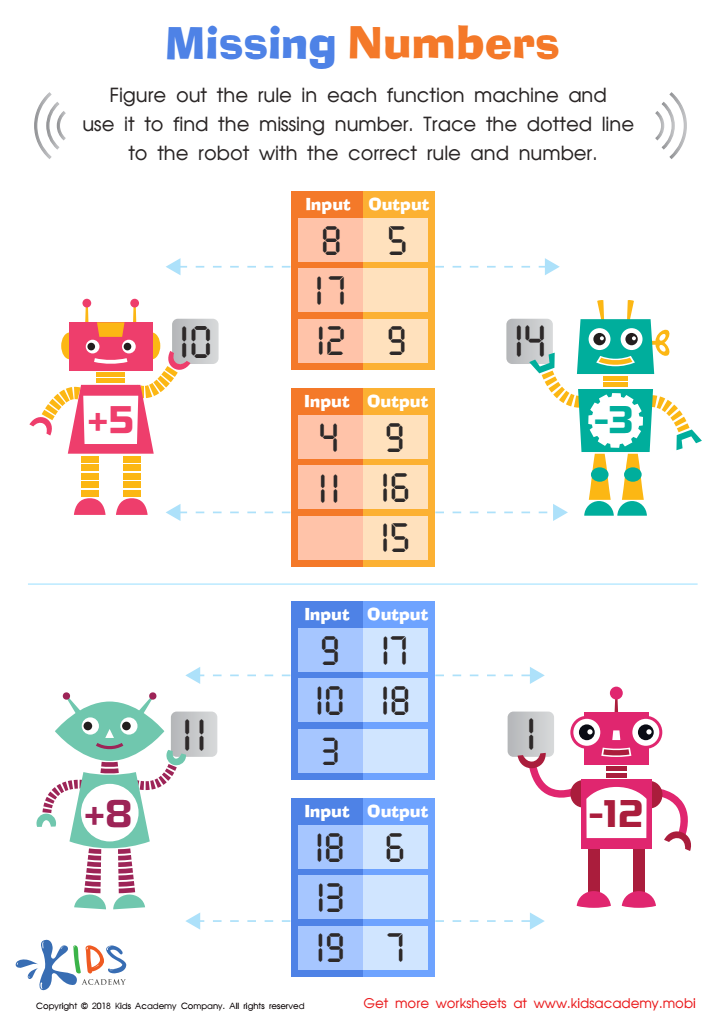
Missing Numbers Worksheet







Sequencing numbers is a fundamental skill that plays a crucial role in early childhood development for children ages 4-8. For parents and teachers, understanding the importance of this skill is essential to nurturing a child’s mathematical abilities and overall cognitive growth.
Firstly, sequencing numbers helps children recognize patterns and develop critical thinking skills. It lays the groundwork for more complex mathematics, such as addition and subtraction, as children begin to understand the order and relationships between numbers.
Moreover, sequencing activities enhance a child's memory and attention span, which are vital components of effective learning. Engaging in sequencing tasks encourages children to recall the order of events, which boosts their organizational skills that are essential both academically and socially.
Additionally, sequencing numbers enhances language development, as children learn to verbalize the sequences and recognize numerical symbols. This fusion of language and math forms a solid foundation for future learning, making it easier to tackle more abstract concepts later on.
Ultimately, investing time and effort into teaching sequencing numbers enriches a child’s educational experience and equips them with necessary skills essential for lifelong learning, problem-solving, and everyday tasks. Encouraging this skill can lead to increased confidence and success in mathematics as they progress in their education.








