
Sound discrimination Worksheets for Ages 4-8
4 filtered results
Difficulty Level
Grade
Age
-
From - To
Subject
Activity
Standards
Unlock your child's auditory skills with our engaging Sound Discrimination Worksheets for ages 4 to 8! Designed to enhance listening abilities, these worksheets feature fun activities that help children differentiate between various sounds, a crucial skill for early literacy development. From identifying similar and contrasting sounds to interactive exercises that foster concentration and critical thinking, our resources are perfect for home or classroom use. Easy to print and filled with vibrant illustrations, these worksheets make learning enjoyable while building essential language skills. Explore our collection today and empower your child’s confidence in recognizing sounds and improving their communication skills!
Favorites
With answer key
Interactive
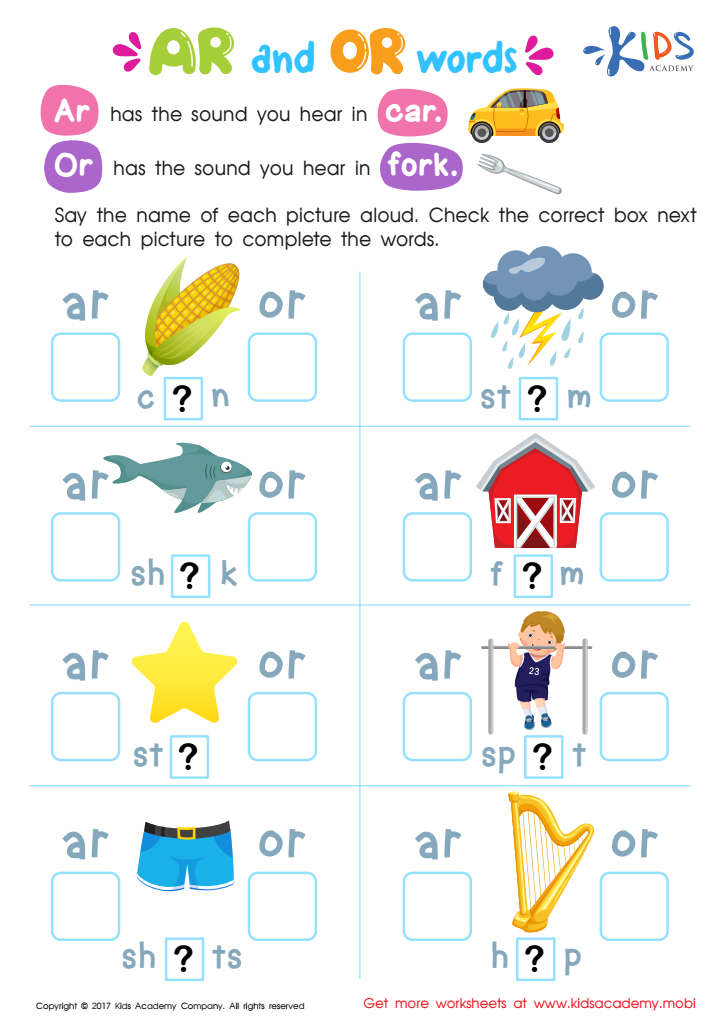
Ar and Or Words Phonics Worksheet
Master the distinct digraphs 'ar' and 'or' with this fun phonics worksheet from Kids Academy! With meaningful illustrations, it'll guide your child to choose the right one. Get ready for the great results!
 Assign to My Students
Ar and Or Words Phonics Worksheet
Worksheet
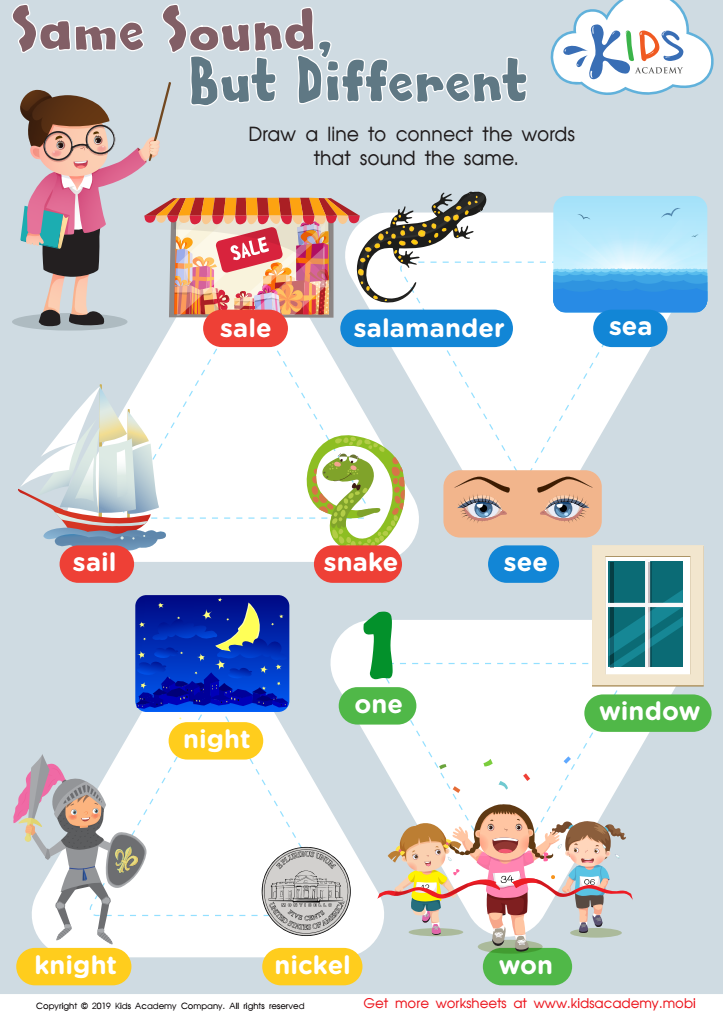
Sound Different Worksheet
Homophones can be tricky for new readers and writers. This PDF worksheet helps kids understand the differences using pictures. It asks them to draw lines to connect the homophones and provides concrete imagery for reference. It's a great way to learn the right definition and spelling of words that sound the same.
Sound Different Worksheet
Worksheet
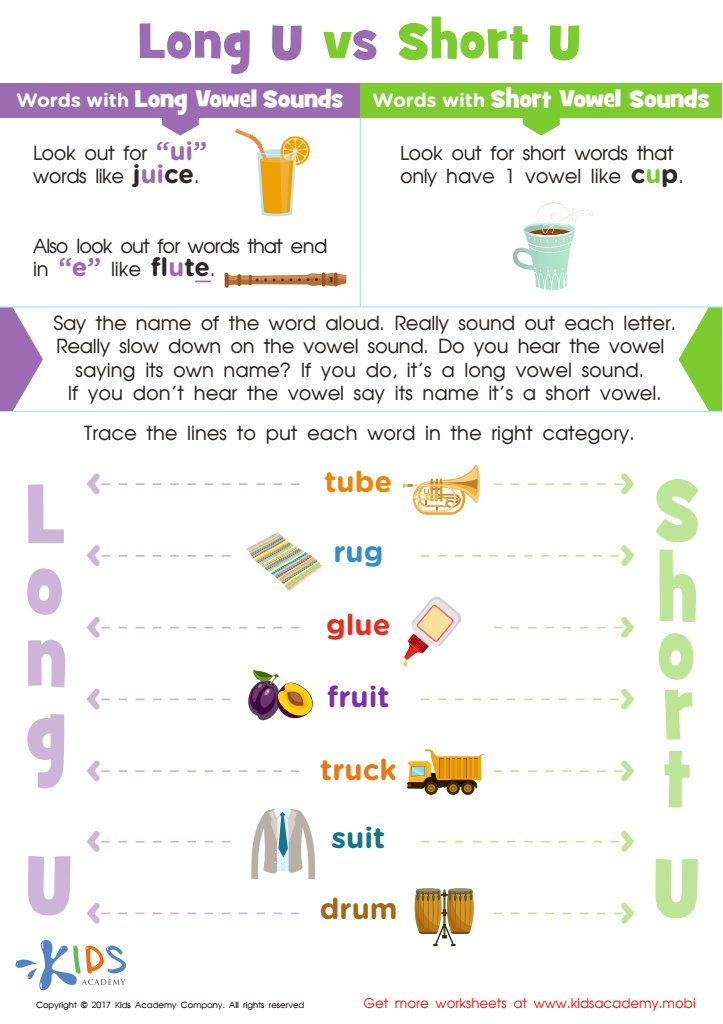
Long and Short Vowel U Spelling Worksheet
Help your child learn long and short vowel sounds with this fun long and short vowel U worksheet! Kids can become proficient spellers by mastering simple spelling tricks and sounding out letters.
Long and Short Vowel U Spelling Worksheet
Worksheet
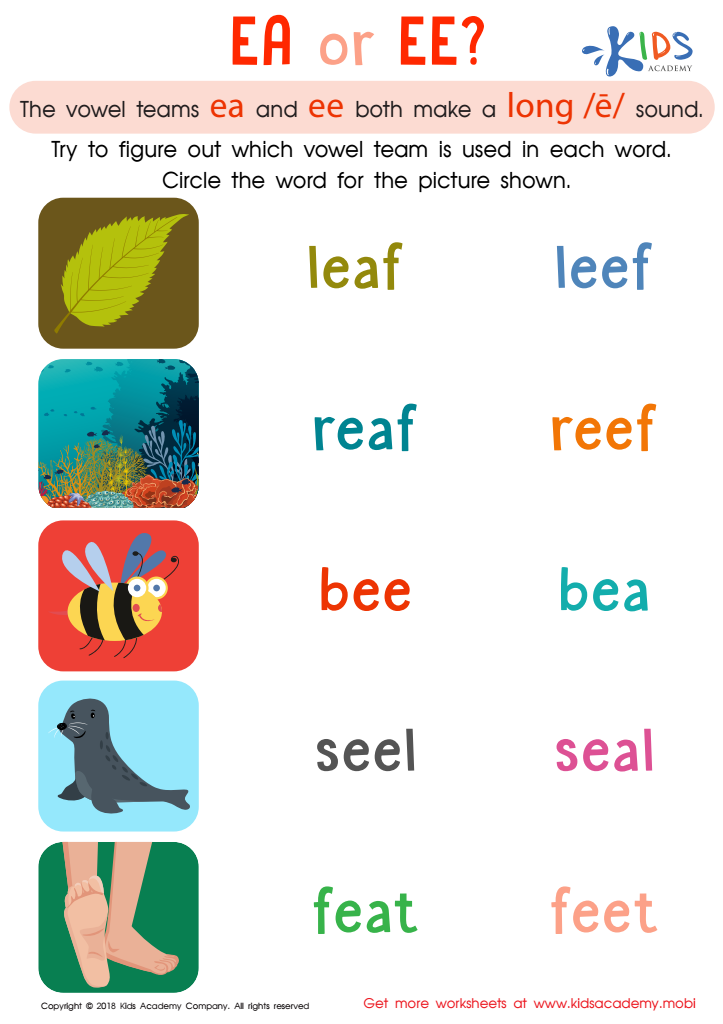
Reading: EA and EE Worksheet
Confused by the long E sound's varying spellings? Give students practice with this printable. It will improve their reading and spelling skills by helping them identify the correct spellings for words with the /ee/ and /ea/ vowel teams. Clear up the confusion and sharpen their skills.
Reading: EA and EE Worksheet
Worksheet
Join Kids Academy for Free
Who is primarily going to use this learning content?


.jpg)




Sound discrimination is a critical skill for children aged 4-8 as it forms the foundation for literacy and language development. At this age, children are honing their ability to hear, differentiate, and process various sounds, which is essential for identifying letters, blending sounds, and recognizing words. When children can accurately discriminate sounds, they become more proficient in reading and spelling, leading to greater academic success.
Parents and teachers should care about sound discrimination because it directly impacts a child's communication skills and self-confidence. Mastery of sound discrimination helps children understand phonemic awareness, which is crucial for learning how letters represent sounds—key to unlocking writing and reading skills. Additionally, good sound discrimination skills can improve listening abilities, which play a vital role in social interactions and classroom participation.
Finally, fostering sound discrimination can prevent future literacy challenges, aiding in the early identification of learning disabilities such as dyslexia. By actively engaging children in sound-related activities—like rhyming games and phonics exercises—adults can significantly enhance this essential skill, paving the way for a lifelong love of learning and effective communication. Investing in sound discrimination is investing in a child’s overall educational and emotional well-being.








