Spelling improvement Worksheets for Ages 4-8 - Page 2
26 filtered results
-
From - To
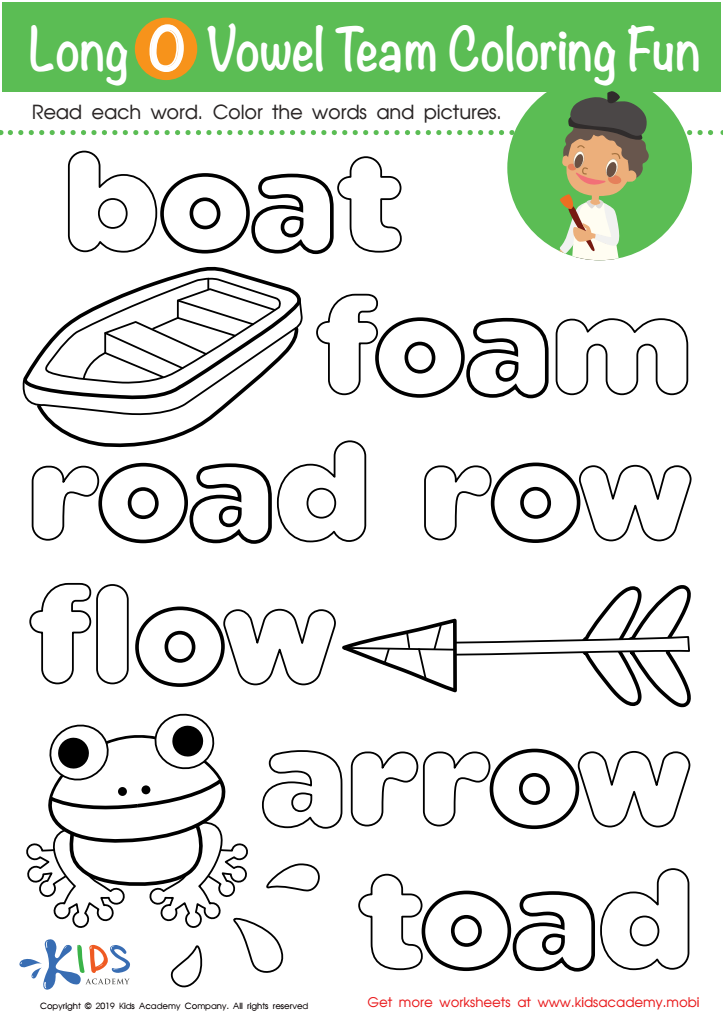
Long O Vowel Team Coloring Worksheet
 Assign to My Students
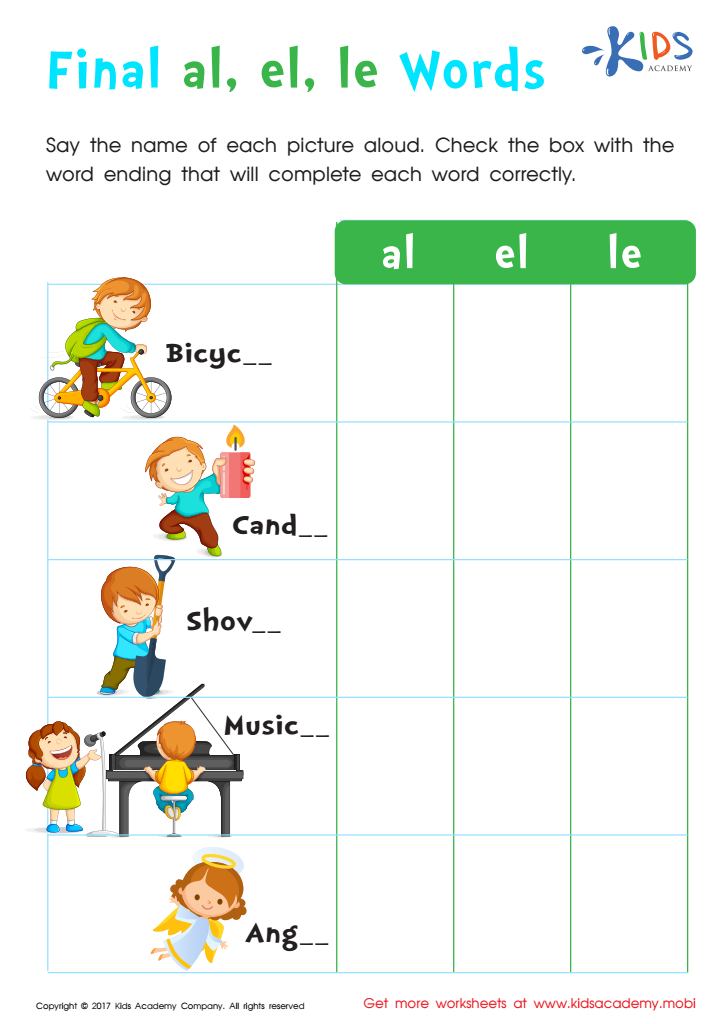
Spelling Words Ending with –le, –el and –al Worksheet







Improving spelling skills in children aged 4-8 is crucial for several reasons. First, spelling forms the foundation for effective reading and writing, crucial skills for academic success. Mastery of spelling enhances vocabulary development, enabling children to express their thoughts more clearly and confidently.
Secondly, spelling plays a significant role in a child's self-esteem. Achieving spelling milestones boosts confidence and motivation, making them more eager to engage in learning activities. When children can spell words correctly, they feel a sense of accomplishment that encourages them to tackle more complex tasks.
Moreover, proficient spelling enhances communication. Children at this age are beginning to articulate their ideas in writing; being able to spell words correctly helps them convey their messages without frustration. It also aids in developing critical thinking and phonetic awareness, key components of literacy.
Lastly, the skills developed through spelling practices foster long-term learning habits. Regular engagement with spelling challenges children to hone their attention to detail and persistence. Thus, parents and teachers should prioritize spelling improvement not just as an academic endeavor, but as a vital part of a child's overall development and confidence as a learner.








