
Synonym recognition Worksheets for Ages 4-8
3 filtered results
Difficulty Level
Grade
Age
-
From - To
Subject
Activity
Standards
Discover the excitement of expanding vocabulary with our Synonym Recognition Worksheets for ages 4-8! These engaging worksheets from Kids Academy are designed to help young learners identify and understand synonyms, enhancing their language skills. Through fun, colorful exercises, children will practice recognizing words with similar meanings, boosting their reading comprehension and communication abilities. Perfect for early grade students, these worksheets support a range of learning styles and can be used both in the classroom and at home. Spark your child's love for language and set a strong foundation for future academic success with our interactive synonym recognition activities!
Favorites
With answer key
Interactive
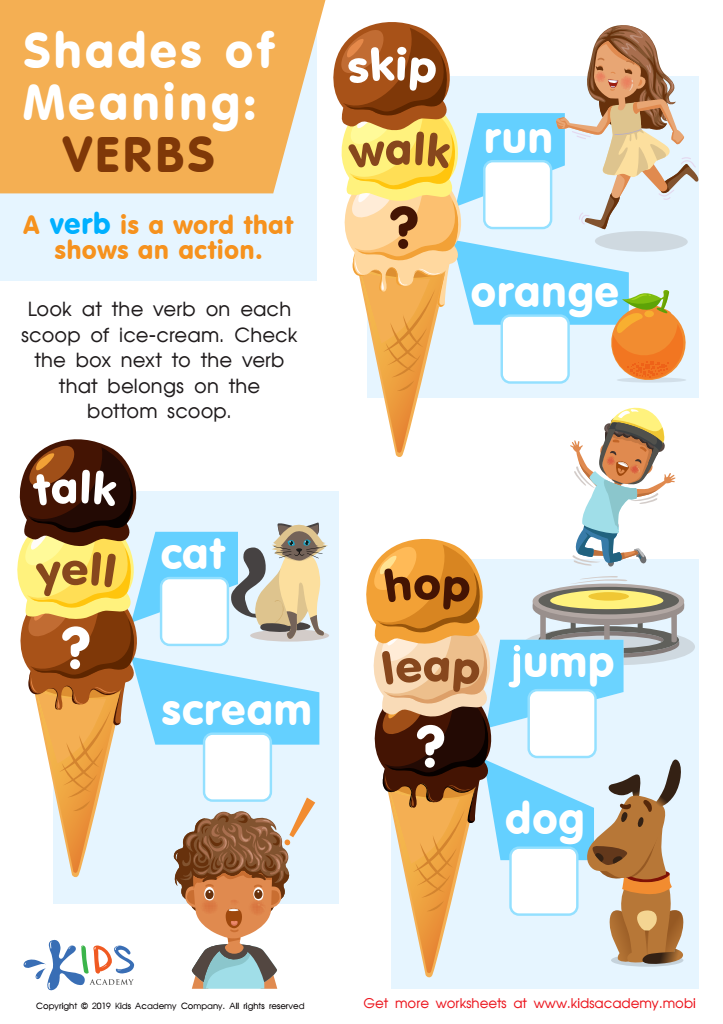
Shades of Meaning: Verbs Worksheet
Verbs are words that show action. Introduce kindergartners to verbs by having them check the box next to the verb that belongs on the bottom scoop in a worksheet. This is a great way to teach them this important part of speech and help them learn to write proper sentences and speak correctly.
 Assign to My Students
Shades of Meaning: Verbs Worksheet
Worksheet
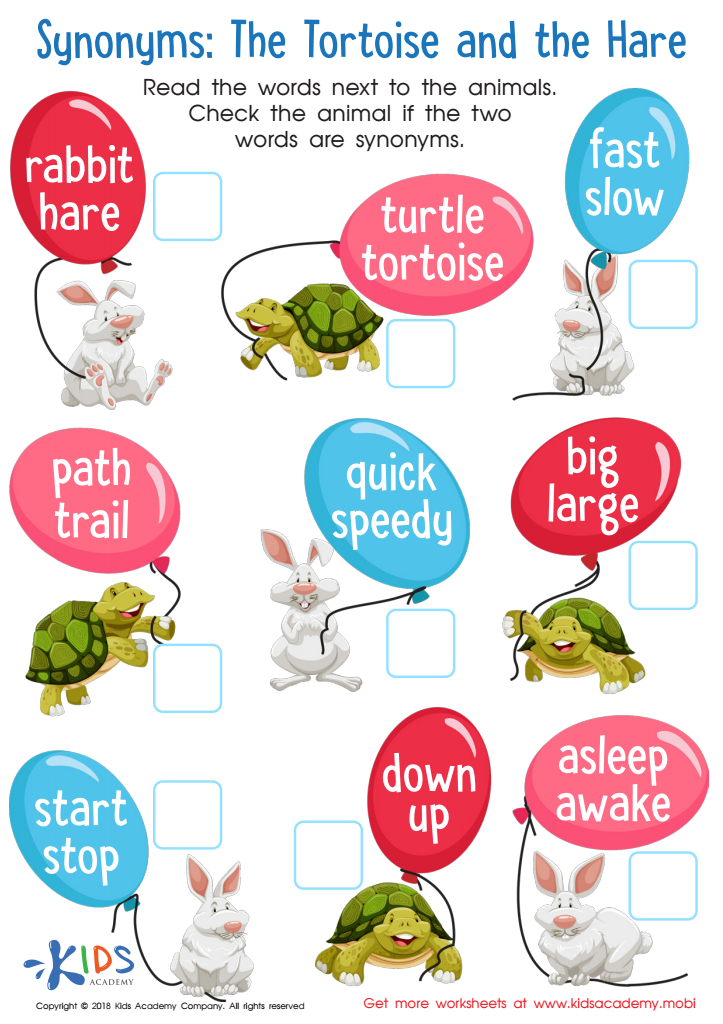
Synonyms: The Tortoise and Hare Worksheet
Help your kids identify words with similar meanings with this worksheet featuring a colourful picture of the Tortoise and the Hare. Show them how to check the boxes of animals with words that have similar meaning, then let them find more on their own. They'll love the challenge and you'll appreciate the educational value.
Synonyms: The Tortoise and Hare Worksheet
Worksheet
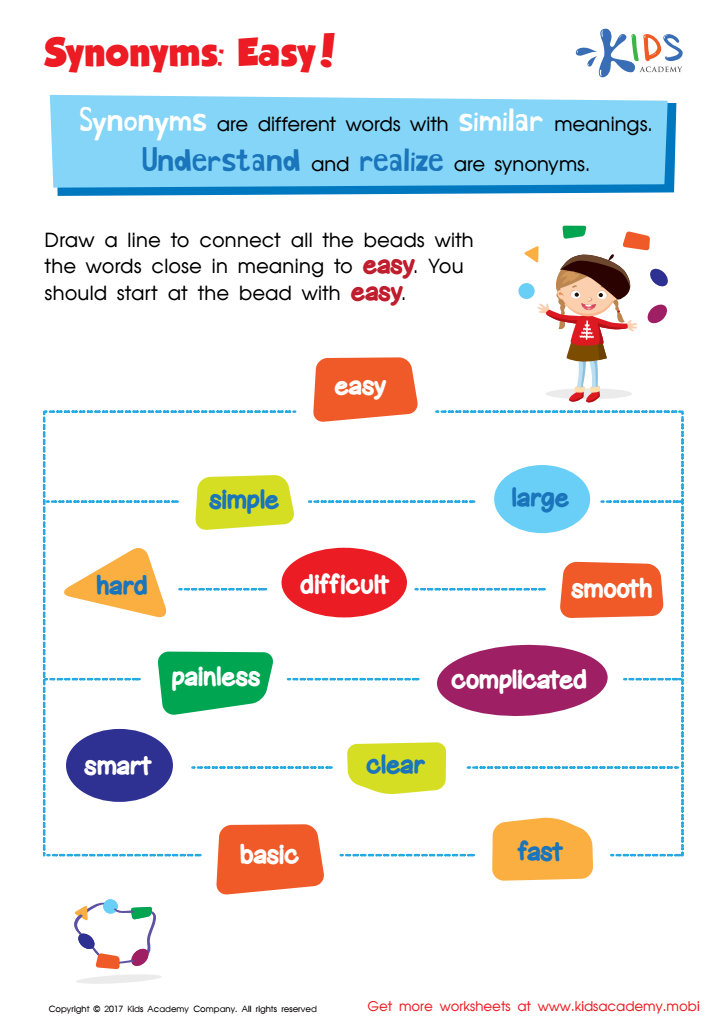
Free Synonym Worksheet
Grade 3s can build their vocabulary with free synonym worksheets. Unlocking the door to better communication, these worksheets help children identify new and interesting words. A great example is finding synonyms for the word easy. Give your kid a boost today!
Free Synonym Worksheet
Worksheet
Join Kids Academy for Free
Who is primarily going to use this learning content?







Synonym recognition is crucial for children aged 4-8 as it significantly contributes to their language development, reading comprehension, and communication skills. At this formative age, expanding a child's vocabulary is foundational. Recognizing synonyms helps children understand that there are different words with similar meanings, which enhances their ability to express themselves more clearly and precisely.
When children are familiar with synonyms, they can better understand the context of what they are reading, as they can derive meanings from words they encounter in stories or during lessons even if those words are new to them. This skill consequently boosts their confidence in reading and reduces the likelihood that they will become frustrated by unfamiliar terminology.
Additionally, understanding synonyms supports writing skills. When composing sentences or stories, young students can choose from a more extensive palette of words to convey their thoughts accurately and vividly, which enriches their narrative or explanatory efforts.
In practical, social settings, a broad vocabulary allows children to engage in more meaningful and varied conversations with peers and adults, fostering better relationships and social development. Hence, parents and teachers should pay attention to synonym recognition and actively incorporate it into learning activities to facilitate robust language skills that will serve children now and in the future.








