Time recognition Worksheets for Ages 4-8
6 filtered results
-
From - To
Explore our engaging Time Recognition Worksheets designed specifically for children aged 4-8! Help your little ones master essential time concepts with fun and interactive exercises. From reading analog and digital clocks to understanding the concepts of AM and PM, our worksheets are crafted to boost confidence and skill levels. Incorporate playful activities that make learning about time enjoyable and beneficial. These resources are perfect for reinforcing lessons at home or in the classroom. With vibrant visuals and age-appropriate tasks, your kids will develop a solid foundation in time recognition while having fun. Start their journey to becoming time-savvy today!
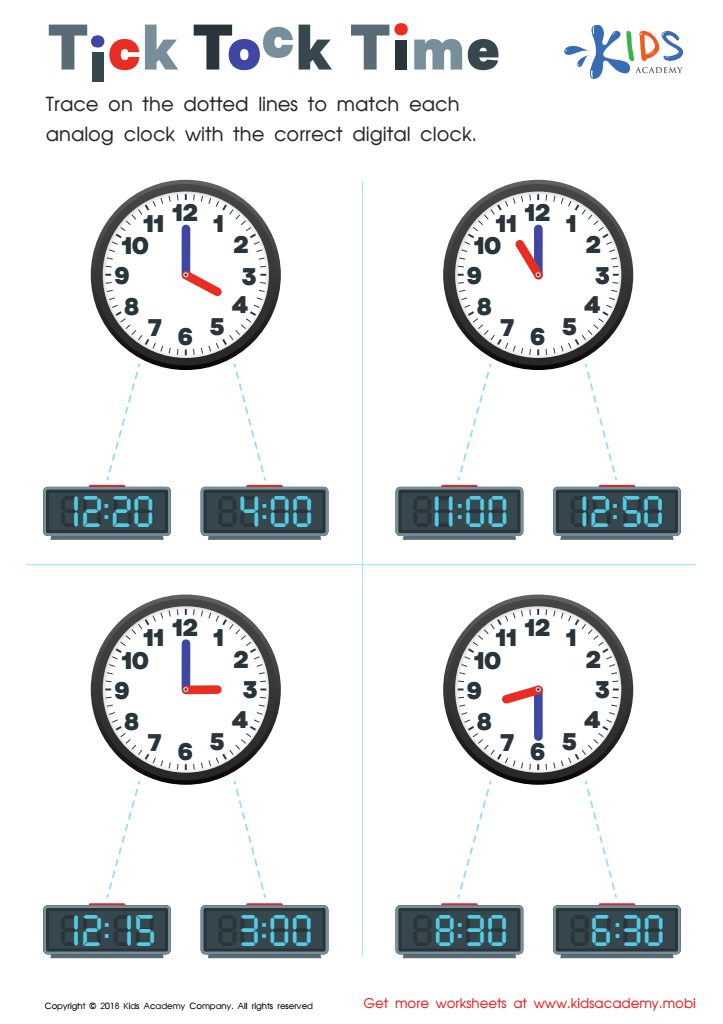
Tick Tock Time Worksheet
 Assign to My Students
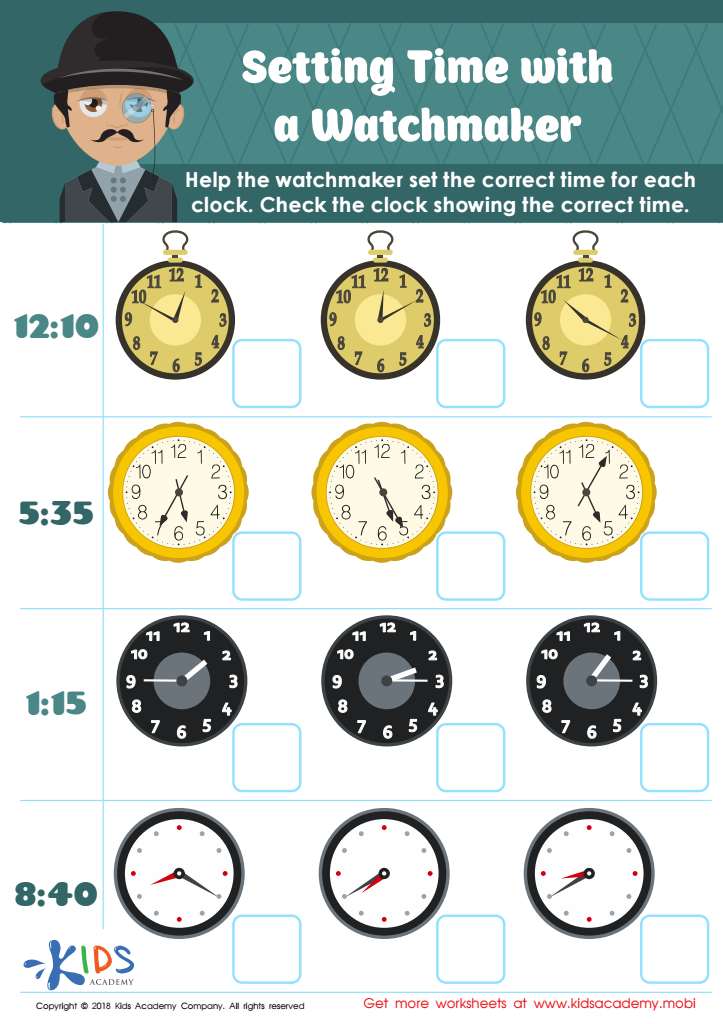
Setting Time with Watchmaker Worksheet
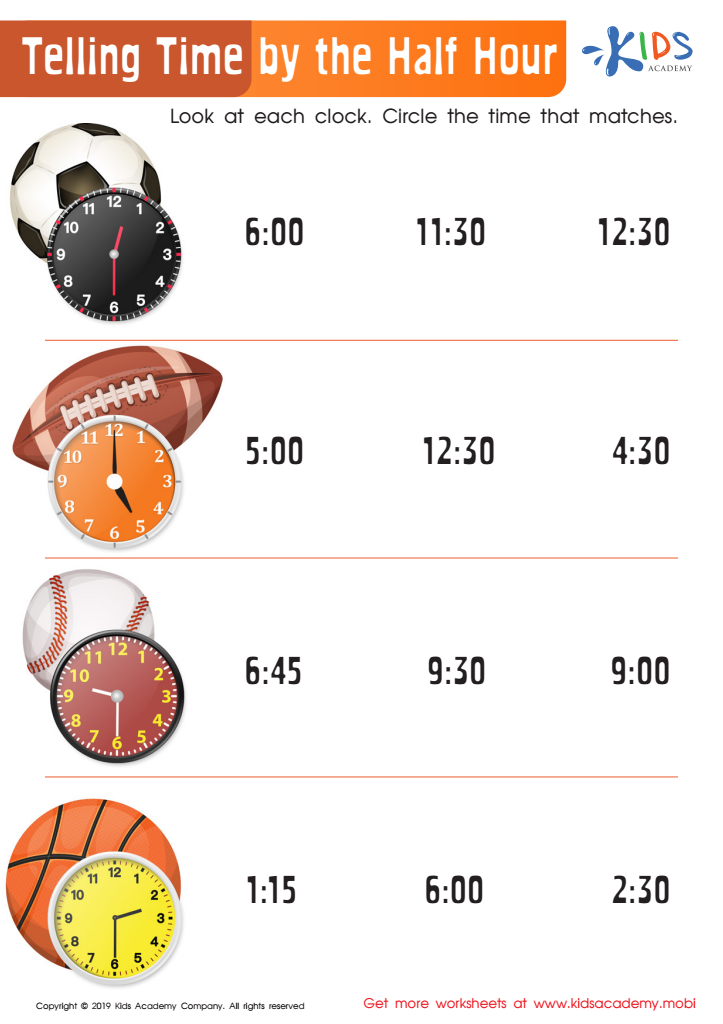
Telling Time by the Half Hour Worksheet
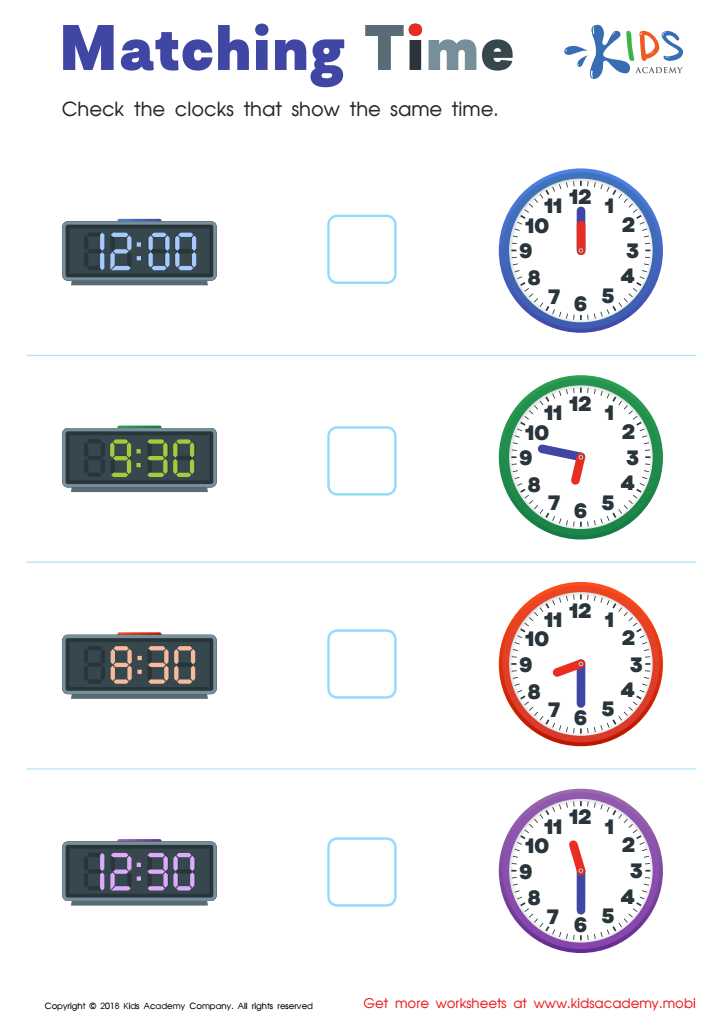
Matching Time Worksheet
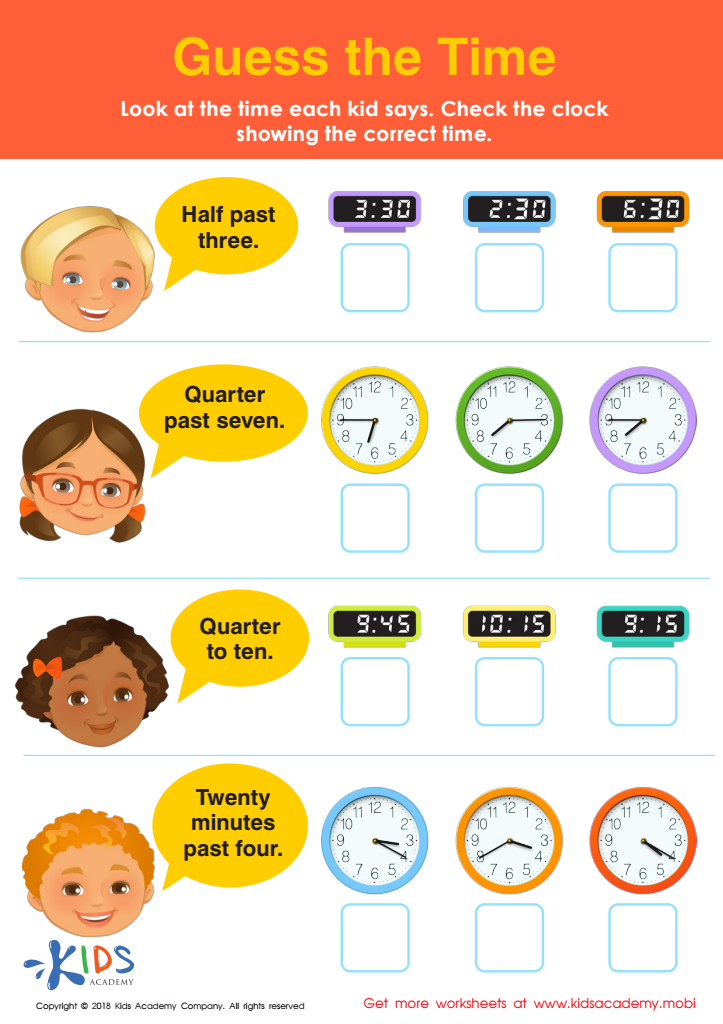
Guess the Time Worksheet
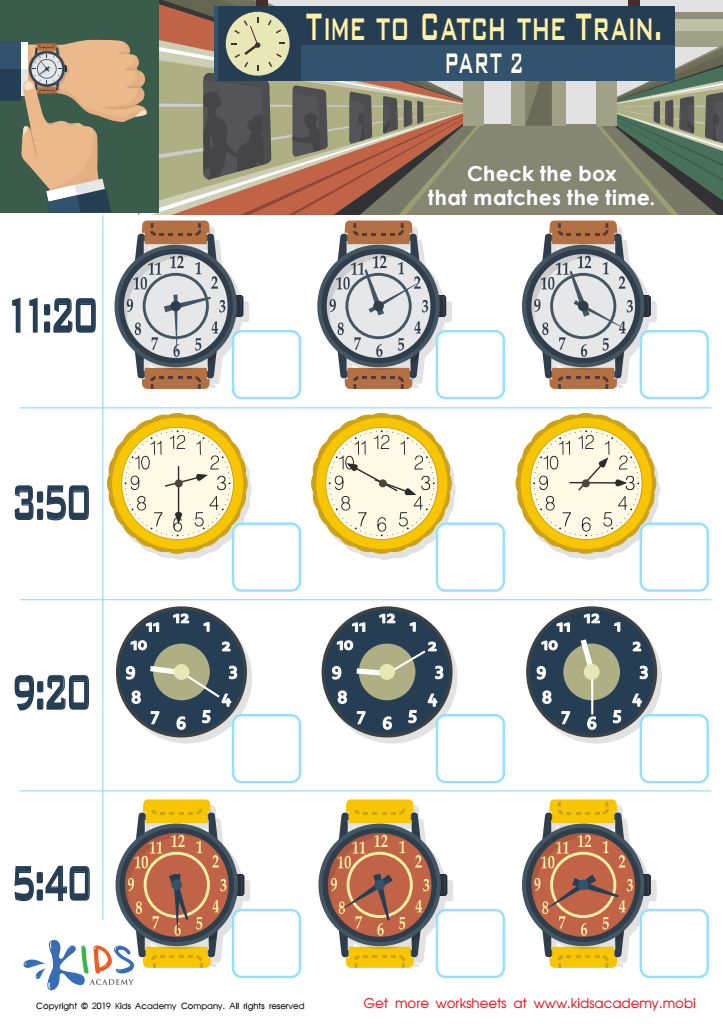
Time to Catch the Train Part 2 Worksheet








Time recognition is a vital skill for children aged 4-8, impacting their daily routines and overall learning. Understanding time helps kids structure their day, grasp the concept of sequencing, and develop a sense of responsibility. For parents and teachers, fostering this skill promotes independence, as children begin to manage their own time for homework, play, and chores.
At this developmental stage, children are naturally curious about the world around them, and time provides a framework for understanding it. Recognizing numbers on a clock or using visual aids can connect math skills to real-life situations, reinforcing learning in fun and meaningful ways. Additionally, learning to tell time enhances social skills; for instance, kids can develop routines for playdates or other social engagements, establishing a basis for longer-term planning and cooperation.
Moreover, as children transition into more structured activities in school, time management becomes crucial for meeting deadlines and staying on task—skills that are foundational for their future academic success. By helping children become time-literate, parents and educators lay a strong groundwork for lifelong learning and self-discipline while enabling children to navigate their day with confidence and ease.








