Understanding democracy Worksheets for Ages 4-8
3 filtered results
-
From - To
Explore our "Understanding Democracy Worksheets" tailored for children aged 4-8. These engaging and interactive resources are designed to introduce young learners to the fundamental concepts of democracy in a fun and accessible way. Through colorful illustrations, simple activities, and relatable scenarios, children will discover the importance of community, participation, and voting. Our worksheets foster critical thinking skills and encourage discussions about fairness and choices, making learning about democracy enjoyable. Perfect for both classroom settings and home learning, these worksheets provide an excellent foundation for future civic education. Start nurturing informed future citizens today with engaging materials that make learning about democracy exciting!
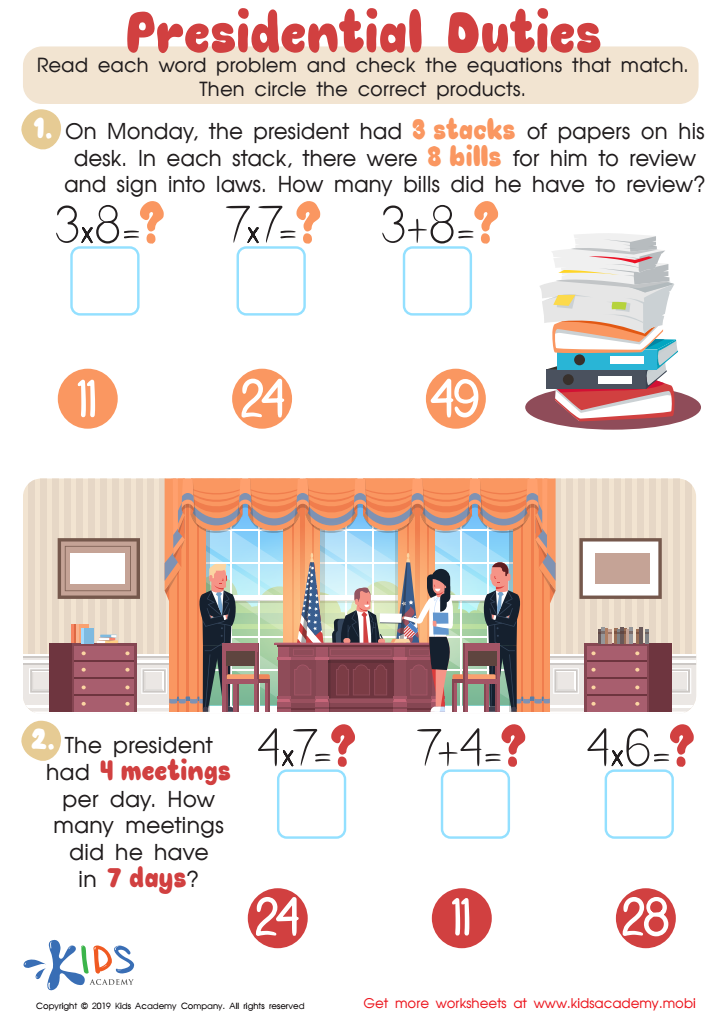
Presidential Duties Worksheet
 Assign to My Students
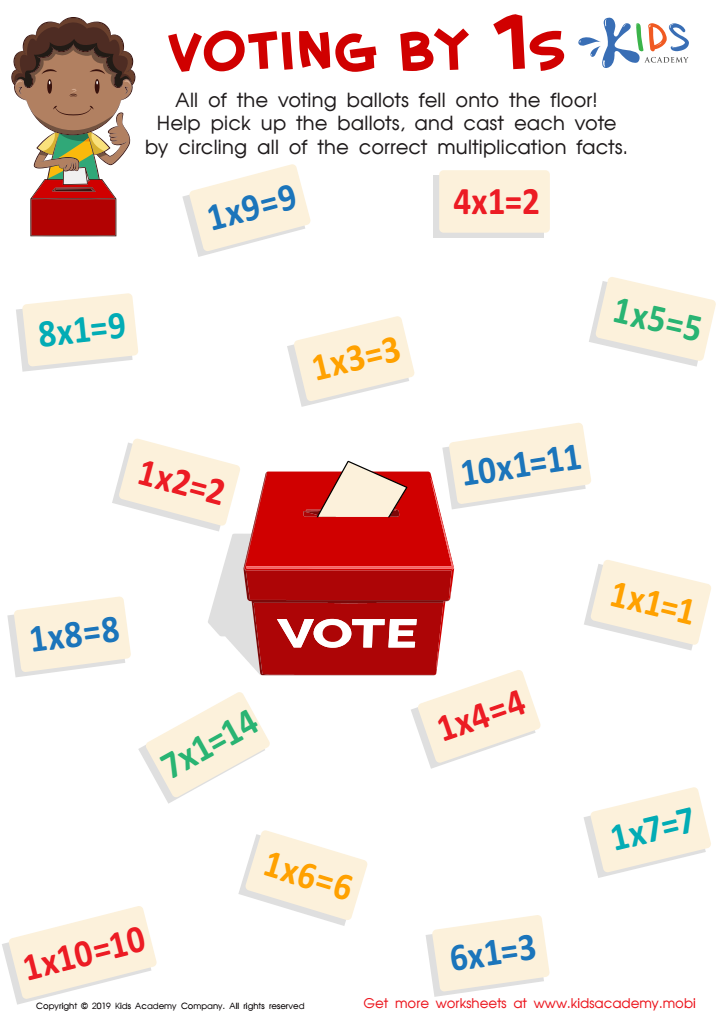
Voting by 1s Worksheet
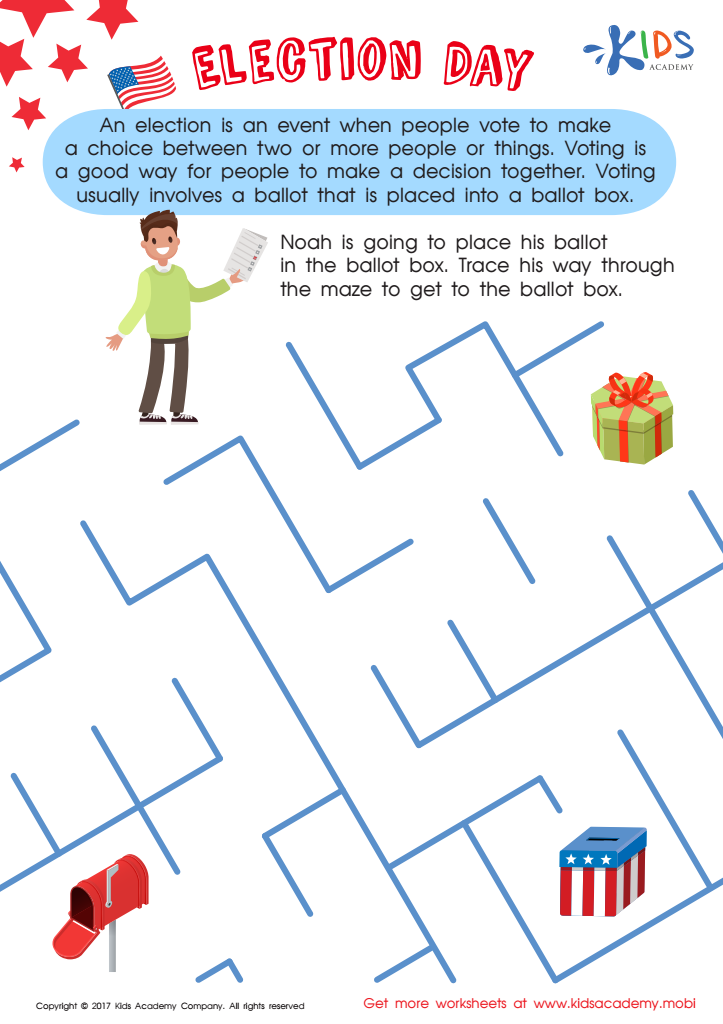
Election Day Worksheet







Understanding democracy is crucial for children aged 4-8, as it lays the foundation for responsible citizenship and critical thinking. At this early stage, children are developing their social skills, language, and ability to participate in group activities. Teaching them about democracy helps instill values such as fairness, respect, and cooperation.
Through age-appropriate lessons, children learn the significance of making choices, the concept of community, and how their voices matter. Activities like role-playing democratic processes—such as voting or discussing solutions to problems—allow children to engage with these concepts in a hands-on manner. This not only makes learning fun but also helps them comprehend different perspectives and develop empathy.
Moreover, understanding democracy fosters a sense of safety and stability. When children recognize how decisions are made collectively and that everyone has a voice, they feel empowered and secure in expressing their thoughts. As these children grow, the early lessons in democracy can guide them in advocating for themselves and others, ultimately contributing to a more engaged and informed citizenry.
Therefore, parents and teachers play a vital role in shaping democratic values among young learners, ensuring they are prepared to participate meaningfully in their communities now and in the future.








