Understanding force Worksheets for Ages 4-8
3 filtered results
-
From - To
Explore our "Understanding Force Worksheets for Ages 4-8," designed to introduce young learners to the concept of forces in a fun and engaging way! These worksheets feature a variety of activities that promote critical thinking and hands-on learning by using simple language and colorful visuals. Kids will discover the basics of force by exploring pushing and pulling, gravity, and motion through interactive tasks. Ideal for both classroom settings and home learning, our printable resources encourage experimentation and observation, making science exciting for young minds. Start your child's journey into the world of physics today with our thoughtfully curated worksheets!
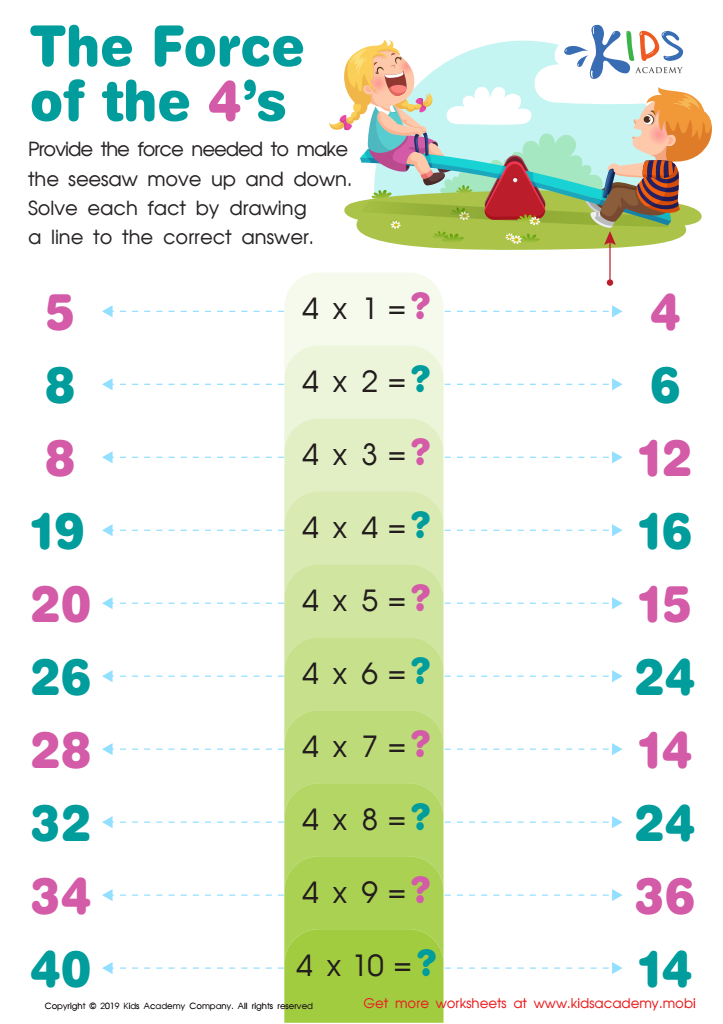
The Force of the 4's Worksheet
 Assign to My Students
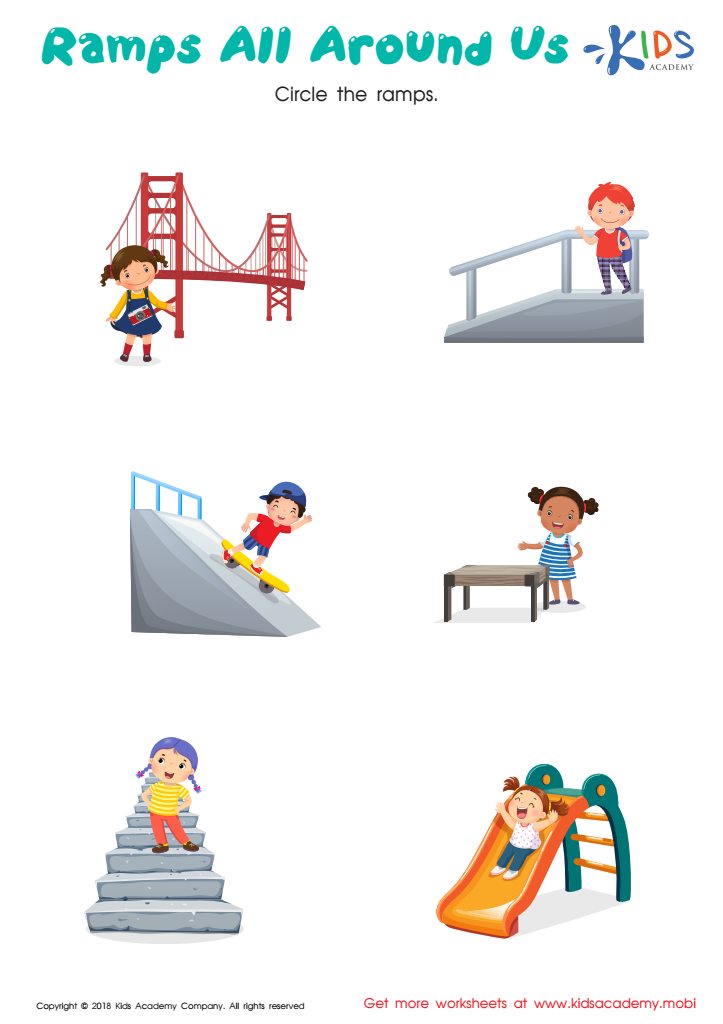
Ramps All Around us Worksheet
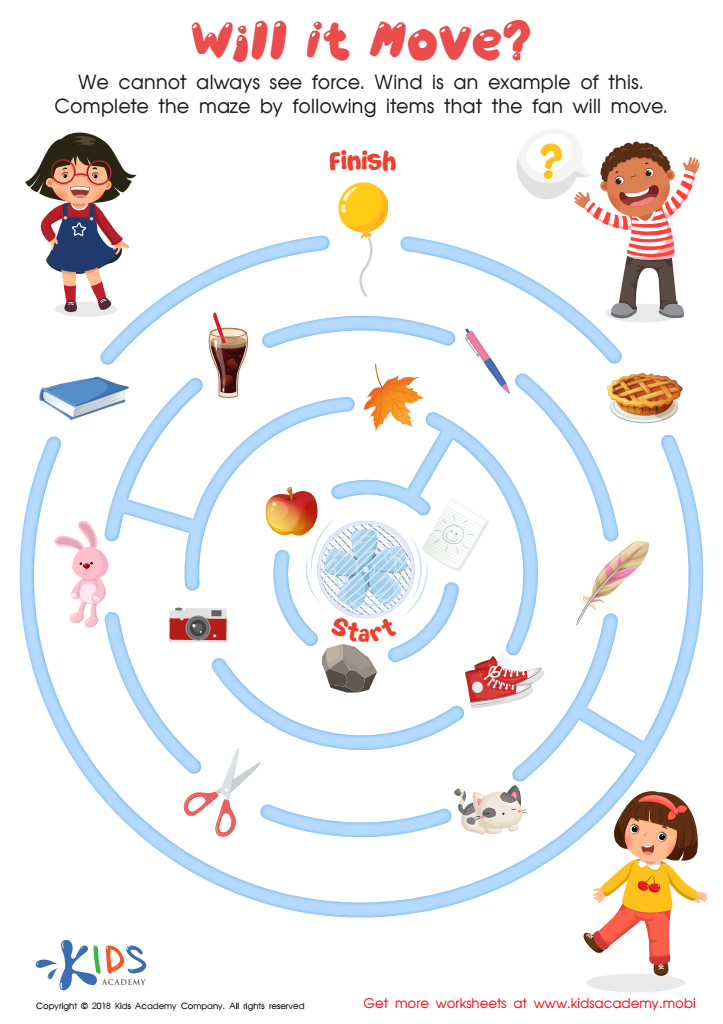
Will it Move? Worksheet








Understanding force is crucial for children aged 4-8 because it lays the foundation for scientific thinking and problem-solving skills. At this age, children are naturally curious and actively explore their physical environment. Teaching them about forces, such as push and pull, helps them make sense of their experiences, fostering critical thinking and inquiry.
Engaging with the concept of force sparks imagination and creativity. By experimenting with toys or natural elements like wind and gravity, children learn to predict outcomes, enhancing their ability to think logically. This hands-on exploration aligns with early learning standards which encourage experiential learning.
Moreover, comprehending the basics of force prepares children for more complex scientific concepts later on. It promotes not only science literacy but also an appreciation for the natural world and how it works. This foundational knowledge can stimulate interest in STEM (science, technology, engineering, and mathematics) fields, encouraging future academic and career pursuits.
Ultimately, fostering an understanding of force at this young age inspires confidence in children as they engage with science, promoting curiosity and a lifelong love for learning. Parents and teachers play a pivotal role in guiding this exploration, making their involvement essential.








