Understanding measurement units Worksheets for Ages 4-8
3 filtered results
-
From - To
Unlock the world of measurement for children aged 4-8 with our "Understanding Measurement Units" worksheets! Designed to engage young learners, these printable activities introduce essential concepts of length, weight, volume, and more through fun and interactive exercises. Each worksheet is tailored to enhance early math skills, encouraging kids to explore and compare different units in a playful manner. From measuring items around the house to solving simple problems, our resources promote critical thinking and hands-on learning. Perfect for parents and educators, these worksheets help build a strong foundation in measurement, making learning both enjoyable and rewarding!
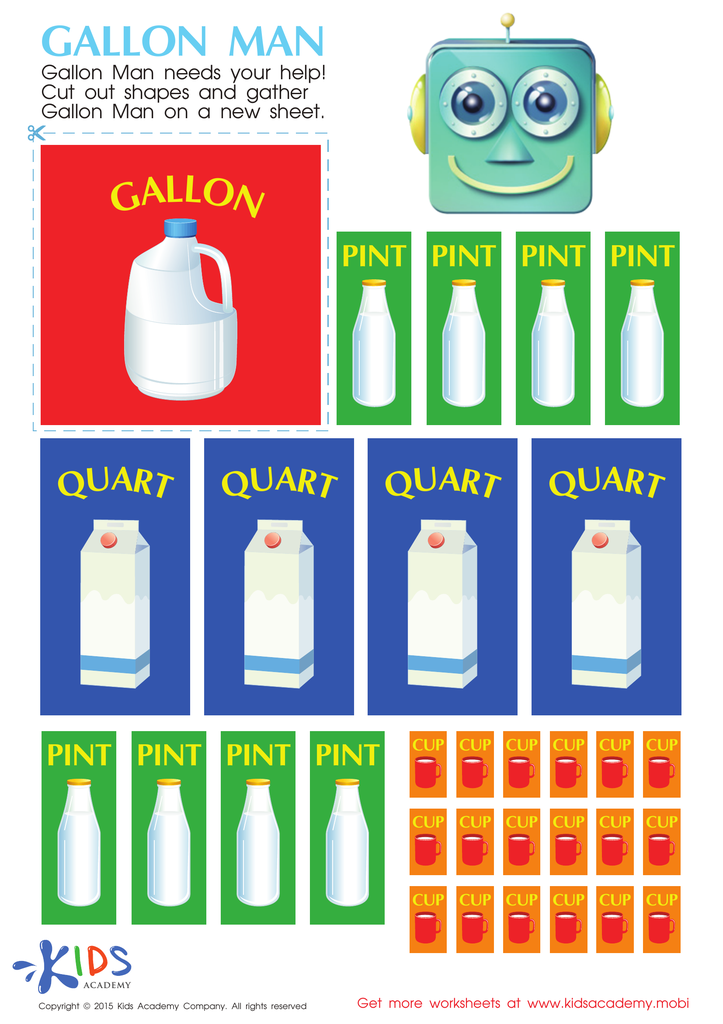
Cups, Pints and Quarts With Gallon Man Worksheet
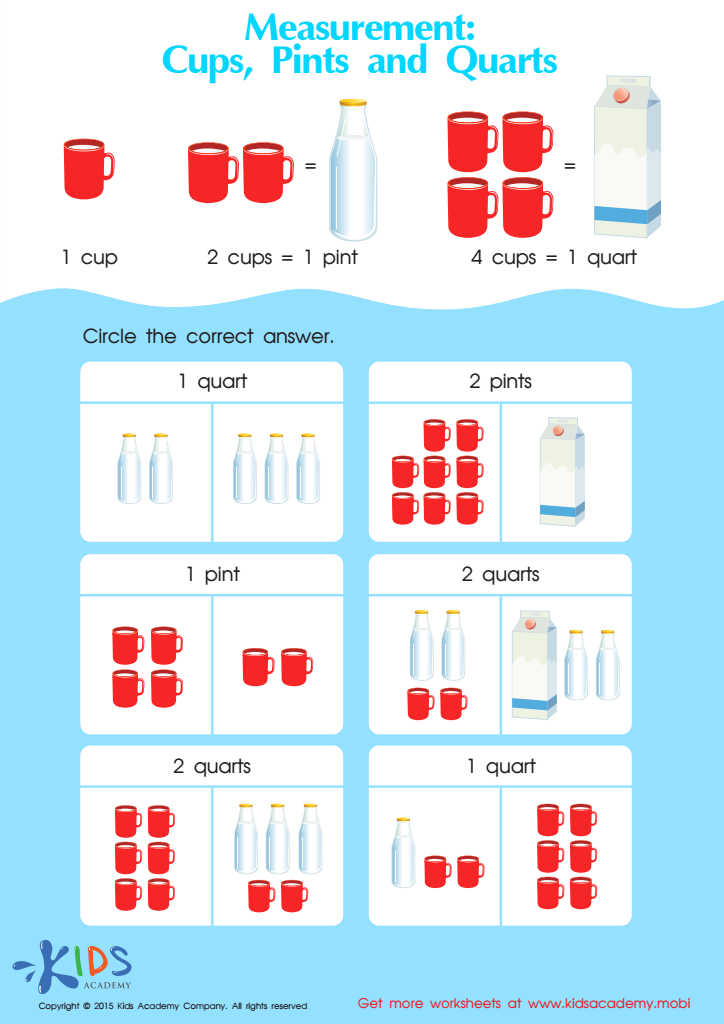
Cups, Pints and Quarts Worksheet
 Assign to My Students
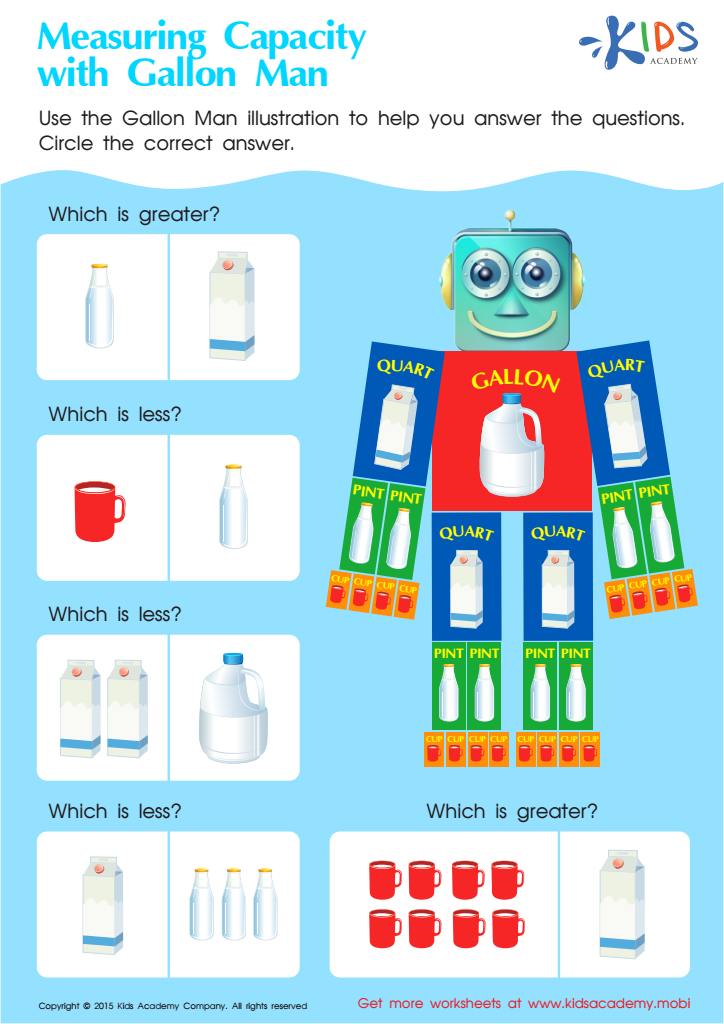
Measurement: Measuring Capacity with Gallon Man Worksheet








Understanding measurement units is crucial for children aged 4-8 as it lays the foundation for essential math skills and everyday problem-solving. During these formative years, children are naturally curious and begin to interact with the world around them more intentionally. By grasping measurement concepts like length, volume, and weight, they learn to compare, contrast, and quantify their experiences, fostering critical thinking skills.
Moreover, measurement understanding enhances cognitive development. When children learn to measure, they practice estimation, precision, and logical reasoning—skills that extend beyond math into science, engineering, and everyday tasks. For instance, cooking involves measuring ingredients, while building projects require length and weight considerations.
In addition, early experiences with measurement can build confidence and excitement about math. Engaging in hands-on activities, such as measuring objects with rulers or pouring liquids in different containers, makes learning fun while reinforcing conceptual understanding.
Finally, as children become adept in measuring, they develop a vocabulary around sizes and comparisons, improving both their communication skills and their ability to articulate their thoughts. This knowledge not only supports academic achievement but also equips children with practical skills they will use throughout their lives. Therefore, both parents and teachers should prioritize measurement education in early childhood.








