Understanding number patterns Worksheets for Ages 4-8
6 filtered results
-
From - To
Explore our engaging "Understanding Number Patterns Worksheets" tailored for children aged 4-8! These worksheets are designed to help young learners recognize, analyze, and create number patterns through fun and interactive activities. Each worksheet promotes critical thinking and enhances mathematical skills, making learning enjoyable. Our resources include colorful visuals and varied exercises, ensuring children remain motivated while mastering essential concepts. Perfect for both classroom use and at-home learning, these worksheets support early numeracy skills and promote cognitive development. Dive into the world of number patterns and watch your child's confidence in math flourish! Visit our page to access these valuable educational tools.
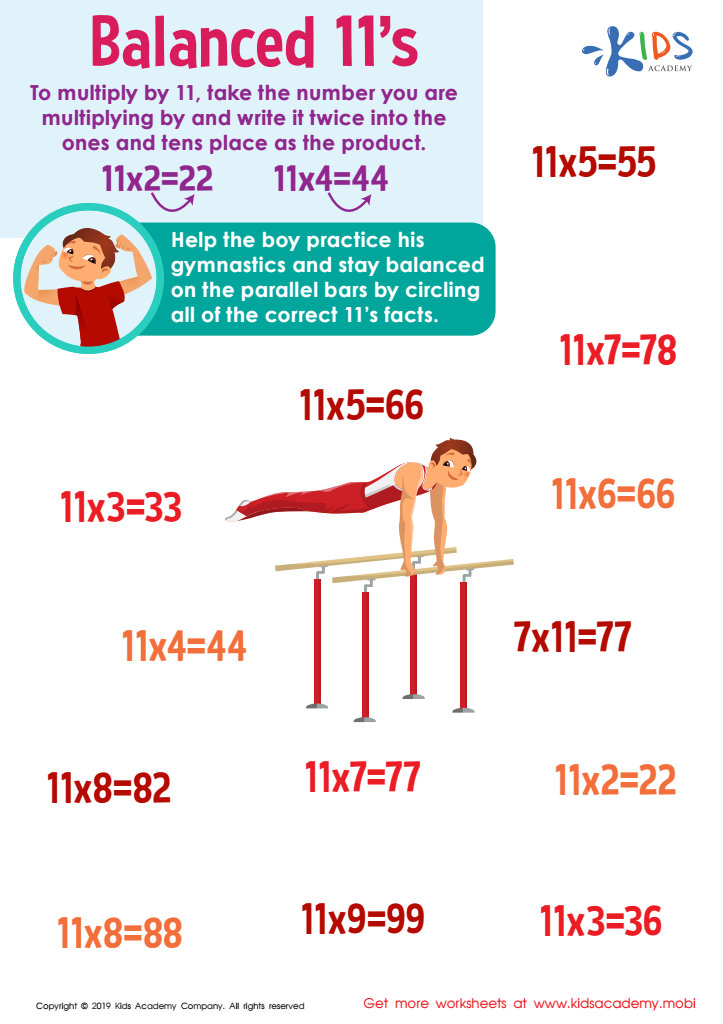
Balanced 11s Worksheet
 Assign to My Students
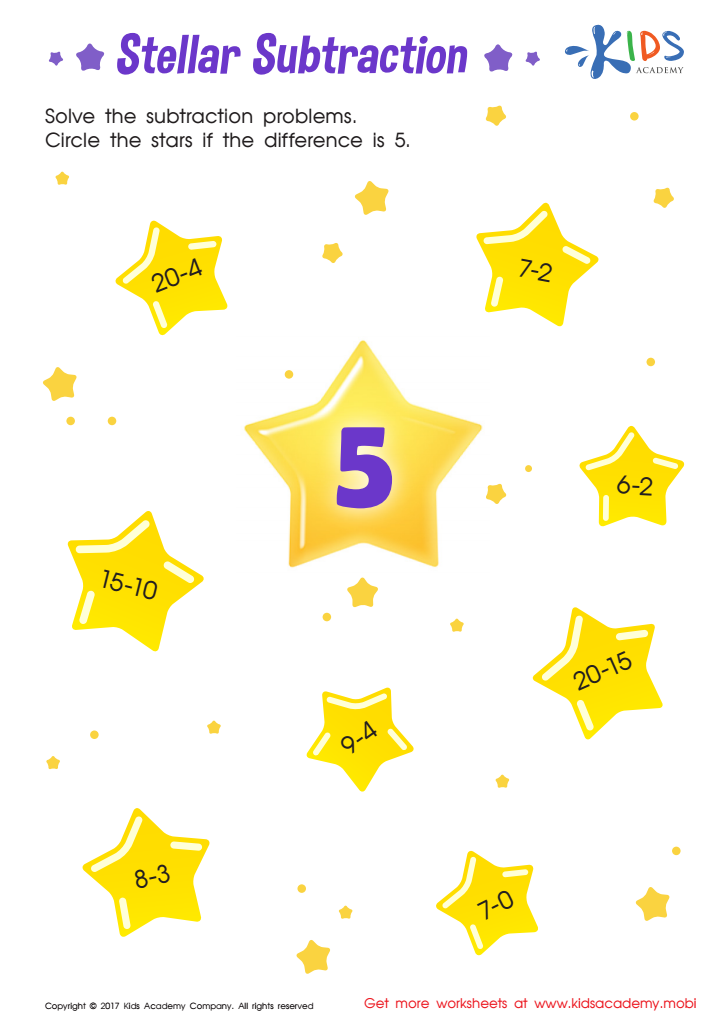
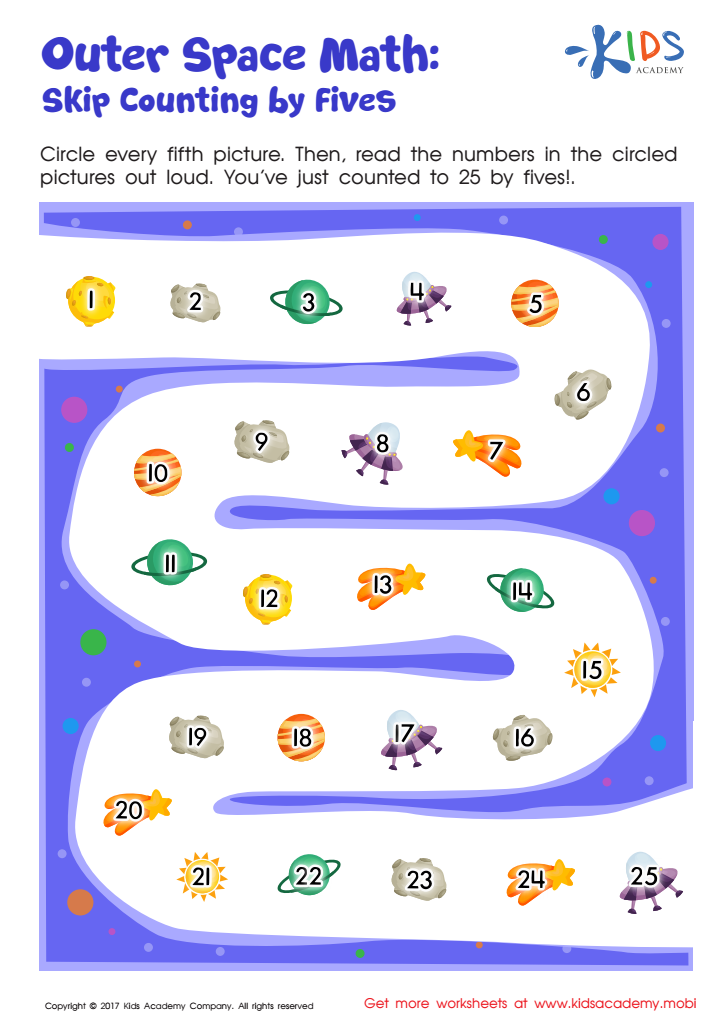
Skip Counting by 5s: Outer Space Math Printable
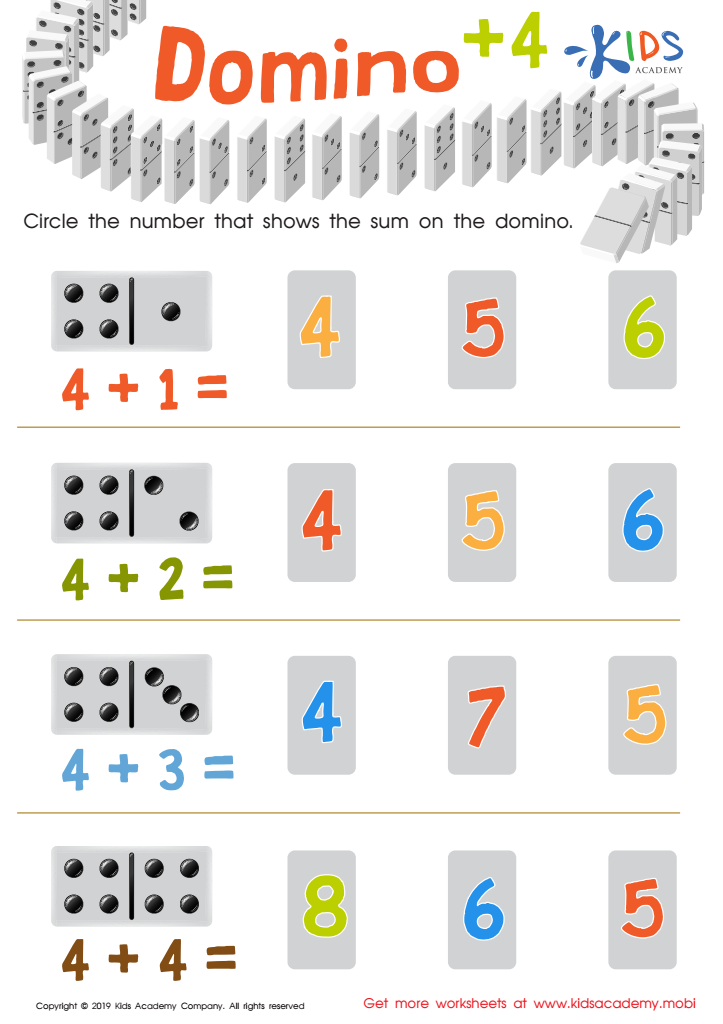
Domino +4 Worksheet
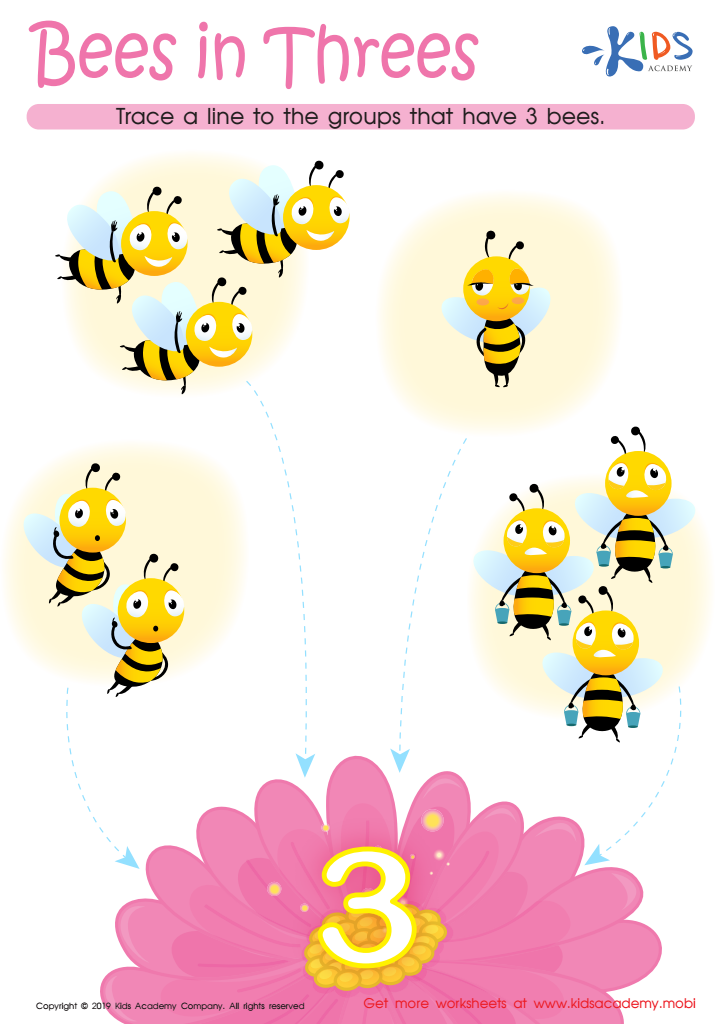
Bees in Threes Worksheet







Understanding number patterns is crucial for children aged 4-8 because it lays the foundation for essential mathematical skills. At this early age, children are naturally curious and eager to explore relationships within numbers. Recognizing patterns helps them understand sequences, groupings, and differences, which fosters critical thinking and problem-solving abilities.
When parents and teachers emphasize number patterns, they help children develop skills that extend beyond math. It enhances their ability to make predictions, identify similarities and differences, and promote logical reasoning. Early exposure to patterns can also mitigate mathematical anxiety, as students learn to approach math through familiar concepts.
Moreover, understanding number patterns connects to various subjects, aiding literacy and artistic expression by fostering an awareness of rhythm, order, and symmetry in language and design. This nurturing environment nurtures confidence and encourages a positive attitude toward learning.
Ultimately, by engaging in activities that highlight number patterns—such as counting games, using visuals, or practical applications—children not only learn to recognize and create patterns but also embark on a lifelong journey of learning and understanding in mathematics and beyond. Parents and teachers who prioritize this aspect of early education set their children up for greater success in future academic pursuits.








